




All In Nutritionals
Home Blog Page 315

Fishing for Success

0
Fishing for Success

EPAX’s lengthy history, quality products and clinical research results help the marine omega-3 supplier swim ahead of the pack

by Natalie Moore


There’s something to be said about standing the test of time. It’s truly a testament to quality and integrity. It’s also an accomplishment a scant few businesses today can claim — however, EPAX AS has managed to do just that. The leading global supplier of marine-based eicosapentaenoic acid (EPA) and docosahexaenoic acid (DHA) omega-3 fatty acid concentrates has a corporate legacy dating back 170 years. Yet, there’s nothing old-fashioned about them. In fact, over the decades EPAX AS’ experiences have only boosted its expertise in the fish oil industry and strengthened its commitment to excellence.

Originally named JC Martens when the Norwegian company was founded in 1838, it primarily traded in dried fish and cod liver oil. Now, EPAX AS products are distributed worldwide to the business-to-business ingredient market under the brand name EPAX.


Brand longevity

So, how has the brand survived and thrived for so long? “What basically makes EPAX different from most competitors is the fact that we are exclusively and fully devoted to the manufacturing of omega-3 ingredients,” says Baldur Hjaltason, business development manager. “These ingredients are highly pure omega-3 concentrates. We also exclusively focus on condition-specific products, such as formulas with different EPA and DHA ratios, and concentrations targeting specific health problems.”


How the products help

The EPAX lineup consists of 10 unique formulations of EPA and DHA, as well as a combination of EPA- and DHA-rich products, all available in triglycerides (TG) or ethyl esters (EE). Each one is especially designed to address a particular aspect of well-being including cognitive, cardiovascular, eye, joint, mood and mind, pre- and postnatal health, to proper inflammatory response.

For example, EPAX 1050 TG, which has a high concentration of DHA, is essential to brain functions and provides nutritional support against age-related cognitive decline, such as poor memory and dementia. EPAX 6000 TG has a highly concentrated EPA and DHA ratio that helps keep cholesterol levels in check for optimal heart health. For individuals suffering from chronic inflammation, EPAX 4020 TG with a 2:1 ratio of EPA and DHA, has a potent anti-inflammatory effect and is tailored to restore the body’s omega-6 and omega-3 balance.

Not only is EPAX the industry leader in developing goods that address modern health concerns, proven research results also set the business apart from the competition. “Our company is the most clinically documented omega-3 ingredient with over 100 published clinical studies,” says Gunilla Traberg, head of marketing. These studies have substantiated various EPAX indication-specific items, which allows for easier positioning within the marketplace and more effective discussions with customers.


Natural evolution

As IHR magazine currently celebrates our 10-year anniversary — a mere blip on the evolutionary radar compared to the epic EPAX timeline, so far — we’re curious to find out what this historic giant has witnessed during the previous 10 years, alone. “In the last decade, the omega-3 market has grown phenomenally with a double-digit growth annually,” says Hjaltason.
“Today approximately 100,000 metric tons are sold for human consumption. Omega-3 ingredients are used in functional food, for supplements, as medical food ingredients and most recently as prescription pharmaceuticals. We are also seeing new delivery forms such as powders and emulsions, and new sources of EPA and DHA coming from marine phospholipids, as well as from algae and genetically modified crops.”

Traberg also mentions that, “Globally increased consumer awareness, credibility and interest in the benefits of omega-3 fatty acids continue to drive the demand for omega-3.” In addition, she says it so happens that “the number of scientific papers published correlates positively with the sales of omega-3 supplements. This consumer awareness has put focus more on not only the amount of EPA and DHA, yet also on purity, quality and environmental factors such as the sustainability and traceability of the crude oil sources.”


Environmental importance

Since the production’s raw materials come directly from the sea, respect for marine ecosystems has always remained an important aspect of business, so the company has undertaken a number of initiatives. “To EPAX, caring for the environment is paramount and we have our own environmental stewardship policy called EPAX EcoVision. This program is based on sustainable sourcing, traceable origin and accountable operations,” says Traberg. “Sustainable sourcing is based on supplies from Friends of the Sea-certified fisheries in Peru, as well as our own certification. The raw material that we use is traceable — time and place of catch — which in turn is a condition for sustainability. Our manufacturing is certified eco-friendly through ISO 14001 certification for environmental safety management, we practice full material accounting at the manufacturing plant, recycling and zero-waste practices, as well as systems for reduced energy use, etc.”


Introducing new products

There’s a lot to look forward to as EPAX announces several remarkable products in the works, which will soon hit store shelves and should really appeal to consumers. “In the coming month, EPAX will be expanding the product line with the launch of a new high-concentrate ingredient called EPAX 7000 EE. The minimum value of the EPA and DHA fatty acids are 360 mg/g and 240 mg/g respectively, and a minimum total omega-3 content of 700 mg/g. This product will have the highest content of EPA and DHA in our 2:1 ratio product range,” shares Hjaltason. “Furthermore, a new condition-specific product concept will be launched this autumn. This is a product designed for physically active people, from the weekend sport enthusiast to the trained competitive athlete. The product behind the science in this sports nutrition concept is EPAX 4020 TG. Next year, EPAX is planning to launch a high-DHA fatty acids product. This will be a stand-alone product and will also serve as an extension of our popular EPAX 1050 TG formula which contains as a minimum 430 mg/g of DHA.
This product will be ideal for those [retailers] considering launching pre- and postnatal nutrition products,” he reveals.

Always on the edge of innovation, some interesting (perhaps even science-fiction-sounding) new research has come about in the omega-3 fish oil category that EPAX is excited about. “The science behind how omega-3 fatty acids work in our body has advanced greatly in the last few years,” says Hjaltason. “The most exciting science is how omega-3 fatty acids regulate our gene expression. This opens new doors in relation to handling complex symptoms like metabolic syndrome. Also, recent work shows that omega-3 fatty acids can slow down the shortening of the telomeres — they sit at the end of the chromosomes, acting like a cap on the end protecting them from damage. They contain the vital DNA information needed for cellular replication. Every time a cell divides the length of the telomeres become shorter. In the end, the cell cannot divide and it dies. If we can slow down this process, we also slow down the aging process and improve quality of life.”

With such a long-standing legacy, yet a constant focus on the future, EPAX has truly established itself as an overall omega-3 expert. Whatever your needs, with its reputable background EPAX is confident it can help you. “Through our global network of distributors and agents we can service customers with local market knowledge and opportunities, as well as assist with regulatory documentation to ensure regulatory compliance on both international and national levels,” adds Traberg. “Our storage facilities are strategically located in key locations around the world to offer shorter lead times and on-time deliveries.”


Catch of the Day

Tips from EPAX on what retailers should expect from omega-3 fish oils and manufacturers:

High-quality oils from a reputable brand that adheres to strict manufacturing standards for pollutants and other parameters

Concentrated oils to ensure sufficient intake of EPA and DHA fatty acids

Brands that have documented results

Brands that conform to traceable and sustainable raw material sourcing


Nature’s Emporium

0
Nature's Emporium

A Natural Success

How Nature’s Emporium went from a 5,000 square foot store to becoming one of North America’s largest natural and organic retailers

By Carlos Weigle

Photography by Julie Broadbent


There is something awe inspiring about turning a 5,000 square foot store into a retail space 10 times that size and surviving the experience. Then again, if the owners are the D’Addario family, failure is not an option.

The first visionary was Angelo D’Addario, who tapped into the bulk foods trend in the early ’80s and opened a store in Pickering (PGA Foods), soon to be followed by another two in North Toronto.

The family-owned company continued to grow by following a very simple rule: giving customers what they wanted. At that time, that meant increasing the offering of natural products. However, very few can escape a deep economic recession unscathed and the one that plagued the early ’90s hit the D’Addarios hard, forcing them to close their Toronto locations.

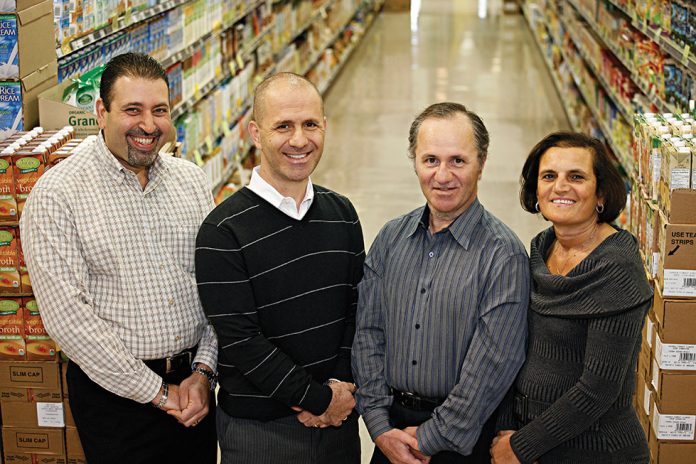
Then fate showed its ugly side when a fire destroyed their flagship store in Pickering. That series of very unfortunate events could have had a devastating effect, forcing them out of the business and making them look elsewhere for business ventures. As it turns out, it had the opposite effect. “While we were waiting for the insurance papers to clear, a space became available in Newmarket. That’s when we started talking about rebuilding,” recalls Teresa who, along with her father-in-law, Angelo, and her brother-in-law, Joe, founded Nature’s Emporium in 1993.

Opening a new store under a new name gave them the chance to have a slightly different profile, one that accompanied the times. The experience they accumulated, on the other hand, allowed them to tap into some tried-and-true strategies while avoiding some of their mistakes.

Even though the 5,000 square foot store initially featured a large bulk food section, refrigerated products and two aisles dedicated to natural food products, this time around it also included “a nice aisle of supplements.”

Product selection and variety is key in making any business succeed, they say. “We had really good relationships with suppliers, so we could bring in small units versus large cases, to try out new products when customers requested them,” explains Teresa.

Personalized, knowledgeable customer service is what makes customers come back, according to the D’Addarios. That was very clear to them right from the start. As Teresa puts it: “With all the competition around, we just started working harder on bringing in what customers wanted and focusing on customer service. We’ve always been very hands-on, and I think people like that.”

The other key aspect to any successful business is, of course, the ability to adapt. That factor has also been a constant on Nature’s Emporium’s shelves. Within the first few years in operation, the bulk segment of their business shrunk to 40 per cent of their revenues, supplements grew to 25 per cent, and the balance was refrigerated products and HABA (health and beauty aids). Nowadays, supplements still account for 25 per cent of the revenues, but grocery has grown to 25 per cent, fresh produce to 15 per cent, HABA is 7 per cent and bulk foods only amount to 5 per cent. These figures alone showcase their ability to change with the times, as the market requires. “Currently the fresh produce is the fastest-growing department,” says Joe.

The produce department’s success is largely attributed to Joe Tavernese, who joined the team as a partner in 2009. Says D’Addario: “He gets up bright and early every morning to personally inspect and buy all the produce we sell. He has been a major factor in our amazing growth. His brother, Cosimo, has also joined us. He has an accounting degree and runs our office.”

The changing times also brought new ways to communicate with their customers. In that respect, Nature’s Emporium embraced the online experience to great results. Not only do they have a very comprehensive website, they also have a strong social media presence on Facebook, Twitter, YouTube, blogs and forums. Everything is done in-house by a team of three, led by media director, Andrew Muto.

The reasoning behind the social media expansion is quite clear to Joe: “We already have the baby boomers in our store, we need to reach a younger audience.” The efforts are certainly paying off. Joe says it’s common to have people come in talking about something they saw or read on one of their social media platforms. Some of their videos have had between 5,000 and 10,000 views on YouTube, which is remarkable.

Young blood is also making an appearance behind the counters and in the offices. Joe’s oldest son is almost a full-time employee, while two of Guy and Teresa’s kids have also embraced the family business. “My dad would be proud,” expresses Joe. “His legacy lives on.”

Without a doubt, the first few years are key in any business, and they can break even accomplished and well-respected business people. Teresa notes that “it took about three years for us to see if the store was going somewhere or not. Then, the pace started picking up and everything shifted.” Indeed, according to Joe, “every year has been a record one since we opened in 1993. I’d say we average about a 20 per cent growth, year over year.”

The continuous change in product selection, with the increase in natural grocery products and supplements, made an expansion imperative. Luckily, they first managed to expand the store to 15,000 square feet (in 2002) and then to 20,000 square feet (in 2006).  As Teresa explains it, “there was so much demand for variety from our customers that we couldn’t address because we didn’t have the space. The expansions provided a great opportunity for us to create a full-service natural market.”

The first expansion allowed them to focus more on groceries (which became 40 per cent of the store’s revenues), the addition of a natural café/juice bar, and the expansion of the HABA section from 15 to 32 feet of wall space. The second expansion, on the other hand, meant even more dedicated space for supplements, as well as the addition of homeopathic remedies, including professional lines.

Even so, those expansions involved, as much as possible, calculated risks. Now, more than doubling your store area … Well, that’s a different beast altogether, one that can easily get out of control and run any successful business to the ground.  Still, Joe sees the experience in a different light: “It was the easiest expansion we’ve ever done. It just made sense and came to be naturally. We’re also better prepared now, since we have a team of people to help us out and not everything depends on us.”

Opportunity knocked on the D’Addarios door – literally. It so happened that Weston Produce, a large independent grocery store that was Nature’s Emporium’s neighbour decided to close their location in 2009. Despite having a large-enough space already, the company still found itself pressed for room. There are always new products coming into the market, be it organic produce, prepared foods or supplements.

However, the idea wasn’t an easy sell: the jump from having a 20,000 square foot store to one that measured 50,000 square feet would certainly make anyone pause. In spite of that, expanding had become increasingly alluring and, in the end, temptation was too great and they gave in.

The decision wasn’t abrupt, and expanding into the new space wasn’t either. In fact, the planning process took over a year. There was too much to consider, from product variety to changing almost every aspect of their business. Construction then took a few more months, until everything was finally ready.

With the expanded space came also better lighting and design overall, as well as the opportunity to offer products such as raw food, and expand already existing products such as artisan cheeses. It also allowed the owners to turn a 3,000 square foot mezzanine into a community room. As Joe explains it, “it holds up to 200 people, and its primary focus is teaching and education. We’ll even have a kitchen where we can teach people how to cook holistically.” They’re also building a naturopathic clinic, so that Nature’s Emporium becomes “a truly holistic experience.”

The result is twofold. First, it turned Nature’s Emporium into one of North America’s largest natural and organic stores and, second, it proved once again that, despite economic downturns such as the one experienced in the last few years, the public’s appetite for living a healthier, more balanced life is almost limitless. If anyone ever thought the natural products industry was merely a fad, success stories such as this one clearly show it’s not. Moreover, it signals a bright future for those who invest in the business. At least for those who do it as well as the D’Addario family.

Back to fine form

0
Back to fine form

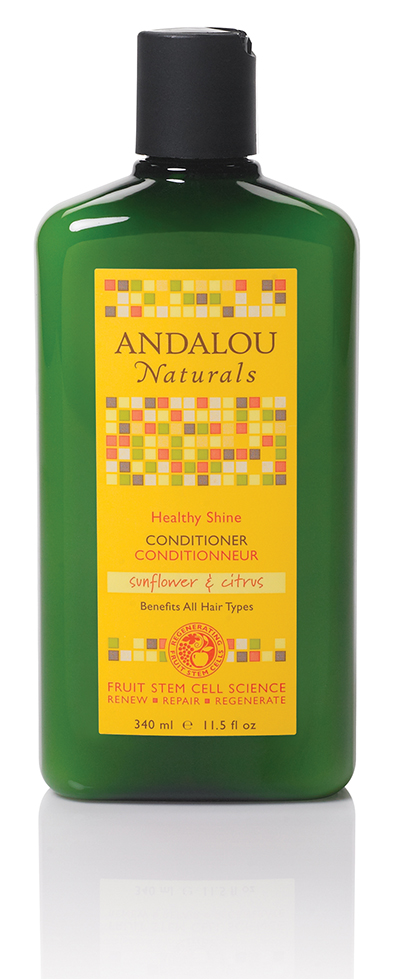
The founders of successful brands such as Avalon and Alba return to the business with the winning Andalou Naturals product line.

By Carlos Weigle


Then passion is what drives you, how can you stay away from the things you love? That dilemma must have crossed the minds of Mark and Stacey Egide last March, after spending seven years out of the natural beauty business. A business they knew very well and to which they had devoted their energy and drive for innovation. It was then when Stacey asked Mark, “What do you think about starting another company?” The passion seed was planted again, and the result is the blossoming of Andalou Naturals, a revolutionary line of skin, hair and body care products.

Yet, as it is the case with every good passion story, it all began years ago. Mark, who has been in the industry for 32 years, started his path at Carme International, manufacturers of brands such as Carme and Millcreek. When the company was sold in 1989, he saw it as the perfect opportunity for launching a business of his own and started the Beauty Without Cruelty line for the natural products market.

One success story was followed by another: Just months later, Stacey joined Mark and together they created the San Francisco Soap brand of bath and body products, which went on to become the second largest specialty bath and body brand in the United States, one that produced over one million gift sets every year. That business was sold in the late ’90s.


Organically Beautiful

That’s when a great idea emerged: If natural product enthusiasts were becoming increasingly passionate about organic foods, why weren’t personal care products following that trend? “After six months of research on organic ingredient availability and another six months of product development, we launched the first full line of personal care products with significant levels (at least 70 per cent) of certified organic ingredients, Avalon Organics,” recalls Mark.

Their commitment to certified organic continued with the Alba Botanica brand and the launch of the Alba Hawaiian product line, “one of the most successful brand introductions in the natural products history,” underlines Stacey.

Avalon was also sold, years passed, and then Stacey asked Mark that crucial question, “What do you think about starting another company?” She told him curiosity struck when she started reading about some research a Swiss company was conducting on plant stem cells, and more specifically, fruit stem cells. “She had also been doing some preliminary research on other key and very unique ingredients for skin care,” explains Mark. “After a couple of months reviewing the materials, it was clear fruit stem cell science was, in our opinion, the next big thing in anti-aging skin care products. These are ingredients, and this is a science that really works.”

It was time for their new brand, Andalou Naturals, to shine. It now offers 37 different skin, hair and body care products based on fruit stem cell science, as well as other key, unique ingredients such as probiotic, polypeptides and an exclusive bioactive eight-berry complex. All products also have a minimum 70 per cent certified organic content in an aloe vera base, and meet the Whole Foods Market premium standard for ingredients.

Interestingly enough, coming up with a name that can really represent your brand is almost as challenging as developing a great line of products. Yet, as with everything Mark and Stacey do, that name came to them in a very natural and organic way. “The word Andalou has a rich, ancient history, with connotations of emergence, as a ‘path of light,’” explains Stacey. It is also the French spelling for Andalusia, a region in southern Spain, “a geographic and cultural getaway between Europe and Africa, bridged between the Atlantic Ocean and the Mediterranean Sea.”


Love Your Farmer

Once you have great products and a fine name, it’s always good to look outside your bubble and care about others. As Stacey puts it, “we value knowing where our ingredients come from and the farmers who grow them.” Andalou has a commitment to sustainability by promoting socially responsible trade and commerce, and is also devoted to helping communities through several well-respected organizations. Among them, Women’s Initiative for Self Employment, The Breast Cancer Fund, GLIDE (against marginalization and poverty) and the Rainforest Action Network.

In order to succeed, you also need a great team. That’s why Mark and Stacey decided to “get the old band together” and gather some of the people who worked with them in the past, as well as reaching out to a few others who had been on their radar for quite some time.

The result of combining all those key ingredients is already evident: Andalou Naturals products are being successfully distributed nationally in the U.S. by Whole Foods Market and hundreds of other retailers, both in Canada and the U.S. Meanwhile, consumers are really excited about fruit stem cell science and its skin care benefits, such as awakening dormant cells to behave like younger, healthy cells, repairing cellular damage caused by UV radiation, oxidative and environmental stress, and protecting the longevity of skin and follicle stem cells for continuous regeneration at the cellular level.

“We have been in overdrive for a year, and are so pleased that our excitement is being shared across North America,” note Stacey and Mark. Which proves the point that being away from what you love can only be temporary, and that passion and innovation are key ingredients to any successful recipe.

Nature’s Fare

0
Nature's Fare

The store as village square

The six Nature’s Fare stores in B.C. have become hubs of community support, learning and sustainability

By Lynne Shuttleworth

Photography by Lorrie Jane Arnott

With every retailer, from corner stores to superstores, selling natural products these days, integrated health retailers need ways to differentiate themselves in order to become indispensible to their customers.

Nature’s Fare in B.C. is one retailer that has positioned itself as an important part of community life. Its strategy entails selling exactly what people are looking for—as well as becoming a hub for learning, charity, environmental initiatives and support of local producers and businesses. In essence, each Nature’s Fare location has taken on the feel of a historic village square.

“Our customers want more than a store, and we want to be more than a store. We want to be really active in our community, and work on giving back to the people that shop with us,” says Alexa Monahan, director of marketing.

Monahan is the 29-year-old daughter of Rick Monahan, who started the business back in 1982 by opening a health food store in Victoria. Nature’s Fare now has six stores in B.C., with the newest one in Langley.


Recession-proof

Monahan maintains that Nature’s Fare’s community activism is what helped the retailer make it through the recent recession without any scars.

“We were affected really slightly, if at all,” she says. “So we felt very lucky about that. Our shoppers are people who chose to forgo other things in their lives when they found themselves with not as much money. Their health and the health of their family is a priority for them.”

Nature’s Fare stays tight with its customers by offering them products and services that fit their lifestyles and values.

“We’re very active in donations and community events like Bike to Work Week,” Monahan explains. “We walk the walk, and talk the talk. Our customers are looking for organics, and we offer only 100 per cent organic produce. We’ve seen significant growth there. And people are looking for local produce; they want the farm-to-table experience, so we buy from local people as much as possible.”

As far as what products are most popular, Monahan reports that sales in the gluten-free category are increasing. As well, vitamins and supplements are big sellers, including those that address the issues of stress, anti-aging, cholesterol and weight loss.


Events for everyone

Being a community hub also means hosting events for customers and local residents. “We’ve shifted to a lot of in-store events,” Monahan says. “We bring in different speakers and host a ton of different educational events—customers can come in for free, and experts in the field come in and talk. Customers respond really well to this.”

This is part of the Nature’s Fare mission to connect with the customer at a personal level. “What sets us apart is customer service and creating that sense of community,” she says. “We want to make a strong connection to our customers by providing value-added services that you won’t find at mass market stores.”

Of course, in order to provide this top-level service, staff needs to be very well trained. And this is something Nature’s Fare is

known for.

“We make sure all our staff are very knowledgeable,” Monahan states. “We have an extensive training program. For example, everyone knows what gluten-free means. When anyone comes in our store, they know they’re going to get the best service.”


No revolving doors

The employees of Nature’s Fare tend to stick around for a long time. That’s because they know they’re appreciated. “We’re a very fair company,” Monahan says.  “We pay a good wage, give bonuses, provide staff incentives, and pay for staff education. We give staff gift certificates so they’re being recognized for doing a good job. We help them when they need it, and let them know we’re always here for them. We make staff feel important and that they’re valuable, contributing members of the team. Everyone has an equal right to be heard and give their opinion.”

To keep the connection with customers strong, Nature’s Fare goes above and beyond, even sending out Christmas cards with gift certificates in them, as well as  offering a loyalty program. “We make an effort to get to know our customers, and make them feel special,” Monahan says. “We have amazing staff. They’re very passionate. They take extra time to listen to people’s stories. They genuinely want to help them. That’s why we have such a loyal customer base.”

Catering to the needs of customers also includes helping them eat well during their busy days. To that end, Nature’s Fare has opened full-service delis in each of its stores. There’s a kitchen at head office where a chef and culinary team prepare meals from local and organic ingredients, and these are shipped by truck to the deli counters of all six store locations. Sandwiches and wraps are made right in the delis.

“People are looking for a healthy place to eat, with healthy convenience food,” says Monahan. “That’s why our sales are growing. We make the majority of everything in our delis ourselves.”


Healthy convenience

The delis serve a wide variety of entrées, which you can take out or eat in the store. Monahan notes that the “lunch crowd” is growing.

“We have quite a few items,” she says, listing two soups every day and hot lunch specials that include butter chicken, daal, veggie curry, turkey stew, lasagna, moussaka, wraps and fresh salads including bean, cabbage and green salads.

As for whether Nature’s Fare will be opening more stores that draw in the community, Monahan says this will happen, but not any time soon.

“I see us expanding in the future. However, we definitely don’t want to rush into opening new stores,” she affirms. “It has to be the right time and place. We don’t want to aggressively expand. We’ll open one store every few years. That gives us time to put a lot of attention into the new store, to make sure our systems are in place, and get our training up to date. We don’t want to spread our resources too thin. We need to give the new store a lot of support and make sure it’s up and running before we open another new one.”


Knowing the niche

It’s not the goal of Nature’s Fare to be another Whole Foods. “We don’t want to be the biggest,” Monahan says. “Our stores are a bit smaller. They’re cozy. We’ve found our niche.”

After all, there’s a built-in limitation to how big the stores can actually be. Monahan explains: “We’re really strict on the products we carry—only the best quality. There’s a massive list of ingredients that are banned from our stores. To get bigger would be difficult because we limit what we sell. We need to feel comfortable eating these things on a daily basis.”

In keeping with the philosophy of slow expansion, the biggest project recently has been renovating and expanding an existing store: the 11,000-square foot Vernon store. “We opened a new fresh food section and a deli seating area. And we gave the whole store a facelift,” Monahan says.

Nature’s Fare has been working to establish itself on the lower mainland of B.C. “We were a relatively unknown brand and company down there. We’re creating a strong image for ourselves and a good customer following, with great staff. It’s been really fun and very challenging.”


New generation

Although Rick Monahan has officially stepped back from the daily operation of the company, he’s still “very much involved as a mentor,” the younger Monahan maintains. She works closely with general manager Shaun Daniels, and her younger sister, Claire, is also part of the family business. They both benefitted from their father’s expertise.

“Dad was a smart businessman and a brilliant accountant,” Monahansays. “He taught us business sense and financial information.”

For her part, she’s helping to bring some new perspectives to the business. “We try and come up with some new ideas, such as integrating social media and other things our generation finds important,” she says.


Energy-saving efforts

Keeping active with “green” initiatives is something Nature’s Fare shines at doing. For example, the company has been putting a lot of effort into sustainability. Last year it had B.C. Hydro do an energy assessment in all the stores, and became a certified climate-smart business.

“We’ve implemented energy-saving measures across the board,” Monahan says. “We’ve updated our refrigeration units, and installed new lighting and low-flow toilets in all the stores. We’re doing different things that lessen our environmental impact. This is a really big thing for us.”

Employees have completely accepted these green initiatives. They receive healthy living incentives and are encouraged to ride their bikes to work.

At head office, Monahan says, it’s “a really fun work environment. Everyone brings their dogs to work. It’s really casual. We have an open-door office policy.”

Whatever way you look at it, Nature’s Fare seems to be on the leading edge of integrated health retail, serving as a great example of how to connect with and serve the community.

Oil of the old world

0
Oil of the old world

A leader in the production of wild oregano oil, North American Herb and Spice has helped bring this healing ingredient back into the market

By E. Z. Guler-Tuck


The use of oregano oil reached its peak in North America in the 1930s, only to be completely removed from the marketplace in the 1940s. The culprit of this mass eradication of the herb was “adulteration of the natural oil by companies trying to maximize profits,” says Judy Kay Gray, President of North American Herb and Spice.

Gray is the founder of the company, and she holds a Masters of Science in Nutrition. When she reintroduced oregano oil to the market in the 1990s, it immediately gained popularity. This rapid rise to the top was attributed to “the commitment to a pure, unadulterated, high-quality oregano oil,” she explains. However, in recent years, “it appears history is repeating itself. Competitors have flooded the marketplace with low-cost adulterated oregano oils with standardized synthetic carvacrol contents that marginalize oregano’s nutritional benefits,” just like in the 1930s.


A “small” order

Since its inception, North American Herb and Spice has grown into a company that integrates “sustainability programs and fair trade practices around the world that benefit local indigenous populations,” says Gray. “Because we look for only the highest quality old-world sources, our focus revolves around providing a premium product.” This type of business model enables the company to run as a small business with 20 full-time employees in Canada and the U.S.


A heap of health benefits

North American Herb and Spice is in the business of bottling healthy ingredients and marketing them to its customers in effective ways.

The company offers a signature line of products featuring oregano, along with other ingredients that it bottles, including omega oils, vitamins, minerals, food oils and sprays, for a total of more than 130 natural health products.

“We are the oregano experts! Recently we released several product lines we are certain will benefit our customers,” Gray affirms. The Oreganol line features everything from germ-killing cleaners to moisturizing cream, along with your usual edible oils, which dissolve in any food or beverage and are offered in a variety of sizes and application methods.

With strong antioxidant properties that are far superior to those of blueberries, “oregano oil contains a delicate balance of plant phenols that, when found in their natural ratio, can produce medicinal benefits in many different applications. This makes oregano oil very versatile as a natural alternative medicine and is why it is often called ‘the medicine chest in a bottle,’” she says. “The juice of oregano is a highly oxygenated hydrosol that provides much needed nourishment on a cellular level.”

The four different varieties, offered in capsule form, provide various benefits to the body. “First, our Oreganol P73 gelcap is a convenient way to take oil of oregano for those who prefer it in capsule form. Our OregaRESP p73 is a very concentrated, desiccated multi-spice oil capsule that provides support for the respiratory system. Our OregaMax is the original, raw, crude oregano blend that is a dietary staple for its potent, natural, trace-mineral content. Finally, our OregaBiotic is a novel spice oil complex emulsified in beeswax, which provides a unique delivery system that supports the gut and intestines,” lists Gray.

No part of the body has been overlooked; the company’s SinuOrega formulation keeps the nasal passages clear, while a topical cream made with oregano oil helps maintain good skin health.


The customer is king

One of North American Herb and Spice’s greatest strengths is the way in which it communicates with its customers. The small staff enables the company to reach out and engage its customers and the community, responding to their demands by providing quality, natural health products.

“Some of the most rewarding experiences, beyond my own personal blessings, are the miracles I have witnessed through communication I have had with my customers,” says Gray. “Countless telephone calls, letters, and emails that remind us why we work so hard to help and educate our consumer. I am reassured every time we make a difference in someone’s life, and that is what motivates us most.”


Four wild species

Unlike many oregano oil compositions, the oil produced by the company is made from a blend of four wild species of oregano. These species of oregano are derived from Turkey, where, for many years, the herb has been an important part of the culture, used in food, medicine and as a preservative.

“The North American Herb and Spice blend of wild high-mountain oregano comes from a region of Turkey where it grows directly out of ancient mineral-rich lime rock,” Gray explains. “This is of utmost importance because the natural phenolic balance found in high-mountain oregano is superior to that found in low-growing plants. Our oregano is truly wild, hand-picked by villagers whose knowledge comes from generations of personal use.”

The harvesting process begins when the oregano is transported to the distillation facility where “it is steam distilled using the purest, untainted water from a 300-foot-deep aquifer. We then bottle the oregano oil, using a time-tested ratio of certified organic extra virgin olive oil. This is the only, truly edible way to benefit from the immense powers of wild oregano oil,” she concludes.


Coming up

The company continues to offer product lines that answer to the growing demand in the market, as well as work on developing new ways of bringing the ingredients to the shelves.

New developments at North American Herb and Spice HQ include “a human study that will prove oregano oil, along with other wild spice oils, is effective against toenail fungus,” Gray says.

North American Herb and Spice is dedicated to and deeply involved with the sourcing and production processes that offer its customers authentic, fresh ingredients from various regions in the world. With this mission in mind, there is no doubt that the company will take its “small business” to new heights within its categories, and the market for its products will continue to grow.

African beauty secrets revealed

0
African beauty secrets revealed

Flash Beauté Inc. works closely with women in remote African villages to bring beauty products to Canadians

By Carol Crenna
As a pioneer in organic beauty products in 1998, he encountered what many of us would consider insurmountable obstacles to certify ingredients grown in rural Africa.Although many customers give organic labels little more than a glance, simply expecting the certification on health store products, Jerome Vignols, founder of Flash Beauté Inc., experienced the challenges of achieving this accomplishment.

Vignols states, “Obtaining certification for shea butter in 2003 was an achievement. In remote villages, women were mostly illiterate, which made management requirements and paperwork very difficult. It took two years of sending trainees thousands of kilometres to implement high standards and educate women on the difference between an organic and a conventional product.”


Launching Kariderm

His company developed a close relationship with a women’s cooperative in Burkina Faso, West Africa, and introduced the world’s first certified organic shea butter under the Kariderm brand. Fair trade certification followed soon afterward. The company sells only pure, unrefined shea butter, extracted without solvents, to retain its nutrients. Most production is still done by hand; the only exception is mechanical filters that remove impurities.

From its beginnings as a small specialty importer, Flash Beauté Inc. has now become a manufacturer and distributor of a complete range of beauty products. Thirty different 100 per cent natural shea butter products for body, face and hair care are sold across Canada through health retailers, with additional importers in Europe and Korea.


Why shea butter?

Although it had gained popularity in France, where Vignols originally lived, shea butter was not known in Canada. “I met the president of a cooperative in Africa where it has been produced as a traditional product for centuries. I recognized that it was an opportunity for business and to introduce Canadians to shea’s many benefits,” explains Vignols. (L’Occitane had previously introduced shea butter in Quebec.)


Deciphering quality

Today several brands sell shea butter, but according to Vignols, they don’t offer what Kariderm does. Quality varies from country to country, affected by production methods. The key is to retain strict, consistent selection of nuts. Oil quality can be identified by colour and scent greyish or greenish, rather than pale cream, and stronger smell, instead of a very light scent, denotes lesser grades. “Sometimes producers buy the cheapest nuts in bulk and then process them in not the best conditions so the products acquire a stronger smell or become rancid,” he says. Kariderm doesn’t add or remove anything including fragrance.


Launching African Essentials

Although Flash Beauté has expanded to other ingredients, it sticks to basics: selling only natural products that are easy to use and easy to understand. Consumers are increasingly seeking good natural beauty products for daily care, and pay much attention to validating the story behind them, according to Vignols.

Specializing in raw materials lesser known in Canada, Flash Beauté Inc. duplicated the partnership established in Burkina Faso this time in rural Morocco. There it produces high-altitude, unrefined argan oil under the label African Essentials. It will expand to a full line of argan based hair and skin care products. Again, Vignols partnered with rural women producers to obtain ECOCERT organic and fair trade certification.

Argan oil is not new to the West, but other brands have yet to be certified organic and fair trade. African Essentials Argan Oil actually got a boost from other brands; due to the popularity of Moroccan Oil, consumers began seeking out products containing the pure oil, not found as just one ingredient in a processed formula with additives.

High altitude argan oil is produced in a small village in the mountains in limited quantities. It is very isolated; people retain their original culture with few modern conveniences. “There are no roads, only rocky pathways, which makes transportation difficult, resulting in costly imports,” admits Vignols, who has visited the community. Since African Essentials just launched, it currently just sells across Ontario and Quebec.


What is argan oil?

African Essentials Argan Oil is produced from selected raw argan nuts extracted from dried fallen fruits. This differs from some producers that gather all nuts found on the ground, which often come from goats that ingested the fruit whole, thus generating a lower grade “goat’s oil.”

Argania spinosa trees are now government-protected, making it unlawful to cut them down for wood, and they’re monitored for goats that climb the trees to eat the fruit, often destroying blossoms for the next year’s fruit. “Villagers now pay attention because it has become one of the area’s few resources. There is cattle breeding, but since it is so dry, they have very little agriculture,” explains Vignols.


Shea butter vs. argan oil?

Consumer feedback for both oils is positive. Vignols says people with extreme eczema conditions have found great relief with shea butter. “We launched it during winter to protect against harsh weather, and then suddenly sales picked up during summer months, too. Customers like it year-round, especially in dry climates like Alberta.”

Argan oil works well on hair, but it also gives surprising results on skin because it is very quickly absorbed. Whereas shea butter is a little heavier, and is used for very dry facial skin or body care, argan oil is exceptional for all facial skin types. Shea butter is absorbed at a deeper level, making it therapeutic for eczema and psoriasis, yet argan oil offers immediate surface results.


New ingredients

In future Flash Beaute will be developing other African-sourced beauty products with unique traditional ingredients under the African Essentials brand. They will include black cumin oil and baobab oil. “We will keep them pure, simple and very effective,” concludes Vignols. “And if we continue to sell the best possible products to consumers, we will also impact the communities involved in making them.”

Matt Lurie, Organic Garage

0
Matt Lurie

HEALTHIER FOOD FOR LESS

Organic Garage  bases its success on introducing healthy food to as many people as possible

By Joe Tuck  •  Photography by Robyn S. Russell

When Matt Lurie was 19 years old, he opened his first Subway franchise. By the time he was in his early 20s, he owned and operated three Subway franchises and was one of the youngest multi-unit franchisees in Canada. In 2006, at 25 years of age, he went out on his own, armed with a youthful optimism, and opened Organic Garage in Oakville.

This family business is 80 years in the making. Lurie is the grandson of Polish immigrants who, beginning in 1931, owned a one-stop-shop grocery store on College Street in Toronto. Due to changing demographics and the rise of supermarket stores, in the 1980s the business was forced to close its doors.

Lurie’s vision for Organic Garage echoes that of the storefront sign that hung above his grandparents’ former shop: “We Sell For Less.” Tweaking this charming declaration slightly, Organic Garage’s motto is “Healthier Food For Less.” Lurie notes, “I knew that with a smart buying strategy it was possible to offer customers the opportunity to buy organic and all-natural products for less money than they were used to paying.” For instance, a popular brand of Almond Milk is priced at $1.97. Competitors have priced the same item between $2.25 and upwards of $4.50.

“We are most known for our pricing structure,” Lurie states. His goal is to be well-priced across all categories and the best-priced.


No compromise on standards

How is this bold declaration made possible? “Customers know us for having a lot of in-and-out specials, manufacturer’s clearance items, short-coded items and distributor liquidation items,” Lurie says. “I get 8-10 calls a day on liquidation products from our vendors because we are now known in the industry as a company that can help a manufacturer-distributor liquidate something. Without compromising our high-quality standards, we pass the savings on to our customers.”

As evidenced upon entering the store, what sets Organic Garage apart from other stores is the large amount of produce it carries, a typically low-margin inventory item. Organic Garage wants to acquire and retain the conventional shopper who wishes to eat healthier, and wants the store to be comfortable for people who might be more used to shopping at the big supermarkets.


Organics is big business

For organic food sales, Oakville is one of the more competitive markets in the region, with several stores vying for customers. “Fifteen years ago ‘organics’ in food stores was in its infancy, now it’s big business,” Lurie says.

As a new retail start-up six years ago, Organic Garage faced two big challenges. “First, we were grossly under-financed when we opened, which meant that we had to basically build the store over the last six years. This isn’t ideal because it meant a constant reinvestment in the business. However, it did allow us to adjust to what our customers wanted without having to do major renovations. Second, we had to overcome our competition. By comparison to other regions, Oakville is a very cut-throat market with a high density of grocery stores for one town,” Lurie explains.

There is a Loblaws, Walmart, Sobeys, Fortinos, Metro, Food Basics, No Frills, Price Chopper/FreshCo, Whole Foods, two Longo’s (with a third opening in the next two years), to name a few.

Lurie continues, “This increased competition really splits the dollar that customers are willing to spend, and means we have to be on our toes when it comes to our own pricing, quality and customer service.” Those three tenets—pricing, quality and customer service—are the backbone of Organic Garage’s business philosophy.

Lurie claims, at most, in the interests of cost versus benefit, the “big box” stores will only commit 10 per cent of their effort and inventory to organics. This is why, he feels, since organics will never be a primary focus for the big chains, they are not necessarily his primary competition.


Food is the core business

So, as the field narrows, what sets Organic Garage apart from its direct competitors? “Unlike other organic food stores, we don’t require a distributor to get a vendor’s new product in the door,” answers Lurie. In addition, where other health food stores might fill their shelves with high-margin, non-perishable and long-lasting products such as vitamins, pharmaceuticals and supplements, Lurie is proud that, “Organic Garage’s core business is food.”

They are 100 per cent, as opposed to 10 per cent, committed to stocking food that contains non-hydrogenated or partially hydrogenated oils, no high fructose corn syrup, no artificial colours, flavours, sweeteners or preservatives, no antibiotics, synthetic growth hormones or animal by-products. On this topic, Lurie states: “We constantly audit our products to ensure their ingredients don’t change.” Some of the popular items stocked include natural breads, popcorn, chips, drinks, rice, diapers, frozen foods, soaps, organic milks and cheeses.


No paper flyers

To grow the business, Organic Garage avoids the use of traditional advertising methods such as paper flyers or corporate literature. With the exception of an e-flyer and the website, there is no media advertising. Instead, Lurie and his team have implemented events-based campaigns geared at building customer loyalty.


Quinoa, kamut…what?

The first part of that approach is the educational program. Lurie explains: “A lot of shoppers don’t know what quinoa or kamut are. Without preaching in store, we tell a story about what a product is and its benefits. An individual’s dietitian might tell them to ‘eat quinoa.’ Well, this is not a quick switch, and it’s difficult for the conventional shopper. This is why we don’t preach. For us, it’s a red light, yellow light, green light approach. Live your life in yellow and when you are ready, at your own pace, gradually go all-in on green,” he explains.

Lurie admits that he enjoys the occasional “red-light item” such as a Chips-Ahoy cookie, though he does encourage people to moderate their favourite guilty pleasures and gradually replace them with a healthier option each time they shop. Eventually, in time, people will make the complete shift toward healthier eating and enter “the green light zone,” completely abandoning their guilty pleasures.

Lurie states, “We are in the business of food. We are not scientists or food experts. Our staff cannot be expected to have ALL of the requisite knowledge pertaining to the hundreds of products and brands on our shelves.” To compensate for this, Organic Garage brings in experts and holds many annual events.


Educating customers

For example, the Gluten-Free Fair runs May 12-13. Organic Garage’s website heralds the
3rd Annual Gluten-Free Fair as, “your opportunity to meet representatives from our
best-selling gluten-free brands. We invite you to try new products, get answers to questions you may have, take home free samples and enjoy specials on the products being featured in our special Gluten-Free E-Flyer.”

In addition, Organic Garage has a partnership with Mapleton’s ice cream, and on June 9, 2012, they are holding a Free Ice Cream Cone Giveaway.

In celebration of National Organic Week, Organic Garage will be providing samples of local organic foods. And, from November 24 to 25, 2012, Organic Garage will hold its first ever Health and Beauty Fair. Here, people will have the opportunity to meet representatives from health and beauty brands. This month, from April 13-15, 2012, Organic Garage will have a booth at the Green Living Show (at Toronto’s Direct Energy Centre), and at the National Women’s Show, from October 19-21, 2012.

So what does the future hold for Organic Garage? Lurie maintains that his industry is still in its early stages, and there are still a lot of “up-and-comers.” Currently, Organic Garage employs 50 salaried, full-time and part-time staff. He is optimistic about Organic Garage’s potential for future growth, and predicts that if the right building presents itself, in the years to come, a new Organic Garage location could open its doors in Toronto’s west end. This would make his family’s story come full circle, back to where his grandparents began their livelihood and food retailing tradition, 80 years ago.

Growth amid change: How five companies have kept ahead

0
Growth amid change: How five companies have kept ahead

If anything, the world has become more competitive in the past few years since the global economy hit a speed bump. Now we take a moment to check in with some of the companies that have stood the test of time from start-up to success, and see how they’re adjusting to the current challenging business environment.


New Nordic in Canada

As a global company originating in Sweden, New Nordic has been actively growing its footprint in the Canadian market. Jan Petersen, who is the general manager for the Canadian and U.S. operations, tells us how the Canadian subsidiary has grown its sales and product line over the past few years, even switching locations to accommodate more employees.

The growth has been anchored by the company’s focus on new and innovative products, and on ongoing marketing support for these products. New Nordic has recently partnered with Purity Life for distribution to health food stores in Canada.

“We are very pleased to be working with Purity Life, and they have proven to be a professional and very pleasant partner to work with,” says Petersen.

“This year we’re introducing quite a few new products and lines that we are very excited about,” he continues. “One is a new detox product, which is a line extension of our known Biofirm product. You could call it a daily detox, one that emphasizes the importance of a healthy liver. We are also launching a very interesting hair, nail and skin product that has done well for us in all other markets. These products are available now.”

Recently, New Nordic has also gained the rights to distribute an internationally recognized product line from Switzerland for ADHD symptoms. Equazen Eye Q, as the line is called, is approved by Health Canada to improve concentration levels in children and adolescents with ADHD. The products have undergone extensive clinical testing and are based on a very specific ratio of essential fatty acids.

“Once the Canadian consumers and professionals realize the potential of this product to help their condition of ADHD, naturally, I think it will be a very popular product,” Petersen says.

New Nordic now operates in 20 countries worldwide, and is dedicated to building its business in Canada and globally. “More than ever, we are developing new products and product lines,” says Petersen, “which I think is the right way to move the company forward.” –Gord Henning


Company Snapshot

Company Name: New Nordic Inc.

Location: Head office, Malmo, Sweden (Canadian operations are run out of Montreal, Que.)

Phone: 514-419-5160

Website: www.newnordic.ca

Employees: 6


Michael Theodor Brokerage Inc.

One of Canada’s leading natural product brokers, Michael Theodor Brokerage Inc. (MTBI) opened its doors back in 1979. Today, the company is still evolving, still striving to maintain its competitive edge. One example of this is currently being rolled out to the compay’s reps: a tablet computer to simplify travelling sales. “They’ll use the tablet instead of having to pull out sales sheets,” says Jimmy Vaid, vice president of MTB. “One of the big changes we’ve gone through is moving from national to regional sales management.”

MTB has hired two new brand managers, and is also experimenting with dividing the company’s reps according to categories in a number of geographic areas across the country. “Especially on the supplement side, it’s a different sell,” says Vaid, and having specialized reps makes it easier. “It gives the retailer a different resource to rely upon, and it also helps our vendor partners, because the rep is better able to answer any product-related questions the retailer may have.”

There are a number of product segments that MTB has targeted for expansion this year. “We are very focused on growing the supplements business,” Vaid points out, noting demographics as a major driving force behind the potential of the baby boomer market.

“We are really active right now in protein products,” says Vaid, products such as organic chicken and wild sustainable fish. “I think MTB is the only broker in those categories, leading the way. The knowledge that we have and the employees that we have, really allowed us to break into these new markets.”

A few years back, MTB had acquired a beachhead in Hong Kong to tap the enormous potential of the Asian market; however, it was distracting from the business in Canada, says Vaid. “We were experiencing a lot of growth in Canada, so we pulled back from Hong Kong. Now we’re completely focused on serving and growing with this market.” It’s a focus that is serving the company well. –Gord Henning


Company Snapshot

Company Name: Michael Theodor Brokerage Inc.

Location: Toronto, Ont. & Richmond, B.C.

Phone: 1-800-668-3008

Website: www.mtbi.ca

Employees: 28


Ascenta Health Ltd.

Ascenta’s award-winning NutraSea brand has come a long way since its introduction to the market in 2003. These Canadian pioneers of the omega-3 fish oil category boasted a 700 per cent boost in second-year sales. This successfully secured the fledgling Nova Scotia-based company’s place in the competitive natural health products market.

“Ascenta exists to create positive social and environmental change. We are guided by the elements of our living manifesto in all that we do, which helps us live a culture that is aligned with our values and helps us attract the best staff and external partners to reach our goal,” says Alexandra Orozco, vice president of marketing. Since Ascenta introduced its turnkey product, NutraSea, they now “have a SKU line-up that offers an optimal omega-3 formulation for everyone in the family.”

Not only is Ascenta committed to its employees, clients and brands, its sustainable practices have demonstrated a commitment to the environment, as well. In the last decade, Ascenta donated one per cent of sales to environmental groups.

“Our own health and happiness is tied to the planet’s health. We’ve only ever used sustainable oil sources. We work to minimize our ecological footprint, and we are proud to have been the first natural health company to donate one per cent to the planet,” explains Orozco.

With a significant amount of research and development, extensive internal training and its Pure Check certification program, Ascenta has been able to get a leg up on production in the fatty acids category. The Pure Check logo, which can be found on all Ascenta products, guarantees that these supplements have been tested for contaminants, as well as undergone strict quality control. “Unlike many brands that don’t meet label claims, we do: for every bottle we produce, you can see it for yourself,” Orozco says.

Ascenta’s sales staff pride themselves on their continued commitment to their relationships with retailers. Instead of simply wanting to get retailers to buy their products, the company’s primary goal is to develop a strong bond with each retailer by providing them with easy access to experts and education. Ongoing improvements to retailer education programs give Ascenta that edge they need to maintain leadership in their category and the industry.

Ascenta’s team of scientists is always hard at work developing new, innovative products to help consumers get, and stay, healthy. Although Ascenta is keeping the introduction of its newest products under wraps, Orozco divulges, “We will be launching a couple of products over the next 12 months and are very excited, given their level of innovation.” –E. Z. Guler-Tuck


Company Snapshot

Company Name: Ascenta Health Ltd.

Location: Dartmouth, N.S.

Phone: 1- 866-224-1775

Website: www.ascentahealth.com

Employees: 50+


New Age Marketing

With an arsenal of non-dairy beverages, natural and organic juices and sodas, energy drinks, nutrition bars, organic herbs and spices, bulk natural and organic foods, green supplements, vegan meat alternatives and personal care products, New Age Marketing is one of Canada’s leading natural product
brokerage firms.

“Founded over 25 years ago, New Age Marketing played a pivotal role in actually introducing leading brands in each of these categories to natural channel distributors and retailers initially.And over the years we assisted in building their sales and market penetration to include the supermarkets, chain drug stores and convenience stores,” explains Michael Weiner, director of new business, market development and consulting.

Recently, the company worked on a succession plan that culminated in a very important announcement in January of this year. “[We are] pleased to announce that three long-term employees of New Age Marketing, Frank Gallucci, Alex Fossella and Marco Blouin have taken the reins of the company under New Age Marketing & Brand Management,” says Weiner.

One of the driving forces behind the company is the successful sales of many of its key brands, including Knudsen and Santa Cruz beverages, Vitasoy, Frontier and Simply Organic herbs and spices, Mary’s organic crackers, Bakery on Main Gluten-Free cereals, Aubrey personal care products and Aura Cacia aromatherapy products. Each brand has come part and parcel with a solid creative program and marketing strategy.

“Many industry strategies which are common today were actually first developed and implemented by New Age Marketing for some of our leading brands over 20 years ago to take advantage of growing market needs and trends,” says Weiner. These include the introduction of tiered case stack programs, MCB programs, multiple purchase initiatives, full truckload and ocean container load pricing and major data subscriptions used to better analyze mass market sales trends.

The future is bright for the folks at New Age Marketing as they continue to grow their staff and network while providing ethical sales and marketing practice, and focus on natural and organic ingredients.

“We have attracted new products to our portfolio, including Bella Italia, Bold Organics and Earth Friendly Product. We are always seeking high-quality brands to represent and high quality people to work for us and with us,” says Weiner. With a winning formula like this, their representation and marketing in the industry will lead the company in the right direction. –E. Z. Guler-Tuck


Company Snapshot

Company Name: New Age Marketing

Location: White Rock, B.C., Calgary, Alta., Toronto, Ont.
and Montreal, Que.

Phone: 1-888-868-0127

Website: http://newagemarketing.ca

Employees: 15


Land Art

Not every company specializing in botanical extracts can succeed. That’s why when Michael Deslandes, a biologist and flavour chemist, made a chlorophyll drink that actually tasted good, they knew they were on the right track to greeny goodness.

The “Land Art Adventure” began with the efforts of Deslandes and his father Jean-Claude in 1992. This family-run Canadian company grew rapidly, leading the race in the liquid dietary supplements field. “As of today, we have more than 50 different products fulfilling specific needs. Our staff is highly qualified to answer any of your questions,” says Deslandes.

The success of the company over the years has been attributed to its team of lab experts and multidisciplinary scientists, who take naturopathic and scientific approaches to developing its brands. Land Art’s in-house naturopath, Andre Gagnon, stands by the effectiveness and high quality of the company’s easy-to-use supplements. “To ensure quality, every batch [of product] is analyzed by an independent laboratory before it is shipped to the market. Nothing is neglected, to ensure the highest quality standards possible,” explains Gagnon.

Since we last checked in with them, after 20 years of striving to position themselves as the leading liquid supplements provider in the country, they have found a winning “formula” (or many) that works. “What distinguishes our [brand] is the variety of the formulas and the quality of the ingredients. Another bestseller is the B-complex, known for its good taste and balanced dosage of active ingredients,” says Valerie Deslandes, the third generation, now driving the brand in sales and marketing.

A rapid expansion plan is in the works for Land Art, as they push hard to gain an edge with their marketing strategy. They have cornered the Quebec market, and now the company has its eyes set on Ontario and California for 2012.

The company’s growth will heavily depend on how well it can maintain its high standards and stick to its roots, “The company is still 100 per cent local and buys some local material and ingredients most of the time when possible. We do not use any artificial flavouring, colouring or sweeteners,” says Deslandes. “Our in-house quality control specs are much more severe than Health Canada’s, and all the products are guaranteed gluten-free.”–E. Z. Guler-Tuck


Company Snapshot

Company Name: Land Art

Location: Varennes, Que.

Phone: 450-929-1933

Website: www.landart.ca

Employees: 20


David Chapman

0
David Chapman

The Business of Change

David Chapman says goodbye to Purity Life, yet admits he is not ready to retire. He learned some valuable lessons while making a name for himself in the industry and now he’s ready to share them.

By Carlos Weigle

Photography by Julie Broadbent


David Chapman’s story is somehow similar to those of many other entrepreneurs: tried a few different businesses, wanted to do things his way, was daring, ambitious and also idealistic. The difference between Chapman and others is that not only did he find his way, he also built an impressive career and became someone highly respected in his industry.

After founding Purity Life with his wife Elyse and turning it into the powerhouse it is today, he decided to (partially) retire. While he’s taking a well-deserved break and preparing for the next phase in his life (which includes consulting for companies in the industry), he agreed to look back at some of the challenges he faced, as well as some of his accomplishments.

It all started with a need to break the rules. “I guess the best way to explain it is I’m a child of the 60s, which means I was naturally a little bit of a rebel to the establishment,” explains Chapman, “and for some reason, I always knew that medical science and conventional medicine were very narrow in their approach.” Sadly, rebels such as Chapman are as necessary today as they were back then: “Things haven’t changed much since; in fact, they’ve been reinforced,” he adds.

Chapman started his professional life as an accountant, which he found limiting. That’s when he had the opportunity of becoming a wholesaler, and everything changed. “I quickly realized that’s what I wanted to do,” he says.

He ended up selling his first wholesaling business (computer components) and looking for what he was going to do next. One of the fields that caught his attention was solar panels and renewable energy. “This was back in 1983,” he recalls, “and I quickly realized it would require tons of money to get into that business, which was in its infancy back then.”

Chapman’s future clearly lay elsewhere, though it was clear he was interested in following the less-traveled path. He then bought Prevention magazine and found out about various products that were being sold by mail order. That’s when he had the idea of approaching some of those companies and asking them, “How would you like to sell your products in Canada?” He was soon selling an innovative type of knee support, and apricot kernels, which were believed to have anti-cancer properties.

Then along came Lavilin, a unique long-life herbal deodorant. “This one really worked,” says Chapman, “so much so that, after 27 years, we’re still selling it at Purity Life.” An American company had the rights for the product for North America and had done advertising in the U.S., which helped get interest in Canada.

The deodorant wasn’t a sensation overnight, and Chapman found himself waiting for his phone to ring. Fortunately, he met someone who worked for a natural health magazine, advertised his product there, and finally started selling it to health food stores across the country. “We were successful, though we lost a lot of money the first six months; after that we started earning a little bit of money,” he says.

“About two years after I was in business, I went to my first show, which was in Washington, and I picked up many product lines there. By then my wife had also joined the business. We basically grew from there and took off,” recalls Chapman.

Even though he concedes that “we were at the right place, at the right time, in the right industry,” he also recognizes that two other big players in the health food sector, which started around the same time he did, eventually went under. Being at the right place at the right time certainly plays a role in helping a business grow. However, as those two competitors found out, it also requires being led by uniquely talented people such as the Chapmans.

By 2000, Purity Life was doing really well. It was recognized as “supplier of the year” by the CHFA and business was booming. Yet it was then Chapman decided to take the company to the next level and create its own brands: “That was sort of a major breaking point for us. We had helped some other companies build their brands in Canada and we were, quite frankly, heartbroken when in spite of our success they decided to go elsewhere. It was very disappointing since we had done all the branding work for them. So we quickly understood that one of the problems of being a broker or distributor is that you help suppliers and they are not always loyal.”

Opportunity knocked when Vita Health was bought by another company and decided to sell its distribution business as well as its brands. That’s when Chapman decided to buy the Nature’s Harmony brand. “That was our real big launch into brands and we continue to sell Nature’s Harmony in health food stores to this day,” he says.

It was a good deal, since Purity Life wasn’t carrying any vitamin brands at the time, and Chapman ensured his own brands weren’t competing with the ones he was already distributing. That strategy hasn’t changed. “We’re still primarily a distributor,” says Chapman. “Of course, we focus on our own brands, yet always making sure we’re looking after our distribution brands.”

Another crucial moment in Purity Life’s evolution came in 2006, when Chapman decided to sell his company to SunOpta. “We had been approached a couple of times before and I always said no, because I didn’t know what I was going to do if I sold the company,” says Chapman. “Finally, SunOpta made us a good offer which included me staying on for five years, so we accepted it.”

Throughout the years, Chapman has not only played a key role in our industry, he has also witnessed the many changes it’s been through. As he points out, “we went from being basically a collection of ‘mom-and-pop stores’ headed by often interesting characters, hippies and rebels, to a more businesslike environment. Yet we’re still keeping up with the basic spirit of the industry, which is helping people.”

The changes that happened at the company level were also reflected in the trade associations that represented those companies. “I’m very pleased to see that the CHFA has become a very professional organization, one that is doing a tremendous job at supporting the industry, as well as dealing with regulatory issues.”

Again, Chapman was part of that transformation, as he was a CHFA board member for over 20 years. When recalling some of the main battles he faced during that time, he doesn’t hesitate to point out “the policies and attitudes of Health Canada,” issues he feels have been addressed. “Health Canada takes our industry seriously now.”

Of course, he’s well aware that some of his colleagues disagree with him and have some strong (negative) opinions when it comes to the regulatory body. “I agree that some of Health Canada’s policies are absurd and some are difficult, yet for the most part we are selling a lot more products than we did five or 10 years ago, many more, in fact,” says Chapman.

On that note, he also says that “those of us who have done the work to register our products are becoming more and more frustrated with the whining of people who have not done any or very little regulatory work and are still complaining that their products aren’t registered.” Chapman doesn’t hide how he feels about some of his colleagues in the industry: “I’m a little frustrated by some of the carrying on that I hear all the time. We’re not dealing with a perfect system; still; it’s better than the one we used to have and that’s what people need to be reminded of.”

As an example of how the situation is indeed better, Chapman emphasizes that “there’s a long list of products, such as amino acids or melatonin, that were unavailable to us, and that we’re now selling and quite reasonably.” Health Canada’s policy on the requirements to get new multi-ingredient products approved is something that is not that reasonable to him. Chapman adds that some of the clinical research studies required “are expensive and not realistic, and need to be changed. So I agree there are definitely wrongs in the system, yet again, at this point, they are listening to us and they are working on a new policy that would be more reasonable.”

As someone who survived numerous ups and downs and built a company strong enough to be coveted by the competition, Chapman has a few words of wisdom for those who want to “make it” in the industry. He points out that “we have to accept we are going to be regulated, whether we like it or not.” According to him, another key factor for any successful company is to “come up with products that are going to make a difference in people’s lives, support those who are doing regulatory work, and support innovation.”

Pricing, of course, is also crucial. “It’s not just price. So many people are hung up with that; it’s also service, it’s everything else you bring to it.” Chapman believes another important reason why so many businesses don’t survive nowadays is that some of the people involved in them “have no business training and don’t understand simple concepts such as margin.”

Speaking of pricing, does he feel smaller retailers have a fighting chance when it comes to competing with some mass marketers that are now selling supplements and natural health products? “Well, if they’re trying to compete pricewise on products such as vitamin C, of course it will be very tough. Yet I think health food stores, if they stick to what they do well, which is knowledge and education, will always have their niche.”

Chapman feels now is a good time to share some of the knowledge he gained through the years and help others in the industry. “I can potentially save some people a fair amount of heartache.” He believes he can, for instance, help Canadian companies enter the desirable and ever-growing Asian market.

“There are certainly opportunities there – the Chinese like to buy North-American products because they’re often afraid of their own. As it happens, the same publicity that hurt Chinese manufacturers in Canada, hurt Chinese manufacturers in their home country.  The saddest part is that it’s not true: there are a lot of really good, very-high-quality Chinese manufacturers.”

The man who admits he is “not ready to sail into the sunset yet” still has a lot to contribute to the industry. Chapman can be reached at david@adeptcanada.ca. Many will undoubtedly be willing to listen.

Great success from small beginnings

0
Great success from small beginnings

Omega Alpha helped pave the way for the natural products industry

By Jessica Uniac


Not many businesses have a company name they can say sums up and represents the goals they  achieved

in their industry in just two decades as a nutraceuticals manufacturing company. Toronto-based Omega Alpha Pharmaceuticals can make this claim.

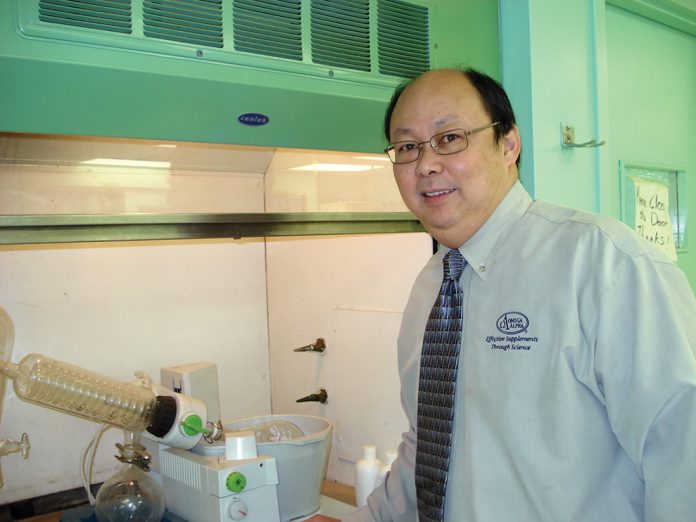
“We thought, we’re just a small company starting up – one  day we will be a much bigger company,” says founder and custom manufacturer Dr. Gordon Chang, on how they chose their name. Chang received his Ph.D. in physiology from the University of Toronto, Institute of Biomedical Engineering, more than 20 years ago.

Soon after, Chang chose a career in OTC pharmaceutical manufacturing for natural health products. After jumping through hoops for Health Canada to become GMP certified, and while making contacts in the industry and landing some small U.S.-based contracts, Chang knew that what he wanted to do was possible. “When we started, it was in 1992,” he recalls, “You have to remember back then there was just a sprinkling of interest in natural products. You didn’t have a lot of people beating down the door to buy the stuff we were producing.”

The companies that were making money back then were selling items such as multivitamins, sticking with what consumers knew. Natural products hadn’t hit the mainstream yet. “I think that is why we were able to get into the industry,” Chang says. “The competition wasn’t as stiff. If I wanted to get into the industry today, I would have to have a lot more money.”

There have always been skeptics when it comes to natural health, and back then the industry was lacking legitimacy; there were few people accepting natural products as beneficial to their health. “Yet, if everyone sat down to think about it, they would realize that most of the drugs that were available had their humble beginnings from an herb. I always use the classic example of Aspirin,” says Chang, citing the well-known substance that originated from willow bark.

Over the years, the industry has gained credibility, with the general public coming around to believe herbal products could be useful. It also helped to have Chang’s academic credentials to give the company legitimacy, in addition to a pharmaceutical license to manufacture, which encouraged people to believe in the products.


Regulations are good

With the new regulations set by Health Canada, it is a common complaint by many manufacturers that it is very hard to get new natural health products approved. Omega Alpha, however, ultimately sees this as being valuable. “There’s probably going to be products for which we will never be able to get an NPN. There are many reasons for that. One of the major ones is that Health Canada still hasn’t figured out how to handle some of these products. As a company, we’re at the stage where the regulations are a good thing just because the general buying public will have a lot more confidence and trust in the products we produce,” says Chang.

In terms of Omega Alpha’s top sellers, the products the public is comfortable with, such as vitamin D, are very popular. Chang says, “We have a calcium magnesium product in liquid form and also in a capsule. The difference with this cal-mag is that we have included the trace minerals you would normally need, which are not always found in cal-mag products. We have detox products – our Lung Flush, Liver Flush and Kidney Flush. We have an Active Living line, which includes bone and joint products, and we have probiotics and more.”


Products for pets

Always on the edge of innovation, Omega Alpha manufactures a product line for pets. “About 10 years ago we launched a line for the equine market,” Chang recalls. “We are actually the leaders in the equine market in Canada right now. What was happening was that all these people who ride horses had pets, and I kept getting phone calls from everybody asking me, ‘can we use this on our cats?’ or ‘can we use this on our dogs?’ because they were seeing these great results in their horses.”

So after getting repeatedly asked, about four years ago Omega Alpha decided to launch a pet line. North Americans treat their pets like family, and pairing the needs of these pet owners with a 20-year-old, highly trusted brand means it’s no surprise this is a growing product category. They started off with products such as detox for pets, as well as focusing on joint health and probiotics.

“We did not go off the deep end and say, ‘we will cure your dog of cancer’ or something like that,” Chang says. “To be fair, when we first came on the market with it, it was like pulling teeth, like anything else. Yet we sank money into the advertising; we did a lot of trade shows, and so on.”

Chang adds that Omega Alpha is not at the point where the pet product line can be a stand-alone, yet they are planning to go into the U.S. with some of their equine and pet products soon. “And the reason we’re going in with those two is because we’re so very unique in that area.”

When asked what he predicts in terms of product development in the next 10 or 20 years, Chang says, “There’s going to be a lot of opportunity out there for different and new products to come down the pipe. Yet again, with the new regulations in place, it’s going to be a lot more difficult to introduce some of the new ingredients. What I see happening will probably be a lot of different combinations of known ingredients that are already out there.”

A great resource Omega Alpha offers consumers is the opportunity to learn – from Chang and his education team – about the products, including what’s in them, how they work and what health issues the products are serving. “We have set up teleseminars that you can call in to, or join us on the Internet for education on our products and on different themes, such as boosting the immune system, what exactly that means and the science behind it,” says Chang.


The Rwanda vitamin

Another way Omega Alpha reaches out is to make many charitable donations. The one that seems to be the most noteworthy comes in the form of a vitamin supplement. Chang created a multivitamin specifically for a Rwandan orphanage and the people there who were malnourished. For a manufacturer of supplements, this makes perfect sense. Chang calls it “the Rwanda vitamin.” He understands that one vitamin isn’t going to change a life, yet what he is trying to do is “contribute to the health and well-being of these severely disadvantaged kids.”

Omega Alpha has also donated to an order of nuns working in Guatemala where many of the orphans are very malnourished. They have used the parasite cleanse and nutritional products to help nourish the kids back to good health.

In addition, they also donate human, pet and  equine products (or money) to organizations such as the Thunderbird Adoption Society, Out in the Cold and numerous local and national animal shelters. Chang’s generosity far exceeds his memory and even he was surprised to learn (when we checked with his staff) that Omega Alpha donates annually to about 100 charitable, business, spiritual and athletic organizations.