All In Nutritionals
Home Blog Page 314

Grocery chains with apps are on the rise

0
Grocery chains with apps are on the rise

Grocery stores are hastily launching apps to expand into the mobile market. According to data from the Interactive Advertising Bureau, Canadians spend 1.9 hours per day on their mobile devices, and they prefer spending time on mobile devices over desktop computers, so it’s no surprise that grocers are in a rush to launch their own apps.

Applications that merely have basic general information such as store hours and locations have improved and grown with new features added, and shopping deals exclusive to the users.

Last September, Metro offered an app feature that allows users to prepare healthy shopping lists for themselves as part of Metro’s “My Healthy Plate with Metro” program that promotes healthy eating and helps customers choose healthier food alternatives. Users can scan bar codes with their phone to add products to their lists. The My Metro app has been a huge success so far as 70 per cent of users have downloaded the four updates of the app that have been available since the launch.

UK grocery chain generates electricity using food waste

0
UK grocery chain generates electricity using food waste

For the first time in history, UK supermarket chain Sainsbury’s will be using electricity generated entirely by its own food waste and leftovers for their stone in Cannock, Staffordshire, UK.

The leftovers will be transported to an anaerobic digester, where the energy will be turned into electricity and used to power the store through a privately owned power line that is one mile long.

The store will be relying entirely on this electricity that is essentially generated by the bacteria found on the rotten food. This provides enough energy to sever its connection to the national power grid altogether.

Sainsbury’s has previously announced that they’re using anaerobic digestion to produce enough electricity to power 2,500 homes.

Steven Singer launches Live Love Snack

0
Steven Singer launches Live Love Snack

Steven Singer, the co-founder and president of Glutino gluten-free products, has launched a new company called Live Love Snack. The focus of the company is to help America snack smarter through creating delicious, healthier snacks in several different categories.

Montreal-based Glutino was launched in 1999 and lists sales over $65 million annually. The company has since been acquired in 2011 by Claridge and later, Boulder Brands.

Live Love Snack will have an accelerated expansion due with an investment from BrandProject LP, a New York and Toronto-based firm. It builds, buys and makes seed stage investments in disruptive consumer products. Andrew Black, CEO of BrandProject, will join Live Love Snack’s board as part of the investment.

“I am passionate about giving people smarter choices,” says Singer. “People should not have to choose between great taste and health At Live Love Snack, we are committing ourselves to offering high quality, delicious snacks that people can feel good about eating.”

The first product line to be produced will be multigrain chips that will be available across several channels, including grocery stores, natural food retailers and big box stores across North America. All of Live Love Snack products are all natural, certified gluten-free and non-GMO Project verified.

Purica hires a new Account Manager

0
Purica hires a new Account Manager

Purica has hired Susan Deley-Gray as its new account manager for Southwestern Ontario. Susan has nearly 20 years of experience in the health food industry, including in a sales role as a former store owner. To connect with Susan, contact her at sue@purica.com.

Nutrition 21 settles patent and trademark infringement lawsuit with SuperNutrition

0
Supreme Court of Canada dismisses Sobeys’ appeal

Nutrition 21 LLC, a subsidiary of JDS Therapeutics LLC, has entered into a confidential settlement and license agreement with SuperNutrition Life-Extension Research, Inc.

The settlement is in regards to a patent and trademark infringement lawsuit against SuperNutrition in the Southern District of New York, claiming SuperNutrition used Nutrition 21’s Chromax trademark and chromium polynicotinate in branded multivitamin products.

While the settlement remains confidential, SuperNutrition will license several Nutrition 21 patents and trademarks and use Nutrition 21 ingredients in its own formulations.

“We are delighted that we were able to reach a customer-driven solution with respect to our dispute with SuperNutrition,” says Gregg Bresner, chief financial officer of Nutrition 21. “SuperNutrition has been an innovative company in the market for decades and we are excited to provide Niachrome to SuperNutrition for use in its branded family of multivitamin products. We believe this reaffirms the strength of Nutrition 21’s trademarks, and its patent portfolio which covers compositions and uses of a number of our products, including our Niachrome chromium polynicotinate.”

Google develops overnight shipping service

0
Google develops overnight shipping service

Search engine giant Google’s service of delivering goods to doorsteps is called Google Shopping Express, and it has recently started offering overnight shipping to its Northern California customers.

Google’s overnight shipping service is in direct competition with its rival Amazon and other online retailers. According to a Business Insider report, Google has made a $500 million investment in Google Shopping Express, which is on the same line as Amazon’s AmazonFresh delivery service.

Google Shopping Express’ overnight shipping service will extend from Fresno to Porterville in the south and Crescent City in the north. These services by online retailers are offered to appeal to customers who don’t prefer brick-and-mortar shopping to online. Online retailers like eBay and Amazon are developing their services for same-day delivery, with the most recent example of Amazon having expanded same-day delivery to Dallas and San Francisco in May.

Rob McLean, Zellers Pharmacy

0
Rob McLean

Giving People What They Want

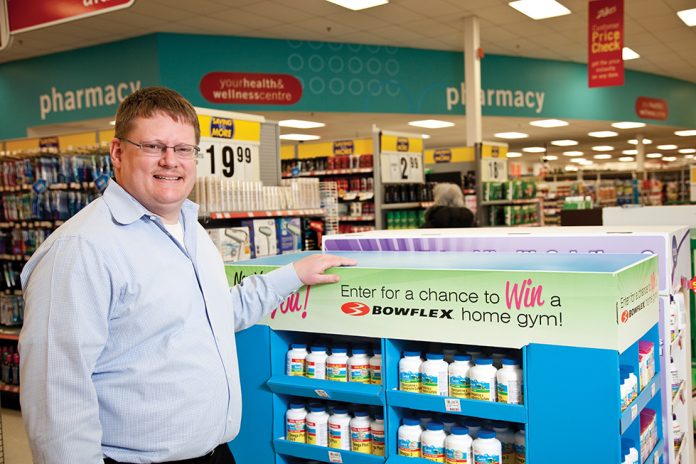
Rob McLean is the Over The Counter (OTC) category manager for Zellers Pharmacy, which is under the Hudson’s Bay Company umbrella. With 23 years of experience, Rob definitely has his finger on the pulse of retail

By Ron Garant

Photography by James Merritt


Right after graduating from Humber College, Rob started to work with Shoppers Drug Mart as a stock boy, became a receiver, then assistant front-shop manager and finally front-shop manager. Not only was this position a great learning experience, it also laid the foundation for his career in retail. He then worked for approximately five years with Big V in a similar role before Shoppers Drug Mart acquired the company. While front-shop manager, an opportunity for advancement came up at Walmart as an assistant buyer; this was his move into a head-office environment.

The transition from front-shop manager to head office was somewhat of a culture shock for Rob: “I was used to being my own boss,” he says. “When I got to Walmart, I was petrified of public speaking. My very first day I had to face that fear head on by being called up to the front of an auditorium to do the Walmart cheer (‘Give me a W…W!; give me an A…A!’) and after being promoted to buyer (other retailers call this position category manager), had to present my offerings at meetings to managers from all across Canada, and they are not a reserved group of people – constantly yelling questions and comments at you.”

During this time Rob was involved with the design, set up, and assortment of Walmart’s Nutrition Centres. He worked closely with the various vendors in a hands-on role setting the counters, merchandising the sections and determining the product mix. “I learned more about the health category at Walmart in five years than I did in the previous ten,” he reflects. Rob also was able to travel across Canada to visit various Walmart stores, which gave him a better understanding of the regional differences in the retail environment, specifically in the health categories.

Rob then had an opportunity to take on the role of category manager at Shoppers Drug Mart. In this role, he further developed his understanding of the impact of the health categories as a drug retailer that focuses on pharmacy.

Rob feels that having come up through the store ranks has helped him be a better category manager: “I’ve always had an appreciation for the stores because if you’ve never worked in a store, you might not understand how your decisions impact them. Is the decision you’re making greater than the expense and the time that the store is going to have to take to do it?”

In 2005, Rob joined HBC as category manager for both The Bay and Zellers pharmacies with responsibility for the Vitamin, Diet, First Aid, Footcare, Family Planning, Medicinal and Feminine Hygiene categories.

At Zellers, Rob felt the greatest opportunity was to show senior management the importance of the pharmacy department and what it could bring to the overall business. “In the five years I’ve been at Zellers, the Pharmacy Department has come a long way in gaining support,” he states. “Senior management can see that it draws consumers into the store versus just a service that’s offered. I think large retailers struggle with having customers that shop in their stores regularly, yet still don’t know they have a pharmacy.” To create awareness for its pharmacy, Zellers utilizes marketing to educate their customers about their pharmacy benefits and enlists services such as patient records, patient counselling, drug information and interactions, as well as their WellAware program.

There have been other successful developments for the front shop of the pharmacy: “I think that through our team, we’ve taken it to a whole new level,” Rob says. “[When I came] to Zellers, the pharmacy had never had a front-page flyer feature; displays were minimal and stock was only on shelves. Now we have pharmacy products promoted with significant flyer ads, supported with in-store activity like vendor pre-packs and even, in some cases, large pallet displays. There is a new look in Zellers’ pharmacies that is quite contemporary. The pharmacy has been given much better focus. The pharmacy in the Scarborough Zellers was a paradigm shift – as soon as you walk in, (you see) the pharmacy. (Instead of) 10-foot high dark aisles, the counters are very low so you can see right across to the other end – it’s bright and clean. We’ve had really good results from that store, so we know it’s what the people want – they want to be comfortable and have a good shopping experience. That decision was made for the right reason and it’s paid off.

“I observe competitors closely by monitoring their promotional activity, visiting their stores and keeping up with industry news,” he says. “Keeping my ear to the ground is also important. To stay ahead of the curve, you have to be willing to take chances and have the support of management.”


Vendor Relationships

In these busy and challenging times, Rob is always looking for the next new thing and he appreciates it when vendor representatives are succinct and understand what he needs to see. He also wants them to be able to do what they say they’re going to do and likes them to have a plan B, in case things don’t go the way they had hoped. So what kind of products does he look for?

“You’re always looking for the diamond in the rough,” he says, “Or maybe something the other retailers haven’t picked up on yet; [even] a run-of-the-mill product that the vendor is going to spend a lot of money on to promote and [therefore help] you do your job. I also might go with someone that I’ve had a relationship with before or someone that has a good reputation. So many times, people come in and (tell you) it’s the greatest thing since sliced bread, we’re going to spend 5 million dollars on it, it’s going to be a household thing – and you don’t know who these people are, you’ve never seen them before, no one’s heard of them. So you back away a little bit, [compared to] if it’s someone you’ve done business with over the years and they’ve never left you out in the cold.”


Buying Decisions

Today’s business environment has changed. “You [used to know] in your gut that something was going to sell or not,” Rob states. “Now it’s more, ‘Well, how do you know that?’ Now you have to be fiscally conscious when you make a decision and a lot more is done by committees.” He also finds that people move around in their jobs more: “It seems like everyday we have a new account person or something else. So often we think we just got that (person) trained, now they’ve been promoted and we’ve got someone new and (have to) start all over again. On both sides, a lot of it is understanding how Zellers works as an organization – when we need product and how we need it as well as with the vendors. You lose so much when you have to re-establish that instead of just [having to ask], ‘What do you have that’s new?’ or ‘When can we do something?’”


Personal Lifestyle

As a divorced father of three, Rob is devoted to his children. “When I have my kids, I don’t have time for anything else,” he states. “They’re 15, 13 and 10, so whatever they’re up to or involved in takes a lot of my time. Outside of the kids, I’m a big Toronto Maple Leafs fan, a Blue Jay fan, I love watching sports.” His personal goals are to continue to grow as a person, add value to Zellers, ensure a proper balance between work and his personal life and, as part of a Health Team, help improve the health of Canadians.


The Future

Rob plans to continue to help grow profitable sales for Zellers, gain market share and build the private label business, ensuring the success of the HBC Pharmacies. “As consumers expect more from life, do not want to age, are more active and more knowledgeable, the health segment will become even more important,” he offers. “The retailer will have to work harder to satisfy the wants of the consumers. All retailers dealing in heath will be chasing this business. Competition will be fierce!”


The Hudson’s Bay Company became sole owner of Zellers in 1978 and maintained its growth tradition, acquiring the Towers chain in 1991, Woodward’s in 1994 and the Canadian Kmart locations in 1998.

Monfitello Inc.

0
Monfitello Inc.

By Ron Garant
Specializing in the packaging of food products in tubes, Monfitello is the food division and sister company of Montebello Packaging, a leading supplier of aluminum and laminate tubes for the pharmaceutical, industrial, and cosmetic industry. The establishment of Monfitello makes it the first and only Canadian manufacturer of food and beverage products in tubes. In addition, Monfitello is the founder and Canadian distributor of Intuition™ add-to-water herbal drink concentrates.

Relatively new to the North American market, tube-packaged food has been popular in Europe, South America and Asia since the 1920s and can be used for numerous food products from condiments such as ketchup, mustard and mayonnaise, to pastes, chocolate and even beverages. Tubes provide convenient and reseal-able packages that retain the product’s flavour by keeping the air out, and are easy to store. You can forget about can openers and difficult jars – no muss, no fuss, you just squeeze out what you need and replace the cap to re-close. Plus, they’re lightweight and shatterproof, and since they’re made of 99.8% pure aluminum, they’re easy and efficient to recycle.

Today’s busy lifestyle and environmental concerns create the perfect opportunity for Monfitello to introduce this type of packaging and they are actively seeking opportunities to partner with brand owners and retailers to develop new products as well as refresh some classics.

Perfect for outdoor activities such as hiking, camping, picnics, etc., they are also great for travelling – the 100ml clear laminate tubes meet most airline carry-on restrictions for liquid products and are already retailing at international duty-free shops, including Montreal, Ottawa, Halifax and Winnipeg.

The possibilities for foods in tubes are endless: Imagine if you will – butter, cheese, pet food, condiments, cooking oil, honey, natural health foods, fruit toppings, beverages and more. Speaking of beverages:


Intuition

Identifying today’s women on-the-go, Intuition was created as an add-to-water mix that offers a variety of health benefits without having to swallow supplements. Utilizing their convenient tubes, it’s easy to dissolve, easily absorbed into the body and can be mixed with hot, cold or sparkling water. Monfitello teamed up with Natures Formulae Health Products to source herbal ingredients and develop Intuition drink concentrates. Monfitello also partnered with professional mixologists, The Martini Club International Inc. to ensure delicious flavours. “Working together with Natures Formulae and The Martini Club, we’ve successfully created the perfect balance of delicious herbal, healthy blends that taste great,” Betty Pilon, president of Monfitello says.

There are currently two mixes available, My Vitality and My Waistline:

My Vitality is a sweet and spicy wild strawberry flavoured caffeine-free concentrate that contains red clover, Korean Ginesing, Siberian ginesing, fo-ti-tien, ginkgo biloba, California poppy, licorice root, Oregon grape, burdock root, Jamaican sarsaparilla, Echinacea and cayenne, to provide balanced energy levels and promote physical and mental vitality. It’s low in calories (36), gluten-free with no sugar added.

My Waistline offers a tangy lemongrass lemonade flavour that includes appetite suppressing and body cleansing herbs. It’s designed to stimulate one’s metabolism and facilitate the way the body processes food. Ingredients include St. John’s Wort, Hawthorn berries, plantain leaf, yerbe maté, bladderwrack seaweed, parsley root, dandelion root, guarana seed, fennel seed, cascara bark, hibiscus, papaya leaf, oat tops, black seed, passionflower, cornsilk, valerian root, blue flag root and gymnema. It contains 33 calories per tube.

Both mixes are available for purchase in 3-tube packs for $5.99 or 14-tube packs for $24.99 CAD, and additional flavours are planned to be introduced. They are available in health stores across Canada and online at www.drinkintuition.com.

Natures Formulae Health Products, of Kelowna B.C., is a progressive Canadian developer and manufacturer of herbal health products, and was founded in 1975 by Barbra Johnston, who holds a Bachelor of Science degree from Brigham-Young University. They produce over 5,000 herbal-based products and provide a large inventory of herbal ingredients.

The Martini Club is based in Toronto and specializes in custom drink design, mixology training programs and specialty bar service. Mixtress Michelle Hunt is Intuition’s “Flavour Maker,” and takes pleasure in combining a wide range of tastes, using fresh herbs and spices in unexpected ways. Interestingly enough, in addition to developing Intuition’s formulations, The Martini Club developed easy-to-make Intuition cocktail recipes, including The Skinny Collins (gin, lemonade and My Waistline) and The Vitality Daquiri (spiced rum, sour mix and My Vitality). Talk about a healthy happy hour!

Mark Rosenhek, Markie Pharmacy

0
Mark Rosenhek

A class Act

Ten years after gracing our first cover, Toronto’s Markie Pharmacy continues to thrive based on good, honest and professional service

By Carlos Weigle

Wardrobe Styling by Kelechi Achonu
Mark Rosenhek is a fortunate man: he does what he has always wanted to do (since he was a little kid) and still enjoys it immensely. His career as a pharmacist started at a Shoppers Drug Mart in downtown Toronto, where he spent almost 15 years. Eventually he decided to open his own independent pharmacy nearby, and many of his customers opted to follow him. When Shoppers closed their location, a large clientele was left unattended. Those downtown customers were probably very happy to find out Rosenhek was setting up shop in the neighbourhood. That certainly helped Markie Pharmacy get established. However, it was just a good start; you need more than that to keep yourself in business.Ten years measured in business time can be close to an eternity. Long gone is the era when stores would remain open for decades without having to constantly reinvent themselves. Life cycles have become increasingly short and consumer loyalty is very fleeting. That’s why it’s refreshing to know that the pharmacist who was featured on our first cover, 10 years ago, is not only still open for business, he’s doing very well, thank you

Rosenhek had a brilliant idea: focus on natural health and alternative medicines at a time when very few pharmacies were interested in that. “Right from the beginning, I knew I didn’t want it to be just like another pharmacy and we started offering alternative products, just when the trend towards natural health was taking off. The timing was wonderful. You know they say ‘timing is everything’ and that is true,” says Rosenhek.

The decision to go solo was certainly the right one. As he explains it: “I make a better living here doing half the volume I did [at Shoppers Drug Mart], because of all the expenses I had there; I had a staff of 25 people, for instance.”


Building relationships

Another very smart move was creating relationships with the naturopathic and homeopathic doctors practising nearby. Before Rosenhek opened his doors in the posh Yorkville area, many of them had to carry products since certain brands were hard to find elsewhere. Most of the practitioners were happy to let a pharmacy take care of that part of the business. “They’re grateful that they don’t have to be sellers, because they’re too busy, their business is treating clients and not being salespeople,” says Rosenhek.

The relationships have only expanded and grown stronger over the years. However, changes were inevitable. One of the most noticeable ones is that big pharmacy chains have also been embracing the natural health trend. As Rosenhek puts it: “You go into a Shoppers Drug Mart or a Rexall Pharma Plus now and you can tell they’re less afraid of carrying some of these products that used to be the domain only of smaller pharmacies and health food stores. Mass marketers are getting into – yet still in a limited way – buying from the same suppliers we are.”

Those big companies are, evidently, in a better position to negotiate pricing, solely based on their sales volume. Rosenhek paints the picture: “If someone comes in and says, ‘gee, I bought this $2 cheaper somewhere else,’ we’ll match the price. However that’s not the only issue.” He adds that, “if people want a product they can’t find elsewhere, they will buy it no matter what the price is, and if they want information about it, they’ll come and ask a pharmacist.” That’s where professionals such as Rosenhek can have the upper hand. “Pharmacists at the big chains have many other things to worry about and they really don’t understand too much about homeopathy or herbals,” he points out. “I still think we have an advantage there, however I also think that was the biggest change I’ve seen happening in the last 10 years.”

Needless to say, it wasn’t the only factor that impacted the industry. The new regulations on natural health products, passed in 2004, has had a lasting effect as well. Rosenhek feels times are only going to get tougher, since the authorities seem determined to enforce those regulations. As he points out, “we bring in a lot of products from the U.S. and most of those manufacturers will not comply with Health Canada’s regulations on natural health products. And [the products] will just be banned, illegal. It’s the same with companies from Europe; very few European companies will comply.”

However, Health Canada seems to be only part of that troubling puzzle; other organizations might become involved too. Rosenhek explains: “Health Canada is going to enforce the regulations in the health food industry, yet the Ontario College of Pharmacists, for example, will enforce them from the pharmacy’s point of view, which means there will be at least two different inspection bodies.”


Not a grocery store

Another interesting change observed in the industry was diversification, the inclusion of other items such as groceries. Rosenhek never thought about going down that road: “Other pharmacies can sell food as much as they want. We’re not a grocery store. I pride myself in having a mix of products that are not food.” Rosenhek mentions staffing issues and low margins as some of the reasons that discourage him from selling that type of product. Of course he has other reasons too. “I don’t think that’s the business I want to get into. I didn’t go to school to sell bread, milk and eggs,” he says.

Markie Pharmacy’s success story proves it is possible to do well by sticking to your guns and being the best at what you do. “People come in and they get polite, quick, accurate service in filling their prescription and that’s a draw for them. As opposed to go into a chain where they may tell you to come back in an hour, you’ll get your prescription here in five minutes,” he explains. The fact that the pharmacy is located in an upscale area also determines the types of customers it gets and what their priorities are. “People around here are not concerned about the price of the prescription,” describes Rosenhek, “they want it accurate and they want it fast. That’s what’s more important to them.”

Rosenhek firmly believes that branching out would not have benefited his business. “The profit driver in any pharmacy is the dispensary,” he says. “It’s not the front store only, it’s the prescriptions. That’s changed quite a bit with the new government regulations because of the reduced professional allowances that pharmacists are now collecting. So it has impacted the bottom line, yet, the guts of any pharmacy is still the dispensary.”

In that respect, he adds “we’re fortunate that we have a profitable dispensary volume and we also have a thriving front store with not only supplements – also a large selection of skin and bath products. If you have to choose one or the other, you’d much rather have a busy dispensary and less of a front store.”


Some practices are, according to Rosenhek, becoming increasingly alarming: “I know there are pharmacies and health food stores that people go into and have a list of things to buy and the person behind the counter will say, ‘You don’t need this, you don’t need this, you should buy this and this,’ and they contradict what the practitioners told the patient to get due to the fact that they don’t carry the products being prescribed. We don’t do that. If someone wants A, they get A. If they want B, they get B. If they want information as to which product I think is best, then of course I will give them my opinion.”


Trends, trends and more trends

One thing that can’t be avoided is trends. Customers will be affected by them and will look for the latest, hottest item to hit the shelves. Trends these days tend to invade the market furiously yet fizzle almost as fast. Rosenhek recalls how echinacea, for instance, used to be so popular 10 years ago and now it’s not anymore. He also knows what the current stars are: “Glucosamine was not very well-known for a while and now it’s a top seller in our pharmacy. Vitamin D tablets also do very well. The same goes for fish oils – so much so that we carry about six different brands of it because people want them. If you come into this pharmacy and you want this particular brand, we’ll get it for you because I don’t have a problem ordering it for you. I don’t have a head office; I’ll get you whatever you want. And that’s what people like.”

Another transforming factor in the industry – also seen in other industries, for that matter – is the tendency towards customizing. “We’ve been doing more and more specialized ordering in the last 10 years,” says Rosenhek. That, of course becomes an advantage to him: “Customers will say ‘I go to my local drugstore and they won’t order it. I can’t get this there, can you get it for me?’”

Compounding is another area that has certainly been a cornerstone at Markie Pharmacy. Not only that, it has become a growth factor. “Especially in terms of topical hormones,” describes Rosenhek. “That’s an area that has mushroomed in the last 10 years. We used to prepare 10 topical hormone creams a month, while now we might do 20, 30 and up to 50 a day!”

Success might make some entrepreneurs greedy. Not Rosenhek, though. Many times he’s been asked about opening new locations, yet he’s never been tempted enough to give it a try. He loves his store, his staff (most of whom have been with him since he opened his doors in 1993) and his customers, and just couldn’t stand not giving them his undivided attention. “It’s a fun place to work,” he says. “You never know who’s going to walk in the front door; from movie stars, to models, to singers, to professors, to politicians, you just never know. I love working here. I go away for a few days’ vacation and after a few days I miss it. So here I am, 35 years working as a pharmacist and still enjoying it,” beams Rosenhek.

He knows he could maybe update the store a little bit, especially since that swanky new Four Seasons Private Residences is being built a few steps away. However, being at such a prime location does have its disadvantages (aside from skyrocketing rent, of course). Companies will offer to make his pharmacy over…for hundreds of thousands of dollars! “I’m sure they do lovely work,” Rosenhek says, “but how much am I going to need to sell to make that four or five hundred thousand dollars? I don’t think customers are going to buy more just because the floor is sparkling. They’re buying more because of what’s on the shelf and how they’re treated.” A very straightforward answer from a pharmacist who still believes in old-fashioned – and much needed – honesty, hard work and treating people the way they want to be treated. With a smile and good, professional service.

David Freeman, Health First Network

0
David Freeman

Strength in numbers

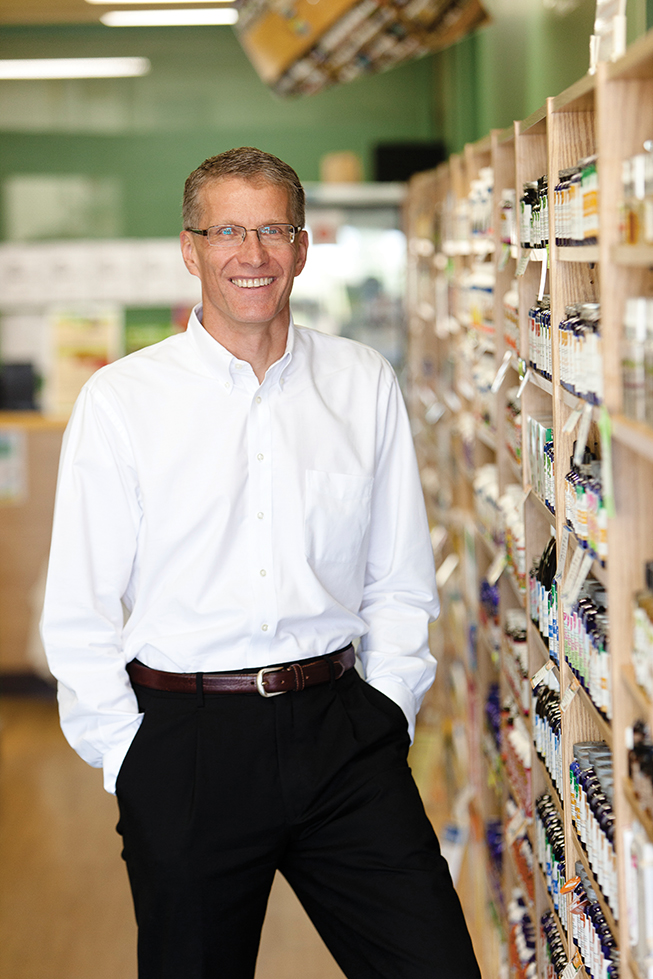
Health First Network has proven to be a powerful tool for independent retailers looking to thrive in an ever-changing market.

By Carlos Weigle  •  Photography by Dean Sanderson


A highly competitive market usually makes business owners overcautious and even a little paranoid. Other stores are often perceived as the enemies and there’s no room for collaboration. That’s why, especially at times like these, it’s important to remember there’s always strength in numbers. Buying groups are clear examples of that.

Eleven years ago a group of Canadian independent health food stores came to that same realization and decided to form what was then called United Health Merchants. The idea behind it was to provide its members with a buying power they wouldn’t otherwise have, making them competitive against large store chains that could obviously negotiate the best prices due to the volume of their sales.

The idea has proven to be a very good one, indeed. In 2004 the organization was rebranded as Health First Network. By 2006, it had 70 members representing 96 stores, and it currently boasts 81 members and 111 stores.


Buying power

David Freeman has been working with Health First Network as its CEO, since 2006. He admits he wasn’t that familiar with the natural health industry, yet he had experienced the power of buying groups firsthand. “I came from the grocery and office product sectors,” he says, “and I worked with a number of buying groups. In particular, in the office product industry, where everything is very commoditized, I watched independent stores almost get wiped off the map unless they were part of a buying group.”

That experience certainly gave him clarity as to what he, the board of directors, and membership could achieve with Health First Network. “When I joined,” he remembers, “We had two things in mind:  that this was certainly a growth industry with ongoing potential, and that the notion of independent stores joining a buying group and collaborating, would be a key success factor.” A lot can change in five years, especially in rapidly evolving times such as these; has Freeman’s opinion changed since? “No, I still see both notions holding true.”

What has changed, then? The organization was restructured to accommodate its growing numbers, for starters. During his first one-and-a-half years at its helm, Freeman helped turn it into a more formal organization, one with offices, employees, and five-year plans. The motivation behind the changes were clear: “Our board, staff and members agreed that we wanted to be a leading retail entity in Canada and that we thought there was an opportunity for us to revolutionize many retailing aspects in our industry.”

In concrete terms, what has that meant? As Freeman describes it, “First of all, we completely overhauled every existing program we had. We went from four flyers a year to six and we’re now planning to move to 12. We completely changed the format, the content, the branding for our programs. We went from no consumer promotions to running regular, national consumer promotions, in many cases, leading-edge ones.”


Taking it online

Online presence is, of course, a key ingredient in the organization’s transformation. As part of its e-marketing program, Health First Network now provides members with their very own websites. Even though they all have a similar look, each member can customize it so that it showcases news and events that are relevant for their stores. Other elements of the e-marketing program are a database with customer contact information and issuing regular newsletters.

Social media is the next step. However, Health First Network prides itself on not rushing into things and getting it right before launching a new initiative. “We advance one step at a time,” says Freeman. “In terms of social media, that means we first built the base platform and now we’re in a position to expand on that.”

Even though technology is undoubtedly taking over pretty much every aspect of the marketing world, stores still find old-fashioned flyers do get their message across. Flyers are also customizable: the store’s name appears prominently on top, “and each member gets to pick whether they want their flyers in French or English, if they want an eight-page supplement or a 12-page supplement and food flyer,” according to Freeman.

In terms of promotions, the organization has given away cars, created in-store contests and championed fundraisers for Vitamin Angels – an organization that provides vital nutrients to close to a million undernourished children – every year.


Pick the right ones

Choosing the right partners is fundamental to creating a strong organization. In the case of Health First Network, there are criteria in place to ensure members are independent, key stores that won’t compete against each other. As Freeman explains it, “our current membership is primarily made up of destination stores, leading stores in any market.” He adds that “We offer our members an exclusive geographical territory. So if the territory is open, and you are the leading store or you’re striving to be the leading store, we’re talking to you.”

Does Freeman foresee a reduction in terms of independent stores that currently populate the market? “I absolutely agree that industries consolidate over time and that the larger, more competitive players have a significant advantage,” he says. Yet he also points out that “my sense of the natural health and organics industry is that it’s only ever grown. This is an industry that has really not had a major setback or decline. Right now there are more independent health food stores than 10 years ago.”

Why the need to belong to a group such as Health First Network, then? Freeman explains it: “I’ve brought in some members, and vendors have said, ‘Why would that store or chain join a group? They don’t need to.’ I respond that they don’t need to join today; they’re looking down the line, they’re looking forward into the future and saying, ‘Some day, it’s going to be very helpful for me to be part of a larger group.’ ”


By the rules?

Consolidation and economic downturns are not the only factors affecting the industry. In fact, new regulations have also been changing the face of the market since 2004. Freeman believes in the importance of having clear rules, without failing to acknowledge some of the difficulties they have created: “We separate the notion of regulations from how they’ve been implemented. Overall, we are in support of some form of regulation. Yes, it costs money for folks to align with them. Yes, there’s work involved. Yes, lines get drawn that we may or may not like. However, if we look at our customers, it’s good to have regulations that say, you can trust what this product is claiming and you can trust what’s in the bottle. That’s why we’re supportive of regulations, partly because we think it will reassure customers, and partly because there are players in our market who probably shouldn’t be there.”

Have there been bumps in the road, though? Freeman certainly believes so. “‘Could the regulations have been better implemented?’ Sure. ‘Have there been problems?’ Absolutely. ‘Are we happy with everything that has happened, or is happening in the rollout?’ No. Yet we’re trying to positively contribute to a good outcome and we do believe that regulations are here to stay and can have benefits if done right.”

Have the regulations, as many claim, limited the amount and kind of products retailers can offer their customers? Yes. Yet again, that can present both disadvantages and advantages to consumers. “There is room in this industry to reduce some SKUs and there’s still an opportunity for customers to have a broad array of alternatives to choose from,” says Freeman. “Products have been removed from the market and others may exit.” What’s the downside, then? According to him, “innovation has slowed because vendors and manufacturers are focusing on and complying with the current regulations and trying to figure out what the future regulations will be.”


Looking forward

The future seems bright, though. “I think, in the longer term, we will return to the kind of innovation we have seen in the past,” predicts Freeman, “we’re just trying to get the ground rules sorted out right now. I’m aware that not all of our members agree with that stance, yet as an organization we are not out fighting the regulations and forecasting the demise of the industry.”

Consumers are also not what they used to be. “I absolutely think that there’s a higher, ongoing growth in concern amongst consumers about health,” says Freeman. “Nowadays there’s a health section in every major newspaper. There’s an increased interest in natural health and organic products, partly because we’ve got an aging population and partly because we’ve got more knowledgeable consumers. A growing section of the market is younger adults, first-time parents who are saying, ‘Hey, it may have been okay for me to eat bologna, it’s not for my kid. My parents took me to fast-food restaurants, yet I am not taking mine.’ They’re very interested in organics and nutrition, and the driver is their child in the home.”

Health First Network offers retailers help in navigating this ever-growing and changing market by providing them with the negotiating power of a buying group, by supporting their efforts with a well-oiled, reliable marketing machine, and through the organization’s private label product family.

Again, caution, has proven to be Health First Network’s best advisor. Even though its brand is slowly growing, Freeman emphasizes it’s not their goal to become a dominant force in the market. As he explains it, “we’re just trying to keep our stores competitive; we launch products either in categories that are highly commoditized – and where a value, private label would be helpful – or where we aren’t able to buy competitively and having a private label as part of the mix helps our stores in those categories.” He adds that “we’re not in the business of making products, we’re in the business of retailing, this is a ‘sidebar’ for us. So, at best, we’re always going to be a step, or two, behind the market’s innovation.”

Transparency is also key in Health First Network’s success. There’s only one initiation and one monthly fee, no hidden costs, which gives members access to all of their services. Some retailers might still question the advantages of joining a buying group. It is certainly an important decision which depends on each retailer’s individual case.

It’s extremely hard to remain competitive in a market dominated by big players, dwindling disposable income and changing rules. As in every aspect of life, there’s strength in numbers and Health First Network is certainly a testament to that.