



Home Blog Page 245

New Study Confirms Stretta Therapy for GERD to be Safe, Effective and Durable

0

Stretta Therapy, a non-ablative radiofrequency treatment for GERD, was called “effective, safe and durable following 15 years of worldwide use” and cited as a “viable complement or alternative to medical and surgical treatment” in a newly-published clinical review of endoscopic techniques for gastroesophageal reflux disease (GERD). Authors Wai-Kit Lo, MD, MPH and Hiroshi Mashimo, MD, PhD of Harvard Medical School, examined multiple alternatives to PPI therapy or surgery, including Stretta and other devices such as endoscopic plication and suturing, as well as injectable and implantable bulking agents. Stretta data includes a meta-analysis of 1,441 patients across 18 studies, and four randomized-controlled trials. The findings have been published online (in advance of print) in the Journal of Clinical Gastroenterology.


“A wealth of research has demonstrated the safety, efficacy, durability, and repeatability of Stretta treatment,” the authors say. “Most important, it does not preclude alternative treatments including medical, surgical, or repeat radiofrequency treatments, and may also provide potential treatment for patients who have failed fundoplication. Stretta is likely the least expensive alternative to medical therapy. This technique should be considered a viable complement or alternative to medical and surgical treatment of GERD symptoms.”


Though PPI therapy is the accepted standard of care for GERD, the authors explain that it doesn’t address the main anatomic and neuromuscular defects underlying GERD. This, together with adverse effects associated with long-term PPI use and a decline in the volume of surgical fundoplication, emphasize the need for alternative approaches to complement medical and surgical treatments.

Can Music Help People With Epilepsy?

0

Scans show brainwaves of those with disorder appear to synchronize with music

According to research presented at the American Psychological Association’s 123rd Annual Convention, the brains of people with epilepsy appear to react to music differently from the brains of those who do not have the disorder.


“We believe that music could potentially be used as an intervention to help people with epilepsy,” said Christine Charyton, PhD, adjunct assistant professor and visiting assistant professor of neurology at The Ohio State University Wexner Medical Center, who presented the research.


Music is processed in the auditory cortex in this same region of the brain where 80 per cent of epilepsy cases originate. Charyton and her colleagues compared the musical processing abilities of the brains of people with and without epilepsy using an electroencephalogram. They collected data from 21 patients who were in the epilepsy monitoring unit at The Ohio State University Wexner Medical Center between September 2012 and May 2014.


The researchers recorded brainwave patterns while patients listened to 10 minutes of silence, followed by either Mozart’s Sonata for Two Pianos in D major, andante movement (K. 448), or John Coltrane’s rendition of “My Favorite Things,” a second 10-minute period of silence, the other of the two musical pieces and finally a third 10-minute period of silence. The order of the music was randomized.


Charyton says brainwave activity in people with epilepsy tended to synchronize more with the music, especially in the temporal lobe, than in people without epilepsy.


“We were surprised by the findings,” said Charyton. “We hypothesized that music would be processed in the brain differently than silence. We did not know if this would be the same or different for people with epilepsy.”


Charyton believes music might be used in conjunction with traditional treatment to help prevent seizures in people with epilepsy.

ICMCM, the world’s leading Chinese medicine fair, opens this week

0
ICMCM

From the 13th to 15th of August, the latest in Chinese medicine products, industry trends and technology will be displayed at the 14th edition of the International Conference and Exhibition of the Modernization of Chinese Medicine and Health Products (ICMCM). This year’s fair, jointly organized by the Hong Kong Trade Development Council (HKTDC) and the Modernized Chinese Medicine International Association (MCMIA), will take place at the Hong Kong Convention and Exhibition Centre.

The event welcomes more than 120 exhibitors from nine countries and regions. It will also include a two-day ICMCM Conference, the theme of which is “Chinese Medicine Research & Commercialization on Cardiovascular Diseases.” This feature event is exclusively held for trade representatives, and will involve discussions by high-profile speakers from Germany, the United States, the Chinese mainland, and Hong Kong. Conference sessions will focus on such topics as cardiovascular tonic herbs, data mining for coronary heart disease and markets and drug quality.

The final day of the fair, however, will be open to public ticket-holders. The day will emphasize educating the community about traditional Chinese medicine and will give them a chance to learn more about products on the market. Organized events will also take place, including a Chinese Medicine Health Public Forum, during which practitioners will be on hand to discuss the applications of Chinese medicine in everyday life.

“The large number and wide variety of exhibitors at the ICMCM this year highlights the growth and diversification of the traditional Chinese medicine industry,” says Johnny Wan, the director of exhibitions and market development at HKTDC. “Hong Kong, with its East-meets-West culture and transparent regulatory environment, is the ideal place to showcase the attributes of traditional Chinese medicine and introduce related brands, products and services to a global audience.”

GNC delivers another unsatisfactory revenue report for 2015’s second quarter

0
GNC delivers another unsatisfactory revenue report for 2015’s second quarter

GNC Holdings, whose revenue has recently been under pressure, delivered another mildly disappointing earnings report for the second quarter of 2015.

This quarter, GNC reported consolidated revenue of $678.5 million, an increase of 0.5 per cent when compared 2014’s second quarter figure of $675.2 million. Revenue also increased in the company’s franchise segment by 7.5 per cent, but decreased in the retail and manufacturing segments by 0.3 and 5.6 per cent.

The company also reported a net income of $67.4 million for 2015’s second quarter, a decrease of 3.6 per cent when compared with the net income of $69.9 million for the same time last year. Additionally, diluted earnings per share for this segment were $0.79, an increase of 2.6 per cent as compared to last year’s $0.77 per share.

GNC CEO Michael Archbold notes that manufacturing revenue, which was off 5.6 per cent year-over-year, was impacted by lower sales to major customers such as Rite-Aid, Drugstore.com, PetSmart and Sam’s Club.

Archbold also told analysts that part of the revenue decline in the same-store retail segment—where revenue was off 0.4 per cent year-over-year—had to do with terminating the promotion-heavy strategy that was enacted by previous CEO Joe Fortunato.

Fortunato, who left the company in 2014, focused his regime as CEO on an exceedingly promotional culture that sought to generate major retail traffic; however, this did little to improve profitability. Moving forward into the third quarter, Archbold plans to make GNC’s marketing schemes more targeted in order to “neutralize” their past impact on earnings.

CHPA response to new labelling requirements for nosodes

0
CHPA response to new labelling requirements for nosodes

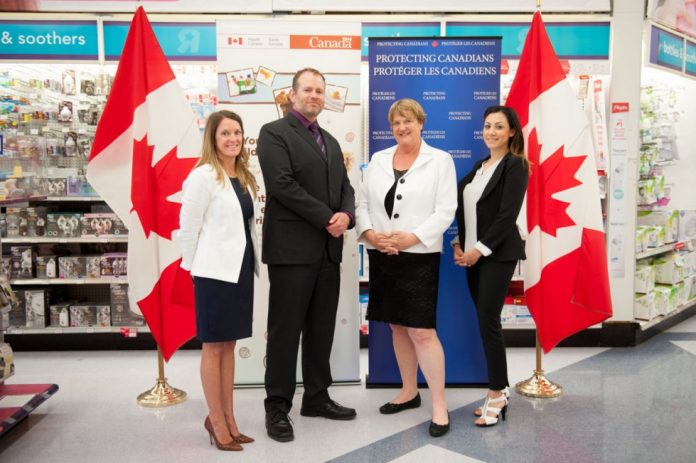
On July 31, Rona Ambrose, minister of health, announced changes for certain homeopathic products that fall under the Natural Health Product Regulations (NHPR), specifically nosode products as well as homeopathic cough, cold and flu products for children 12 and under. According to Ambrose, the government of Canada believes that current package labelling for these products “may not be adequate for Canadians to make informed choices.”

By January 2016, all nosode product license holders are requested to include a new statement on nosode labels: “This product is neither a vaccine nor an alternative to vaccination. This product has not been proven to prevent infection. Health Canada does not recommend its use in children and advises that your child receive all routine vaccinations.”

On August 6, the Canadian Homeopathic Pharmaceutical Association (CHPA) issued a statement on its official website in response to new labelling requirements.

“CHPA was not consulted in the development of this new labelling statement and has expressed concerns to Health Canada about the lack of consultation and the feasibility and timing of implementation. CHPA will encourage Health Canada to conduct the appropriate level and process of consultation before final implementation of this important policy decision.”

CHPA issues a response to new labelling requirements for homeopathic medicines for cough, cold and flu: It’s a mistake

0
CHPA issues a response to new labelling requirements for homeopathic medicines for cough

On July 31, Rona Ambrose, minister of health, announced changes for certain homeopathic products that fall under the Natural Health Product Regulations (NHPR), specifically nosode products as well as homeopathic cough, cold and flu products for children 12 and under. According to Ambrose, the government of Canada believes that current package labelling for these products “may not be adequate for Canadians to make informed choices.”

On August 6, the Canadian Homeopathic Pharmaceutical Association (CHPA) issued a response on its website, saying that removal of health claims and indications for use for children of 12 years of age and under from homeopathic medicines for cough, cold and flu will be a very serious mistake.

The CHPA is unaware of any evidence of health risk “to substantiate the new labelling requirements for these products,” as “homeopathic medicines have decades of history of safe use in Canada with virtually no history of adverse events associated with their administration to children.” Also, the association says there is no evidence of consumer concerns about how homeopathic medicines are currently labelled.

“CHPA also objects to Health Canada having released this policy decision without any prior consultations with CHPA, health care practitioner associations, consumer associations and other stakeholder organizations whose views are normally sought in a transparent consultation process. There are alternatives to this policy decision to enhance consumer understanding and informed choice and Health Canada is obligated under the government of Canada’s Federal Regulatory Policy to take these into consideration in a transparent public consultation process.”

CHPA issues a response to new labelling requirements for homeopathic medicines for cough, cold and flu: It’s a mistake

0

On July 31, Rona Ambrose, minister of health, announced changes for certain homeopathic products that fall under the Natural Health Product Regulations (NHPR), specifically nosode products as well as homeopathic cough, cold and flu products for children 12 and under. According to Ambrose, the government of Canada believes that current package labelling for these products “may not be adequate for Canadians to make informed choices.”


On August 6, the Canadian Homeopathic Pharmaceutical Association (CHPA) issued a response on its website, saying that removal of health claims and indications for use for children of 12 years of age and under from homeopathic medicines for cough, cold and flu will be a very serious mistake.


The CHPA is unaware of any evidence of health risk “to substantiate the new labelling requirements for these products,” as “homeopathic medicines have decades of history of safe use in Canada with virtually no history of adverse events associated with their administration to children.” Also, the association says there is no evidence of consumer concerns about how homeopathic medicines are currently labelled.


“CHPA also objects to Health Canada having released this policy decision without any prior consultations with CHPA, health care practitioner associations, consumer associations and other stakeholder organizations whose views are normally sought in a transparent consultation process. There are alternatives to this policy decision to enhance consumer understanding and informed choice and Health Canada is obligated under the government of Canada’s Federal Regulatory Policy to take these into consideration in a transparent public consultation process.”


CHPA response to new labelling requirements for nosodes

0

On July 31, Rona Ambrose, minister of health, announced changes for certain homeopathic products that fall under the Natural Health Product Regulations (NHPR), specifically nosode products as well as homeopathic cough, cold and flu products for children 12 and under. According to Ambrose, the government of Canada believes that current package labelling for these products “may not be adequate for Canadians to make informed choices.”


By January 2016, all nosode product license holders are requested to include a new statement on nosode labels: “This product is neither a vaccine nor an alternative to vaccination. This product has not been proven to prevent infection. Health Canada does not recommend its use in children and advises that your child receive all routine vaccinations.”


On August 6, the Canadian Homeopathic Pharmaceutical Association (CHPA) issued a statement on its official website in response to new labelling requirements.


“CHPA was not consulted in the development of this new labelling statement and has expressed concerns to Health Canada about the lack of consultation and the feasibility and timing of implementation. CHPA will encourage Health Canada to conduct the appropriate level and process of consultation before final implementation of this important policy decision.”


Global savoury snacks market to hit $166.6 billion by 2020

0
Global savoury snacks market to hit $166.6 billion by 2020

According to P&S Market Research, the global savoury snack market is set to reach $166.6 billion by 2020, growing at a rate of 7.1 per cent each year.

The global savoury snacks market was valued at $111.1 billion in 2014, with processed snacks accounting for the biggest segment at about $41.5 million for the year. P&S notes that its projected market increase has to do with the increasing demand for savoury snacks in developing countries, such as India, where the category is forecasted to grow at around 16.6 per cent each year until 2020.


MORE INDUSTRY NEWS


Although the market is set for big growth, P&S says that some healthy alternatives, such as fresh fruits, juices and bakery products were hindering some potential growth for the sector. This is due to an increased consumer demand, especially in western countries, for less processed ingredients in food products.

Kellogg’s to remove artificial ingredients from cereals, snacks

0
Kellogg’s to remove artificial ingredients from cereals

With consumer demand for less artificial food products on the rise, Kellogg’s has decided to go all-natural.

The 109-year-old company, whose products have been staples in the breakfast world for decades, noted on Tuesday that it would aim to stop its use of artificial colours and flavours by the end of 2018. As of now, says the cereal giant, around 75 per cent of its products are being made without these ingredients.


MORE INDUSTRY NEWS


Kellogg’s is just one in a string of North American food companies to remove synthetic ingredients from products due to health concerns. General Mills also noted in June that it plans to have 90 per cent of its cereals free of artificial colouring and flavouring by 2016, up from its current standing at around 60 per cent.

The growing consumer preference for less processed foods has also recently shrunk the sales for both of these companies. While the second-quarter revenue that Kellogg’s recently reported topped analysts’ expectations, it still showed a 5.1 per cent decline in sales. This was the seventh time in eight quarters that sales have fallen for the company.

Sales in the company’s U.S. snacks business—its biggest industry—fell 2 per cent, while sales in the U.S. morning foods business, which includes cereals, fell 2.2 per cent.