



All In Nutritionals
Home Blog Page 246

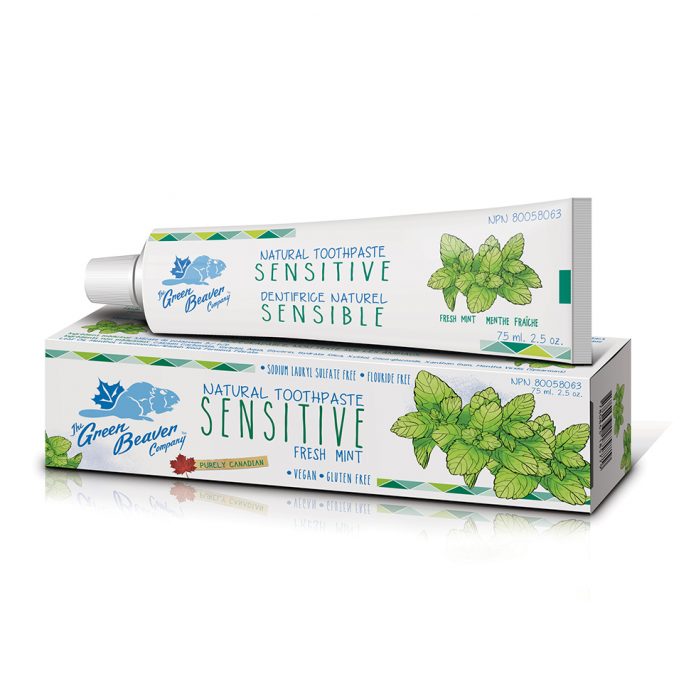
Green Beaver releases new toothpaste

0
Green Beaver releases new toothpaste

Do you have a toothpaste for sensitive teeth?”

That has been one of the most frequently asked questions since the company first introduced its line of toothpastes 14 years ago.

To answer this question, Green Beaver has now created Canada’s first fluoride-free natural sensitive toothpaste for adults and children, 12 and older.

“We started shipping to our distributors last Friday,” says Alain Ménard. “It starts to appear in health food stores across the country next week.” Many studies show that some 20 to 30 per cent of the population has sensitive teeth.


MORE INDUSTRY NEWS


The toothpaste contains the maximum strength of naturally occurring potassium nitrate allowed by Health Canada. Mineral-sourced potassium nitrate has been clinically proven to helps reduce painful sensitivity of the teeth to cold, heat, acids, sweets or contact. Green Beaver’s sensitive toothpaste can also progressively shield dental nerves for lasting sensitivity relief when used regularly.

Made entirely with natural ingredients, this toothpaste does not contain synthetic foaming agents, artificial sweeteners, colours, microbeads or preservatives. The Company believes that toothpaste should be safe to swallow and should not harm our environment.

This toothpaste will naturally whiten teeth and remove stains with extra fine mineral silica. Xylitol derived from sustainably grown birch and other hardwood trees will help to clean and brighten teeth. It also contains a novel radish extract to help eliminate bacteria that can cause bad breath. Green Beaver’s natural sensitive toothpaste is flavoured with refreshing organic essential oil of spearmint and menthol.

Kyolic Aged Garlic Extract by Purity Life

0
Kyolic Aged Garlic Extract by Purity Life

[youtube]S8P3gwuXwJI[/youtube]

Researchers, health professionals and patients to work together to help Canadians living with hepatitis C

0

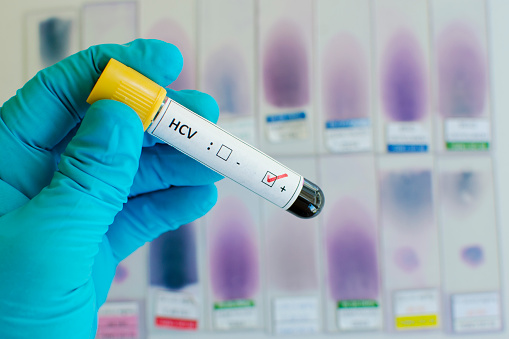
On July 27, Rona Ambrose, minister of health, announced $4.5 million dollar investment in a new national network focused on improving the health of Canadians living with hepatitis C and preventing new infections. The announcement was made in advance of World Hepatitis Day on July 28.


“Our Government is committed to working with provinces, territories and other partners to address the challenge of hepatitis C in Canada,” Ambrose says. “This network will be an important resource as we work together to raise awareness, prevent new infections, and improve the health of Canadians living with hepatitis C.”


In 2010, the World Health Organization along with the World Hepatitis Alliance made World Hepatitis Day one of only four official disease-specific health days. Celebrated annually on July 28, the initiative raises awareness about viral hepatitis.


The National Collaborative Hepatitis C Networkwill be led by Dr. Naglaa Shoukry, a scientist at the Centre Hospitalier de l’Université de Montréal Research Centre (CRCHUM) and an Associate Professor at Université de Montréal, and involve more than 60 researchers, health professionals and partners across the country. Through the network, funded through a partnership between the Canadian Institutes of Health Research and the Public Health Agency of Canada, Dr. Shoukry and her team will work to improve prevention strategies, enhance access and adherence to treatment and better understand the health challenges of Canadians living with hepatitis C.


“Our network is guided by the overall goal of eliminating hepatitis C in Canada,” says Dr. Shoukry. “Through a continuous pipeline from discovery to implementation, we intend to reduce transmission of the virus through novel prevention strategies and vaccine development, increase the number of those cured of infection in particular in vulnerable populations through innovative treatment strategies and cascade of care, and improve health outcomes among those living with hepatitis C.”

Renew Life releases new chewable probiotic for kids

0
Renew Life releases new chewable probiotic for kids

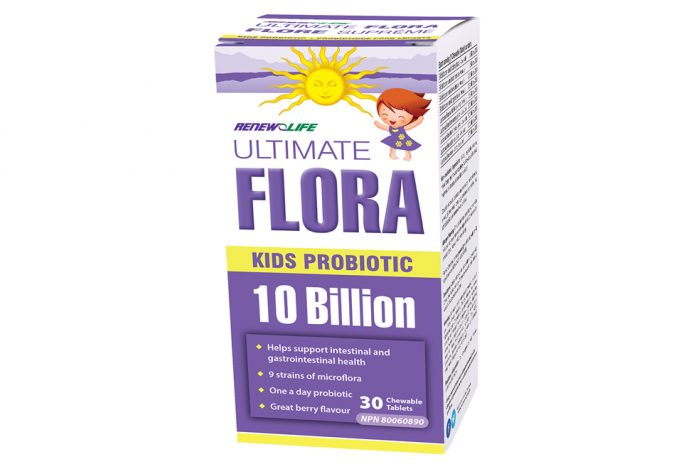
Renew Life recently announced the launch of a new child-friendly product following the trends of the probiotic health surge.

The Ultimate Flora Kids Probiotic, as it is called, is said to deliver the benefit of 10 billion useful bacteria selected from nine strains that are prevalent in a child’s digestive tract.

[blockquote style=”center” color=”#0a0909″ bg_color=”#faf0f0″ border_color=”#ab1313″]“Increasingly consumers are realizing how important probiotics are to the health of their entire family,” said Louise Vokins, marketing manager at Renew Life Canada. “For that reason, a high potency children’s probiotic was a natural addition to the award-winning Ultimate Flora line of probiotics. At Renew Life we are a company that specializes in digestive care so every formula is created based on this knowledge.”[/blockquote]

The four bidifobacteria, which are often overlooked in children’s probiotic formulas include, Bifidobacterium bifidum, Bifidobacterium infastis, Bifidobacterium Breve and Bifidibacterium longum.


MORE INDUSTRY NEWS


The company says these chewables have great taste without any added sugars and are appropriate for children aged three and older. There is the option of choosing FloraBABY powder for those younger than three.

This product also contains a therapeutic dosage of Lactobacillus bacteria, which have shown to help alleviate allergies and skin conditions such as eczema and dermatitis.

U.S. FDA reveals confusion regarding added sugars labelling among consumers

0
U.S. FDA reveals confusion regarding added sugars labelling among consumers

In what seems like a move following pace with Health Canada, the U.S. Food and Drug Administration has announced a plan to redo the nutrition facts panel to include added sugars in it.

The FDA’s consumer study confirmed what an earlier study by IFIC foundation had shown in testing consumer comprehension of added sugars labelling.


MORE INDUSTRY NEWS


The central point to the added sugars labelling was the attempt at assessing how labelling added sugars in products affects the ability of consumers to identify the total number of sugars in what they’re buying.

[blockquote style=”center” color=”#0f0606″ bg_color=”#f5eded” border_color=”#b80d0d”]“A key question to answer in our consumer research is whether or not an ‘Added Sugars’ declaration on the NFP provides clear information that is well understood by consumers that would be used appropriately in efforts to make informed dietary choices,” said co-author Kris Sollid, RD, IFIC Director of Nutrients Communications. “The short (and sweet) answer…providing added sugars information significantly decreases the ability for consumers to accurately identify the total amount of sugars in a product.”[/blockquote]

Research shows that when asked to identify the total amount of sugars in a product, 92 per cent respondents were able to do so correctly when viewing the current label format where ‘sugars’ are listed and ‘added sugars’ are not.

However, fewer than 55 per cent people were able to get it correct when viewing a label that identified ‘sugars’ and ‘added sugars’ separately.

In Canada, nutrient labelling has recently undergone several changes. The movement has required all labels to clearly identify the daily nutritional value for consumers, focusing on per cent daily value and serving size. The Canadian government believes that giving this information on nutritional labels will help consumers choose foods that have more of the nutrients they want, such as fibre and calcium, and less of those they don’t want, such as saturated and trans fats and sodium.


HealthWave: creating your online dispensary

0

As a medical practitioner, you have probably experienced the hassle of managing a physical inventory. HealthWave’s Smart Dispensary promises to help you with their new approach, transforming your traditional dispensary into a virtual platform.


“Our goal is to make it easy for practitioners to prescribe and fill nutraceutical protocol,” says Kyle Braatz, the CEO of HealthWave. “Practitioners use this software to write prescriptions, patients use this software to fill these prescriptions and we handle everything else.”


HealthWave was founded in 2012, and Braatz says it is a brainchild of his co-founder’s wife, who is a naturopathic doctor. After starting her own practice, she faced some challenges, such as not being able to create a comprehensive protocol, feeling like she had to prescribe what was on her shelf, rather than what was best for her patients. That’s when Braatz together with his co-founders Brad Dyment and Chris Wise realized the need to create a tool that would benefit both practitioners and their patients.


This is how it works. You start by making a product recommendation to your patient accompanied by a personal message, instructions and any other relevant documents, which are then sent to your patient’s email.


If your patient is not tech-savvy, they can check out in your clinic using a computer, laptop or tablet or call the HealthWave ordering line from the comfort of their homes. Once the purchase is complete, it’s processed by HealthWave, the funds are transferred to the appropriate parties (practitioners, vendors, etc) and the order is shipped to your patient’s door. HealthWave is absolutely free to join and it takes only a few minutes to sign up. A recently introduced feature also allows you to invite other practitioners and staff members of your clinic to join your HealthWave account.


According to Braatz, the goal of HealthWave is not only to save your time when it comes to writing an efficient protocol, but also to help your patients who will have all your product recommendations stored in one place. Complementary shipping is offered for orders over $125 and on every patient’s first order in the US. The order usually ships within three business days.


According to Braatz, HealthWave helps take a more integrative approach to healthcare, as the platform provides a smart way to prescribe and fill a more integrative protocol.


“It’s replacing this traditional in-house dispensary, letting the doctors focus on their patients’ health rather than managing an inventory.”

New vending machines in Europe serve fresh organic produce

0
New vending machines in Europe serve fresh organic produce

On-the-go diners in Paris will have another option to satiate themselves – a healthier option: organic produce.

A system designed by French and Scottish entrepreneurs have rehashed the idea of providing pre-cooked food to busy customers by replacing the burgers and chips with fresh and local produce.


MORE INDUSTRY NEWS


According to an article in The National, Joseph Petit, who owns two such stores in Paris, runs the locations without a staff. Designed to serve a fast-paced generation, the stores carry products in metal cubby holes.

Each box contains packages containing fresh fruits and vegetables such as strawberries, carrots, spring onions or freshly laid eggs. Products will depend on availability.

The customer picks up the meal, pays at a console and can begin enjoying the assortment immediately.

In Scotland, the same business plan is being run by Peter Grewar, who says the only rule he applies when buying produce from neighbouring farmers is that the product should be Scottish and seasonal.

Hain Celestial acquired plant-based foods and beverages facility in Germany

0
Hain Celestial acquired plant-based foods and beverages facility in Germany

The North American natural and organic products company Hain Celestial acquired the leading plant-based foods and beverages facilities in Germany and Austria by the name of Mona Group.

Brands sported by Mona include Joya®, Happy®, soy oat, rice and nut-based drinks. Austrian and German companies are the prime customers for Mona yogurts, desserts, creamers, tofu and private labels.


MORE INDUSTRY NEWS


In calendar year 2014 Mona had approximately $50 million in net sales and is expected to be accretive to Hain Celestial’s earnings in fiscal year 2016.  Mona’s plant-based business, which was established in 2001, was owned by several venture capital groups and members of current and former management.

With the acquisition of Mona, Hain Celestial Europe will have three facilities producing plant-based beverages, two inGermany and one in Austria, serving the European markets.  Mona’s Vienna office will be the base for expansion into eastern Europe.

U.S. states can no longer put GMO labels on food

0
U.S. states can no longer put GMO labels on food

The American House of Representatives voted to ban states from forming their own regulations about GMO labelling.

As reported by the Huffington Post, the House instead passed a bill called the Safe and Accurate Food Labelling Act making it voluntary for companies to declare the presence of genetically modified ingredients in their products.


MORE INDUSTRY NEWS


States such as Vermont, Maine and Connecticut that had recently passed local GMO-labelling laws will be banned from putting them into practice.

This ban will also allow the Food and Drug Administration to define the label “natural” as including genetically modified elements.

Representatives supporting the bill said that scientific evidence outlining the safe use of GMO products is undeniable and this ruling does not have anything to do with the health-related impact of the product but it has everything to do with simplification of rules across the country.

North of the border, Health Canada and the Canadian Food Inspection Agency (CFIA) jointly decide the laws governing federal food labelling policies in Canada under the Food and Drugs Act. Mandatory labelling for foods, including genetically engineered foods, can be required by Health Canada where there are health or safety concerns that could be mitigated through labelling or to highlight a significant nutritional or compositional change.


Loblaws to close down 52 stores during the next year

0
Loblaws to close down 52 stores during the next year

A second-quarter earnings report release by Loblaws Companies Ltd. says 52 unprofitable stores will be closed over the next year.

The company currently has more than 2,000 stores under the names Loblaws, Provigo, Extra Foods and its recently acquired Shoppers Drug Mart. The closure announcement on Thursday said it will affect all banners and formats owned by Loblaws Companies Ltd.

With the closures, sales are expected to be cut by $300 million per year, but on the other hand, it will result in a $35 million to $40 million improvement in operating profits.


MORE INDUSTRY NEWS


Closure costs are estimated to be $120 million and of this amount $45 million was taken in the second quarter that ended June 20 and $30 million were for severance and lease termination costs.

The news release about the cuts shows that the grocery retailer’s sales rose to 2.2 per cent to $10.54 billion for the same quarter last year.

The company also reports a second-quarter profit of $185 million as compared with a loss of $456 million a year ago.