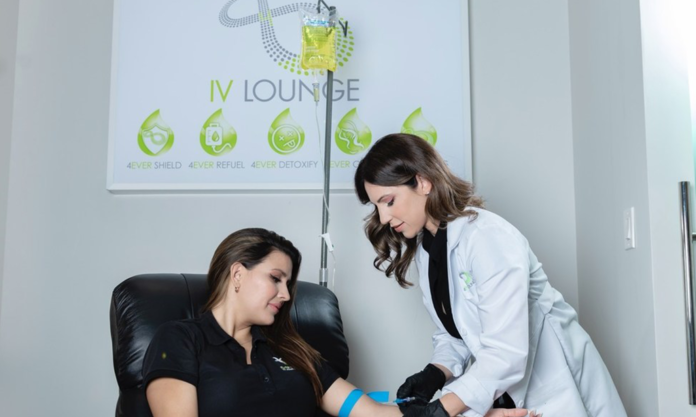
4everYoung, a renowned preventative health facility among the 250 most prominent allergan centers in the world, turns to intravenous vitamin therapy as an important tool to stimulate the immune system and optimize overall health and well-being
As health takes center stage, everyone does their best to protect themselves and strengthen their immune systems. Taking supplements and following a balanced diet are important parts of the equation to achieving optimal health but intravenous vitamin therapy — popularly known as IV therapy — can also serve as a powerful reinforcement, providing for a faster and more effective immune system boost.
Despite having been in existence since the 1970s, IV therapy has recently enjoyed a spike in popularity –especially among A-list celebrities and athletes, who rely on it as a sure-fire way to obtain all the health benefits and vitamins necessary to help them combat ailments as well as to feel their best as they cope with the pandemic. However, it’s important to note that IV therapy is not exclusive to celebrities and being a star is not a requirement to receive this type of treatment.
There are several types of intravenous vitamin therapies and vitamin injections to choose from. The ones containing a large assortment of vitamins necessary to combat the flu are in the highest demand. These are the ones containing Vitamin C, D, Zinc, and Vitamin B12 – all of which are vitamins known to play an essential role in assisting the body in its production of red blood cells and common immune system boosters.
“The benefit of this [IV therapy] is that by intravenously or intramuscularly administering vitamins, you are able to absorb 100 percent of what is being put in versus supplements which must be broken down. The therapy itself only takes about 30 minutes to an hour and is monitored. Once the infusion is finished, the IV is removed and the person who received the treatment is free to go home without restrictions,” Itza Marie, an Advanced Registered Nurse Practitioner at 4everYoung Aventura, said.
Intravenous vitamin therapy has proven helpful in the treatment of several different conditions that affect not only the immune system but other parts of the body as well. Some of the ailments of this type of therapy can help with constant fatigue, headaches, “brain fog” dry or tired-looking skin, dehydration or frequent illness.
For years, people have turned to Vitamin C pills or multivitamins to help boost their immune systems. But with IV therapy, the options are endless. The team at 4everYoung Aventura specializes in vitamin cocktail infusions, each designed with a specific therapy in mind and of which the 4everYoung vitamin cocktail is the most requested thanks to its antioxidant and immune system boosting properties.
If you’re looking to strengthen your body and give your immune system a boost, intravenous IV therapy is the best option to do so, quickly and effectively.
In-depth analysis shows dietary glycemic index is not a determinant of weight gain or loss
A study recently published in Advances in Nutrition, a peer-reviewed nutrition journal from the American Society for Nutrition, concludes that high-glycemic (high-GI) foods (often called “fast carbs”) are no more likely than low-GI foods (often called “slow carbs”) to lead to weight gain – and no less likely to lead to diet-induced weight loss.
Undertaken to assess the hypothesis that high-GI foods promote fat storage and increase the risk of obesity by causing a rapid increase in blood sugar and insulin secretion and that low-GI foods do the opposite, the comprehensive study analyzed data on 43 cohorts from 34 publications (comprising nearly two million adults) to assess if dietary glycemic index impacts body weight.
“This study is the first to definitively demonstrate that fast carbs do not make you fat,” says study co-author Glenn Gaesser, Ph.D., professor of exercise science in the College of Health Solutions at Arizona State University. “Contrary to popular belief, those who consume a diet of high-GI foods are no more likely to be obese or gain weight than those who consume a diet of low-GI foods. Furthermore, they are no less likely to lose weight.”
In the simplest terms, the study’s overarching conclusion was that “GI, as a measure of carbohydrate quality, appears to be relatively unimportant as a determinant of BMI or diet-induced weight loss.”
More specifically:
In the 27 cohort studies that reported results of statistical comparisons, 70% showed that BMI was either not different between the highest and lowest dietary GI groups (12 of 27 cohorts) or that BMI was lower in the highest dietary GI group (7 of 27 cohorts).
Results of 30 meta-analyses of RCTs from 8 publications demonstrated that low-GI diets were generally no better than high-GI diets for reducing body weight or body fat.
Although low-GI diets with a dietary GI at least 20 units lower than the comparison diet resulted in greater weight loss in adults with normal glucose tolerance, it did not do so in adults with impaired glucose tolerance.
Taking a broad look at the data, co-authors Julie Miller Jones, Ph.D., LN, CNS, and Siddhartha Angadi, Ph.D., highlights the key takeaways for consumers in the context of ever-evolving nutrition research.
“The review questions the premise that low-GI diets lead to substantially better weight control outcomes and reminds us of the many other qualities of carbohydrates that are far more important to consider: for example, nutrient density, dietary fibre and whole grain content, and percentage of added sugar,” says Angadi.
According to the authors, the study also highlights the need for both researchers and nutrition communicators to be mindful of the many positive nutrients that staple carbohydrate foods contribute to diet quality, as well as the detractor nutrients that indulgent foods often contain when characterizing or communicating the quality of carbohydrates.
“The key takeaway is that carbohydrates, regardless of type, can be part of a healthy diet and have a place on a healthy plate,” says Miller-Jones. “Over the past few decades, we’ve seen the blanket vilification of carbs, processed foods, and foods made with refined grains. Science has shown that these foods in the right balance can be part of a dietary pattern that can promote a healthy weight and reduce disease risk. The truth is that eating a wide variety of carbohydrates, from fast-carb white bread to slow-carb bran flakes and pairing them with smart choices from all the food groups can provide the nutritional benefits that healthy carbs, especially whole and enriched grain staples. foods can offer.”
Financial results from Canada’s three largest grocers offered a clearer picture of how the COVID-19 crisis has shaped shopping habits – and how consumers respond when public health restrictions are eased.
Metro Inc.’s third-quarter earnings, reported Wednesday, largely mirrored results posted earlier this summer by competitors Empire Co. Ltd. and Loblaw Companies Ltd.
At the onset of the pandemic, all three saw sales soar as shoppers stockpiled everything prompting shortages of things like flour and toilet paper. Many Canadians also opted for conventional full-service grocery stores rather than discount supermarkets and bought more items per visit as part of a one-stop-shop effort to reduce their grocery trips.
But the opposite trend is now emerging as the vaccine rollout continues and COVID-19 infections drop.
Metro, Loblaw and Empire all noted an increase in traffic in their stores in recent quarters, but smaller basket sizes and more muted sales, an indication that people are shopping around more and potentially spending more at restaurants.
They also noted a gradual return to discount grocery stores as an increasing number of shoppers sought out promotions over simply convenience.
“Consumers are shopping around a little more with the easing of restrictions,” Metro President and CEO Eric La Fleche said during a conference call.
“We’re seeing a gradual shift to more normal pre-pandemic behaviour,” he said. “The discount channel, in general, is benefiting from that versus conventional (stores), which had a big uplift during the pandemic.
The Montreal-based grocery and drugstore retailer, which operates under numerous banners including Metro, Super C and Food Basics, said Wednesday its food same-store sales were down 3.6 percent in its third-quarter compared with last year.
Empire, which owns Sobeys, Safeway and FreshCo, reported similar results in June, noting its same-store sales slid 4.5 percent while Loblaw, behind store chains like Zehrs, Provigo and No Frills, said its food same-store sales declined 0.1 percent.
La Fleche with Metro said he expects food sales will remain soft this fall.
“While we can’t predict exactly how the pandemic will evolve, we expect our food sales to decline in (the fourth quarter) versus last year’s high levels, but to compare favourably to fiscal 2019,” he said.
But Metro hopes to make up some ground through its drugstore division, which includes Jean Coutu and Brunet.
“We expect continued growth from prescriptions,” La Fleche said. “The easing of restrictions will have a positive impact on certain categories that were negatively affected by the pandemic such as beauty, cosmetics, and cold and flu products.”
Meanwhile, the grocer is also expecting to see some inflationary pressure from the higher cost of goods, transportation and labour.
“I would expect some inflation to be reflected at retail in a more pronounced way this fall,” La Fleche said. “But we will have to wait and see. We fully intend to remain competitive.”
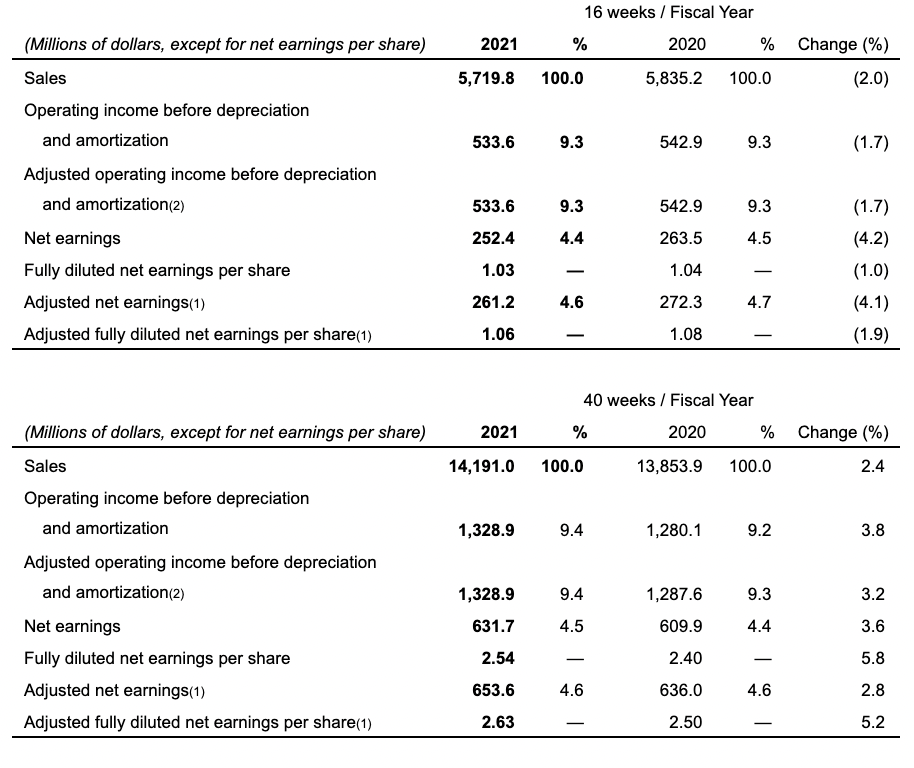
Metro said it earned $252.4 million in its latest quarter, down from $263.5 million the year before.
The company said its profit amounted to $1.03 per diluted share for the 16-week period ended July 3, down from $1.04 per diluted share a year ago.
Sales in what was the company’s third-quarter were $5.72 billion, down from $5.84 billion last year.
COVID-19 related expenses for the quarter totalled $38 million compared with $107 million in the same quarter last year.
This summer season noticed SEOs scrambling to maintain up with a collection of updates rolled out by Google which have been particularly core, web page expertise, and spam. Certainly each digital marketer is nonetheless attempting to determine the precise reason behind the change in rankings.
Whereas the rolling out of the core replace completed on twelfth June, Google began rolling out the web page expertise replace proper on its heels, on fifteenth June. This roll-out is anticipated to go on proper till the tip of August. Additionally, Google went on to roll out a two-part spam replace – half one of many replace started on twenty third June, and half two started on twenty eighth June.
What These Updates Signify
The web page expertise replace has so much to do with HTTPS and metrics equivalent to velocity, responsiveness, and core net vitals. When you want to see how this replace might have an effect on your website, the up to date structure is stay in all of the testing instruments and Google Search Console. Nevertheless, you have to remember that the Search Console information is delayed, as it’s based mostly on the CrUX (Chrome UX Report) information aggregated over the previous 28 days.
As this roll-out goes to final months, chances are high you could not see any drastic shift in a website’s visibility. This could provide the time to work in your website’s metrics in order that its efficiency meets your expectations.
Not like core and web page expertise updates, spam updates start and finish on the identical day, which implies your web site rankings could also be impacted nearly instantly. Therefore, if an internet site noticed any adjustments in rankings on the times when this two-part replace rolled out, you recognize what might have triggered it.
That stated, none of our web sites skilled any main shift in rankings.
Last Takeaway
Though there’s quite a lot of speak round these updates, it’s nonetheless too early to know precisely how they’ll have an effect on website rankings. As for the spam updates, the SEOs don’t appear to be too impressed and really feel that too many spam websites are nonetheless being ranke.
“It brings me an immense sense of pride for Rexall to be recognized with the Great Place to Work® Certification,” said Nicolas Caprio, President, Rexall. “Every day, our dedicated, passionate and caring team members are encouraged to bring their authentic selves to work. Today’s designation proves to myself and our leadership team that we are successful in creating a culture where our employees feel valued, recognized and supported in attaining their true potential.”
This latest recognition is part of a series of designations that highlight Rexall as a world-class employer that empowers and celebrates its employees, including the 2021 Innovative HR Award, the 2021 Forbes Canada’s Best Employer award and the 2020 Canadian HR Team of the Year Gold Winner award. And, for the fourth consecutive year, Rexall private label products have been recognized for the Retail Council of Canada Grand Prix New Product Awards. Rexall’s commitment to being the best place to work is driven by our ICARE values of Integrity, Customer-First, Accountability, Respect and Excellence.
Nancy Fonseca, Senior Vice President of Great Place to Work® Canada, says that a great workplace is about the level of trust that employees experience in their leaders, the level of pride they have in their jobs, and the extent to which they enjoy their colleagues. “Our data shows that great workplaces benefit from stronger financial performance, reduced turnover, and better customer satisfaction than their peers. What’s more, work environments with trust at the foundation are ripe for innovation, agility, resilience and efficiency,” Fonseca said.
At Rexall, our corporate and store teams unite, collaborate, and proudly execute our shared mission every day. We’re not only a health and wellness destination for Canadians, we’re a talent destination for the best and brightest in the business. We’re proud of our Canadian roots, which date back to 1904, and are equally as proud of who we are today: entrepreneurially-minded, agile, and passionate about evolving the business we have grown and love dearly.
Island Abbey Foods, owners of the Honibe® brand, hosted local, provincial and federal officials, members of the media, representatives from the business community and other invited guests for a milestone groundbreaking ceremony to celebrate the expansion of their local Island Abbey Foods facility.
Home to the company’s honey-based specialty health products, the event featured speeches and appearances by Honibe executives and Prince Edward Island dignitaries such as Zach Bell representing the province, MP Sean Casey from the federal government, Jamie Aiken, CEO of Finance PEI, Stephanie Corbett CEO of Innovation PEI, and Wade Arsenault, CEO of CADC.
“Over the last fifteen years Island Abbey Foods has firmly established itself as an anchor of Prince Edward Island’s fast-growing bioscience sector,” said Premier Dennis King. “This new expansion will further that growth, creating new high skill and high paying career opportunities here at home”
Honibe is known for adult and child-friendly over-the-counter offerings, including lozenges, gummy vitamins and their recent addition, HoneyPops ¾ all made using natural ingredients with Canadian honey at the forefront.
“The new facility will accommodate the growth in our gummy production,” said Scott Spencer, COO at Honibe. “We’re adding another 30K square feet of facility space at our current location to accommodate our growing need for production, warehouse, and office spaces. With the expansion, we will be able to produce 50M bottles per year, 5X our current capacity.”
Honibe attributes the growth of its brand to its products’ unique properties and the proprietary technology of turning liquid honey into solid form without losing its nutritional benefits.
“Most gummies are made with sugar, but at Island Abbey Foods, we use honey as the foundation of our Honibe products. Sugar has no benefits to the health of the human body, whereas honey has natural benefits such as antioxidants, antimicrobials and a lower glycemic index. So when you buy a bottle of Honibe gummies, you’re not just getting what’s on the label, you’re getting all the benefits of honey too.”
Scott believes an increase in advertising and further investment in a digital presence will help Honibe continue to resonate with consumers — especially those caring for children and older adults — who want better products than those comprised mostly of sugar.
The Minister of Agriculture and Agri-Food, the Honourable Marie-Claude Bibeau, announced that the Government of Canada is making available $100 million through the AgriRecovery Framework to address the immediate extraordinary costs faced by producers due to the drought and wildfires. This funding is designed to match all provincial AgriRecovery submissions on the 60-40 cost-shared basis outlined under the Canadian Agricultural Partnership. By making funding available now, producers can be assured that they will receive assistance as soon as full assessments are completed.
The Government of Canada is working around the clock to help the governments of Manitoba, Ontario, Saskatchewan, Alberta and British Columbia complete the assessments of the disaster and examine how AgriRecovery can help respond. Once these assessments are completed, the Government of Canada will expedite work to finalize an agreement with each province on support programs. The Government of Canada is open to submissions that include direct assistance to livestock producers for added costs of obtaining livestock feed, transportation and water.
Minister Bibeau also announced that Manitoba is invoking the late participation provision of AgriStability. Provinces affected by drought are encouraged to invoke this provision to allow producers who did not enroll to access program support. Producers can also apply for interim payments under AgriStability, which can help cope with immediate financial challenges. To date, the Government of Canada and the governments of Saskatchewan, Alberta and Manitoba have agreed to increase the 2021 AgriStability interim benefit payment percentage from 50% to 75%, so producers can access a greater portion of their benefit when needed most. Minister Bibeau repeated the Government of Canada’s offer to provinces to raise the AgriStability compensation rate from 70% to 80%. This would provide farmers across the country an additional $75 million per year, benefitting distressed farmers who need help now more than ever.
Minister Bibeau also announced the designation for Livestock Tax Deferral of additional prescribed drought regions in British Columbia, Alberta, Saskatchewan and Ontario. This adds to the list of prescribed drought regions across Canada announced on July 22, 2021. The designation will allow beef producers who are forced to sell a significant amount of their breeding herd due to drought conditions to offset the resulting revenues with the costs to replace the herd.
AgriInsurance helps producers manage production and quality losses caused by these adverse weather conditions, including drought. Minister Bibeau highlighted the federal support to all Prairie provinces for immediate bilateral adjustments to the cost-shared AgriInsurance program to make drought-damaged crops available for feed. These measures will increase the number of crops available for livestock producers in this time of need.
The Government of Canada stands with farm families during this difficult time and is listening to their needs and taking action to respond.
Quotes
“There are a lot of farm families across the West and in parts of Ontario who are making tough decisions in a difficult situation. Our Government is working closely with our provincial partners to provide timely support to producers in need. Today we are announcing $100 million to add to provincial AgriRecovery initiatives, ready to be delivered as quickly as we can turn around provincial submissions, and ready to seek further funding for requests exceeding this amount. We will continue to support farm families to get them through the challenges we face today, and position them for a sustainable future since we know climate change will continue to pose challenges.”
The Honourable Marie-Claude Bibeau, Minister of Agriculture and Agri-Food
“Severe drought conditions sustained high temperatures, and wildfires continue to create stress and uncertainty for our producers. That is why the Government of Canada is taking action to secure funding under AgriRecovery, to ensure continuous support is provided to farmers as quickly as possible.”
The Honourable Jim Carr, Minister and Special Representative for the Prairies and Member of Parliament for Winnipeg South Centre
Quick Facts
AgriRecovery responses that exceed $60 million in total federal budget require additional program authorities. The Prime Minister has authorized access to the $100 million announced today, and this funding will complement the $25 million in COVID-19 support estimated for 2021-2022, primarily targeted towards the livestock sector in Canada.
Producers have access to a suite of Business Risk Management (BRM) programs to help them manage significant risks that threaten the viability of their farm and are beyond their capacity to manage.
On July 22, Minister Bibeau visited Manitoba’s Interlake Region, where she met with drought-impacted farmers to see first-hand how drought conditions are creating crop losses, affecting crop quality, and reducing forage and water supplies available to livestock.
AgriRecovery is a federal-provincial-territorial disaster relief framework intended to work together with the core BRM programs to help agricultural producers recover from natural disasters. AgriRecovery helps with the extraordinary costs associated with recovering from disaster events.
AgriStability is one of the BRM programs under the Canadian Agricultural Partnership. It protects Canadian producers against large declines in farming income for reasons such as production loss, increased costs and market conditions. While the deadline to enroll for the 2021 program year has passed, provinces may request late participation to make the program available to other producers during a crisis situation.
An interim payment under AgriStability is based on estimates of a participant’s program year production margin and reference margin. To receive an interim payment, the participant’s estimated production margin must decline by more than 30% of their estimated reference margin. Participants can apply for an interim payment to access program funds early. Provincial governments can request that the interim payment percentage be increased from 50% to 75%.
The Livestock Tax Deferral provision allows livestock producers in these regions who reduced their breeding herds by at least 15% due to drought or flooding, to defer a portion of their 2021 income from sales until the 2022 tax year, when the income may be at least partially offset by the cost of reacquiring breeding animals, which may reduce their potential tax burden. Eligible regions are identified based on weather, climate and production data, in consultation with industry and provinces. The criteria for identifying regions for Livestock Tax Deferral is forage shortfalls of 50% or more caused by drought or excess moisture. Agriculture and Agri-Food Canada officials continue to monitor weather, climate and production data from across Canada and will add regions if they meet the eligibility criteria. When prescribed regions are identified, the list is announced publicly and posted to this web page.
AgriInvest is a self-managed producer-government savings account designed to help producers manage small income declines and make investments to manage risk and improve market income. Canadian agricultural producers can access the funds in their AgriInvest accounts at any time.
During a crisis such as this, farmers facing the stress and uncertainty of providing for their families may suffer serious mental health impacts. Those needing help are encouraged to reach out for support and can contact The Do More Ag Foundation, a not-for-profit organization focusing on mental health in agriculture across Canada.
Sales of $5,719.8 million, down 2.0%, and up 9.4% vs 2019
Food same-store sales down 3.6%, and up 11.4% vs 2019
Pharmacy same-store sales up 7.6%, and up 8.6% vs 2019
Net earnings of $252.4 million, down 4.2% and adjusted net earnings(1) of $261.2 million, down 4.1%
Fully diluted net earnings per share of $1.03, down 1.0%, and adjusted fully diluted net earnings per share(1) of $1.06, down 1.9%
Expenses related to COVID-19 totalling $38 million, including $8 million of gift cards to front-line employees
Transition to new Ontario fresh distribution center completed, adding $8 million of non-recurring costs
PRESIDENT’S MESSAGE
“We are pleased with the solid results of our third quarter considering we cycled exceptionally strong sales and earnings last year at the height of the pandemic. Our sales and earnings growth over 2019 levels is strong. Despite the challenging operating environment caused by the pandemic, our teams successfully completed three key strategic initiatives during the quarter: the transition to our new automated Fresh distribution center in Toronto; the integration of our pharmacy distribution operations into the Jean Coutu distribution center in Varennes; and the opening of our dedicated store for online grocery in Montréal. These achievements position us well to meet our growth objectives going forward“, declared Eric La Flèche, President and Chief Executive Officer.
OPERATING RESULTS
SALES
Sales in the third quarter of Fiscal 2021 remained strong, reaching $5,719.8 million, down 2.0% compared to $5,835.2 million in the third quarter of 2020 as we cycled the peak sales experienced at the start of the pandemic but up 9.4% over two years. Food same-store sales were down 3.6% versus the same quarter last year (up 15.6% in 2020) but increased 11.4% compared to the third quarter of 2019. Online food sales increased by 19% versus last year (about 300% in 2020). Our food basket inflation was approximately 1.0% (3.0% in 2020). Pharmacy same-store sales were up 7.6% (1.0% in 2020), with a 9.3% increase in prescription drugs and a 3.8% increase in front-store sales.
Sales in the first 40 weeks of Fiscal 2021 totalled $14,191.0 million, up 2.4% compared to $13,853.9 million for the corresponding period of 2020.
OPERATING INCOME BEFORE DEPRECIATION AND AMORTIZATION
This earnings measurement excludes financial costs, taxes, depreciation and amortization.
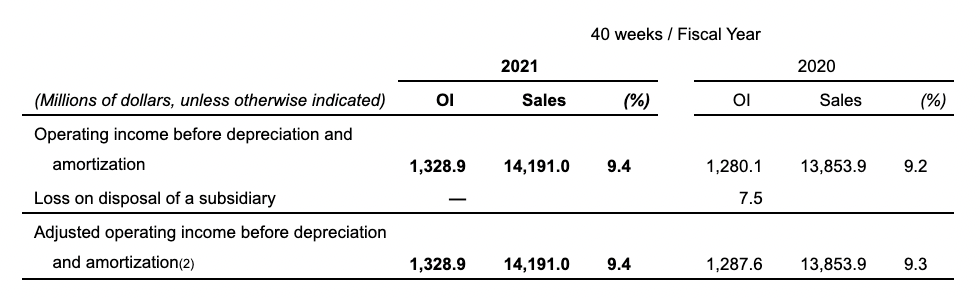
Operating income before depreciation and amortization for the third quarter of Fiscal 2021 totalled $533.6 million, or 9.3% of sales, down 1.7% versus the corresponding quarter of last year.
Operating income before depreciation and amortization for the first 40 weeks of Fiscal 2021 totalled $1,328.9 million or 9.4% of sales, up 3.8% versus the corresponding period of 2020. During the first 40 weeks of Fiscal 2020, we recognized a loss of $7.5 million on disposal of our meal-kit subsidiary. Excluding this item, adjusted operating income before depreciation and amortization(2) for the first 40 weeks of Fiscal 2021 increased by 3.2% versus the corresponding period of 2020.
Operating income before depreciation and amortization adjustments (OI)(2)
Gross margin on sales for the third quarter and the first 40 weeks of Fiscal 2021 were 19.8% and 19.9% respectively, versus 20.0% and 19.8% for the corresponding periods of 2020.
Operating expenses as a percentage of sales for the third quarter of Fiscal 2021 were 10.5% versus 10.7% for the corresponding quarter of 2020. COVID-19 related expenses for the third quarter of Fiscal 2021 were approximately $38 million, including $8 million of gift cards to front-line employees, versus approximately $107 million in the same quarter last year. This decrease of $69 million was partly offset by an increase in other operating expenses, mainly related to activities and services that have been reinstated after initially being halted at the start of the pandemic, and non-recurring costs of approximately $8 million related to the transition to our new fresh distribution center in Ontario.
For the first 40 weeks of Fiscal 2021, operating expenses as a percentage of sales were 10.5% versus 10.6% (10.5% excluding the loss on disposal of our meal-kit subsidiary) for the corresponding period of 2020. The costs related to COVID-19 for the first 40 weeks of Fiscal 2021 were approximately $95 million, including $24 million of gift cards to front-line employees, compared to $110 million in 2020.
DEPRECIATION AND AMORTIZATION AND NET FINANCIAL COSTS
Total depreciation and amortization expense for the third quarter of Fiscal 2021 was $149.4 million versus $140.5 million for the corresponding quarter of 2020. For the first 40 weeks of Fiscal 2021, total depreciation and amortization expense was $367.5 million versus $344.0 million for the corresponding period of 2020. These increases reflect the additional investments in supply chain and logistics as well as in-store technology.
Net financial costs for the third quarter of Fiscal 2021 were $42.1 million compared with $43.0 million for the corresponding quarter of 2020. For the first 40 weeks of Fiscal 2021, net financial costs were $104.8 million compared with $106.0 million for the corresponding period of 2020.
INCOME TAXES
The income tax expense of $89.7 million for the third quarter of Fiscal 2021 represented an effective tax rate of 26.2% compared with an income tax expense of $95.9 million in the third quarter of Fiscal 2020 which represented an effective tax rate of 26.7%. The 40-week period income tax expense of $224.9 million for Fiscal 2021 and $220.2 million for Fiscal 2020 represented an effective tax rate of 26.3% and 26.5% respectively.
NET EARNINGS AND ADJUSTED NET EARNINGS(1)
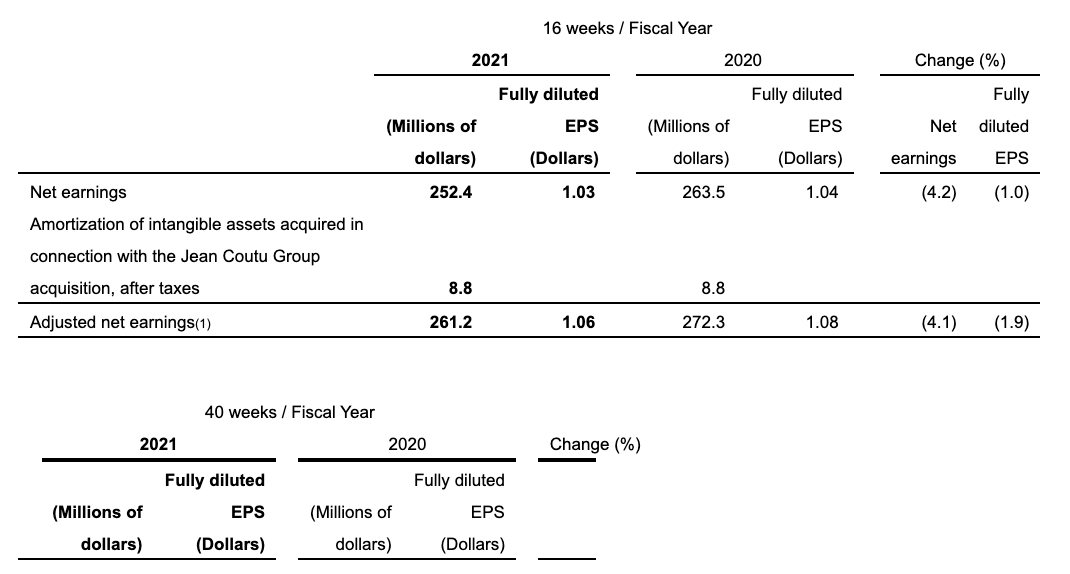
Net earnings for the third quarter of Fiscal 2021 were $252.4 million compared with $263.5 million for the corresponding quarter of 2020, while fully diluted net earnings per share were $1.03 compared with $1.04 in 2020, down 4.2% and 1.0%, respectively but up 13.5% and 19.8% respectively on a two-year basis. Excluding the specific items shown in the table below, adjusted net earnings(1) for the third quarter of Fiscal 2021 totalled $261.2 million compared with $272.3 million for the corresponding quarter of 2020, and adjusted fully diluted net earnings per share(1) amounted to $1.06 versus $1.08, down 4.1% and 1.9%, respectively but up 13.4% and 17.8% respectively over two years.
Net earnings for the first 40 weeks of Fiscal 2021 were $631.7 million compared with $609.9 million for the corresponding period of 2020, while fully diluted net earnings per share were $2.54 compared with $2.40 in 2020, up 3.6% and 5.8%, respectively. Excluding the specific items shown in the table below, adjusted net earnings(1) for the first 40 weeks of Fiscal 2021 totalled $653.6 million compared with $636.0 million for the corresponding period of 2020, and adjusted fully diluted net earnings per share(1) amounted to $2.63 versus $2.50, up 2.8% and 5.2%, respectively. The impact of the labour conflict at the Jean Coutu distribution center in the first quarter of Fiscal 2021, was approximately $0.05 per share.
The company is pleased to announce its new partnership with plant-based professional athlete and Chicago Bears quarterback Justin Fields as a PlantX Ambassador. Mr. Fields will help promote the Company’s brand and product offerings and will help the Company advocate for the benefits of living a plant-based lifestyle.
The young quarterback’s successful sports career kick-started when he was playing college football with the University of Georgia Bulldogs in 2018, which led to him transferring to the Ohio State Buckeyes in 2019. During his time with Ohio State, he won two First-Team All-Big Ten Conference Awards in 2019 and 2020, including the Big 10 Football Championship Game MVP award and the Second-Team All-American award in 2019. His talent and perseverance led to him being drafted as a quarterback and 11th overall player by the Chicago Bears of the National Football League in 2021.
Mr. Fields decided to adopt a plant-based diet that excludes meat and dairy products while taking part in a challenge with his family at the beginning of the COVID-19 pandemic. Since then, Mr. Fields has experienced the benefits of a plant-based lifestyle and has become a strong advocate of plant-based eating and its positive effects on sports performance.
“Living a plant-based lifestyle at first was just a short-term challenge, which quickly turned into a passion and way of life for me,” PlantX Ambassador Justin Fields. “PlantX is the perfect destination for people looking to educate themselves and try new products that are plant-based.”
Mr. Fields will curate a list of his favourite PlantX products through a dedicated “Justin’s Picks” section on the PlantX e-commerce platform and help further promote the Company’s offerings to his dedicated audiences across his personal platforms. Customers will also be able to access “Justin’s Picks” selections in the Company’s brick-and-mortar stores in Squamish, British Columbia and San Diego, California.
Beyond raising awareness on his social platforms, Mr. Fields will also be representing the Company in interviews discussing various topics in the plant-based industry to help position the Company as an authoritative platform for plant-based athletes. Mr. Fields’s involvement as a PlantX ambassador aims to support other athletes in exploring their own plant-based journeys and encourage the professional sports world to shift towards a plant-based focus.
“Justin is an emerging leader in the world of football, and his plant-based lifestyle is a true inspiration to so many people,” said PlantX Founder Sean Dollinger. “Justin’s support will be a valuable asset to PlantX as he will help us improve plant-based education and show the world that even world-renowned athletes can successfully and enjoyably live a plant-based life. We are delighted to work with him to forward the Company’s mission and improve the health and well-being of our community.”
PlantX and Justin Fields further announced that they have sponsored “Pros Week,” a charitable event presented by David Mulugheta and The Fair Catch Foundation. The event has previously been attended by high-profile athletes including Jalen Ramsey, Micah Parsons, Kyle Pitts, Christian Wilkins, Isaiah Simmons and Jaycee Horn. Proceed from this event will be donated to charities and initiatives supported by the event, such as The Leukemia & Lymphoma Society, local Foster Homes in Austin, Texas and Alex Okafor’s Survivor Scholarship Program.
PlantX and Justin Fields also announced a joint donation of USD $20,000 and plant-based protein bars, drinks and nutritional supplements to the Fair Catch Foundation.
About Justin Fields
Justin Fields was born in Atlanta, Georgia, where he attended Harrison High School. After a standout high school career, he was invited to the Elite 11 quarterback camp and won MVP during his senior year. His senior season was documented in the Netflix series QB1: Beyond the Lights, created by Peter Berg. Fields would end up making the decision to attend the University of Georgia. As a true freshman, Fields would serve as a backup for Jake Fromm but showed promise when he was able to see some action. Following Georgia’s loss to Alabama in the 2018 SEC Championship Game, Fields announced that he would be transferring to Ohio State Buckeyes. In his first season as a Buckeye, Fields recorded a successful season where he finished third in Heisman Trophy voting while also throwing for 41 touchdowns and taking his team to the College Football Playoff. The Buckeyes would end up losing to Clemson in the 2020 College Football Playoff semifinal last season. Fields have done much more of the same this season by avenging his loss to Clemson and leading his team to the National Championship against the Alabama Crimson Tide. Fields were selected 11th overall by the Chicago Bears in the 2021 NFL Draft.
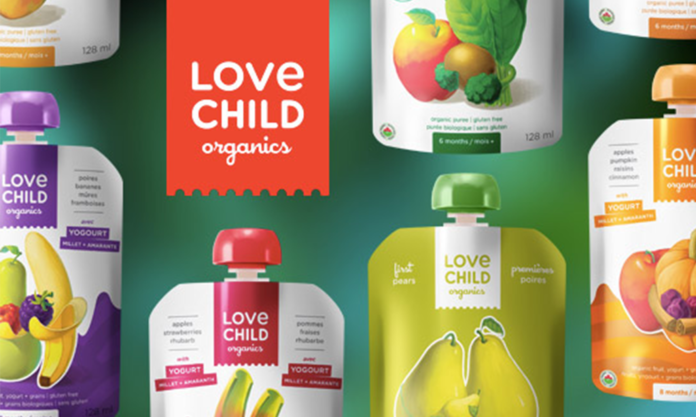
The LOVE CHILD ORGANICS brand is a leader in the organic baby food and snack categories across Canada with a following of parents looking for healthier options for their infants and children aged six months to six years. The brand is re-establishing its growth momentum after facing supply challenges in the last fiscal year.
The customer fill rates of the LOVE CHILD ORGANICS pouch range have significantly improved to more than 95% over the past 3 months compared to the fourth quarter of the fiscal year ending March 31, 2021. In June, the Company announced that the brand had been re-listed at Canada’s second-largest retailer and had been executing promotion activity for the brand across retailers nationally after a half-year hiatus due to supply constraints.
The Company is confirming significant ‘stock keeping unit’ (‘SKU’) expansion for the brand across 400 outlets at another top Canadian grocery retailer starting in a few weeks. This outlet expansion will include the distribution of its LOVE CHILD ORGANICS Brekky Blends new product innovations. This leading grocery retailer has confirmed incremental merchandising support over the months ahead. The Company is also in positive discussions about the brand with a key retailer in the warehouse club channel and with a top Quebec-based grocery retailer, targeting distribution expansion over the coming months.
The Company is pleased to announce an increase in its marketing investment in the LOVE CHILD ORGANICS brand which will see the brand featured on the popular FoodSCAPES television program during the upcoming back-to-school season. FoodSCAPES airs nationally on BNN and Global television as well as the Canadian Living website.
“There has been ongoing consumer demand for the LOVE CHILD ORGANICS brand and we are excited to rebuild momentum in the business, expand our distribution across channels, and drive ongoing awareness and accessibility for families,” says Brittany Compton, Brand President of LOVE CHILD ORGANICS. “Over the coming months, we will be announcing the launch of an exciting new product platform, so our brand is prominent as families grow and their food and snack choices evolve over time.”