Researchers found that Pycnogenol® outperformed cranberry extract in reducing infection occurrence and decreasing painful symptoms, without side effects.
Recurrent urinary tract infections are the result of a bacterial infection and are defined as three episodes in the previous year or two episodes in the last six months. About 50 percent of women worldwide contract at least one urinary tract infection in their lifetime and 25–30 percent of women have at least one episode of recurrent urinary infections. Around 12 percent of men1 will experience urinary tract infections in their lifetime. Urinary tract infections cause up to 10 million visits2 to health care providers each year.
Similar to UTI, interstitial cystitis (IC) is a painful, often chronic disorder of the bladder, typically indicated by serious sensory lower urinary tract symptoms and pelvic pain but without bacterial occurrence in the urinalysis, estimated to impact between 3 and 6 percent of adult women.
“Patients who suffer from recurrent urinary tract infections often experience painful, disruptive symptoms including pain, burning and itching in the pelvic area, and a constant need to go to the bathroom. This study shows, Pycnogenol®, a natural ingredient, may reduce those symptoms,” says Dr. Steven Lamm, MD, researcher, internist, and a leading expert on sexual health.
“It is important that we reduce the use of antibiotics in the management of recurrent urinary tract disorders. This study presents a potential natural alternative to antibiotic use. Pycnogenol® is known as an effective anti-inflammation agent. Important findings here that require further research” said Dr. Lamm.
Published in Evidence-Based Complementary and Alternative Medicine, the study encompassed 64 participants between the ages of 35 and 41. The test group was comprised of patients who reported at least three symptomatic urinary tract infections in the past year, reported at least two urinary tract infections in the past six months or reported symptoms of urinary tract infections without bacterial occurrence in the urinalysis, such as interstitial cystitis.
Three groups were tested in the study: a control group, a Pycnogenol® group, and a cranberry group. Each group was tested for 60 days and followed a standard management routine. The control group only followed the standard management routine, which consisted of accurate hygiene, improved bladder care, avoiding too much caffeine, spices, and alcohol, careful hydration, and mild exercise.
The Pycnogenol® group was supplemented with 150mg of Pycnogenol® per day. The cranberry group was supplemented with 400mg (two 200mg capsules) of dried cranberry extract (19 mg proanthocyanidins each) per day.
After 60 days of daily oral supplementation with 150mg of Pycnogenol®, results included:
62% reduction in the number of urinary tract infection/interstitial cystitis episodes (vs. 45% reduction in the cranberry group and 29% reduction in the control group)
100% of participants showed infection-free urine (vs. 35% of participants in the cranberry group and 36% of participants in the control group. At study start, 40-50% of the patients showed infection-free urine.)
91% of participants were symptom-free (vs. 80% of participants in the cranberry group and 82% of participants in the control group)
11% decrease in oxidative stress (vs. 4% decrease in the cranberry group and 2% decrease in the control group)
The high impact of Pycnogenol® on the reduction of urinary tract infections/interstitial cystitis in patients compared to the effect of cranberry and standard management in this study corroborates with previous research demonstrating Pycnogenol®’s high antioxidative and anti-inflammatory effects.
A Texas federal judge has dismissed a pharmacist’s False Claims Act suit against Walgreens alleging the company submitted claims to Medicaid and Medicare for medications that were never prescribed, holding she failed to show the actions were fraud “rather than an innocent mistake, negligence or regulatory violation.”
GWL’s 2021 Second Quarter Report has been filed on SEDAR and is available at sedar.com and in the Investor Centre section of the Company’s website at weston.ca.
“We are pleased with the performance of our businesses as they lapped the most difficult quarter of the pandemic, with each delivering operational and financial improvements,” said Galen G. Weston, Chairman and Chief Executive Officer, George Weston Limited. “As economies continue to reopen in the second half of the year, our businesses are well-positioned to execute on their plans.”
Loblaw Companies Limited (“Loblaw”) delivered a strong financial performance in the second quarter of 2021. Revenue growth continued despite lapping the unprecedented demand in the previous year from stockpiling by consumers at the start of COVID-19. Consolidated gross margin improved significantly, reflecting a heightened focus on the core retail business, including promotional effectiveness and cost controls. Loblaw maintained its focus on delivering value and quality to its customers in a safe shopping environment and is well-positioned to meet the evolving needs of customers as pandemic restrictions lift and economies re-open.
Choice Properties Real Estate Investment Trust (“Choice Properties”) generated solid results in the second quarter of 2021, collecting 98% of contractual rents despite continued regional lockdowns across Canada. Choice Properties continued to advance its development initiatives, drive meaningful net asset value appreciation and improve its balance sheet. Net asset value per unit increased by 3.6% driven primarily by gains from the industrial portfolio, 149,000 square feet of the new gross leasable area was transferred to income-producing assets, and Choice Properties lowered its leverage ratio through the early repayment of $200 million of debentures.
Weston Foods delivered much improved financial results in the second quarter of 2021 compared to the same quarter in 2020. Sales grew in food service and retail as government-mandated lockdowns were lifted in many regions of Canada and the United States. In addition to the increase in sales, lower pandemic-related costs and continued productivity improvements contributed to the year-over-year earnings growth. In the second quarter, Weston Foods was faced with higher-than-expected input, labour and distribution costs. The higher costs, together with labour availability challenges, negatively impacted sales and earnings. These factors were primarily the result of a surge in global demand for consumer goods as economies began to reopen following the lifting of many lockdown restrictions. Weston Foods has taken steps, including pricing, to help mitigate the impact of cost inflation, and expects the labour availability challenges will ease over time. The business is well-positioned to meet the increasing demand from its customers and continue to offer superior products and services.
2021 SECOND QUARTER HIGHLIGHTS
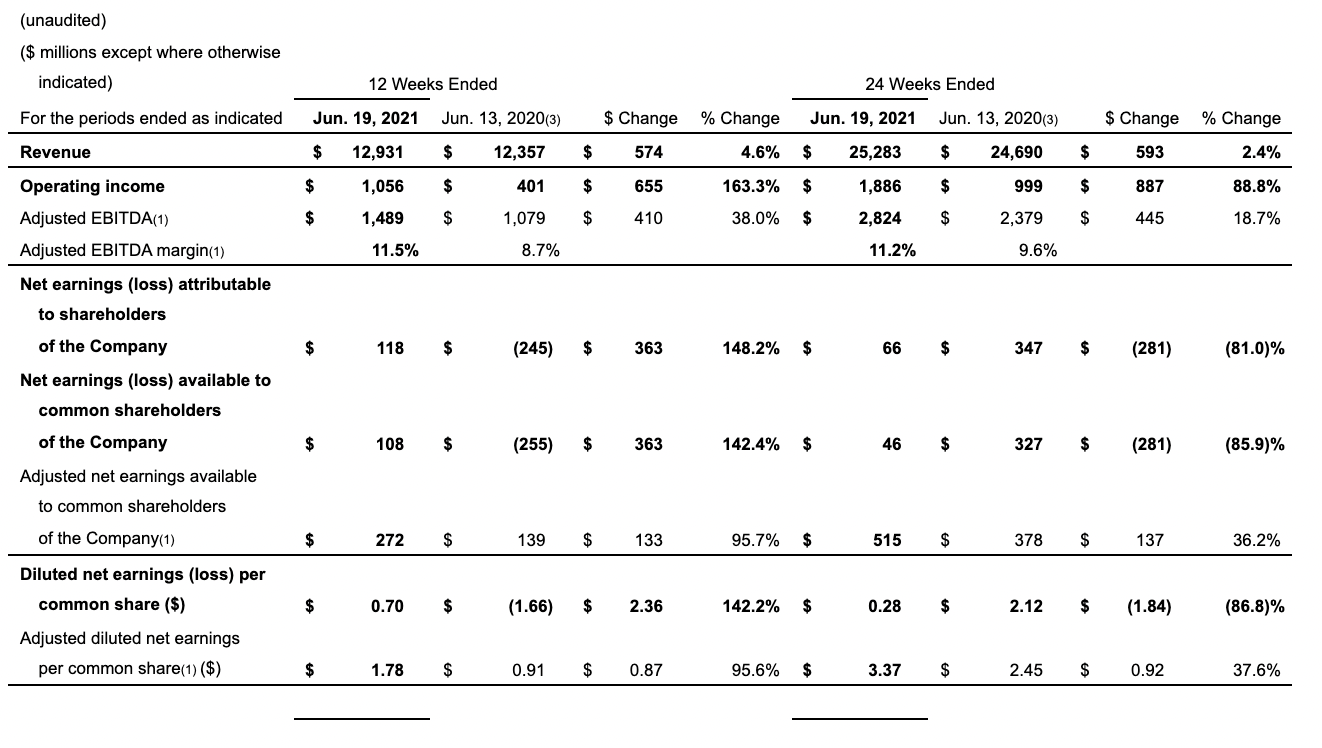
George Weston Limited’s net earnings available to common shareholders of the Company were $108 million ($0.70 per common share) an increase of $363 million ($2.36 per common share) when compared to the same period in 2020. The increase was due to the favourable year-over-year net impact of adjusting items totaling $230 million ($1.49 per common share), which was primarily due to the favourable year-over-year impact of the fair value adjustment on investment properties of $203 million ($1.33 per common share) at Choice Properties, net of consolidation adjustments in Other and Intersegment, and an improvement of $133 million ($0.87 per common share) in the Company’s consolidated underlying operating performance.
Adjusted net earnings available to common shareholders of the Company(1) in the second quarter of 2021 were $272 million ($1.78 per common share). In comparison to the same period in 2020, this represented an increase of $133 million ($0.87 per common share), or 95.7%, primarily due to the improvement in the underlying operating performance of Loblaw, Choice Properties and Weston Foods. The increase in adjusted diluted net earnings per common share(1) of $0.87, or 95.6%, was due to the performance in adjusted net earnings available to common shareholders(1) and the favourable impact of share repurchases.
Quarterly common share dividend to be increased by $0.05, or 9.1%, from $0.550 per common share to $0.600 per common share.
CONSOLIDATED RESULTS OF OPERATIONS
The Company’s results reflect the impact of COVID-19 and the year-over-year impact of the fair value adjustment of the Trust Unit liability as a result of the significant changes in Choice Properties’ unit price, recorded in net interest expense and other financing charges. The Company’s results are impacted by market price fluctuations of Choice Properties’ Trust Units on the basis that the Trust Units held by unitholders, other than the Company, are redeemable for cash at the option of the holder and are presented as a liability on the Company’s consolidated balance sheet. The Company’s financial results are negatively impacted when the Trust Unit price rises and positively impacted when the Trust Unit price declines.
In the second quarter of 2021, the Company recorded net earnings available to common shareholders of the Company of $108 million ($0.70 per common share), an increase of $363 million ($2.36 per common share) compared to the same period in 2020. The increase was due to the favourable year-over-year net impact of adjusting items totalling $230 million ($1.49 per common share), and an improvement of $133 million ($0.87 per common share) in the consolidated underlying operating performance of the Company described below.
The favourable year-over-year net impact of adjusting items totalling $230 million ($1.49 per common share) was due to:
the favourable year-over-year impact of the fair value adjustment on investment properties of $203 million ($1.33 per common share) primarily driven by Choice Properties, net of consolidation adjustments in Other and Intersegment; and
the favourable year-over-year impact of the fair value adjustment of the Trust Unit liability of $69 million ($0.44 per common share) as a result of the increase in Choice Properties’ unit price in the second quarter of 2021;
the unfavourable year-over-year impact of the fair value adjustment of the forward sale agreement of Loblaw common shares of $52 million ($0.34 per common share).
The improvement in the Company’s consolidated underlying operating performance of $133 million ($0.87 per common share) was due to:
the favourable underlying operating performance of Loblaw, Choice Properties and Weston Foods;
an increase in depreciation and amortization.
Diluted net earnings per common share also included the favourable impact of shares purchased for cancellation in the fourth quarter of 2020 and in the first and second quarters of 2021.
Adjusted net earnings available to common shareholders of the Company(1) were $272 million, an increase of $133 million, or 95.7%, compared to the same period in 2020 due to the improvement in the Company’s consolidated underlying operating performance described above. Adjusted diluted net earnings per common share(1) was $1.78 per common share in the second quarter of 2021, an increase of $0.87 per common share, or 95.6%, compared to the same period in 2020. The increase was due to the performance in adjusted net earnings available to common shareholders(1) and the favourable impact of share repurchases.
Frost & Sullivan’s recent analysis, Global Infant Formula Ingredients Growth Opportunities, finds that the global infant formula ingredients market expands steadily as the demand for high-quality infant formula products that can closely mimic the breast milk composition is on the rise. The market is estimated to hit $8.21 billion by 2025 from $6.37 billion in 2020, an uptick at a compound annual growth rate (CAGR) of 5.2%. Additionally, the growing demand for organic and plant-based infant formulas from health-conscious consumers gives further impetus to the overall industry’s growth presenting lucrative growth prospects across the non-allergenic and non- genetically-modified organisms (GMO) plant protein ingredients space.
“The growing trend of mimicking infant formulas to breast milk is leading manufacturers to develop specialized ingredients that could offer superior nutrition composition to formula-fed infants,” said Smriti Sharma, Chemicals, Materials, and Nutrition Research Analyst at Frost & Sullivan. “Going forward, across different infant formula segments, volume growth is primarily from the specialty infant formula category, with growing-up/toddler milk estimated to account for a majority of the bulk demand for ingredients, primarily due to its sheer volume. The demand for premium, organic, clean-label products will drive all application segments.”
Sharma added: “Regulations across the infant formula space are predicted to play a significant role in shaping market dynamics. For instance, new European regulations have proposed reduced protein concentration and high DHA levels, which is likely to impact DHA oil adoption. Moreover, proposed changes in the infant formula national standards (GB standards) in China—one of the leading markets of infant formula products—are anticipated to impact the market significantly. Further, expected approvals for highly specialized ingredients in the Chinese market will foster future growth and innovation potential.”
Rapid urbanization, growth of the middle class, and rising number of women participating in the labour force—especially in developing markets—are key factors to drive the global infant formula ingredients market. Participants should explore the following to unlock growth opportunities:
Innovation Across Functional Ingredients to Cater to the Growing Demand for Specialty Formulas: Ingredient manufacturers need to keep up with changing requirements and offer ingredients that align with changing product requirements.
Expanding Their Portfolio By Offering Functional Ingredients That Enable Products Closer to Breast Milk: Manufacturers need to push authorities to have a regulatory framework that supports innovation. Approval of novel ingredients needs to be fast-tracked to ensure early adoption.
Offering High-quality, Non-GMO, Organic Ingredients to Cater to Changing Consumer Demand: Increasing clean-label requirements and creating product differentiation are driving the demand for organic, non-GM ingredients. Ingredient manufacturers need to pivot in terms of their offerings to cater to changing consumer demand.
Global Infant Formula Ingredients Growth Opportunities is the latest addition to Frost & Sullivan’s, Chemicals, Materials, and Nutrition research and analysis available through the Frost & Sullivan Leadership Council, which helps organizations identify a continuous flow of growth opportunities to succeed in an unpredictable future.
It is with great sadness that Vitality Products Inc. announces Brian L. Gessner, a member of the Board of Directors and Chairman of the Board, passed away suddenly on July 31, 2021. Mr. Gessner’s contributions over his 12 years of service to the Company were greatly appreciated and he will be missed. Our sincerest condolences to Mr. Gessner’s family, friends and colleagues.
Acquisition Validates the Company’s High Growth M&A Strategy
Bonne Santé Group, Inc., an emerging growth global nutraceutical company, announced today that it has successfully completed the acquisition of Doctors Scientific Organica, LLC, an international food supplements company. The announcement was made jointly by Dr. Sasson Moulavi, the founder and principal of Doctors Scientific Organica and A.J. Cervantes, Jr., the Chairman of Bonne Santé Group.
Doctors Scientific Organica (“DSO”) is principally engaged in the manufacturing and marketing of a wide array of health & wellness foods, vitamins and supplements, including several weight loss products. Smart for Life®, the primary DSO brand, is sold in big box retailers such as Costco and Walmart, as well as through online retailers such as Amazon. DSO’s products include cookies, protein bars, shakes and similar products, which can be found on its website: www.smartforlife.com.
Concurrent with the DSO acquisition, Bonne Santé Group (“BSG”) completed an equity and debt financing that totaled $11 million, with four funds providing the equity financing and a commercial lender, Diamond Creek Capital, LLC, providing the senior secured debt. Dawson James Securities, Inc. served as the company’s investment bank and sole placement agent for the equity, and advisor for the debt in the transaction.
“This acquisition is a transformative event that will support Bonne Santé’s objective of creating a highly diversified and vertically integrated global nutraceutical company,” stated Mr. Cervantes. “Our vision at BSG is to develop and acquire multiple brands and sales channels for cross marketing goods and services. Our company will benefit by being able to deliver proprietary branded health & wellness products that are seeing extraordinary demand.”
“I am excited to join the team at Bonne Santé Group and become a major shareholder,” said Dr. Moulavi. “I share the company’s vison of building a high growth global nutraceutical company in the health & wellness sector and look forward to working with A.J. and the entire management team to accelerate DSO and Smart for Life’s product line into additional markets in the United States and around the world.”
DSO was founded by Dr. Sasson Moulavi, a prominent bariatric doctor and one of the select Bariatric Fellows in the United States. He is known as the innovator of the revolutionary Smart for Life Cookie Diet and the Smart for Life® brand, having been featured in various news segments and online videos over the past 20 years.
Ryan Zackon, Bonne Santé Group’s CEO noted, “DSO has grown the Smart for Life brand into a household name that creates immediate high-growth opportunities and will contribute additional revenue, product lines, R&D and successful distribution. My mission as CEO is to achieve additional operational efficiencies by leveraging my knowledge and expertise in the industry, as well as driving further growth through accretive acquisitions, and this is an exciting milestone for our company and our new employees.”
“Dr. Sass has created an extraordinary company and brand,” stated Darren Minton, Bonne Santé Group’s President. “Not only are several of their products currently being sold in major big box retailers with additional product lines ready for expansion, this acquisition further validates the concept of supporting shared management and market intelligence among our various facilities and healthy lifestyle categories.”
The acquisition will capitalize on numerous synergies, as well as health food bars becoming a major new product line for BSG as part of the transaction. High quality bar and cookie production is difficult to replicate, especially considering DSO’s significant track record of success with major brands and retailers. DSO represents the next, in a series of highly targeted acquisitions, with Bonne Santé’s sizeable M&A pipeline further validating its high-growth consolidation model.
Health Canada has recently proposed amendments to the Food and Drug Regulations (FDR) and the Natural Health Products Regulations (NHPR), with a new regulatory framework.
Comments on the proposed amendments to the FDR and NHPR may be made to the Department of Health, Office of Legislative and Regulatory Modernization until Aug. 25, 2021, and Sept. 4, 2021, respectively. If enacted, supplemented foods will be regulated by the FDR and will no longer be sold under Temporary Marketing Authorizations (TMAs) issued by Health Canada, and Natural Health Products (NHPs) will be required to meet additional labelling requirements.
A new regulatory framework for supplemented foods
Prepackaged foods containing one or more added supplemental ingredients such as vitamins, mineral nutrients, amino acids or other ingredients have historically been marketed in Canada as supplemented foods pursuant to a TMA from Health Canada. Proposed amendments to the FDR would provide a new regulatory framework for supplemented foods, overseeing the permitted supplemental ingredients and supplemental foods, and any conditions of use and sale.
Defined lists of supplemental ingredients and supplemental food categories will be introduced setting out detailed conditions of use for each ingredient in order for the supplemental foods to be sold, and specific categories of food to which supplemental ingredients may be added. Any supplemental ingredients or supplemental foods identified in the defined lists may be sold without any further regulatory approval from Health Canada. Requests may be submitted to add, remove or revise the conditions of use of a supplemental ingredient or supplemented food category from their respective lists to streamline the authorization of new products.
Existing labelling requirements for prepackaged foods under the FDR would apply to supplemental foods, as well as new labelling requirements specific to supplemental foods to help consumers distinguish these products from regular foods, understand the associated risks and make informed decisions on consumption. New labelling requirements for supplemental foods would include:
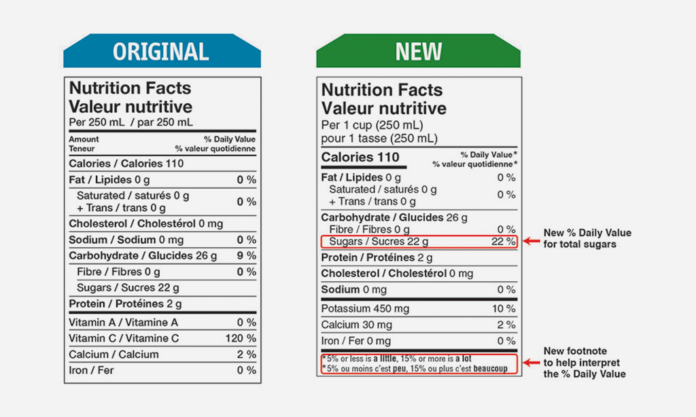
a standard Supplemented Foods Facts Table (SFFT) in place of the Nutritional Facts Table (NFT) on the label of most prepackaged products;
cautionary statements in both English and French for certain supplemental ingredients or certain levels of supplemental ingredients; and
a Supplemented Food Caution Identifier (SFCI) on the label of any product containing cautionary statements.
Existing requirements for making representations on a prepackaged product’s label would also apply to supplemented foods, as well as new requirements on the use of representations on a supplemented food label, including:
supplemented foods with cautionary statements will be prohibited from making representations about the supplemental ingredient that triggered the cautionary statement;
for supplemented foods with cautionary statements, any permitted representation on the principal display panel, or elsewhere on the label will be subject to size restrictions compared to the size of the SFCI or the size of the cautionary statements, respectively; and
for supplemented foods that carry the statement “high caffeine content” on their principal display panel of the label, representations related to the vitamin and mineral nutrient content in the food, physical performance, hydration or electrolyte replacement would also be prohibited.
New supplemented foods coming to market following the coming into force of the amended FDR would be required to comply with the new FDR immediately, whereas supplemented foods currently being sold under a TMA would be granted a transition period of three years once the proposed amendments to the FDR come into force.
Health Canada would continue to accept TMA applications until the coming into force date of the proposed amendments to the FDR. If a TMA is approved after the coming into force date, the product would have the remainder of the three-year transition period to comply with the FDR amendments.
New labelling requirements for natural health products
Health Canada has proposed amendments to the NHPR to improve the labelling of NHPs so that information is clear, consistent and legible for consumers and health professionals and in alignment with existing rules established for comparable non-prescription drugs.
Under the proposed amendments to the NHPR, a standardized products facts table (PFT) will be required in both French and English, under the title “Product Facts/Info-Produit,” or alternatively, “Drug Facts/Info-Médicament” displayed according to the prescribed format. The PFT would include the medicinal and non-medicinal ingredients, recommended use, warnings, directions, storage conditions, as well as a postal address, telephone number, e-mail address, or web address of the NHP product licence holder that may be used for consumers to report problems or pose questions. Any NHPs containing a food allergen, gluten or aspartame would be required to include a warning statement as well as the source of food allergen or gluten. In addition to the PFT, the NHP label would also be required to show the name of the product licence holder or importer (if applicable), the recommended route of administration, the lot number and the expiry date.
The proposed amendments to the NHPR also set out requirements on the location and orientation of the PFT, as well as font types, minimum type size and contrast of all statements, information or declarations required by the NHPR on the label of the NHP (both within and outside of the PFT).
The proposed amendments to the NHPR are expected to come into force three years following publication in the Canada Gazette, Part II, with the exception of amendments to the NHPR to clarify existing rules, which would come into force on the date of publication in the Canada Gazette, Part II.
New NHPs coming to market following the coming into force of the amended NHPR would be required to comply with the new NHPR immediately, whereas all NHPs marketed in Canada prior to the coming into force date of the proposed amendments to the NHPR would be given an additional transition period of three years to comply with the new labelling requirements, amounting to a total transition period of six years following publication in the Canada Gazette, Part II.
Herb Holdings, Inc. announced that it has confidentially submitted a draft registration statement on Form S-1 with the Securities and Exchange Commission (the “SEC”) relating to the proposed initial public offering of its common stock.
The number of shares to be offered and the price range for the proposed offering have not yet been determined. The initial public offering is expected to commence after the SEC completes its review process, subject to market and other conditions.
This press release does not constitute an offer to sell or the solicitation of an offer to buy any securities. Any offers, solicitations or offers to buy, or any sales of securities will be made in accordance with the registration requirements of the Securities Act of 1933, as amended (“Securities Act”). This announcement is being issued in accordance with Rule 135 under the Securities Act.
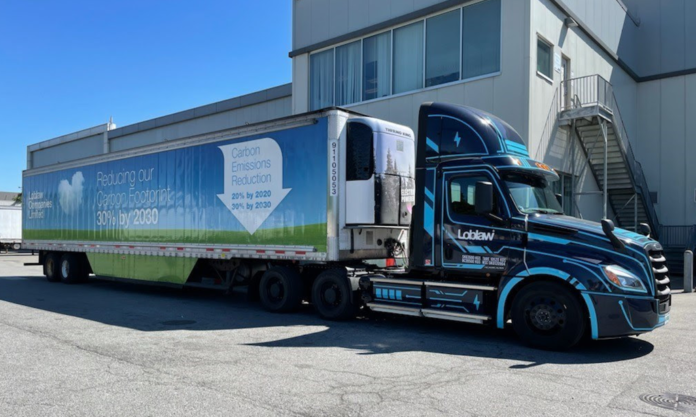
The company took an important step on its journey to move its corporately-owned trucking fleet to electric vehicles, with the introduction of Daimler Trucks North America’s (DTNA) battery-electric Freightliner eCascadia to routes in British Columbia. The company first trialed the eCascadia in early 2020 as part of Freightliner’s Customer Experience (CX) fleet. Loblaw has placed an initial order for five vehicles to be delivered in 2022/2023.
Loblaw will continue to utilize the CX fleet eCascadia for the next three months in and around the South Surrey, B.C. area. Typical routes the eCascadia runs include distances between 160km to 250km, primarily hauling grocery and other retail products from the company’s distribution center to stores. Data generated from the daily operations will help inform the continual development of electric vehicles.
“With approximately 10,000 deliveries to and from our stores each week, we understand the impact our fleet has on the environment. We know that through our own actions, we can play a critical role in helping Canada reach its carbon reduction targets,” said Brian Springer, Vice President, Transport Operations, Loblaw Companies Limited. “Over the past few years, we have worked closely with our partners to reach our goal of fully electrifying our corporate fleet by 2030. Our partnership with the Daimler Trucks North America’s eMobility group is an important piece in that overall commitment.”
In January of 2020, Loblaw participated in a demonstration of the eCascadia, loaded to 80,000 pounds of gross weight. Overall impressions were positive, and leadership saw the immediate potential for electric vehicle usage in operations. One in five Loblaw trips run about 150 km from a distribution center, which easily fits within the production eCascadia’s planned 400 km range capability.
“As always, collaboration with our customers is critical to understanding how commercial battery electric trucks will be part of a long-term solution in CO2-neutral transportation,” said David Carson, senior vice president of sales & marketing at Daimler Trucks North America. “We are excited for Loblaw’s trial and for feedback that aids in the purposeful innovation of our electric vehicles.”
The iconic gym brand is commemorating its 45th Anniversary with a Global Group Exercise event called, “Gorilla Week Goes Global” on Saturday, July 31st. World Gym locations across six continents will be entertaining their Group Exercise special event to mark the anniversary. Gyms will be posting photos and videos on their social media channels with #GorillaWeekGoesGlobal. To see members participating globally, fans can follow this hashtag. Australia will kick off the event and it will end on the West Coast of the United States.
“World Gym has always fostered a special sense of camaraderie and togetherness in the gym,” said CEO Lewis Stanton. “This special event is a way for our members in over 220 gyms on six continents to share in that camaraderie on a truly global scale.”
In July and August, Gorilla Week Goes Global, a check-in challenge for members, caps off the first annual Gorilla Games. During Gorilla Week, all World Gym’s exercise classes are amped up to Beast Mode. That cycling class pushes members harder, that dance class pumps it a little extra and those HIIT classes burn just a few more calories. Participating gyms will provide prizes for winners.