All In Nutritionals
Home Blog Page 280

High Nutrition Business API

0
High Nutrition Business API

On Feb 10, semantic technology company Edamam launched two new Nutrition Analysis and Recipe Search APIs, providing data-driven, cloud-based nutrition solutions for businesses in the food, health and wellness sectors.

These apps provide “real-time analysis of any recipe or ingredient list with detailed information for over 30 nutrients and nutrition claims for more than 20 major diets, such as vegan, paleo and gluten-free.”

Drawing from over 500 of the top food sites in the English web, Edamam’s Recipe Search API builds on their semantically organized database of 1.5 million nutritionally tagged and analyzed recipes and provides results for high quality recipes that fit a particular diet need or calorie requirement.

Among the current users of Edamam’s API solutions are Epicurious, Random House and Gannett.

“The Nutrition Analysis and Recipe Search APIs will open our unmatched, ground-breaking technology to a wide range of businesses at very affordable prices,” added Victor Penev, Edamam’s Founder and CEO.

https://developer.edamam.com.

Read more: http://www.digitaljournal.com/pr/2465731#ixzz3RTR67fBI

Retailers Keep Eyes on Target

0
Retailers Keep Eyes on Target

If Target keeps to it’s proposed schedule of being out of Canada completely by early May, there is no shortage of companies interested in moving in.

“Canadian Tire, Costco, Walmart, Home Depot and Metro grocery stores have all expressed an interest in some of our Target locations,” said David B. Henry, vice chairman and CEO of Kimco Realty Corp. Regardless of Target’s lack of success in Canada, property values and prices remain at historic high levels here, thanks to strong demand from pension funds and other institutional investors, he says. Kimco reported strong leasing momentum across its portfolio in the fourth quarter, with leasing spreads of 9.4 percent.

Meanwhile, Canadian landlord RioCan has 26 locations currently leased by Target, representing 1.9 percent of its total annualized rental revenue, at an average lease rate of . (hotelfauchere.com) 62 per square foot and an average remaining lease term of approximately 12.7 years. Target U.S. is also guaranteeing these leases for their remaining terms.

http://www.icsc.org/sct/newswire/canadian-landlords-find-new-users-for-target-stores


Calgary Retail Space in High Demand

0
Calgary Retail Space in High Demand

Despite the woes of the Canadian oil industry, retail vacancy rates in Calgary dropped from 2.7 per cent to 2.2 per cent this year and nearly 14 million square feet of new retail development is either being proposed or currently under construction. The report by Barclay Street Real Estate, said American retailer Target’s departure from Canada will skew the current vacancy rate, roughly doubling the total vacant space in Calgary, as an estimated 725,000 square feet of retail space will come back on the market with the closing of these stores.

Jonathan Gheron, a retail associate with Barclay Street Real Estate says, “Our economy has been thriving. There’s competition for current good space and the additions of this space I believe most of it will get absorbed.

“Overall, the consensus for Calgary is still positive. There’s still people who want to come here and open stores. The economy the way it is, is unfortunate but we haven’t seen a slowdown in retail. It’s still a very active market.” 

Herbasante Refines Taste of High DHA Omega Oil

0
Herbasante Refines Taste of High DHA Omega Oil

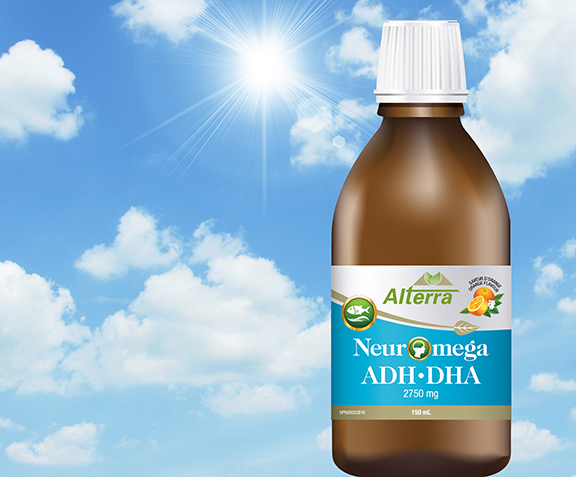
Herbasante – a Canadian company that specializes in providing a wide range of innovative natural and non-toxic homeopathic and herbal remedies at affordable prices – has improved one of their market leading supplements to make it even better.

President Patrick Toledano tells us, “We have had an Omega oil called Neuromega for about 10 years now – it’s the highest DHA formula on the market – in terms of concentration. This week we’re launching a new flavour. We’ll still have the old Cran-Raspberry flavour but now we’re launching an orange flavor that is absolutely delicious – 2750 mg of DHA per teaspoon. It has the new orange flavour – incredibly non-fishy. Now that we’ve improved the favour it should bring this already popular product to a whole different level.”

And not only that. Herbasante’s put the Umcka back in the Bronkotux!

“One of our cough syrup flavours has Umcka – which was removed from the market awhile ago. We were able to get an NPN and we were able to bring it back. We’re very proud of that and we’ve also launched a homeopathic cough syrup for kids – with a kids dosage on the label. It’s our ability to get NPNs for these things that is really setting us apart. We can do things that others have not been able to accomplish.”

Toledano estimates that they have product in over 1000 stores from coast to coast.


Microwaves and Nutrients

0

Maybe we shouldn’t feel guilty about that microwave oven in our kitchen. Most North American homes have them. The convenience they offer is almost irresistable. But despite the widespread use of microwave ovens and their excellent safety record, some people have lingering doubts that cooking food with microwaves somehow makes food less healthy by zapping away nutrients. Does cooking with microwaves do that?

Think about how microwaves work – cooking food using waves of energy that are similar to radio waves but shorter. These waves are remarkably selective, primarily affecting water and other molecules that are electrically asymmetrical — one end positively charged and the other negatively charged. Microwaves cause these molecules to vibrate and quickly build up thermal (heat) energy.

Some nutrients break down when they’re exposed to heat, whether it is from a microwave or a regular oven. Vitamin C is perhaps the clearest example. But because microwave cooking times are shorter, is it possible that cooking with a microwave does a better job of preserving vitamin C and other nutrients that break down when heated?

Cooking vegetables in water robs them of some of their nutritional value because nutrients leach out into the cooking water. For example, boiled broccoli loses glucosinolate, the sulfur-containing compound that may give the vegetable its cancer-fighting properties (as well as the taste that many find distinctive and some find disgusting). Steamed broccoli holds on to more glucosinolate than boiled or fried broccoli.

The cooking method that best retains nutrients is one that cooks quickly, heats food for the shortest amount of time, and uses as little liquid as possible. Microwaving meets those criteria. Using the microwave with a small amount of water essentially steams food from the inside out. That keeps more vitamins and minerals than almost any other cooking method.

But let’s not get too lost in the details. Vegetables, pretty much any way you prepare them, are good for you, and most of us don’t eat enough of them. And the microwave oven? A marvel of engineering, a miracle of convenience — and sometimes nutritionally advantageous to boot.


Excerpted from the Harvard Health article “Microwave Cooking and Nutrition” http://www.health.harvard.edu/staying-healthy/microwave-cooking-and-nutrition

(Re) Consider the Cranberry

0

A recent peer-reviewed study, published in Nutrition Research, shows cranberry juice drinkers had lower than normal levels of C-reactive protein, a marker of inflammation, and better overall heart health. The findings bolster the broader scientific literature that’s setting cranberry juice apart as a great tasting beverage that can provide whole body benefits and be part of a healthy diet.

Using the CDC’s National Health and Nutrition Examination Survey (NHANES) data for US adults (aged 19 and older), researchers compared consumers who drink an average of about two servings of cranberry juice per day – roughly 14 fluid ounces – over two non-consecutive days with those who do not. They pooled four years’ of data to determine if there were differences between groups. Turns out that regular cranberry juice consumers did not have higher body weight or even an increased likelihood for becoming overweight. Nor did cranberry juice drinkers consume more calories than those who didn’t drink cranberry juice.

While many in the healthy living community advocate for limiting added sugars, this study positions cranberry juice as an exception to the rule and reinforce previous findings that point to cardiovascular health benefits from cranberry juice, while also underscoring a link between cranberry juice consumption and total health.

“Cranberry beverages may be inappropriately associated with contributing to increased weight or diabetes risk,” said Kiyah J. Duffey, Ph.D., Virginia Tech, first author on the paper. “In actuality, mounting evidence suggests quite the opposite. Packed with polyphenols, like flavonoids, cranberry juice may contribute to improved cardiovascular health.”

Excerpted from Business Wire article “Cranberry Juice Scores High Marks in Heart Health”


Food for Thought

0

The top nutrition advisory panel in the United States has decided to drop its caution about eating cholesterol-laden food, a move that could undo almost 40 years of government warnings about its consumption.

The group’s finding that cholesterol in the diet need no longer be considered a “nutrient of concern” stands in contrast to the committee’s findings five years ago, the last time it convened. During those proceedings, as in previous years, the panel deemed the issue of excess cholesterol in the American diet a public health concern.

The finding follows an evolution of thinking among many nutritionists who now believe that, for healthy adults, eating foods high in cholesterol may not significantly affect the level of cholesterol in the blood or increase the risk of heart disease.

The greater danger in this regard, these experts believe, lies not in products such as eggs, shrimp or lobster, which are high in cholesterol, but in too many servings of foods heavy with saturated fats, such as fatty meats, whole milk, and butter.

The new view on cholesterol in food does not reverse warnings about high levels of “bad” cholesterol in the blood, which have been linked to heart disease. Moreover, some experts warned that people with particular health problems, such as diabetes, should continue to avoid cholesterol-rich diets.

While we’re all growing accustomed to conflicting dietary advice, the change on cholesterol comes from the influential US Dietary Guidelines Advisory Committee, the group that provides the scientific basis for the “Dietary Guidelines.” That federal publication has broad effects on the American diet, helping to determine the content of school lunches, affecting how food manufacturers advertise their wares, and serving as the foundation for reams of diet advice.

The problem with nutrition research is that most of it relies on large studies of populations and their dietary patterns obtained mostly through dietary questionnaires or 24-hour dietary recall. The first study linking saturated fats to heart disease by Ancel Keys (and on which 50 years of dietary policy to eat low fat was based) looked at about 30 men from Crete and their previous day’s diet and linked that to the fact they had fewer heart attacks than people from countries that ate more saturated fat. Skimpy evidence at best! In fact, most of the “evidence” that fat in general and saturated fat in particular is bad for us is being rigorously challenged by better and more specific research.

These type of studies are further complicated because it is very hard to tease out the factors that matter. For example, when Asians move from Asia to the U.S., they eat more meat and have more heart disease and cancer, but they also consume far more sugar. So it is the meat or is it the sugar? Hard to know.  These types of population studies also cannot prove cause and effect, only show correlation. Yet, the media and consumers take it as gospel. We thought dietary cholesterol was bad and were told to avoid egg yolks at all costs. Turns out they appear to have no impact on cholesterol.

Many experimental studies on vegan or paleo diets, which should give more direct evidence of cause and effect often have only small numbers of people in the study, making it hard to draw firm conclusions.  Even worse is that the diets they use for comparison (the control group) are not ideal alternative diets. Comparing a vegan diet of chips and Coke, bagels and pasta to a paleo diet of healthy veggies and grass fed meat won’t be very helpful, nor would comparing a paleo diet of feedlot meat, bologna and no fresh veggies to a whole foods, low glycemic vegan diet.

Also, eating a low fat versus a high fat vegan diet has very different health benefits. The Eco-Atkins or high fat, high protein, low carb, low glycemic vegan diet performs better for weight loss and cholesterol lowering than a low fat vegan diet that avoids nuts, seeds and avacados.

RD Laing said that “scientists can’t see the way they see, with their way of seeing.”

Let’s focus take a close look at what is in common between paleo and vegan (healthy vegan), because there is more that intelligent eating has in common than there are differences. They both focus on real, whole, fresh food that is sustainably raised.

Here are the characteristics of a healthy diet everyone agrees on:

  1. Very low glycemic load — low in sugar, flour and refined carbohydrates of all kinds.
  2. High in vegetables and fruits. The deeper the colors, the more variety, the better. This provides a high phytonutrient content protective against most diseases. (Although the paleo camp recommends lower glycemic fruit such as berries.)
  3. Low in pesticides, antibiotics and hormones and probably no or low GMO foods.
  4. No chemicals, additives, preservatives, dyes, MSG, artificial sweeteners and other “Franken Chemicals” that you would never have in your pantry.
  5. Higher in good quality fats — omega 3 fats for all. And most camps advise good quality fats from olive oil, nuts, seeds and avocados. Although some still advise very low fat diets for heart disease reversal.
  6. Adequate protein for appetite control and muscle synthesis, especially in the elderly.
  7. Ideally organic, local and fresh foods should be the majority of your diet.
  8. If animal products are consumed they should be sustainably raised or grass fed.
  9. If you are eating fish you should choose low mercury and low toxin containing fish such as sardines, herring and anchovies or other small fish and avoid tuna, swordfish and Chilean sea bass because of the high mercury load.

Excerpted from the article “Why You Should Be Paleo-Vegan” by Dr. Mark Hyman

High Nutrition Business API

0

Semantic technology company Edamam launched today two new APIs, providing data-driven, cloud-based nutrition solutions for businesses in the food, health and wellness sectors.

The Nutrition Analysis and Recipe Search APIs are business ready. They provide “real-time analysis of any recipe or ingredient list with detailed information for over 30 nutrients and nutrition claims for more than 20 major diets, such as vegan, paleo and gluten-free.”

Drawing from over 500 of the top food sites in the English web, Edamam’s Recipe Search API builds on their semantically organized database of 1.5 million nutritionally tagged and analyzed recipes and provides results for high quality recipes that fit a particular diet need or calorie requirement.

Among the current users of Edamam’s API solutions are Epicurious, Random House and Gannett.

“The Nutrition Analysis and Recipe Search APIs will open our unmatched, ground-breaking technology to a wide range of businesses at very affordable prices,” added Victor Penev, Edamam’s Founder and CEO.

Read more: http://www.digitaljournal.com/pr/2465731#ixzz3RTR67fBI

Pick Me Up

0
Pick Me Up

NOW® B12 Instant Energy is back and features natural ingredients including 2000 mcg of multisource B12 and energizing co-factors that promote lasting energy. Convenient single–serve packets help meet the physical demands of busy, health-conscious consumers. Free of refined sugar, caffeine or other stimulants, and the “jolt-and-crash” effect seen with many energy products.

This is the ideal mix of energy and mood supporting nutrients.to help you stay well fuelled. Perfect for busy professionals, parents, students, physically active folks, athletes, vegetarians or anyone in need of an instant boost. Or take one package daily as a dietary supplement.

NOW B-12 Instant Energy combines three forms of B-12 for maximum utilization by the body. This perfectly balanced formula takes the guesswork out of staying well fueled by providing a mix of the most beneficial compounds in one easy-to-use formula. With additional nutrients such as Chromium, Creatine and six other B-Vitamins, NOW B-12 Instant Energy can give you the spark you need, no matter where life takes you.

Ethical Nutrition Explained

0
Ethical Nutrition Explained

In the preamble to their newly released “Report on Ethical Nutrition,” BCC Research defines “Ethical Nutrition” as “the practice of providing the proper nutrients to a wide range of individuals, including infants, children, adults, and individuals with illnesses and injuries.”

They go on to say: The global ethical nutrition market is divided into three very distinct categories:

  • infant formula market
  • enteral formula market
  • parenteral formula market

Aha! Since the term “ethical nutrition” is neither a widely known nor often used bit of health category jargon, you may well wonder where the term comes from and what it actually means. The inclusion of parenteral formulas – which can encompass both intravenous and force feeding brings the “ethical” aspect into the equation because it raises the whole question of how long you keep (or when you stop) feeding unresponsive patients – especially in cases of terminal illness. How that applies to infants and regular adult formulas is anybody’s guess, but it is enough to know that in this particular study, “Ethical Nutrition” refers to the full range of infant and adult clinical nutrition supplements.

As a retailer, it’s good to know that the field is expected to boom. BCC Research says, “In 2014, the market reached $37.1 billion at manufacturers’ sales levels. The developing number of elderly and critically ill, along with a shift toward home care and increasing inroads into developing countries has continued to fuel growth. By 2019, it is anticipated that revenues will likely reach $58.2 billion, expanding at a compound annual growth rate (CAGR) of 9.4%. The infant formula segment will account for approximately 54.5% of total revenues by 2019.

Says BCC Research analyst Mary Anne Crandall. “The impact of managed care and demand for cost-effective healthcare dramatically has changed the structure of this market and has altered significantly the strategies that companies use to survive and succeed.”

A 2005 article in Practical Gastroenterology said there were well over 100 enteral formulas available at that time and the market has blossomed and grown dramatically since then. Specialized formulas are designed for a variety of clinical conditions or disease states. There are over thirty-five specialized formulas currently on the market. But having said that, there is only a handful of major manufacturers, led by Abbott Nutrition’s Ross Product Division (makers of Similac, Ensure and Glucerna), Nestlé Health Science (makers of Nutren Junior Infant Formula, Boost High Calorie Supplements and Vivonex) along with Mead Johnson and Norvartis.