



All In Nutritionals
Home Blog Page 199

Fish and fish oil supplements boost kidney cancer therapy

0

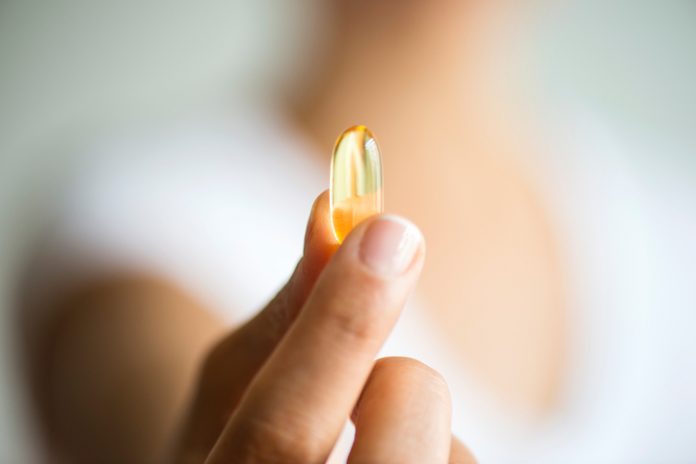
Scientists at the University of California, Davis have discovered that docosahexaenoic acid (DHA)—a fatty acid commonly found in fish and fish oil supplements—may be beneficial in the treatment of kidney cancer.

Their study found that DHA reduces renal cell carcinoma invasiveness, growth rate, and blood vessel growth when combined with the anti-cancer therapy regorafenib. Regorafenib works to fight cancer by attacking tyrosine kinases, which are enzymes that activate other proteins. However, kidney cancers mutate to resist these therapies.

“Most renal cell carcinomas learn to escape therapy after a couple of years,” says Robert Weiss, professor of medicine at UC Davis, chief of nephrology at Sacramento VA Medical Center, and head of the kidney cancer working group at the UC Davis Comprehensive Cancer Center. “A simple additive, which is completely nontoxic, could have a positive effect on disease, even rescuing regorafenib and similar therapies from resistance.”

Going into the study, Weiss and his associates knew that DHA metabolites, called epoxydocosapentaenoic acid (EDP), have the potential to restrain the ability of cancers to invade and grow blood vessels. Unfortunately, an enzyme called soluble epoxide hydrolase (sEH) usually breaks down and inactivates EDP.

“We knew that regorafenib blocks sEH,” said Weiss. “If you add more DHA and block sEH, all that DHA goes towards creating EDP, which contributes to the anti-cancer effect.”

The team tested the combination against both cancer cell lines and human tumors in mice, finding that the compound killed kidney cancer cells in both models.

Although the results are promising, these benefits are quite narrow, says Weiss—there’s still no proof that fish oil supplements could have any impact against kidney cancer on their own.

“We don’t have any evidence for that so far,” he notes. “It would be premature to make that assumption.” However, these findings do offer a simple way for patients with advanced kidney cancer to increase the effectiveness of their treatments.


Acupuncture may reduce symptoms of menopause in your patients

0

According to researchers at Wake Forest Baptist Medical Center, acupuncture treatments can reduce the number of hot flashes and night sweats that menopausal patients experience. The year-long study, funded by the National Institutes of Health, was comprised of 209 women from ages 45 to 60 who had not had a menstrual period for at least three months and had at least four hot flashes or night sweats per day.

The participants received a baseline assessment and were randomly assigned to one of two groups. The first received acupuncture treatments during the first six months of the study, but did not undergo them for the second six months. Conversely, the second group did not receive any acupuncture during the first six months, but did for the duration of the study.

After six months, the first group reported an average 36.7 per cent decline in the frequency of their hot flashes. After a year, the benefits persevered, with the group members maintaining an average 29.4 per cent reduction in symptoms.

On the other hand, the second group reported a 6 per cent increase in symptom frequency during the first six months, but saw an average 31 per cent reduction in their symptoms after receiving acupuncture.

“Although acupuncture does not work for every woman, our study showed that, on average, acupuncture effectively reduced the frequency of hot flashes and results were maintained for six months after the treatments stopped,” says Nancy Avis, Ph.D., professor of public health sciences at Wake Forest Baptist and lead author of the study.

“There are a number of non-hormonal options for treating hot flashes and night sweats that are available to women,” she adds. “None of these options seem to work for everyone, but our study showed that acupuncture from a licensed acupuncturist can help some women without any side effects. Our study also showed that the maximum benefit occurred after about eight treatments.”

Avis cautions that these benefits could also be due to outside factors to the study, like any additional care and attention received by the participants. Moreover, she says, additional research is needed to identify individual differences in response to acupuncture.

Ontario launches $20M Fund to support innovative health technologies

0

The Government of Ontario is setting up a new $20 million Health Technologies Fund to support healthcare innovation. This funding may be applied to a large variety of groups from SMEs to multi-national corporations, as long as more than half of the research and development and manufacturing processes occur in Ontario.

“The $20 million fund is designed to support pre-market evaluations and early adoption of innovative Ontario health technologies,” says William Charnetski, Ontario’s chief Health Innovation strategist. “Through it, we will invest $5 million over each of the next four years to accelerate innovation across multiple health care settings.”

Eligibility for this support requires membership of a Health Innovation team, which may be comprised of procurement professionals, tech companies, researchers, or end users (such as clinicians, doctors, or patients). Applicants may apply in one of three project categories: prototype, pre-market evaluation and early adoption.

“The three different categories recognizes that some companies are at different stages of their development,” says Gerry Frenette, executive director of Public and Member Relations at Canada’s Medical Technology Companies (MEDEC). “As it sits right now, we have a lot of innovation that is making its way into the healthcare system, but it’s not easy. The early adoption piece is really helpful.”

This initiative will also involve the hiring of Innovation Brokers, who are intended to help remove behavioural and process-driven barriers to the funded projects. Charnetski says that model candidates for this position are professionals who are well acquainted with both Ontario’s health care sector and its business climate. Additionally, they should have connections and networks that may promote a province-wide culture of innovation.

“We want people who are able to bring insight from a particular geography or sector into the strategic and tactical conversation,” he says.

An Innovation Broker could be the leader of an organization, research team or consortium. Their main purpose is to foster cooperation across Ontario’s healthcare system, with the mind to improve patient outcomes, add value to the system, and grow jobs in the province.

To learn more about becoming an Innovation Broker, visit the Government of Ontario’s website here.

Weetabix all day

0
Weetabix all day

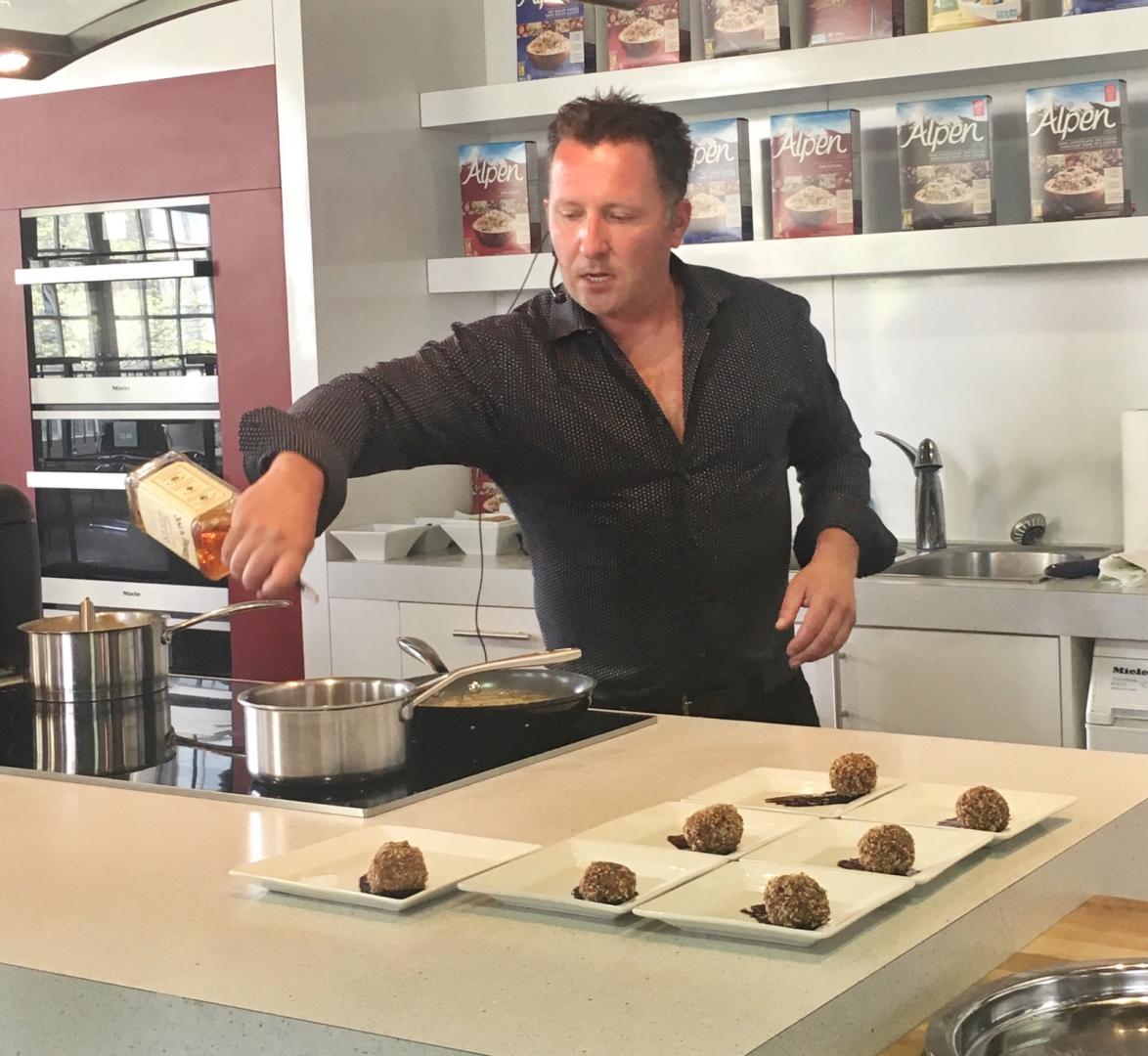
Weetabix hosted a luncheon today to teach us how we can use a breakfast cereal for a simple lunch or dinner.

It is recommended that an adult woman eat 25 grams of fibre every day, whereas the average adult only eats 11 grams, according to nutritionist Theresa Albert. A 10-year-old child is recommended to have 25 grams as well, yet the average child only east 7 grams.

Weetabix has a healthy 4 grams per serving, making it a great addition to many recipes.

weetabix1

Not only do Weetabix, Alpen, and Grain Shop have a healthy dose of fibre, they are also low in sugar.

weetabix3

An amazing product with many possibilities. You can’t go wrong with versatile food!

PharmaChoice Central Fill Ltd. announces new director of pharmacy innovation

0
PharmaChoice Central Fill Ltd. announces new director of pharmacy innovation

PharmaChoice announced today that Trent Lane will be joining the team to start up a new central fill facility in Calgary, Alberta.
These new services will provide pharmacists with tools to proactively refill prescriptions along with centralized prescription assembly, product verification, packaging, delivery and/or toting filled prescriptions back to pharmacies for patient pickup.
Having spent the last three years at PharmaSave, where he was responsible for innovative pharmacy solutions for over 500 independent pharmacies across Canada, Lane brings a wealth of industry experience.
“We are extremely fortunate to have found someone of Trent’s caliber to fulfill this role” says Grady Brown, CEO of PharmaChoice West.
Along with the new initiative, PharmaChoice Central Fill Ltd. will launch MedSync, which is designed to assist in increasing patient adherence to chronic medications.
“I am very excited to lead this new project. I believe the combination of MedSync along with central fill will provide pharmacists not only the tools to transition their practice, but also the time to focus on their patients,” Lane says.

PharmaChoice Central Fill Ltd. will be introducing Trent Lane at the PharmaChoice West tradeshow on May 28th and 29th in Saskatoon, Saskatchewan.

About PharmaChoice 

PharmaChoice is a member-owned co-operative that represents 640 local independent pharmacy owners across Canada. Each pharmacy location is unique and tailored to the community it serves. With the support of the PharmaChoice team, your independent owners and operators are united in a promise to always provide you with best Advice for Life. For more information, click here.

About MedSync

MedSync is a web-based application that is used to synchronize medication for pick up at the same time each month. Pharmacists using an appointment based model at the time of pick up may also incorporate other funded pharmacy clinical services. The MedSync model shows an 18-26% increase in prescription refills while improving patient adherence to chronic medications. For more information, click here.

The GMA asks for definition of “natural”

0
The GMA asks for definition of “natural”

The Grocery Manufacturers Association (GMA) is asking the U.S. Food and Drug Administration (FDA) to more clearly define their use of the term “natural.”
“Our industry is committed to providing consumers with labeling information in the clearest possible terms in order for them to make informed product purchases,” said Karin Moore, GMA’s SVP and general counsel.
“It is critically important for FDA to clearly define the term ‘natural’ to alleviate confusion for consumers and industry alike and to set a standard that will promote fair and consistent dealing in the marketplace among food and beverage manufacturers.”

Last November, the FDA started seeking comments on the issue and the year prior, the GMA filed a citizen petition with the FDA to set a definition for the term—one of three petitions filed on the matter. Some federal courts have also requested clarification from the FDA on their definition of “natural” due to ongoing litigation on the issue.
The GMA also states that farming and agricultural methods used in the production of a crop of animal husbandry should not influence on the “natural” status of a food or ingredient.

Canada’s retail sales dips one per cent

0
Canada’s retail sales dips one per cent

In March, Canada’s retail sales fell one per cent—more than what was expected. You might take this as a chance to look over what products are selling well and which ones aren’t. BMO Capital Markets economist Doug Porter says, “This followed two extremely strong months and I don’t think it takes away from the broader picture that the Canadian consumer has held up remarkably well so far in 2016.” As the market becomes more aware of natural products, retailers must adapt to consumer needs.

Natural skincare is big business

0
Natural skincare is big business

Target, Whole Foods, Credo and Sephora are just a few mass retailers helping natural skincare products gain ground.
Target announced that they will begin to carry Fig + Yarrow skincare products this summer.
“It’s amazing how quickly natural skincare has come into the collective consciousness, and how people have become very savvy about ingredients,” says Brandy Monique, founder of Fig + Yarrow, in a Q&A posted on the Target content site.
A five-piece collection will find its way to Target’s shelves in July and is just one of several natural brands they are taking on board.
Keeping pace with trends and consumer expectations, Target has also recently added Sonia Kashuk, S.W Basics, and defy & INSPIRE.
Customers are becoming more conscious of personal care and cosmetics and are looking for fewer ingredients, fewer synthesized chemicals, and fewer harmful ingredients. The retail landscape is responding with products at every level, from mass to prestige to luxury.

Nutraceutical International Corporation posts a 7.4% net sales gain for its second quarter

0
Nutraceutical International Corporation posts a 7.4% net sales gain for its second quarter

Nutraceutical International has pursued an aggressive acquisition strategy over the last few years—mostly through small deals and now manufacturers dietary supplements, personal care products, and foods such as Solaray, Nature’s Life, Natural Balance and Organix South. Having acquired more than 65 companies since being founded in 1993, Nutraceutical has made impressive strides in the natural product industry.
Bill Gay, chairman and chief executive officer, commented, “Fiscal 2016 second quarter net sales grew by 7.4%, Adjusted EBITDA increased by $1.1M, or 10.8%, and we added $0.06 per share to diluted EPS. Management is pleased with the overall growth and direction of our business and with the gains generated by recent acquisitions. We are hopeful the softness in certain areas of our international business will improve later in the year.
Our February 2016 acquisition of Aubrey Organics in Tampa, Florida will enable us to consolidate certain branded offices and manufacturing operations for our personal care business. Both of these new businesses expand our current branded portfolio of products with many unique offerings for our health and natural food store customers,” he said.

Stock traders appear to be buying into the company’s strategy. The company’s share price on the NASDAQ exchange has risen to more than $23.
They have also made good with their expectations of sales.
Neutrceutical said that net sales for the fiscal 2016 second quarter were $59.5 million, compared to $55.4 million for the same quarter of fiscal 2015. For the second quarter of fiscal 2016, net income was $4.6 million, or $0.49 diluted earnings per share, compared to net income of $4.1 million, or $0.43 diluted earnings per share, for the same quarter of fiscal 2015.
Net sales for the six months ended March 31, 2016 were $115.5 million compared to $108.4 million for the same period of fiscal 2015. For the six months ended March 31, 2016, net income was $8.9 million, or $0.94 diluted earnings per share, compared to net income of $7.4 million, or $0.77 diluted earnings per share, for the same period of fiscal 2015.

Frozen food recall after Listeria outbreak

0
Frozen food recall after Listeria outbreak

The Canadian Food Inspection Agency has released quite a list of products being recalled due to Listeria monocytogenes:

Here is a list of products that are sold at Costco which are being recalled:

– Organic by Nature brand frozen Organic Butternut Squash (UPC 8 46358 00067 1) and Organic Vegetable Medley (UPC 8 46358 00062 6) sold in Alberta, British Columbia, Manitoba, Saskatchewan

– Organic by Nature brand frozen Organic Sweet Peas (UPC 8 46358 00061 9) sold in Alberta, British Columbia, Manitoba, Saskatchewan
Other Retailers:

– Cookin’ Greens Organic brand A Blend of Kale, Sweet Corn & Peas (UPC 8 11138 00038 7) sold nationally

– Alasko brand IQF Regular Mixed Frozen Vegetables A Grade (UPC 1 06 95058 17331 7) and B Grade (UPC 1 06 95058 17341 6) sold for hotel/restaurant/institutional use in Alberta, British Columbia, Manitoba, Saskatchewan

– Harmonie brand, IGA brand, Co-op brand, Western Family brand and unbranded frozen vegetable products (various UPCs) sold in Alberta, British Columbia, Manitoba, Possibly National, Saskatchewan

– Ajinomoto brand Yakitori Chicken with Japanese-Style Fried Rice (UPC 0 71757 05642 8) sold in Alberta, British Columbia, Manitoba, Saskatchewan

– All Asia Fresh brand rice and noodle bowls sold in Alberta

– Indican brand Mixed Frozen Veggies (UPC 6 27727 10001 3) sold in Alberta and British Columbia

– Stahlbush Island Farms brand Cut Green Beans (UPC 6 38882 00053 7) sold at retail in Alberta, British Columbia, Manitoba, Northwest Territories, Nova Scotia, Ontario, Possibly National, Quebec, Saskatchewan, Yukon.

Check the CFIA website for more information.