




The Boucher Institute of Naturopathic Medicine (BINM) has announced their commitment to offer Canada’s first naturopathic midwifery program beginning in the fall of 2011. The Chair of Women’s and Children’s Health at the Boucher Institute, Cathy Carlson-Rink, ND has begun development of individual certificate courses in naturopathic therapeutics in obstetrics, gynaecology and paediatrics. These certificate credits will be applied to the completion of the comprehensive midwifery program when accreditation is achieved. “We are thrilled to be moving forward with this initiative,” said Boucher Institute President, Patricia Wolfe, ND. “Helping women to naturally prepare for and accomplish childbirth, and supporting them as new mothers to make the best health choices for themselves and their babies, is a profound and effective way to promote wellness extending into the next generation.” The development of this important post-graduate program holds to BINM’s firm commitment to advance naturopathic knowledge and skills. Midwifery is an intrinsically holistic practice, combining an understanding of the physical, emotional, environmental, social and cultural aspects of a woman’s reproductive health experience. Much like naturopathic medicine, midwifery is collaborative by nature and promotes health and wellness among women, babies and families.
X YMOGEN Announces Emergence into Canadian Market
OXYMOGEN, a US- based provider of functional food and nutraceutical products servicing the professional market for over 25 years, has announced its arrival to the Canadian market as of the fourth quarter of 2011. The company offers over 150 products, manufactured in TGA-certified facilities and is engaged with Health Canada to obtain NPN numbers on as many products as possible for distribution in Canada. Many of their formulas are based upon licenses of exclusivity from partners such as Johns Hopkins University, InstitutRosell, and ProliantBiologicals. XYMOGEN was recognized in 2007, 2008, and again in 2010 by American Business Magazine, Inc. as one of the 5000 fastest-growing private companies in America. The company cites “research-based doses of ingredients in single and combination products” and the fact that many products are published in peer reviewed journals, as a major basis for the success it has enjoyed with ND’s, MD’s, and other integrated healthcare providers.
Methylation testing now available with Doctor’s Data Inc.
Doctor’s Data, Inc. (DDI) has developed a Methylation Profile to report on plasma concentrations of key amino acids and intermediary metabolites in order to permit the evaluation of disorders in methionine metabolism. Potential consequences of untreated aberrant methionine metabolism include abnormal neurotransmitter metabolism and neuropsychiatric disorders, nitric oxide dyshomeostasis, global under-methylation/synthesis/ repair of DNA, immune dysregulation, cancer, cardiovascular disease, congenital heart disease/birth defects, neurodegenerative disease, impaired endogenous detoxification and increased risk for Down syndrome. Improvements in disordered methionine metabolism may be accomplished through nutritional intervention guided by the DDI Methylation Profile.
The treatment of hypertension is improving in Canada
A recent study has revealed that the treatment of hypertension has vastly improved over the past two decades in Canada (CMAJ. 2011 Jun 14;183(9):1007-13) as awareness of the condition’s risks grows and drug treatments become more prevalent. The study looked at blood pressure measurements of Canadians between the ages of 20 and 79 and found that while the rate of hypertension remained stable at 19.7% to 21.6% of the population, rates of treatment and control had greatly improved. Over the period of the study, which was based on the review of three large-scale surveys, control of the condition through drug regimes had substantially improved, with 64.6% of those with the condition receiving treatment in 2009, up from 13.2% in 1992, ranking Canada as one of the most successful nations at treating hypertension. Despite the improvement in awareness and treatment, the study revealed that while Canada has one of the world’s lowest hypertension rates, a third of the population still has blood pressure above recommended targets and cardiovascular disease remains the most common cause of death and disability.
WHO says cell phone use “possibly carcinogenic”
Using a mobile phone might increase the risk of developing certain types of brain tumors and consumers should consider ways of reducing their exposure, World Health Organisation (WHO) cancer experts said. A working group of 31 scientists from 14 countries meeting at the WHO’s International Agency for Research on Cancer (IARC) said a review of all the available scientific evidence suggested cell phone use should be classified as “possibly carcinogenic.” The classification, which puts mobile phone use in the same broad IARC cancer risk category as lead, chloroform and coffee, could spur the United Nations health body to look again at its guidelines on mobile phones, the scientists said. Institute 20 years ago and he is the chief science officer for Metagenics, Inc. Bland has devoted his life to helping people realize optimal health by addressing the causes of impaired metabolism and physiology, and then applying individualized responses. He has inspired many with his groundbreaking work in the fields of nutrition and nutrigenomics and his leadership in the growing specialty of lifestyle medicine, helping people make lifestyle changes to promote lifelong health and avoid chronic illness. Considered the “Father of Functional Medicine,” Bland’s vision, brilliance, and leadership have inspired a worldwide community of clinicians, scientists, and educators to transform clinical practice and educational curricula.
Health Canada announces funding for clinical trials of liberation therapy for MS patients
On June 29, 2011, the federal government announced that it will fund clinical trials of the so-called liberation therapy for multiplesclerosis(MS)patients.Liberation is an unproven therapy based on the theory of Italian neurologist Dr. Paolo Zamboni that stenosis, a narrowing or blockage of veins in the neck which drain blood from the brain, results in a medical condition known as Chronic Cerebrospinal Venous Insufficiency (CCSVI), which may cause MS symptoms. Removing the blockage using a procedure similar to balloon angioplasty known as percutaneous transluminal angioplasty (PTA) was found to improve blood flow, which in turn improved balance and walking, while reducing dizziness, fatigue, muscle spasms and incontinence. Although the cause of MS is unknown, several new studies are pointing toward CCSVI as being a culprit in the pathogenesis of MS. The push for clinical trials in Canada has been increasing as dozens of patients who underwent the operation abroad at their own expense claim their lives have changed for the better.
Phospholipids choline, serine, and inositol

Phospholipids choline, serine, and inositol
Effects on Major Depressive Disorder
Introduction
Depression or Major Depressive Disorder (MDD) is a serious illness that interferes with a patient’s mental, physical and cognitive well being (Soleimani 2011). It is described as “a broad and heterogeneous diagnostic grouping, central to which is depressed mood or loss of pleasure in most activities” (Middleton 2005). Since depression affects the quality of life and productivity of the patient, an early diagnosis is crucial for effective treatment. It has been reported that 60-70% of patients with depression will respond to treatment if diagnosed early and appropriately treated (Shah 1999). The annual prevalence of depression in Canada is estimated at 4.8% (Patten 2006). According to the National Comorbidity survey, the average lifetime estimate of depression in the United States is 12% for males and 26% for females with an average lifetime prevalence of 17% (Shah 1999). The World Health Organization (WHO) in the 1990s ranked depression to be the fourth cause of global disease burden. In 2001, depression rose to be the third leading cause of Global Disease Burden (GDB) worldwide (Murray 1997).
The most important factor predicting the risk of a depressive episode is having had depression in the past. Patients who have had depression in the past have more than a 50% chance of having another episode in the future. Females have double the risk of being depressed than males in their lifetime and first-degree relatives are three times more likely to develop depression than the general public (Shah 1999).
Two existing criteria are used to diagnose depression; the American Psychiatric Association’s Diagnostic and statistical Manual version four (DSM-IV), and the World Health Organization’s International classification of disease tenth revision (ICD-10). The DSM-IV-RT defines depression as a mood disorder. A patient is diagnosed with MDD based on the DSM-IV if they meet the following criteria: the patient should not have a history of bipolar disorder, the patient should have a depressive episode for at least two weeks and the patient has to experience at least five of the following symptoms: depressed mood, weight gain or loss, psychomotor agitation or retardation, inability to enjoy activities otherwise enjoyable, feeling guilty, feeling worthless, insomnia and recurrent thoughts of death or suicide. Moreover, these symptoms have to cause significant impairment to the patient’s functioning and cannot be related to substance abuse (American Psychiatric Association [DSM-IV-TR] 2000). After diagnosis, symptoms will be classified according to severity to indicate mild, moderate or severe depression. Mild depression is classified by meeting the minimum criteria and slightly more symptoms; moderate depression episodes are classified by meeting the minimum criteria plus symptoms that interfere with the patient’s social and occupational life. If psychotic features or suicidal thoughts accompany an episode, the patient is considered to have severe depression, even if they only meet the DSM-IV minimum criteria (Hamilton 1960). Recommended treatment differs based on disease severity.
The course of action for mild depression is often watchful waiting, with the expectation that symptoms will subside in 14 days (Whooley 2000). In the case of moderate or severe depression, selective serotonin reuptake inhibitors (SSRIs) are used as the first line of treatment. Patients with severe depression should be closely monitored for suicidality with referral or admission to hospital if necessary (Soleimani 2011).
A meta analysis published in 2010 found that SSRI treatment is no better than placebo for mild to moderate depression (Fournier 2010). In addition, subgroup analysis from the Women’s Health Survey study also found that women using SSRIs for depression are at a significantly higher risk of sudden cardiac death (William 2009). This recent research highlights the need for safe and effective treatment alternatives to drug therapy.
Interest in administering phospholipids for treatment of MDD stems from animal and human data demonstrating that certain areas of the brain, plasma and CSF can show deficiencies in phospholipids in depressed patients. Phospholipids are also integral in CNS second messenger systems raising questions as to whether these deficiencies contribute to the symptomology of major depression. This review will focus on the effects of administering phosphatidylinositol, phosphatidylserine or phosphatidylcholine on unipolar depression by reviewing current human trials and animal data. A comprehensive literature review was conducted and revealed one systematic review, three clinical trials and four animal studies on inositol and depression, three human and one animal study on phosphatidylserine and no human or animal studies on the relationship between depression and phosphatidylcholine. The remainder of the article will focus on inositol and phosphatidylserine as possible treatments for major depression.
Phosphatidylinositol
Inositol is a sugar alcohol that is a component of cell membrane phospholipids and a part of the intracellular phosphatidylinositol second-messenger system associated with receptors of norepinephrine, serotonin and choline (Berridge 1989).
In total, four studies of inositol treatment for depression in rats were found. Well- defined parameters of antidepressant response based primarily on locomotion indices serve as endpoint measures. All four studies demonstrated a significant antidepressant effect from administration of inositol relative to placebo (Einat 1999, Einat 2002, Kofman 1993, Kofman 1998).
In 1978 Barkai and colleagues found that patients with MDD have significantly decreased inositol levels in CSF when compared to healthy controls. This finding was investigated further in 1993 where inositol was administered to subjects and results were recorded. The conclusion was that administering inositol to depressed patients increases their CSF inositol levels significantly (Levine 1993); the findings inspired the first randomized clinical trial done by Levine and colleagues in 1995.
A total of three human trials were identified investigating the effects of inositol administration on depression. Levine and colleagues conducted the first randomized clinical trial using the Hamilton Depression Rating Scale (HDRS) as their primary endoint measure (Levine 1995). After administering 12g of inositol or placebo for four weeks, the authors found a significant reduction in depression scores in the inositol group compared to the placebo group.
Plausibility of a physiologic reaction to inositol in MDD was elevated by a follow up of this study group 10-12 months after the initial study had ceased. 50% of patients who responded to inositol in the initial trial had experienced a relapse in depressive symptoms after discontinuing treatment and no patients in the placebo arm who initially reported benefit experienced a relapse in symptoms. (Levine 1995b)
In 1999, two studies were published that investigated inositol effects on HDRS. Levine and colleagues (1999) administered inositol and standard SSRI treatment in the experimental group and used placebo with SSRIs as a control. After four weeks, authors found that there was no significant difference between the groups on HDRS scores, however there was an expected improvement in the scores of both groups as both groups received SSRI therapy. Nemets and colleagues (1999) conducted a study to investigate the effects of inositol on depression after failed SSRI treatment. Depressed patients that failed to respond to three weeks of SSRI treatment were enrolled in this study and randomized into two groups: inositol group or placebo group. Patients continued their SSRI treatment during the four weeks period of the study. The authors concluded that there was no significant difference in the depression scores when comparing both groups.
Levine (1995) included 4 patients with bipolar depression in the inositol group (N=9). Inclusion of patients with bipolar depression could potentially explain the apparent improvement in mean HDRS scores as almost half the treatment group was classified as bipolar. This inclusion of patients with bipolar makes it difficult to conclude whether inositol is effective in reducing depression in patients with unipolar depression.
Each of the three studies reviewed above have two main limitations: small sample size and a short study period. The duration of the two studies conducted in 1999 was adopted from the first study (Levine 1995) that reported significant reduction in HDRS after 4 weeks. A longer study is needed to define when inositol becomes effective in reducing depression symptoms if at all. The patients in the original study were not using concurrent SSRI treatment and were not labeled as SSRI non-responders which may explain the difference in results when compared to the studies conducted in 1999. Thus, a follow up study with a greater sample size, longer duration and patients with MDD who have no history of SSRI use may produce more conclusive results. Future directions for the study of inositol and MDD should also include investigation into the potential applications of the different stereoisomers of inositol including myo-inositol and d-chiro-inositol.
A Cochrane systematic review (Taylor 2004) combined all of the three studies and included a study that recruited only bipolar patients and found that even with a combined sample (n=141), the effect of inositol on depression scores is still not significant.
In conclusion, the three RCTs (Levine 1995, Levine 1999, Nemets 1999) show conflicting results regarding the treatment effect of inositol.
Phosphatidylserine
Phosphatidylserine is one of the most important phospholipids in the central nervous system. It mainly plays a role in the function and homeostasis of nerve cells and is involved in cell-to-cell recognition and communication and affects levels of neurotransmitters such as dopamine, acetylcholine, and norepinephrine. For these reasons, phosphatidylserine has mostly been studied for its role in memory and cognitive functions (Kidd 1999).
One study was identified examining endpoints relating to depression following administration of phosphatidylserine in rats. Significant antidepressant outcomes were demonstrated relative to administration of placebo (Castilho 2004).
Three studies have investigated the effects of administering phosphatidylserine to patients with depression. Maggioni and colleagues (1990) conducted a placebo- controlled crossover study looking at the effects of administering phosphatidylserine to elderly female patients with depression. All 10 patients received both the treatment and placebo, thus served as their own controls. Symptoms were measured using the HDRS. All patients received the placebo for at least 7 days followed by a washout period before receiving 300mg/day of phosphatidylserine for 30 days. Depression scores were recorded before placebo (phase I), before phosphatidylserine treatment (phase II) and after phosphatidylserine treatment (phase III). Rating scores before and after placebo administration did not change. However, depression scores were reduced significantly after phosphatidylserine treatment (Maggioni 1990).
Brambilla and colleagues (1995) recruited 10 elderly female patients (8 with MDD and 2 with bipolar depression) to study the effects of administering phosphatidylserine on depression. Patients received a dose of 600mg of phosphatidylserine per day. Patients had a significant reduction in the HDRS after 30 days (Brambilla 1995).
Brambilla, & Maggioni (1998) studied phosphatidylserine and depression in an elderly female sample. Ten females were recruited for this study, 8 with MDD and 2 with bipolar depression. The average age of the patients were consistent with earlier studies and included women between the ages of 66 to 78 years. Patients received 200 mg of PS three times a day for 30 days after 15 days of hospitalization for depression. Effects were measured based on HDRS and a significant improvement was seen after 30 days in the treatment group when compared to controls (Brambilla 1998).
Discussion
The need for an alternative treatment for depression magnified after a prospective study of nurses found that using SSRIs significantly increases the risk of sudden cardiac death. The current findings indicate that administering inositol to rats creates a significant reduction in depressive symptoms as reported by several studies (Einat 2000, Einat 2002, Kofman 1998, Kofman 1993). On the other hand, only one (Levine 1995) of three (Levine 1999, Nemets 1999) human studies found a significant effect following administration of inositol on depressive symptoms. The type of patients (MDD, unipolar depression versus bipolar disorder) and the use of adjunct pharmacotherapy may explain the difference in results. The positive effects of inositol in rats strengthen the case for further investigation of inositol treatment for depression in humans.
In studies of phosphatidylserine, three human trials and an animal study showed a significant reduction in depressive scores after treatment. The human studies presented in this paper found that phosphatidylserine is effective in reducing depression scores in elderly female patients. Although it was very effective in treating depression, no studies have been published looking at the effects of phosphatidylserine on depression in a sample of adult males or younger adult females. Questions as to whether the antidepressant effects of phosphatidylserine are age or gender dependent requires further study across male and younger female patient populations.
Conclusion
Based on the current findings, the effect of inositol administration on depressive symptoms is not clear and requires further investigation in humans. For phosphatidylserine, three human trials and one animal study confirm an antidepressant effect. Administering between 300-600mg/day for 30 days has been shown to significantly reduce symptoms in elderly females with depression. Continued research in the use of phospholipids in the treatment of depression is warranted given their high safety profile and potential to improve symptoms in depressed patients.
References:
American Psychiatric Association. Diagnostic and statistical manual of mental disorders (4th ed., text rev.). Washington DC. 2000.
Barkai AL, Dunner DL, Gross HA, Mayo P, Fieve RR. Reduced Myo-Inositol levels in cerebrospinal fluid from patients with affective disorder. Biological Psychiatry. 1978;13(1):65-72.
Berridge MJ, Irvine RF. Inositol phosphates and cell signalling. Nature. 1989;341(6239):197-205.
Blokland A, Honig W, Brouns F, Jolles J. Cognition-enhancing properties of subchronic phosphatidylserine (PS) treatment in middle- aged rats: comparison of bovine cortex PS with egg PS and soybean PS. Nutrition. 1999;15(10):778-783.
Brambilla F, Maggioni M, Cenacchi T, Sacerdote P, Panerai AR. T-lymphocyte proliferative response to mitogen stimulation in elderly depressed patients. Journal of Affective Disorders. 1995;36(1-2):51-56.
Brambilla F, Maggioni M. Blood levels of cytokines in elderly patients with major depressive disorder. Acta Psychiatrica Scandinavica. 1998;97(4):309-313.
Castilho JC, Perry JC, Andreatini R, Vital MA. Phosphatidylserine: an antidepressive or a cognitive enhancer? Progress in Neuro-Psychopharmacology & Biological Psychiatry. 2004;28(4):731-738.
Einat H, Belmaker RH, Zangen A, Overstreet DH, Yadid G. Chronic inositol treatment reduces depression-like immobility of Flinders Sensitive Line rats in the forced swim test. Depress Anxiety. 2002;15(3):148-51.
Einat H, Karbovski H, Korik J, Tsalah D, Belmaker RH. Inositol reduces depressivelike behaviors in two different animal models of depression. Psychopharmacology. 2000;144:158 – 162.
Fournier JC, DeRubeis RJ, Hollon SD, Dimidjian S, Amsterdam JD, Shelton RC, Fawcett J. Antidepressant drug effects and depression severity: a patient-level metaanalysis. JAMA. 2010 Jan 6;303(1):47-53.
Hamilton M. A rating scale for depression. J Neurol Neurosurg Psychiatry. 1960 Feb;23:56-62.
Kidd PM. Phosphatidylserine. Alternative Medicine Review. 1999; 4(2):115-8.
Kofman O, Agam G, Shapiro J, Spencer A. Chronic dietary inositol enhances locomotor activity and brain inositol levels in rats. Psychophamacology. 1998;139:239–242.
Kofman O, Bersudsky Y, Vinnitsky I, Alpert C, Belmaker RH. The effect of peripheral inositol injection on rat motor activity models of depression. Israel Journal of Medical Sciences. 1998;29:580 – 586.
Levine J, Rapaport A, Lev L, Bersudsky Y, Kofman O, Belmaker RH, Shapiro J, Agam G. Inositol treatment raises CSF inositol levels. Brain Res. 1993 Nov 5;627(1):168-70.
Levine, J, et al. Double-blind, controlled trial of Inositol treatment of depression. The American Journal of Psychiatry. 1995;152(5):792-794.
Levine J, Barak Y, Kofman O, Belmaker RH. Follow up and relapse analysis of an inositol study of depression. Israel Journal of Psychiatry and Related Sciences. 1995;32(1):14-21
Levine J, Mishori A, Susnosky M, Martin M, Belmaker RH. Combination of inositol and serotonin reuptake inhibitors in the treatment of depression. Biol Psychiatry. 1999 Feb 1;45(3):270-3.
Maggioni M, Picotti GB, Bondiolotti GP, Panerai A, Cenacchi T, Nobile P,Brambilla F. Effects of phosphatidylserine therapy in geriatric patients with depressive disorders. Acta Psychiatr Scand. 1990 Mar;81(3):265-70.
Middleton H, Shaw I, Feder G. NICE guidelines for the management of depression. BMJ. 2005;330(7486):267-268.
Murray C, Lopez A. Global mortality, disability, and the contribution of risk factors: global burden of disease study. The Lancent. 1997;349(9063):1436-1422.
Nemets B, Mishory A, Levine J, Belmaker RH. Inositol addition does not improve depression in SSRI treatment failures. J Neural Transm. 1999;106(7-8):795-8.
Patten SB, Wang JL, Williams JV, Currie S. Descriptive epidemiology of major depression in Canada . Canadian Journal of Psychiatry. 2006;51(2):84-87.
Shah N, Eisner T, Farrell M, Raeder C. An overview of ssris for the treatment of depression. Journal of the Pharmacy Society of Wisconsin. 1999;July-August:33-46.
Soleimani L, Lapidus K, Iosifescu D. Diagnosis and treatment of major depressive disorder. Psychiatry for the Neurologist. 2011;29(1):177-193.
Taylor MJ, Wilder H, Bhagwagar Z, Geddes J. Inositol for depressive disorders. Cochrane Database of Systematic Reviews 2004, Issue 1. Art. No.: CD004049. DOI: 10.1002/14651858.CD004049.pub2.
Whang W, Kubzansky LD, Kawachi I, Rexrode KM, Kroenke CH, Glynn RJ, Garan H, Albert CM. Depression and risk of sudden cardiac death and coronary heart disease in women: results from the Nurses’ Health Study. J Am Coll Cardiol. 2009 Mar 17;53(11):950-8.
Whooley MA, Simon GE. Managing depression in medical outpatients. N Engl J Med. 2000 Dec 28;343(26):1942-50.
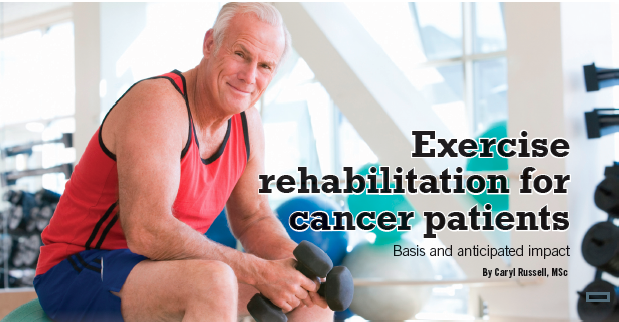
Exercise rehabilitation for cancer patients
Exercise rehabilitation for cancer patients
Basis and anticipated impact
Introduction
Chronic diseases are the most serious public health burden in Canada and the leading cause of death and disability worldwide. In Canada, about two-thirds of total deaths are due to chronic diseases; about 16 million Canadians live with a chronic disease (Chronic Disease Prevention Alliance of Canada 2011). ese people are often at risk for several comorbidities because of the similarity in underlying risk factors. Physical inactivity is one lifestyle risk factor for many of these diseases and, at the same time, it is routinely prescribed in the rehabilitation for these diseases. Exercise (a form of physical activity that is deliberate and performed repeatedly over a period of time) has consistently been used in the prevention, treatment and rehabilitation of cardiovascular disease, type 2 diabetes, metabolic syndrome, musculoskeletal disease, hypertension, neuropsychiatric diseases, respiratory diseases, and now, cancer (Durstines 2009).
Convincing evidence supports the role for exercise across the cancer spectrum. e continuum includes exercise as prevention, during treatment, recovery, living after recovery and for some, living with advanced cancer (Doyle 2009). Evidence will be reviewed to support the role that exercise plays when utilized in conjunction with conventional therapies and health promotion strategies during and post-cancer treatment. It is important to note that survival rates have increased in Canada such that the fi ve- year survival for all cancers combined is 62% and can be as high as 90% for thyroid, prostate and testicular cancers (Canadian Cancer Society 2011). A combination of risk factor identifi cation and screening, early detection, advances in detection methods and treatment therapies all improve survival. With these improvements, more patients with cancer are living longer, and hence, require long-term management. is fact prompted the early research into strategies to help improve the quality of life for cancer survivors; exercise prescription being one strategy.
Cancer and Exercise
Cancer is a disease that has touched almost everyone’s life either personally or through family or friends and its eff ects are far-reaching. It is a term for diseases in which abnormal cells divide without control and can invade nearby tissues (National Cancer Institute at the National Institutes of Health 2010). Treatment, consisting of some combination of surgery, chemotherapy, radiation and/or immunotherapy may eradicate the tumor but often leaves individuals struggling to regain the quality of life they once had before cancer diagnosis. e eff ects of treatment can and do cause physiological alterations to normal tissue and body functions. Immune, cardiovascular, pulmonary, gastrointestinal, musculoskeletal, hepatic, neuroendocrine, and dermatological toxicity result in varying types and degrees of symptoms (Schneider 2003). Side eff ects include, but are not limited to, fatigue, lymphedema, pain, fat gain, muscle atrophy, sleep disturbance, depression, peripheral neuropathy, cognitive decline, bone loss, anemia, impaired immune function and secondary cancers (Schmitz 2011).
It became clear that the positive eff ects of exercise were opposite these negative side eff ects of treatment. Going back to the early work of Winningham (1991), where a walking program for people with cancer was used to counter the debilitating eff ects of disease, treatment and inactivity (Winningham 1991), several research reports emerged indicating that physical activity and/or exercise may be useful for improving the quality of life of cancer survivors. In addition to giving cancer survivors some control over their own lives, exercise also provides physiological adaptations that contribute to reduced side eff ects.
The type of exercise training (aerobic, resistance or both), the patient population (single cancer type or a mixed group of cancer type) and the fact that treatment protocols are not consistent from person to person, have made it difficult to conduct randomized control studies for each group or condition under varying exercise training modes, duration and intensity, with the intent of providing specific exercise guidelines. Progress has been made for groups such as breast, prostate, colorectal, and hematological cancers. Synthesized evidence-based research (Doyle 2009), a systematic review and meta-analysis (Speck 2010) and a Roundtable consensus paper (Schmitz 2011) collectively demonstrate that exercise is safe and feasible during cancer treatment and results in:
• improvement in the quality of life during and after treatment
• improvement in functional capacity as measured by aerobic fitness scores and muscular strength
• no increased onset of lymphedema associated with breast cancer
• improvements in body composition favoring increased lean tissue and/or reduced body fat
• protection from loss of bone mineral density
• reduction in cancer related fatigue
• reduction in sleep disturbances • improvements in mood states and self-esteem, reduced anxiety and depression
Throughout and beyond the treatment phase, exercise is important. There were reductions in secondary cancers and mortality rates with increased levels of physical activity in 832 patients with stage III colon cancer (Meyerhardt 2006). In a study of 5,204 participants in the Nurse’s Health Study, weight and weight gain were positively associated with higher rates of breast cancer recurrence and mortality (Kroenke 2005). Exercise has been proposed as one mechanism to prevent this. Additional concerns of cardiac and pulmonary toxicities from cancer therapy are now being documented and addressed (Carver 2007) and these patients would benefit from exercise interventions early in their treatment phase that continue post treatment.
Cancer Specific Guidelines
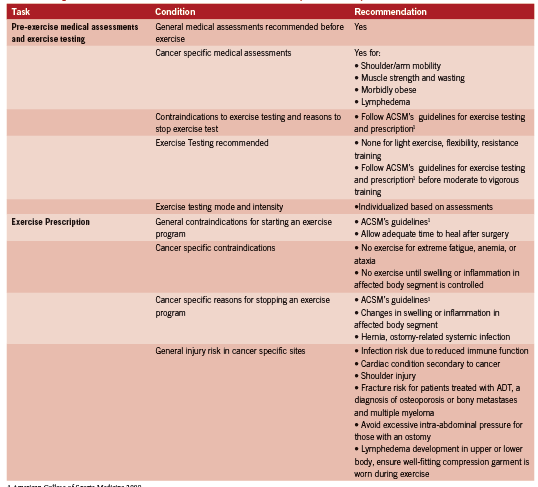
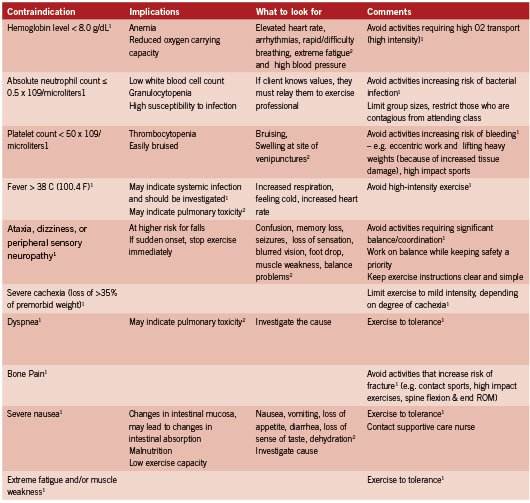
Given the current interest in cancer and exercise, a roundtable was convened by the American College of Sports Medicine (ACSM) to develop new recommendations for exercise training both during and after cancer treatment. With the release of the ACSM guidelines in 2010, it is recommended that cancer patients and survivors “avoid inactivity”, and “return to or achieve 150 minutes per week of moderate-intensity aerobic exercise plus resistance and flexibility exercises” (Schmitz 2011) . In this guideline, specific information is provided on medical and exercise assessment, and exercise management with particular emphasis on specific disease site recommendations and contraindications. Table 1 is a condensed version of these guidelines while Table 2 highlights specific contraindications and suggests indications and strategies to minimize risk.
The evidence is compelling that exercise may reduce side effects of cancer treatment, improve psychological and physiological wellness and increase survivorship. There is a need for accessible programs and exercise professionals to provide the appropriate exercise suited to the unique needs of cancer survivors. The recently released ACSM Cancer Exercise Trainer certification and the publication of the exercise guidelines will increase the capacity of fitness professionals to serve the needs of cancer survivors. Fitness professionals who train cancer survivors need to design exercise programs to meet individual needs, taking into consideration their medical history (specific diagnosis & treatment), side effects and limitations, comorbidities, activity level and of course, readiness to engage in an exercise program. Further support for exercise in disease prevention and treatment comes from a recent ACSM initiative called Exercise is Medicine ™. Their vision is “to make physical activity and exercise a standard part of a global disease prevention and treatment medical paradigm” (Exercise is Medicine 2011).
The Canadian Experience
The Oncology Rehabilitation Program at the Ottawa Regional Cancer Centre was the first in Canada to describe a safe and effective exercise intervention program showing that patients (N=261) with a variety of cancers at various stages of illness can safely participate in a program of structured physical activity with no adverse events (Segal1999). Significant contributions to our understanding of the role exercise plays in cancer management come from research-based programs of Dr. Courneya at the University of Alberta, culminating in the development of the ACSM cancer guidelines (Courneya 2000, Courneya 2001, Courneya 2007).
Developed at the University of Waterloo, UW WELL-FIT is an exercise based program for patients in treatment for cancer. After 10 years, the UW WELL-FIT program has demonstrated results similar to Segal (1999). After a 12 week exercise intervention program, cardiovascular assessments were performed on 305 (78.4%) participants with significant improvements in physical function This was demonstrated by decreases in heart rate, systolic blood pressure and RPE at the submaximal level (p<.01) and an increase in maximal workrate attained. The summary component scales of the SF-36 (physical and mental) were significantly improved as well as all eight sub-scales (p<.01) indicating an improved quality of life (Noble in press). Additionally, UW WELL-FIT provided a framework to design and implement exercise rehabilitation programs (Russell 2009), which has been made available as a resource for health professionals wanting to start an oncology rehabilitation exercisebased program (http://uwfitness.uwaterloo.ca/).
The task now is to initiate and promote programs that ensure access for all cancer patients undergoing treatment. It is time to increase awareness for oncologists and allied health professionals of the new ACSM guidelines and their importance, and to provide trained exercise professionals to manage these programs. It is equally important to educate patients about their need to exercise during treatment and beyond, and to seek out opportunities that will fulfill their exercise needs.
References:
American College of Sports Medicine. ACSM’s Guidelines for Execise Testing and Prescription 8th Edition. Philadelphia: Lippeincott Williams & Wilkins. 2009.
Canadian Cancer Society. (2011, May 18). Retrieved 06 06, 2011, from http:// www. cancer.ca /Canada-wide /About%20us /Media%20centre /CW-Media%20releases/CW- 2011/ Backgrounder %20Canadian %20Cancer %20Statistics %20at %20a%20 glance. aspx?sc_lang=en
Carver JR, Shapiro CL, Ng A, Jacobs L, Schwartz C, Virgo KS, Hagerty KL, Somerfield MR, Vaughn DJ; ASCO Cancer Survivorship Expert Panel. American Society of Clinical Oncology clinical evidence review on the ongoing care of adult cancer survivors: cardiac and pulmonary late effects. J Clin Oncol. 2007 Sep 1;25(25):3991-4008.
Chronic Disease Prevention Alliance of Canada. (2011). Retrieved May 17, 2011, from http://www.cdpac.ca/content.php?doc=1.
Courneya KS, Mackey JR, Jones LW. Coping with cancer: can exercise help? Phys Sportsmed. 2000 May;28(5):49-73.
Courneya KS, Friedenreich CM. Framework PEACE: an organizational model for examining physical exercise across the cancer experience. Ann Behav Med. 2001 Fall;23(4):263-72.
Courneya KS, Friedenreich CM. Physical activity and cancer control. Semin Oncol Nurs. 2007 Nov;23(4):242-52.
Doyle C, Kushi LH, Byers T, Courneya KS, Demark-Wahnefried W, Grant B, McTiernan A, Rock CL, Thompson C, Gansler T, Andrews KS; 2006 Nutrition, Physical Activity and Cancer Survivorship Advisory Committee; American Cancer Society. Nutrition and physical activity during and after cancer treatment: an American Cancer Society guide for informed choices. CA Cancer J Clin. 2006 Nov- Dec;56(6):323-53.
Durstines JL, Moore GE, Painter P, and Roberts S. ACSM’s Exercise Management for Persons with Chronic Diseases and Diabilities. Champlaign IL: Human Kinetics. 2009.
Exercise is Medicine. Your Prescription for Health Series. Retrieved June 12, 2011. http://exerciseismedicine.org/documents/YPH_Cancer.pdf.
Kroenke CH, Chen WY, Rosner B, Holmes MD. Weight, weight gain, and survival after breast cancer diagnosis. J Clin Oncol. 2005 Mar 1;23(7):1370-8.
Meyerhardt JA, Heseltine D, Niedzwiecki D, Hollis D, Saltz LB, Mayer RJ, Thomas J, Nelson H, Whittom R, Hantel A, Schilsky RL, Fuchs CS. Impact of physical activity on cancer recurrence and survival in patients with stage III colon cancer: findings from CALGB 89803. J Clin Oncol. 2006 Aug 1;24(22):3535-41.
National Cancer Institute at the National Institues of Health. (2010, December 7). Retrieved June 10, 2011, from http://www.cancer.gov/cancertopics/cancerlibrary/ what-is-cancer
Noble M, Russell C,Kraemer L,Sharratt M. UW WELL-FIT: The impact of supervised exercise programs on physical capacity and quality of life in individuals receiving treatment for cancer.Supportive Care in Cancer. In Press.
Russell C, Kraemer L, Noble M, Sharratt M. Active Living for Older Adults in Treatment for Cancer: Framework for Design. Orangeville Ontario: Active Living Coalition For Older Adults http://www.alcoa.ca/e/cancer_project/index.htm. 2009.
Schmitz KH, Courneya KS, Matthews C, Demark-Wahnefried W, Galvao DA, Pinto BM,Irwin ML, Wolin KY, Segal RJ, Lucia A, Schneider CM, von Gruenigen VE, Schwartz AL; American College of Sports Medicine. American College of Sports Medicine roundtable on exercise guidelines for cancer survivors. Med Sci Sports Exerc. 2010 Jul;42(7):1409-26.
Schneider CM, Dennehy CA, and Carter SD. Exercise and Cancer Recovery. Champaign, IL United States: Human Kinetics. 2003.
Segal R, Evans W, Johnson D, Smith J, Colletta SP, Corsini L, Reid R. Oncology Rehabilitation Program at the Ottawa Regional Cancer Centre: program description. CMAJ. 1999 Aug 10;161(3):282-5.
Speck RM, Courneya KS, Masse LC, Duval S, Schmitz KH. An update of controlled physical activity trials in cancer survivors: a systematic review and meta-analysis. J Cancer Surviv. 2010 Jun;4(2):87-100.
Winningham ML. Walking program for people with cancer. Getting started. Cancer Nurs. 1991 Oct;14(5):270-6.
CAPE

CAPE
The Green Coat Revolution
You might visit your doctor for an annual checkup or to make sure that nagging pain or new mole isn’t a sign of a more serious illness. You may even see your doctor to find out about improving your diet or maintaining an active lifestyle. But you probably don’t think to turn to your doctor for advice about environmental activism – unless, of course, they are a member of the Canadian Association of Physicians for the Environment (CAPE).
Established in 1994, CAPE represents doctors, allied healthcare practitioners, and concerned citizens from across Canada who understand the link between our health and our surroundings. CAPE brings doctors and other health experts to meet with political decision-makers to discuss the need for environmentally protective legislation because a healthy environment means healthy people. Current issues on the CAPE agenda include: banning lawn pesticides, closing coal power plants, promoting local organic food, making hospitals more environmentally friendly, and ending asbestos mining and export. In recent years, the organization has seen remarkable growth – from just 450 members in 2006 to over 5,000 today. Membership growth for CAPE translates into more support and success in achieving health-protective laws.

Dr. Warren Bell, one of the organizations founders, explains, “patient care is about more than just treating a disease or a symptom. It includes illness prevention by way of protecting our air, water and land.” A family physician in Salmon Arm BC, Dr. Bell is actively involved in CAPE’s anti-pesticide campaign as well as fighting large-scale development in his home town. “If we don’t target the cause of our illnesses, we are contributing to an unsustainably expensive health care system. Protecting our environment is the first step to improving our overall health as well as saving a lot of money for other things.”

Partnering with organization’s such as the Canadian Cancer Society and the David Suzuki Foundation, CAPE led the fight in achieving Ontario’s pesticide ban, which came into effect in April 2009. “Ontario’s ban on lawn and garden pesticides is the most healthprotective legislation of its kind in North America,” says CAPE’s Executive Director, Gideon Forman. “We’re now using Ontario’s law as a model for our efforts in other provinces. If Ontario kids can be protected from these poisons, kids elsewhere in the country can be as well.” According to the Ontario College of Family Physicians’ Pesticides Literature Review, lawn and garden pesticides are linked to childhood cancers, neurological illness and birth defects.
The flip-side to CAPE’s pesticide campaign focuses on the positives of a chemical-free lifestyle – it’s an educational program called Organics for Kids. Launched in 2006, the program takes city kids on a day-trip to an organic farm to learn about the benefits of ecological agriculture and eating organic – and CAPE picks up the cheque! Depending on the season, children have the chance to harvest carrots, taste fresh greens, visit greenhouses, prepare food boxes, and even play with organically raised free-run chickens. Most importantly, they get to meet the farmers responsible for growing the food we see on our plates every day. By making this connection, CAPE hopes children will make healthier eating choices and support local organic farming.
With climate change at the forefront of most enviro-conscious minds, CAPE makes the health-case to curb the warming of our planet and the focus is on coal. Experts around the world, including Nobel-prize-winning economist Paul Krugman and leading climate scientist James Hansen are naming coal as the foremost climate destroyer. If we do nothing else, these experts say, we must tackle this fossil fuel.
Coal is both a climate culprit and a health hazard and CAPE has taken a strong stance against using it for energy. In spring 2011, they partnered with large health groups including the Registered Nurses’ Association of Ontario and the Asthma Society of Canada, in a unique campaign asking the Ontario government to phase-out coal plants and invest in conservation, wind and solar power. The initiative included ads which appeared in newspapers across Ontario and urged citizens to ask their local candidates where they stand on coal and renewables.
The anti-coal campaign also involved bringing health experts to meet with members of provincial parliament to speak about the importance of a coal phase-out, which would save lives and millions of dollars a year in health costs. Dr. Hilary de Veber is CAPE’s vice president and a paediatrician in Toronto. “Coal-fired electricity emits pollutants which increase the risk of heart disease, asthma attacks and other common health problems,” Dr. de Veber explains. “Ontario’s coal emissions account for over 150,000 illnesses and 300 deaths a year. We would benefit from improved health, environmental protection and overall cost savings if we phased out coal.”

Another Canadian environmental-health hazard lurks in what should be an obsolete industry, but is instead a blight on our nation’s reputation. CAPE is active in Quebec, urging the government to put an end to the mining and export of chrysotile asbestos. Despite its world-wide recognition as a cause of asbestosis, mesothelioma, and lung cancer, the government still allows this deadly powder to be mined and sold abroad, while it is simultaneously being removed from government buildings. And with no North-American markets for asbestos, the product is sold to countries in Asia, Africa and Latin America, where health and safety laws are lax or non-existent. CAPE’s anti-asbestos campaign kicked-off with a full page ad in Le Devoir in February 2011 and they are continuing to keep the pressure on the Quebec government to end subsidies to the industry and provide a just transition for workers in the field.
CAPE also does some work to make healthcare facilities more environmentally friendly, primarily through changing transport, energy and purchasing policies. Dr. Jean Zigby is CAPE’s president, a Montreal-based family physician and palliative care specialist. He is also founding president of Synergie Santé Environnement, a non-profit organization whose mission is to reduce the eco-impact of health care delivery. “Hospitals are some of the worst environmental offenders in the country. They are energy intensive and produce a lot of waste from a wide range of sources,” says Dr. Zigby. “With a small amount of effort, facilities can integrate better products and methods, which results in a safer clinic for staff and for patients, and a smaller ecological footprint.”
With their twentieth anniversary only three years away, CAPE has accomplished many feats and as the organization continues to grow, they hope to do even more. Our reality now includes lackadaisical companies causing record-breaking oil spills and environmental pollutants contributing to sky-rocketing cancer-rates. The environment certainly can’t protect itself from this bombardment of pollution – it’s up against too much. We’re lucky to have a group of dedicated docs looking out for us and humbly putting the planet at the top of their to-save list.
Membership in CAPE is open to anyone and is not exclusive to doctors. To learn more, or to become a member of the Canadian Association of Physicians for the Environment, please visit www.cape.ca, facebook.com/ capedoctors, twitter.com/cape_doctors.
DR AKBAR KHAN, md

DR AKBAR KHAN, md
Medicor Cancer Centres
As IHP continues to showcase integrated medical doctors as cover features, several trends emerge with regards to the manner in which an MD generates an interest in implementation of integrative therapies. Sometimes the MD entered their medical training with an already existing passion for natural therapeutics. Often the decision stems from patient inquiry leading to literature- based research of the field. Dr Akbar Khan, MD, represents a novel and exciting avenue through which, in this case, a conventionally- trained family physician has come to embrace a broad array of integrative techniques; he witnessed first hand the immense magnitude of safety and efficacy of the practice.
This 1992 graduate of the University of Toronto School of Medicine describes sharing an impression of integrative medicine of most allopathic doctors in Canada; skepticism and a belief that integrative practices were lacking in efficacy. But a trend that has existed for some time, and continues to grow at an exponential pace, is patient enquiry regarding use of natural medicines. Still skeptical, Dr Khan decided to have an ND offer services through his private clinic in 2006. “I didn’t expect much in the way of benefit, but I figured it would be better to supervise the use of such medicines rather than have patients finding them on their own, likely to not inform me of what they were using” describes Dr Khan. In a very short period of time, Dr Khan’s impression of natural medicines for cancer management underwent a 180 degree turn; today, Dr Khan is a vocal advocate of the benefits of natural medicines for cancer management.

Dr Douglas Andrews, ND, is the naturopathic doctor of the Medicor Cancer Centres team. The ability to implement the full extent of naturopathic training in a centre focused on cancer management is a rare luxury in Canada. Having the support of the supervising physician to apply required monitoring, and to have access to world- class progression markers is equally inviting. The Medicor Cancer Centres team has provided a benchmark example for the simplicity with which MD and ND can coexist and deliver the ultimate goal of healthcare; improved patient outcomes through collaboration.

“I learned through observation…” continues Dr Khan. “Pretty soon I was tracking down human trials and preclinical evidence of how these substances work, which ones work, which ones have interactions to be aware of”… “I was amazed by how many problems conventional medicine has no answer for yet natural medicines provide safe, effective, and inexpensive solutions for… take neuropathy for example”…

Dr Khan is quick to highlight an important factor in assimilating evidence of natural medicine for application in an oncology practice: consideration of quality of available evidence. Why is it difficult to find good quality evidence of these safe, effective, and inexpensive medicines? Why are journals not full of Phase II and III clinical trials of natural medicines among patients with cancer? The answer is quite simple. It has nothing to do with safety, nor efficacy. It’s all about $$$. “There is no proprietary ownership of the molecules or substances in question. Who is willing to spend the dollars to research these substances when after the years of effort and cost there is no profit to be made?” describes Dr Khan. Practitioners of integrative medicine have been frustrated by this “profit first” model of medicine for decades. Unexplainably, it seems to carry more weight coming from a conventionally- trained practitioner.
Intravenous vitamin C was the first integrative therapy to catch Dr Khan’s eye. He was highly skeptical of its ability to deliver any outcome of significance, but decided a sufficient evidence- base existed to establish it was safe and unlikely to interact with the conventional medicines being applied. Now a vocal advocate for the intervention, Dr Khan simply says “it works!” “Patients have more energy, less nausea, and we have clearly witnessed it having no interaction of concern with the conventional medicines we use”.

Dichloroacetate (DCA) is another medicine Dr Khan praises his affiliation with integrative practitioners for being introduced to. While a synthetically- created prescription medication, it is not considered for application in patients with cancer among circles of conventional practitioners. Dr Khan liberally uses the medicine, supported by highly impressive evidence of clinical utility. This important medicine however produces peripheral neuropathy in a large percentage of patients who implement it. In conjunction with Dr. Dong Andrews, ND and Dr Jill Shainhouse, ND, a protocol of natural medicines was created for coadministration with DCA in an effort to prevent the neuropathy that accompanies the use of the drug. Through combining R-alpha lipoic acid, acetyl- L- carnitine, and benfotiamine, amazing outcomes in prevention of DCAinduced neuropathy have been achieved. Dr. Khan is also using the same cocktail of natural medicines with excellent results in treating patients with pre-existing chemo-induced neuropathy.

Akbar Khan, Silvana Marra and
Humaira Khan
Dr Khan describes with frustration the lack of interest displayed by conventional practitioners for safe and effective solutions simply because they come from the realm of natural medicine. “My greatest concern is helping patients. If it works, who cares where it comes from? Prior to developing the neuropathy protocol, our best answer was analgesic medication for painful neuropathy. The combination of three simple, inexpensive, and safe natural medicines allows us to liberally apply an effective anticancer agent that otherwise we would be forced to use very sparingly”.
Tetrathiomolybdate (TM) is another drug frowned upon by most conventionally- trained oncologists that Dr Khan has come to rely on heavily. “The literature uses the term chelation to describe the medication”, describes Dr Khan, “this makes most physicians uninterested”. TM is a chelator with a high affinity for binding copper. It creates a copper deficiency state, which has been shown to dramatically inhibit angiogenesis. “We have enjoyed excellent results with a combination of DCA + TM”.

The team also employs prescription of low dose naltrexone as an inexpensive means of increasing opioid growth factor (OGF) levels. Injection of OGF is possible, but can cost a patient over $2000/ month. Low dose naltrexone has served the clinic well as an inexpensive alternative. Dr Khan also describes with enthusiasm the facilities approach to vitamin D. “The government says we shouldn’t monitor plasma vitamin D levels, but we have found it to be a necessity. We have found severe vitamin D deficiency in many patients. Furthermore, government recommendations for dosing of D are simply ineffective at correcting existing deficiency. We use an aggressive, high- dose strategy with vitamin D with routine monitoring throughout the process”.
The Medicor Cancer Centres clinic has implemented an impressive combined consult system of patient management. A patient’s first visit is conducted by Dr Khan. The availability of integrative systems of practice, and the presence of an in- house ND are explained to the patient. The subset of patients interested in pursuing integrative medicine meet with Dr Andrews on their second visit. Dr Khan will often sit in on this visit, or have a pre- consult meeting with Dr Andrews to bring him up to speed on the case.
 Bridging the gap… Time, evolving clinical research, and an explosion in practitioners of integrative medicine have set the process well on its way. Finding a clinic offering MD and ND services under the same roof, and more importantly having the professionals work as a team, was a rare site 20 or more years ago, even as early as 10 years ago. Such relationships are being created at an exponential rate today. IHP is privileged to be able to present these benchmark initiatives. We look forward to the day when an MD solo practice is the rare exception. The benefit to patient outcomes achieved by the combination of skillsets is undeniable. We congratulate Dr Khan and others for pioneering a new era of healthcare in Canada.