




All In Nutritionals
Home Blog Page 324

Walmart shakes up its e-commerce team

0
Walmart shakes up its e-commerce team

Walmart has announced two changes to its web team that will help in its ongoing fight against Amazon.com and encourage more online business.

Walmart.com President and CEO Joel Anderson has resigned from the company and moved on to discount teen retailer Five Below after three years with the company. Fernando Madeira, currently Walmart’s president of its Latin American e-commerce arm, will assume leadership of the American website in addition to maintaining his current duties, among others.

Walmart.com has hired approximately 1,000 employees to its e-commerce team in Silicon Valley in the last 18 months, as the company’s Brazil team increased by about 600 employees in the same time period. In addition, Walmart has announced three new e-commerce centres in Texas, Pennsylvania and Indiana over the past few months.

“It is important that we all understand the shift that has happened in technology and retail, what it means for us, and what we’re doing to win,” says Walmart CEO Doug McMillon.

U.S. organic product sales on the rise

0
U.S. organic product sales on the rise

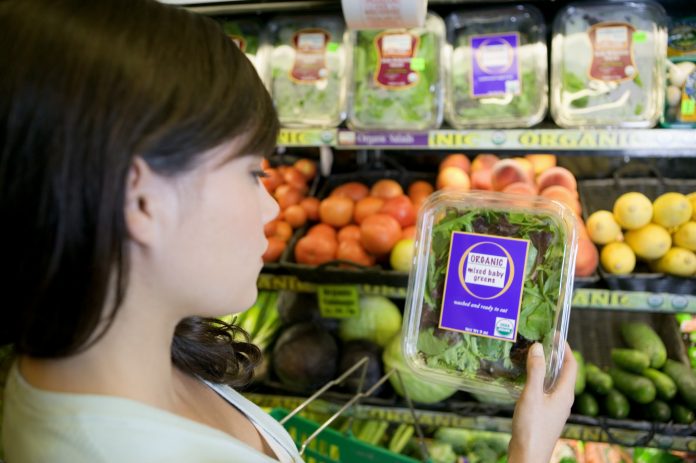
According to a new report from the Organic Trade Association (OTA), U.S. retail sales of organic products rose to 11.5 per cent in 2013, or US$35.1 billion. 92 per cent of these were food or beverages. OTA executive director Laura Batcha says, “There was strong growth in produce and eggs, but we’ve also seen a resurgence in sales of some organic packaged foods such as snacks and cereals. Daily growth was positive but somewhat curtailed by lack of supply, but breads and grains were up 11.6 per cent.” Walmart made a move to go more organic recently by announcing plans to launch organic Wild Oats products for a new and more affordable price at 2,000 stores.

U.S. consumers conflicted about organic requirements

0
U.S. organic product sales on the rise

A recent survey involving 1,016 adults showed that while 84 per cent of U.S. consumers purchase organic food, with 45 per cent of them buying it at least once a month, they don’t necessarily know what organic means.

The survey by Opinion Research Corporation for Consumer Reports showed that a little under half of the consumers surveyed thought that organic means that the poultry, meat or eggs had a living space or went outdoors. Both of those are, in fact, requirements of the National Organic Program.

Other interesting consumer thoughts include 81 per cent believing organic fruits and vegetables had no toxic pesticides, while 91 per cent thought they shouldn’t contain any, and 66 per cent wished for a label on the products that indicated where specifically it was grown and processed.

Walmart Canada’s president gets more global responsibility 

0
Walmart Canada's president gets more global responsibility 

Walmart Canada’s president, Shelly Broader, is being promoted to executive vice president, president and CEO of Europe, the Middle East, sub-Saharan Africa and Canada. In her new role, Broader will be in charge of retail operations and business development for these regions. Broader, who will be based in Canada, will continue to oversee the Canadian business until her new replacement is determined, which Walmart says it will announce at a later date. “Shelley has been a strong leader since joining Walmart Canada and is the ideal person to leverage the tremendous potential the EMEA (Europe, Middle East and Africa) region holds for our company,” says David Cheesewright, president and CEO of Walmart International. In her new position, Broader will oversee regions that employ over 285,000 people at 1,345 stores. “Walmart has strong operations and excellent teams of associates in Canada, sub-Saharan Africa and the United Kingdom that are well-positioned to drive future growth,” says Broader. “I look forward to working with the teams to build on this success and to bring our mission of saving people money so they can live better to even more families across the region.”

UNFI’s acquisition of Tony’s Fine Foods gives it a boost against competition

0
UNFI's acquisition of Tony's Fine Foods gives it a boost against competition

United Natural Foods Inc., a leading natural food distributor, announced its plans to purchase Tony’s Fine Foods, a distributor of perishable food products, in late May for US$196 million. The deal is expected to close in July and gives the company a boost against mainstream distributors, according to UNFI. It allows it to offer several “perimeter products” to its main distribution networks, according to Steve Spinner, CEO of UNFI.

“Given the growth in our space, competition has also increased. Conventional food distributors and continued movement to direct distribution by supermarkets for fast moving products will pressure our growth as the industry expands,” says Spinner.

The Tony’s line includes specialty protein, cheese, deli, food service and bakery goods distributed throughout the Western United States, Alaska and Hawaii.
In addition to the acquisition, UNFI has invested in a 450,000 square foot distribution centre in Wisconsin to deal with growing demand.

“Our sales growth, almost 14 per cent ahead versus the prior year, continues to prove the natural organic and specialty products are not a passing trend for the fast growing permanent part of consumer purchases,” says Spinner.

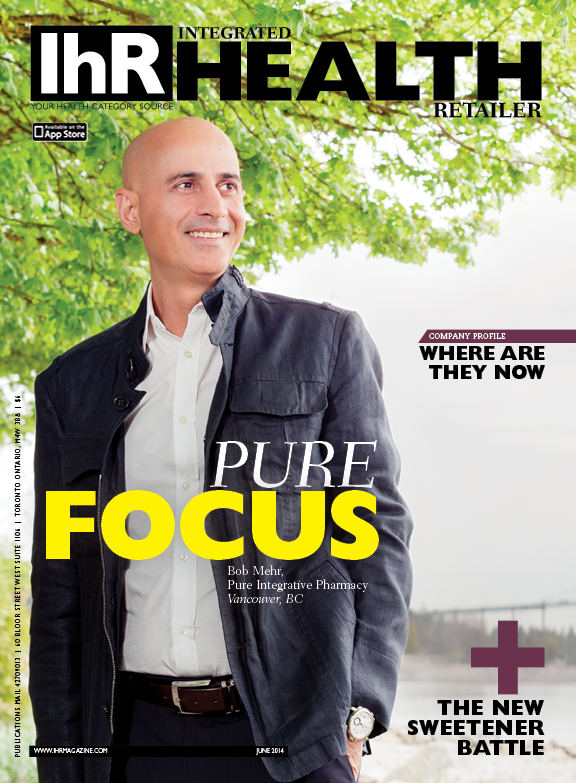
Current Issue : June 2014

0
Current Issue : June 2014

Maternal vitamin D status and small-for-gestational-age offspring

0

In this study, the association between second-trimester maternal serum 25-hydroxyvitamin D concentrations and risk of small for gestational age (SGA) in singleton live births was evaluated. Serum samples at 12-26 weeks of gestation for 25-hydroxyvitamin D were assayed in a sample of participants in a multicenter clinical trial of low-dose aspirin for the prevention of preeclampsia in high-risk women (n=792). The risk of SGA was assessed after adjustment for confounders including maternal prepregnancy obesity, race, treatment allocation, and risk group. The results showed that thirteen percent of neonates were SGA at birth. Mean vitamin D concentrations were lower in women who delivered SGA compared with non-SGA neonates. In adjusted models, vitamin D concentrations of 50-74 nmol/L and 75 nmol/L or greater compared with less than 30 nmol/L were associated with 43% (95% CI 0.33-0.99) and 54% (95% CI 0.24-0.87) reductions in risk of SGA, respectively. Race and maternal obesity each modified this association. White women with vitamin D of 50 nmol/L or greater compared with less than 50 had a 68% reduction in SGA risk and nonobese women with greater than 50 had a 50% reduction in SGA risk. The authors conclude that maternal vitamin D status in the second trimester is associated with risk of SGA. Obstet Gynecol. 2014. PMID: 24463662.

Treating generalized anxiety disorder using CAM

0

In this study, the authors evaluated the effectiveness of a pilot program that used multiple complementary and alternative medicine (CAM) therapies, focusing on self-care behaviours for treatment of generalized anxiety disorder (GAD). The study occurred at a military treatment facility in the Pacific Northwest. Participants were a convenience sample of volunteers seeking treatment, there were 37 enrolled in total who had a documented history of GAD or met screening criteria based on the GAD-7. The participants received acupuncture treatments once a week for 6 weeks and engaged in yogic breathing exercises, self or partner-assisted massage therapy using scented oils, episodic journaling, nutrition counseling, and exercise. The results showed that 68% of the participants completed the program. There were significant reductions in anxiety pre- and posttest using GAD-7 and there were also individual subscale reductions on the Depression Anxiety Stress Scale-21. While not specifically targeted for treatment, secondary exploratory outcomes included reductions in use of anxiolytic medication and in the pain scale. The authors conclude that in this pilot study, a multimodal intervention focusing on self-care behaviours may be feasible for patients seeking adjunctive treatments, and that it may produce anxiolytic effects validated measures. Altern Ther Health Med. 2013. PMID: 23981404.

Acupuncture for treatment of arthralgia in women with early breast cancer: pilot study

0

In this pilot study, the safety, efficacy, and feasibility of acupuncture was evaluated in treating aromatase inhibitor-induced arthralgia. Aromatase inhibitors are recommended as adjuvant hormone treatment for postmenopausal women with early breast cancer, but a significant portion experience joint pain and stiffness. A total of 32 patients were randomized to receive either sham or real electroacupuncture twice weekly for 6 weeks. Outcomes of joint pain, stiffness, and physical function were measured with the Western Ontario and McMaster Universities Osteoarthritis Index (WOMAC), overall pain and severity and interference with the BPI-SF and quality of life with the Functional Assessment of Cancer Therapy-General (FACT-G) instrument. Hand strength was assessed by a grip test, and a serum marker of inflammation (CRP) was also measured. All assessments were performed at baseline, 6 weeks, and 12 weeks, except for blood samples at baseline and 6 weeks only. The results showed that there were no significant differences in outcome measures, however positive trends were observed in stiffness and physical function at week 12 in favour of real electroacupuncture. The authors conclude that acupuncture is feasible and safe in patients with breast cancer with joint pain caused by aromatase inhibitors. Acupunct Med. 2013. PMID: 23722951.

Prenatal SSRI Use and Offspring with Autism

0

In this study, a total of 966 mother-child pairs were evaluated. 492 of the children had autism spectrum disorders (ASD), 154 had developmental delays (DD), and 320 had typical development (TD). The pairs were obtained from the Childhood Autism Risks from Genetics and the Environment (CHARGE) Study, a population-based casecontrol study. Standardized measures confirmed developmental status. Interviews with biological mothers ascertained prenatal SSRI use, maternal mental health history, and sociodemographic information. The results showed that the prevalence of prenatal SSRI exposure was lowest in the TD children (3.4%) but did not differ significantly from ASD (5.9%) or DD (5.2%) children. Among boys, prenatal SSRI exposure was nearly 3 times as likely in children with ASD relative to TD (OR 2.91, 95% CI 1.07-7.93). The strongest association occurred with first-trimester exposure (OR 3.22, 95% CI 1.17-8.84). Exposure was also elevated among boys with DD (OR 3.39, 95% CI 0.98-11.75) and was strongest in the third trimester (OR 4.98, 95% CI 1.20-20.62). Findings were similar among mothers with anxiety or mood disorder histories. The authors conclude that in boys, prenatal exposure to SSRIs may increase susceptibility to ASD or DD. Pediatrics. 2014. PMID: 24733881.