




Home Blog Page 253

Hôtel-Dieu Grace Healthcare Launches “Changing Lives Together”

0

Hôtel-Dieu Grace Healthcare (HDGH), that has played an integral role in the well-being of the Windsor-Essex region for more than 127 years, has launched a public awareness campaign “Changing Lives Together” to promote its heritage, services and community partnerships.


“Changing Lives Together” is designed to help the region become familiar with the non-acute services provided at HDGH’s campus located at the Tayfour Campus on Prince Road, such as specialized mental health and addictions; rehabilitation services; complex continuing care and palliative care; and children and youth mental health services.


“When our hospital services realigned in 2013, Hôtel-Dieu Grace Healthcare became responsible for all non-acute care services and relocated from the Ouellette Avenue building to the Tayfour Campus on Prince Road,” said Janice Kaffer, president and CEO of HDGH. “To ensure our community understands what we offer, how we deliver our services and the partnerships that help us make it all happen, we have adopted the tagline ‘Changing Lives Together’ to reflect the next chapter in our growth.”


A comprehensive communications plan includes advertisements, social media activities and internal engagement projects to reinforce the new message.


Minister Ambrose launches next phase of the Regulatory Transparency and Openness Framework

0

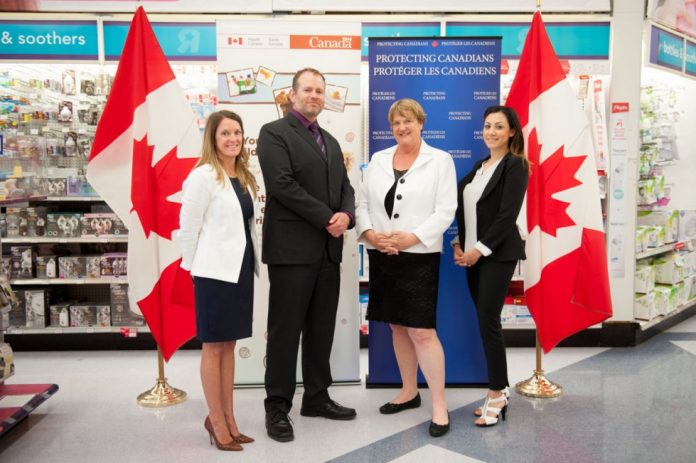
On June 25, Rona Ambrose, minister of health, announced the next phase of Health Canada’s Regulatory Transparency and Openness Framework – a three-year plan with new commitments that will further increase Health Canada’s transparency and openness, making more information available and easier to understand in 2015-2018.


The plan will expand the information available in the Drug and Health Product Register to include a wider variety of products and information, and enhancing the Drug and Health Product Inspection Database to include more information on Health Canada inspection activities.


“Fundamental change is underway at Health Canada in the way it engages and informs Canadians,” Ambrose says. “I’m incredibly proud of what has been accomplished in the first year of the Framework. Credible, timely information is key to building trust and enabling Canadians not only to make informed health choices, but also to better understand the health regulatory system that’s in place to protect our safety and the safety of our families.”


Vitality first quarter results show loss

0
Vitality shows net loss

According to a news release, the financial results of Vitality, ending April 30, show a net loss of $52,838 compared to a loss of $41,661 for the same period last year.

At the end of the April this year, the company’s administrative and general expenses had increased to $67,327 owing to a push in sales efforts.


Sales for the first three months were reportedly up to $21,397 as the company continued distribution of Vitality’s new line of natural health products released almost two years ago.

Vitality continues to seek new opportunities to market and license all 92 of its natural health products, which hold and natural product number issued by Health Canada.


Canada and Israel team up to explore frontiers of health research

0

On June 25, Joe Oliver, minister of finance, announced, on behalf of Rona Ambrose, minister of health, that Canada and Israel are teaming up on a bold new research effort. Oliver was joined by Rafael Barak, Israel’s Ambassador to Canada, Dr. Naomi Azrieli, Chair and CEO of the Azrieli Foundation, Dr. Jean Lebel, president of Canada’s International Development Research Centre, and Dr. Alain Beaudet, president of the Canadian Institutes of Health Research.


The joint Canada-Israel Health Research Program is a seven-year, $35 million program that draws on the scientific strengths of Canadian and Israeli researchers in the broad field of biomedicine. The program will fund up to 30 research projects involving researchers from Canada and Israel with an initial focus on the neurosciences.


The program is a partnership between the Azrieli Foundation, Canada’s International Development Research Centre, Canadian Institutes of Health Research, and the Israel Science Foundation. The research teams will integrate researchers from low- and middle-income countries to further their scientific capacity.


“Canada and Israel are renowned for excellence in health research, particularly in the neurosciences,” Oliver says. “The Canada-Israel Health Research Program harnesses the collective energies of our two great nations to pursue basic biomedical research aimed at improving health outcomes for Canadians, Israelis, and people throughout the world. I am pleased to note that researchers in developing countries will have an opportunity to contribute to these research endeavours as well.”

Canada’s Largest-Ever Health Data Portal Opens to Global Researchers

0

On June 29, the Canadian Partnership Against Cancer launched a landmark research portal that includes health and biological data from 300,000 Canadians — nearly one in every 50 individuals between the ages of 35 and 69.


“I would like to congratulate the Canadian Partnership for Tomorrow Project for creating one of the largest, most expansive cancer research databases in the world,” says Health Minister Rona Ambrose. “This landmark study offers a wealth of information that will be opened to researchers, which could lead to new strategies in the fight against cancer and related chronic diseases.”


Dr. Heather Bryant, vice-president of Cancer Control at the Partnership, says that the Canadian Partnership for Tomorrow Project (CPTP) will provide researchers with access to health and lifestyle surveys, health outcome data and even biological samples. “This lets them approach cancer and chronic disease from new angles, helping them dig deeper than ever before into its potential causes,” Bryant says.


“Given the complexity of cancer, we must study huge numbers of willing participants over a long period of time to uncover meaningful information about its risk factors,” says Dr. Paula Robson, Scientific Director at the Alberta Tomorrow Project, which is one of five provincial partners involved in CPTP. “Thankfully, hundreds of thousands of Canadians have come forward to share their health information in hopes of unlocking the mystery of why some people develop cancer or other chronic diseases.”


The data can be used for long-term population health studies on people’s health, lifestyle or health risks. CPTP will accelerate research, improve the competitiveness of Canadian research and provide opportunities for made-in-Canada discoveries.

Vitamins and nutritional supplements will dominate the natural health market

0
Western organic growers to get a boost

Vitamins, minerals and supplements are projected to take the natural and pharmaceutical industry to new heights of growth in the second half of 2015.

According to a press release by the Nutritional Business Journal, Florida, says that companies that sell products such as nutritional supplements, power bars and vitamins have seen strong fiscal growth in 2015.


MORE INDUSTRY NEWS


One such company, Axxess Pharma that develops a variety of supplements and specialty products through AllStar Health Brands Inc., has successfully completed a string of management projects. For them, 2015 has been a year of aggressive marketing and global approvals.


The next big cash crop: hemp

0
The next big cash crop: hemp

Alberta has recently added hemp to its collection of popular crops such as corn, sugar beets and potatoes.

In an article in The Lethbridge Herald, Dr. Jan Slaski, who is team lead in the crop development and management section of Ecosystems and Plant Sciences for Alberta Innovates Technology Futures, said that the hemp industry has been growing rapidly over the last five or six years, and last year, the crop yield exceeded 100,000 licensed acres.


MORE INDUSTRY NEWS


Most of this hemp is grown on the Prairies, and Slaski estimates that a quarter to a third of all hemp production in Canada comes out of Alberta. Some of this production is in part owing to efforts by companies such as Rowland Seeds in Taber. The company is growing about 8,000 acres of organic hemp per year.

Slaski also added that Canada is the largest hemp producer in the world, with China in close pursuit.

The natural health product industry isn’t the only one taking advantage of this golden crop, the textile industry is also setting foot into the field with a Quebec-based uniform manufacturer, Logistik Unicorp, is testing Alberta Innovates-grown hemp as a textile fibre.

Not only that, another company, Stemia, is planning on using hemp to make construction materials.

Natural health industry sees higher insurance limit requirements

0
Study shows fear of unhealthy ingredients decreases enjoyment

Distributors in the dietary supplement and natural health products business are now requiring higher liability insurance limits for their suppliers.

Good news is that insurance rates are now lower than they have been in a while.

Greg Doherty, a managing director of the dietary supplement practice group with the Pasadena, CA-based insurance firm Bolton & Co., shares that customers have told him that KeHE distributors are not asking for $5 million in liability insurance from suppliers.


MORE INDUSTRY NEWS


Doherty says he isn’t so sure if this is simply a knee-jerk reaction from all the bad press the industry has recently received as a result of the actions of the New York Attorney General.

Instead, he says, there are other factors driving the long-term trends in the insurance market and the underwriters have to manage the risk over years rather than responding to momentarily heightened elements such as bad press.


Canada Day brings tax break on feminine hygiene products

0
Canada Day brings tax break on feminine hygiene products

The Federal Government announced Thursday that tampons and other feminine hygiene products will be exempt from GST and HST.

This tax removal comes after the conservatives capitulated in the face of pressure from opposition parties and women’s groups who regard this tax as “gender-based discrimination.”


MORE INDUSTRY NEWS


According to Finance Canada, taking off this tax will save consumers about $25 million a year. Attempts at having this tax removed have been in process since 2004, recently an online petition entitled “No Tax on Tampons” has received close to 75,000 supporters.

Politically, the government hopes this move will lead to more women voting for the conservatives in the upcoming federal elections on Oct. 19.

General Mills moves to remove artificial flavours and colours from more cereals

0
West Chicago General Mills facility closure to impact 500 employees

With up to 75 per cent of General Mills cereals bidding to be free of artificial ingredients by the beginning of next year, Lucky Charms and Trix will joining the line by the end of 2017.

The company says this move will not lead to a change in the way the cereals look or taste. They want to ensure that fun vibrant colours and the fruity flavour remain the same as children have come to expect of the brand.


General Mills is the first major cereal company to have announced this move, but it is not the first food giant to do so. Taco Bell, Pizza Hut and Subway have been making incremental changes in their menus to remove artificial ingredients. Kraft Macaroni and Cheese, Nestlé chocolate and Newcastle Brown Ale have also made similar moves over the past year.

As a nutritionist working with food stamp recipients says that removing GMOs doesn’t change calorie levels, neither does it it lower the nutrient level.