Home Blog Page 234

Preliminary study finds that Ebola virus fragments can persist in the semen of some survivors for at least nine months

0

Preliminary results of a study into persistence of Ebola virus in body fluids show that some men still produce semen samples that test positive for Ebola virus nine months after onset of symptoms. The report was published on October 14 in the New England Journal of Medicine. The long-term study is being jointly conducted by the Sierra Leone Ministry of Health and Sanitation, Sierra Leone Ministry of Defence, the World Health Organization and the U.S. Centers for Disease Control and

Prevention.


“Sierra Leone is committed to getting to zero cases and to taking care of our survivors, and part of that effort includes understanding how survivors may be affected after their initial recovery,” says Amara Jambai, M.D., M.Sc., Deputy Chief Medical Officer for the Sierra Leone Ministry of Health and Sanitation. “Survivors are to be commended for contributing to the studies that help us understand how long the virus may persist in semen.”


Ninety three men over the age of 18 from Freetown, Sierra Leone, provided semen samples that were tested to detect the presence of Ebola virus genetic material. The men enrolled in the study between two and 10 months after their illness began. For men who were tested in the first three months after their illness began, all were positive (9/9; 100 per cent). More than half of men (26/40; 65 per cent) who were tested between four to six months after their illness began were positive, while one quarter (11/43; 26 per cent) of those tested between seven to nine months after their illness began also tested positive. The men were given their test results along with counseling and condoms. What remains unclear is why some study participants had cleared the fragments of Ebola virus from semen earlier than others. The U.S. Centers for Disease Control and Prevention in Atlanta is conducting further tests of the samples to determine if the virus is live and potentially infectious.


“These results come at a critically important time, reminding us that while Ebola case numbers continue to plummet, Ebola survivors and their families continue to struggle with the effects of the disease,” says Bruce Aylward, WHO Director-General’s Special Representative on the Ebola Response. “This study provides further evidence that survivors need continued, substantial support for the next six to 12 months to meet these challenges and to ensure their partners are not exposed to potential virus.”


“Ebola survivors face an increasing number of recognized health complications,” said CDC Director Tom Frieden, M.D., M.P.H. “This study provides important new information about the persistence of Ebola virus in semen and helps us make recommendations to survivors and their loved ones to help them stay healthy.”


There are more than 800 male survivors across the three countries who need appropriate education and regular testing to help them take appropriate measures to prevent potential exposure of their partners to the virus.


Edmonton Oliver Primary Care Network using technology to help prevent childhood obesity

0

In an effort to prevent childhood obesity, researchers are conducting a study at the Edmonton Oliver Primary Care Network (PCN) using RIPPLE (the Resource Information Program for Parents on Lifestyle & Education). RIPPLE is a screening, brief intervention and referral to treatment program. It is designed to screen children’s weight status, deliver a brief intervention to parents related to children’s lifestyle behaviours, and provide referrals to treatment and other supportive resources for parents.


Researchers believe this program will help parents better identify their children’s diet and physical activity habits. Parents of 5 to 17 year olds can participate while they wait for their appointment with their pediatrician at the Allin Clinic. Using a tablet, they answer a series of questions related to their children’s eating and activity habits.


“Through this technology, parents are giving us better, more accurate information about their children’s lifestyles,” says Jillian Avis, a PhD candidate with the Department of Pediatrics (Faculty of Medicine & Dentistry) at the University of Alberta.


“We’re hoping to enhance parents’ awareness and increase their motivation to support children’s healthy lifestyle behaviors,” says Dr. Geoff Ball, associate professor with the Department of Pediatrics at the University of Alberta. “We follow up after one month to determine what, if any, changes are taking place and to connect them to more resources, if necessary.”


This project is funded by a research grant from the Canadian Institutes of Health Research, Alberta Innovates – Health Solutions, and Public Health Agency of Canada.


Whole Foods unveils new distribution center

0
Whole Foods unveils new distribution center

On October 7, Whole Foods Market celebrated the opening of its new state-of-the-art distribution center in Vernon, California. Whole Foods marked the milestone by hosting a traditional bread-breaking ceremony with team members, company leaders and city officials, including Vernon Mayor Michael McCormick.

With nearly 100 full-time team members, this 128,000-square-foot distribution center serves the company’s 56 stores in Arizona, Hawaii, Southern California and southern Nevada.

Some of the building innovations include solar panels on the roof that heat water, a building for the recycling and compost sorting collected from all 56 stores, and break room furniture made of recycled materials, including chairs made of 111 recycled coke bottles each, and picnic tables made of recycled plastic.

Among additional highlights are earthquake-resistant racking in the warehouse with base isolators, state-of-the-art docks and 26 bay dock doors developed with straight lines from dock doors to warehouses for efficient loading and unloading, ammonia refrigeration as an energy efficient alternative to Freon and others.

GreenSpace Brands announces amendment of terms of private placement

0
GreenSpace Brands announces amendment of terms of private placement

On October 7, GreenSpace Brands Inc., a developer and seller of premium natural food products, announced that it has amended the terms of its previously announced non-brokered equity financing to offer up to $2 million in units at a subscription price of $1.05 per unit, each unit comprised of one common share in the capital of the GreenSpace and one quarter of a warrant.

Each whole Warrant will be exercisable for one Common Share at an exercise price of $1.20 for a period of 24 months from the date of issuance. Net proceeds of the equity financing will be used for the acquisition of Love Child Inc. and general working capital purposes. Completion of the equity financing is subject to customary conditions including TSX Venture Exchange approval.

All securities issued pursuant to the equity financing will be subject to a hold period of four months and one day in accordance with applicable Canadian securities laws. The equity financing is expected to close in one or more tranches over the next few weeks. Finders fees of up to 8per cent may be payable on certain of the subscriptions received.

Study Estimates HIV-Infected Individuals Have Increased Cumulative Incidence of Lifetime Cancer Risk

0

A large study with follow-up over 14 years offers a unique way of looking at the risk of cancer among HIV-positive individuals by accounting for the competing risk of death in the era of highly effective antiretroviral therapy (ART), as reported on October 6 in the Annals of Internal Medicine. The study was funded primarily by grants from the National Institutes of Health.


The study population consisted of 86,620 HIV-infected and 196,987 uninfected adults followed between 1996 and 2009 in 16 cohorts from the U.S. and Canada participating in the NA-ACCORD.


Researchers used the competing risk of death approach to estimate cumulative cancer incidence by HIV status and calendar era. Among HIV-infected subjects, the median CD4 count increased. Despite increasing age, the mortality rate decreased, but even in 2005-2009 the mortality rate was over three-fold higher than in uninfected subjects.


“This analysis provides easily interpretable information for HIV patients and their providers about their long-term cancer risk, and helps us identify where public health and clinical efforts should be focused to achieve the biggest impacts,” said co-author Richard D. Moore, MD, MHS, of the Johns Hopkins School of Medicine, and overall principal investigator of the North American Cohort Collaboration on Research and Design (NA-ACCORD).


“In the era before antiretroviral therapy, people who were infected with HIV were dying of AIDS. Now that use of this therapy is greatly increasing the lifespan of HIV-infected patients, their risk of developing other diseases, such as cancer, has increased,” said lead author Michael J. Silverberg, PhD, MPH, Research Scientist at the Kaiser Permanente Northern California Division of Research. “These patients have a higher burden of cancer compared with the general population due to impaired immune function and chronic inflammation, as well as a higher prevalence of risk factors including smoking and viral co-infections.”


“Our approach allowed us to disentangle the effects of longevity from other factors on the risk of cancer,” explained Silverberg. “For example, we found that longevity was the main contribution to the increased risk over time for anal, colorectal and liver cancers. The risk for other cancers, such as lung cancer, melanoma and Hodgkin’s lymphoma, did not appear to increase over time. This was because the increased risk with longevity was compensated for by other factors, such as decreases in smoking or adverse sun exposure behaviors.”


The researchers identified several clinical implications regarding cancer screening in HIV patients:


— The high smoking prevalence in HIV patients, along with high lung cancer incidence, suggests that HIV-infected smokers may benefit from new guidelines for annual lung cancer screening with low-dose computed tomography. In addition, development of targeted smoking cessation interventions for HIV patients should remain a priority.


— The rise in colorectal cancer risk among HIV patients, despite a decline in the general population, indicates the possible need for increased screening among HIV patients aged 50-75 years, as recommended for the general population.


— The increasing risk of liver cancer over time indicates a need to ensure universal hepatitis B virus (HBV) vaccination for HIV patients who are HBV seronegative, and to provide treatment of HBV infection using antiretroviral therapy (ART) regimens with anti-HBV activity and of hepatitis C virus (HCV) infection with recently approved interferon-free therapies.


— The highly effective human papillomavirus (HPV) vaccine, which was licensed in 2011 for the prevention of anal cancer, has been found to produce immunity in HIV patients, suggesting that vaccination has the potential to substantially decrease the burden of anal and possibly HPV-related oral cavity/pharyngeal cancers, although further research is needed.


— Research is also needed to follow-up on observational studies that suggest statin use by HIV patients may reduce cancer risk, presumably due to their anti-inflammatory effects.


— Efforts need to be intensified to promote early, sustained ART, the only known approach to prevention of Kaposi sarcoma and non-Hodgkin’s lymphoma and possibly other cancers linked to immunosuppression or inflammation.

Jarden Life Sciences Examines Solutions to Temperature-Sensitive Pharmaceutical Sampling

0

On October 5, Jarden Life Sciences published a white paper discussing available strategies to help to reduce risk and variability in temperature-sensitive pharmaceutical sampling. The paper outlines the advantages of active systems for temperature assurance, which offer decreased risk, increased potential for return-on-investment and improved efficiencies for temperature-sensitive pharmaceutical sampling when compared to passive systems.

 

In its white paper, Jarden Life Sciences says the growing number of biologic pharmaceuticals is a contributing factor to the need for reliable methods of distributing temperature-sensitive products in the last mile of the supply chain.


“As the demand for and prevalence of biologic drugs increases, so does the need for effective, efficient and compliant solutions for distributing temperature-sensitive drug samples,” said Scott Dyvig, program manager, Packaging Engineering and Technical Services at Jarden Life Sciences. “Active temperature-control systems, like Jarden Life Sciences’ Envirocooler™ ActiVault™, offer a reliable and consistent temperature environment for the last mile of product distribution, increasing efficiencies and reducing costs over time.”


The Jarden Life Sciences’ white paper on temperature-sensitive pharmaceutical sampling provides insight into such areas as the impact of biologic drug development on product sampling; active vs. passive temperature-control systems: risks and rewards; and active systems as a business solution and key elements in the last mile of the cold chain distribution process


According to Jarden Life Sciences, passive cooling systems are the alternative to active systems, but they “require additional steps to set up and maintain and are more vulnerable to human operator error when creating the cooling environment needed to sustain the temperature range for certain pharmaceuticals, such as biologics.” The company believes active systems, on the other hand, “rely on a power source that can provide a more reliable and consistent temperature for the transport of biologic samples, substantially decreasing the number of steps taken by the user and reducing variability caused by external environmental changes.”


Kashi joins Andean Naturals to help Light-A-Community in rural Bolivia

0
Kashi joins Andean Naturals to help Light-A-Community in rural Bolivia

Kashi and Andean Naturals have partnered in a project to bring solar energy to quinoa farming families in Bolivia’s Southern Highlands. The project is designed to supply solar-powered electricity to off-grid rural homes and irrigation projects far from electrical lines.

Since 2004, Andean Naturals, a leading US importer of quinoa and other ancient grains, has been working with and on behalf of Bolivian quinoa farmers to ensure that the rewards of quinoa’s rising popularity return to the communities in which it was grown. In 2013, the company launched the Andean Family Farmers (AFF) program to coordinate and expand its assistance in the field to family farms around the salt flats of southern Bolivia’s Salar de Uyuni.

Starting from June 2015, AFF’s partners include Kashi, the California whole-grain pioneer known for health-aware brands such as GOLEAN(R). Kashi is providing majority funding for the AFF Light-A-Community project to bring electricity to the remotest parts of the quinoa farmlands.

With support from Kashi, AFF is working to provide the benefits of solar power to up to 60 homes located in six isolated farm communities. Each home receives a solar package that includes equipment (solar panels, a lithium battery, cables and lights), installation and user training.

Kashi has also joined an ongoing initiative by Andean Naturals, Andean Family Farmers and Kellogg Company to bring irrigation to far-flung farming areas. This part of the Light-A-Community project involves installing solar power systems to drive pumps that feed remote irrigation systems from the newly dug wells. A reliable water supply is critical to raising crop yields and protecting farmers against extreme drought. Irrigation systems will be installed and solar-equipped in four communities during the second half of 2015.

“Kashi is an active partner in the Andean Family Farmers program in support of quinoa farmers in the Altiplano of southern Bolivia,” says Louise Cotterill, associate director at Kashi. “We are working together with leaders of farming associations to provide solar power to off-grid grower families. The Andean Family Farmers team is installing solar kits to light homes and systems to power remote irrigation projects, helping to raise living standards and increase quinoa crop yields.”

“As it brings electricity to remote homes and irrigation systems, the Light-A-Community project is making a visible and measurable difference to the quality of daily life and to productivity in the fields,” says Sarah Connolly, head of Mission for Andean Naturals and AFF project manager. “We are very grateful to our partners at Kashi for supporting our efforts and helping to build a secure future for Bolivian quinoa farmers.”

Ester-C® launches new Immune CHARGE Gummies

0
Ester-C® launches new Immune CHARGE Gummies

Ester-C® has launched new Immune CHARGE Gummies with a special formula for everyday immune support for adults and children ages four years and older. These orange-flavored gummies are gluten-free and made with all-natural colours and flavours.

This product provides 100 per cent of the daily value of the patented Ester-C formula in two gummies. Ester-C is Calcium Ascorbate, formulated to contain the same metabolites your body produces that help enhance the retention of Vitamin C by the white blood cells.

“With families more on-the-go than ever, we looked to introduce new delivery forms to the Ester-C portfolio, like gummies, which make it convenient for families to support their immune health anytime, anywhere*,” said John Frame, vice president for Ester-C. “We’re excited to launch new Ester-C Immune CHARGE Gummies because the benefits of the patented Ester-C formula can now be experienced by the whole family, whether it be those heading off to school on the bus or grabbing the train to work.”

An evening with Michèle Boiron

0

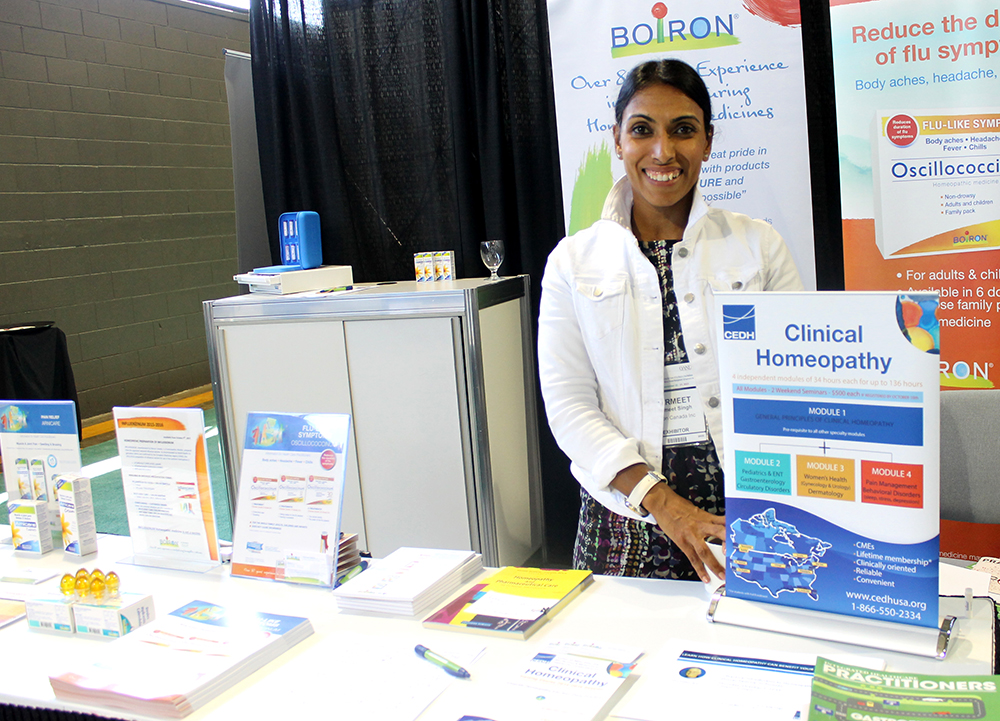
BoironRGBLast week, Michèle Boiron of Boiron Canada spoke at the Montreal Marriott Courtyard to more than 60 doctors and pharmacists on the topic of “Homeopathic Medication: An Effective Treatment for Today’s Patient.” Following her presentation, she shared the Boiron family story and discussed her experiences as a pharmacist, including some of her past cases, with an audience of more than 150 attendees during an exclusive sit-down dinner.


This event was an opportunity for those involved in homeopathy – whether as pharmacists, practitioners, naturopaths, or homeopaths – to meet, develop knowledge and share interest in homeopathy. The event was also a reflection of the ever-increasing emphasis being placed on homeopathic medicine.


“Homeopathic medicine meets a growing need among health care practitioners and consumers, who are looking for effective, reliable health products,” explains Daniel Dereser, CEO of Boiron Canada. “We’re delighted to provide this opportunity for Michèle Boiron to share her extensive knowledge of homeopathy with Canadian health care professionals.”


Both talks were accompanied by fantastic live performances by painter Stéphane Lemardelé who has captivated audiences across Quebec and Montreal.

Whiteknight Acquisitions III set on entering transaction with Delivra

0
Whiteknight Acquisitions III set on entering transaction with Delivra

Whiteknight Acquisitions III Inc. (WKA) has announced that it plans on entering a proposed transaction with Delivra Inc. that entails the two companies to exchange and acquire each other shares.

The non-binding letter of intent that the two companies have entered states that each convertible, exchangeable, or exercisable security of Delivra will be exchanged for the equivalent WKA on substantially the same economic terms and conditions as the original convertible, exchangeable or exercisable security of Delivra.

The Proposed Transaction is currently expected to be completed by way of a three cornered amalgamation between WKA and Delivra or other similar transaction, which will result in Delivra becoming a wholly-owned subsidiary of WKA.

The Proposed Transaction is subject to, among other things, receipt of the requisite shareholder approval of Delivra, final approval of the TSX Venture Exchange (the “Exchange”) and standard closing conditions, including the conditions described below. The parties have agreed that during the period from signing the LOI through to execution of the Definitive Agreement, each of WKA and Delivra will continue their respective operations in the ordinary course and will not solicit or accept alternative offers (subject to fiduciary duties). Subject to satisfactory completion of due diligence, the parties expect to execute the Definitive Agreement on or before October 30, 2015 (or such other date as may be mutually agreed in writing between WKA and Delivra) and have agreed to use their best efforts to complete the Proposed Transaction by November 30, 2015 (or such other date as may be mutually agreed in writing between WKA and Delivra).