



Home Blog Page 213

PharmaChoice reaches 600-location milestone

0
PharmaChoice reaches 600-location milestone

PharmaChoice is now Canada’s second-largest independent pharmacy banner after recently reaching its significant milestone of 600 locations.

“PharmaChoice is proud to have earned a leadership position in our country’s crowded pharmacy landscape,” says PharmaChoice East CEO Calvin LeRoux. LeRoux and other owners founded the pharmacy banner in 1999.

“We are confident that PharmaChoice is the program that provides independents with the best return on their investment, and we believe our rapid growth is proof of that,” LaRoux adds.

According to a recent release, the company has doubled its store count in five years. PharmaChoice West CEO Grady Brown says that the company’s success is due to a “proven financial model with operational flexibility and comprehensive program support.”

“If a member is looking for true independence, ultimate flexibility and a solid support system, look no further,” Brown says. “We truly respect our owners’ entrepreneurial spirits while offering them the comprehensive set of tools required to remain competitive in today’s marketplace.”

Vivo Brand recalls more natural health products

0
Vivo Brand recalls more natural health products

Vivo Brand Management is recalling more of its sexual enhancement products. This recall is due to an undeclared prescription drug, which could pose serious health risks—particularly those with heart conditions.

The recalled products, Sorta for Men Daily, Forta Xpload, as well as Durazest For Men Volume, might contain the prescription drug, sildenafil, the generic form of Viagara, which should only be taken under the supervision of a healthcare practitioner.

In a release, Health Canada advises that any consumers who have taken this product and have health concerns to consult their physician.

“Health Canada advises that consumers taking nitrate drugs should never take sildenafil or similar products together,” says Rebecca Gilman, media relations representative with Health Canada. “The combination could cause low blood pressure, which could be fatal.”

Also, consumers with high blood pressure, history of heart attack, chest pain and other heart problems who take sildenafil and engage in sexual activity are at higher risk of cardiovascular side effects.

“Consumers can also experience other side effects including headaches, indigestion, abnormal vision, as well as hearing loss, facial flushing, and dizziness,” says Gilman.

Health Canada is in the process of suspending all affected product licenses and monitoring the recall.

Vivo was unavailable for comment as of press time.

Is Transparency the Best Policy for Natural Health Retailers?

0
Is Transparency the Best Policy for Natural Health Retailers?

How does Canada’s natural health retailers handle business transparency? The industry conversation over this hot topic has changed on both sides of the border with the help of regulatory decisions such as the New York Attorney General’s probe into herbal supplements. Experts say that industry players engaging in shady practices have to cease because they jeopardize other industry members. Canada’s natural health retailers compare how transparency impacts and compares to the Canadian market.

The industry conversation over transparency has changed with the help of the New York Attorney General’s probe into herbal supplements. Experts say that industry players engaging in shady practices have to cease because they jeopardize other industry members. So, with these thoughts in mind, what does Canada’s natural health retailers say about transparency?

“[Besides the New York Attorney’s probe] I believe the standard needs to be raised by Canadian authorities as well,” says Sherwin Shao, owner of a number of Nutrition House locations in Ontario. “I know many instances where labelling was forced to be changed, but only after the consumer has been buying under false pretences for years. I believe penalties must be higher to prevent abuses.”

Daniel Lupu, owner of the Yonge/Bloor Nutrition House location in Toronto adds: “Transparency is great for the natural health care industry. It forces all companies to play by the same rules–at least here in Canada.”

Lupu says all natural health products require an official NPN number with clearly indicated ingredients and their specific concentrations. “In the U.S., the consumer doesn’t really have a clear indication of what and how much of a specific ingredient is truly in that product.”

The Yonge/Bloore owner concludes: “In life, honesty is always the best policy. If a company is not willing to be transparent, then the question becomes ‘what are they trying to hide?’”

OPA says Ontario should be permit pharmacists to immunize and treat minor ailments

0
OPA says Ontario should be permit pharmacists to immunize and treat minor ailments

The Ontario Pharmacists Association (OPA) says that the Ontario government should permit pharmacists to provide immunizations and treat minor ailments. Unlike other provinces, Ontario pharmacists are not allowed to give consumers immunizations or treat minor ailments—all of which could reduce the number of patients visiting emergency rooms and doctor’s offices.

In a release, the OPA stated that pharmacists in other provinces such as Quebec and Nova Scotia can prescribe for common ailments and administer some vaccines—besides the flu shot.

“Ontario is one of the last provinces to empower pharmacists to treat common ailments such as diaper rash, athlete’s foot and pink eye, as well to authorize pharmacists to administer vaccines for travel, HPV, pertussis and shingles, to name just a few,” says said Sean Simpson, Chair of the Board for the Ontario Pharmacists Association (OPA).

“Pharmacists are highly trained medication experts and giving them the ability to provide these services will have a significant impact on patient care, as well as on cost savings,” Simpson continues.

“Ugly” fruits and vegetables can save shoppers a pretty penny

0
“Ugly” fruits and vegetables can save shoppers a pretty penny

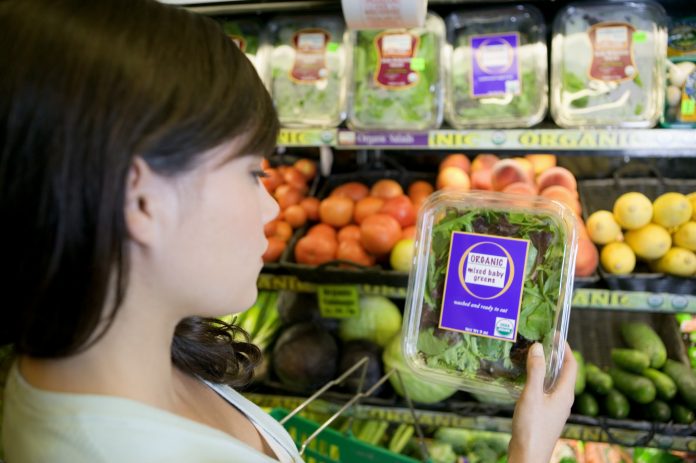
Launched last March, Loblaw’s “Naturally Imperfect” line—which features misshapen and oddly sized fruits and vegetables—has been loved by consumers across the country for its affordable prices. Now, the brand is expanding to include more “ugly duckling” peppers, pears, onions, mushrooms and carrots.

“When it comes to produce, Canadians know that beauty is more than skin deep,” says Ian Gordon, senior vice-president of Loblaw Brands, Loblaw Companies Limited. “Our customers recognize that they get the same flavor and nutritional benefits in spite of appearances.

Produce selected for the line may not have been harvested due to its small size, or was previously used in juices, sauces or soups due to malformations.

The brand, which featured only apples and potatoes at its launch, can now be found across the country in select no frills, Zehrs, Real Canadian Superstore, Your Independent Grocer and Loblaws locations.

Healthy competition better for primary health care

0
Healthy competition better for primary health care

As pharmacies express their valid concerns over the prospective McKesson/Rexall merger, Jim Danahy, the managing principal and CEO of consultancy firm CustomerLAB says that healthy competition is beneficial to accelerate the move toward primary healthcare.

“Healthy competition—no pun intended—is beneficial to accelerate the move toward better primary care,” Danahy says. “We have [thousands] of places already built with people ready to work in them—we just need to harness different processes and tools and to work differently.”

Danahy adds that Canada needs the deep pockets and the know-how of these two large companies, and now McKesson has the possibility of company-owned stores as labs in which to refine their primary care.

Ben Shenouda, an independent pharmacist in Brampton, and spokesperson for the Independent Association of Pharmacists of Ontario, takes a different position.

“It is true that competition is healthy, but which competition?” he says. “If your supplier is your competitor, how can you see this as a good thing. He will dictate the availability of the products as well as the cost price of the products.”

Shenouda continues: “Also, he can cut exclusive deals with end payers (insurance companies) based on lower cost prices and exclusivity of the products.”

With this acquisition, McKesson, a U.S.-based services company, could become the largest player in the Canadian retail pharmacy market—both supplying and selling drugs at retail.

McKesson’s Rexall takeover: a catalyst for Canadian healthcare reform?

0
McKesson’s Rexall takeover: a catalyst for Canadian healthcare reform?

According to industry experts, McKesson’s reported acquisition of Rexall may have great implications in Canadian healthcare reform.

“The healthcare system is shifting from institutional care to primary, community-based care, which involves a combination of in-community facilities and at-home services,” says Jim Danahy, managing principal and CEO of consultancy firm CustomerLAB. “We are shifting out emphasis from the hospital.”

Danahy suggests that the “space race” that this deal has struck between the possible McKesson-Rexall partnership and the Loblaws-Shoppers Drug Mart camp will be instrumental in the incitement of this change—the “healthy competition” generated between the two parties will help to speed up the switch to primary care.

“Having two large companies in a race to ‘do it better’ will be able to do what a fragmented industry wasn’t able to do previously,” he notes.

The key problem that the move toward primary care will address, explains Danahy, is medication non-adherence. “This issue kills thousands of people per year and causes untold suffering while also creating a burden on the healthcare system,” he says. “It can be resolved simply by helping patients to take the medication that has already been prescribed to them.”

“There are few times that patient care needs and the biggest business opportunities are perfectly aligned,” concludes Danahy. “But this is one of them.”

United Natural Foods is buying Haddon House

0
United Natural Foods is buying Haddon House

Canadian and U.S. natural food distributor United Natural Foods is set to acquire Haddon House Food Products, a distributor of speciality, natural, organic, ethnic, and kosher foods.

“Haddon House has a unique product and service offering that we expect to play an important role in our ongoing strategy to build out UNFI’s gourmet and ethnic product categories across the country,” stated Steven Spinner, UNFI’s President and Chief Executive Officer.

Spinner adds that Haddon House founders, David Anderson, Sr. and David Anderson, Jr., will remain with the company in leadership positions. The plan, according to Spinner, is to move “this exciting service offering and product category across our companies and throughout the United States.”

International Cancer Genome Consortium reaches 1,000 authorized users

0

On March 1, the International Cancer Genome Consortium (ICGC) announced that its Data Access Compliance Office (DACO) authorized its 1,000th user, giving them access to the Consortium’s Controlled Access datasets. This shows that more authorized researchers are accessing ICGC’s Controlled Access data for their research, using these datasets as the foundation for the next generation of cancer diagnostics and treatments.


“This is a great achievement that demonstrates how scientific collaboration can drive innovation and strengthen Ontario’s reputation as a leader in cancer research. I’m pleased Ontario’s researchers are leveraging the ICGC data and I’m excited to see how this will lead to future cancer diagnostics and treatments for patients in Ontario and potentially around the globe,” says Reza Moridi, Ontario’s Minister of Research and Innovation.


Although ICGC datasets catalogue tumour-specific mutations that are unrestricted and available to the scientific community, it has introduced an authorization process to grant access to clinical and inherited genetic data associated with unique individuals. This minimizes the risk of identification of donors based on computer analyses of demographic, clinical or genetic data.


“ICGC is supported and framed by robust ethics policies and procedures that ensure governance while facilitating access,” says Bartha Knoppers, Chair of the ICGC Ethics and Governance Committee and Director of the Centre of Genomics and Policy, Faculty of Medicine, Department of Human Genetics at McGill University. “Today’s milestone is proof of its success.”


ICGC has received commitments for 88 project teams in 17 jurisdictions to study more than 25,000 tumour genomes from various funding organizations in Asia, Australia, Europe, North America and South America.


Canadian Beverage Association responds to calls for taxation on sugar-sweetened and artificially-sweetened beverages

0
Canadian Beverage Association responds to calls for taxation on sugar-sweetened and artificially-sweetened beverages

In its statement in response to calls for taxation on sugar-sweetened and artificially-sweetened beverages, the Canadian Beverage Association (CBA) says it supports the ongoing efforts of the Canadian Federal and Provincial Governments, but disagrees with taxes on their members’ products as such measures “have proven ineffective in achieving desired outcome, and would not reflect the continued reduction of beverage calories in Canada.”

“Calls for measures such as taxation or labelling are a response to concerns about increasing incidence of obesity and resulting health concerns; however, it is important to note that obesity has continued to rise steadily over the past 20 years, while consumption of sugar-sweetened beverages, and beverage calories overall, has been declining over the same period,” the Association states.

“This has been tried in other jurisdictions and it has failed,” says Jim Goetz, the Association’s president. “It didn’t reduce obesity. It increased the price of groceries, and resulted in job losses in the food and beverage sector.”

The Association’s statement also emphasizes that Canada’s beverage companies voluntarily provide a clear calorie label on all of their products, in addition to what Health Canada requires.