




The support and generosity of its customers across Canada, combined with contributions from Home Office, Giant Tiger Stores Limited has raised over $100,000 to date for the Fort McMurray relief efforts. Fundraising started Thursday, May 5, and will continue as needed. Customers can round their receipt up to the nearest dollar at participating Giant Tiger stores. Funds will be donatred to the Canadian Red Cross Alberta Fires Appeal.
“Our thoughts are with individuals and families in Fort McMurray and northern Alberta whose lives have been touched by this disaster and we hope for the continued safety of everyone in the community,” said Thomas Haig, President and COO, Giant Tiger. “The support we have received from customers and store owners from across the country as well as Home Office is tremendous and we thank everyone for their generosity in this time of need. It is our sincere hope that these contributions will help those affected by the wildfire both now and during their recovery.”
To help Giant Tiger raise funds for the Canadian Red Cross Alberta Fires Appeal and local community aid initiatives, please visit your local participating store.
Giant Tiger Raises Over $100,000 for Fort McMurray Wildfire Relief Efforts

Paypal Canada introduces free shipping on returned items

PayPal Canada has become the latest player to offer free returns, now providing up to 10 refunds a year—or up to $300 annually—on online shipping costs. The company plans to offset the extra cost of doing so with increased e-commerce business.
This comes as a response to the growing number of cyber merchants attempting to keep pace with industry powerhouse Amazon.com Inc., especially with its growing supplement business, which does offer free returns. While relaxing return policies could come with higher expenses, online retailers are becoming more and more willing to due so in order to compete.
PayPal Canada notes that its choice to offer free returns is a bid to make customers even more comfortable with e-commerce transactions.
“People are generally worried about shopping online because they don’t quite feel comfortable with the return process,” says Kerry Reynolds, head of consumer marketing at PayPal Canada. “For us, [free] return shipping is a competitive differentiator… It’s one of those things that’s in line with our strategy of removing those barriers for people to buy online.”
According PayPal’s 2015 research, high return shipping costs discourage more than half of online shoppers globally from making repeat purchases. Reynolds notes that because of this, PayPal has introduced free return shipping in 40 countries over the past year, resulting in a “steep incline” in the number of people subscribing to the service.
“Shipping costs, in general, have always been a pain point for Canadians,” she concludes. “It’s adding that extra level of confidence to people who are shopping online.”
However, while free returns offer consumers comfort, they can hurt retailers’ ability to resell product—returned items can’t always be resold at full price, depending on their condition and timing of the return. As such, Antony Karabus, CEO of retail consultancy HRC Advisory, notes that to avoid these issues, retailers can tighten policies on when—and in what condition—products can be returned for full refunds. Moreover, he suggests that retailers consider creating a subscription charge or high purchase threshold for shoppers to qualify for free shipping.
Amazon’s Impact on the Supplement Market

Point, click, ship—it’s just that easy. Within seconds, you have found your vitamin or supplement, selected it, ordered it, and it’s on its way to you. A few seconds later, you receive your confirmation email.
Want to compare prices on your favourite supplements? That’s easy to do. Now, let’s think about the power of the dreaded Amazon and its influence in retail, and in particular, the effect it has on the supplements market and the high-service and customer-focused independent retailer.
How can you compete with the power of Amazon? Is the end near? But wait! Isn’t this the same conversation we had in the ‘80s and ‘90s as Walmart marched in and became the world’s largest retailer and one of the most valuable companies globally? Who could even compete? Independent retail seemed to be doomed. Except that it wasn’t and it isn’t. In fact, today Amazon has a market capitalization almost 30 per cent higher than that of Walmart—an amazing $277 billion.
So what exactly is Amazon and how does it affect the supplements and the natural health industry? To be sure, Amazon is not to be ignored. Founded in 1994 as primarily an online retailer of books, the Amazon of today has grown to sales of over $107 billion. While Walmart is still the world’s dominate retail force at over $400 billion in sales, Amazon now ranks in the top five worldwide and is just short of Costco.
Amazon has over 244 million active users. As of January 2016, 54 million of Amazon’s customers were members of its Prime priority shipping club. For an annual fee of C$80, Amazon offers a two-day delivery at no extra charge. In order to keep this promise and reduce the delivery cost of these orders, the company has recently announced it will be leasing 20 Boeing 767 jets of its own. This will make Amazon the 9th largest operator of Boeing 767s in the world—more than Air Canada and British Airways uses. This innovation will let Amazon’s customers receive their supplements faster and cheaper.
The jets are by no means a small investment. At an average cost of $500,000 a month to lease, Amazon’s annual costs for its fleet will approach $240 million. But with 89 warehouses and annual shipping costs of over $11.3 billion for 2015, investing in cost reductions is seen as key to Amazon’s continued success.
A quick search for “vitamins” will reveal 214,867 matches on amazon.com and 65,402 results on amazon.ca. Four major manufacturers of supplements have their coupons listed on the front page of the U.S. website with an option to subscribe to their offers. By clicking on New Chapter’s products you can save 20 per cent. From NBTY, it’s a $1-off coupon. Fortunately for Canadian retailers, this feature does not seem to have hit the market.
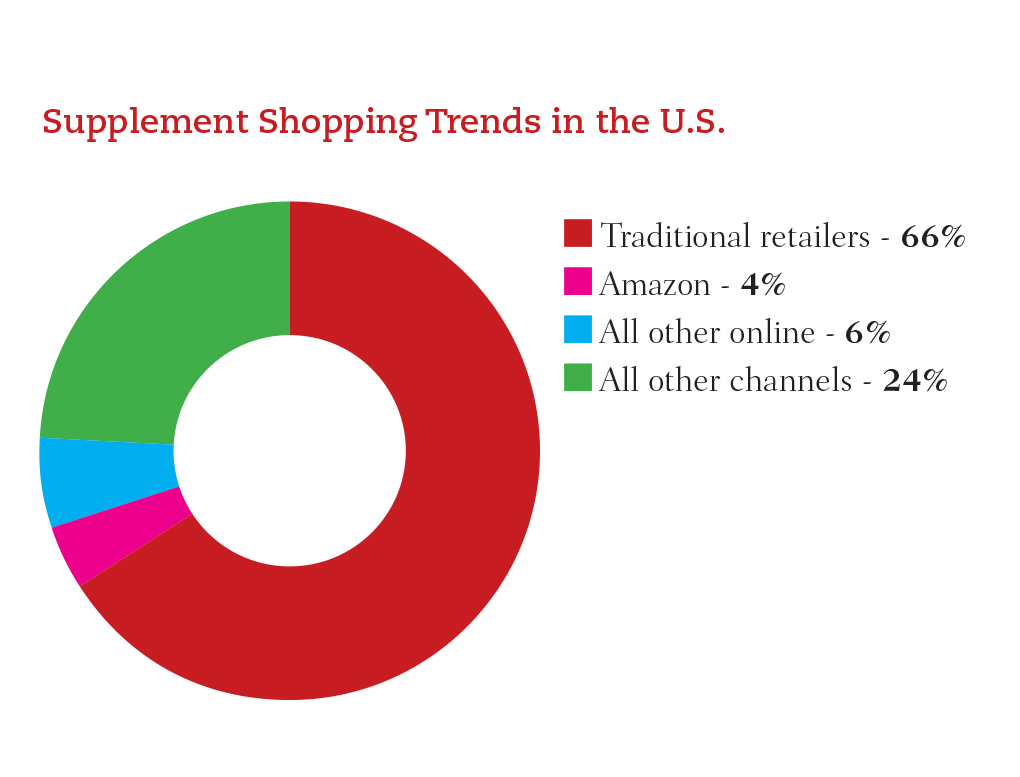
So where does this put Amazon in terms of the overall market? According to Nutraingredients’ May 2015 report, the dietary supplements
industry in the U.S. reached a high of $35 billion. The good news is that traditional retail continued to dominate sales in this category with an estimated 66 per cent of all retail dollars. Consumers continue to stick to the traditional shopping trends with food, drug
and mass retailers remaining as the channels of choice for their supplements purchases. That being said, online sales in the U.S. account for the largest single avenue for supplements sales is at $1.9 billion versus Walmart’s U.S. sales at $1.7 billion. Amazon’s share of all the online sales in the U.S. accounted for 38 per cent of all sales, or 80 per cent of all “online only” sales.
It seems that Amazon has an estimated $684 million in dietary supplements sales, which accounts for 0.6 per cent of its total sales.
While still a staggering number, it is small enough to be a rounding error for Amazon, and not an area of signi cant growth. In fact, according to Nutraingredients, in the eight years of monitoring the online sales, 2015 marked the rst year when the online sales for nutritional
supplements fell, declining by 0.2 per cent.
It seems like the old quote by Oliver Hazard Perry, “We have seen the enemy and he is ours,” and more importantly, “Don’t give up the ship” can be applied to the current market situation. The retail landscape is always shifting. The power of deep-pocketed retailers or
online juggernauts may be inevitable but it is not unstoppable. Excellent customer service and targeted consumer promotions will continue to protect the share of independent and chain retail as long as thestrategy is tailored to customer needs.
DATA SECURITY

Your sensitive information is more accessible than you think
By Phill Feltham
Your clinic is not immune to data breaches—cyber or physical. Practitioners store patients’ health and financial information on their networks, however, there are criminals who want to steal this information for identify theft or credit card fraud—which costs a patient dearly. That’s when, as a practitioner, you lose your valuable reputation and increase your operating costs.
The doctor-patient relationship is based on trust. As a practitioner, it is your duty to help your patients, as well as to protect their sensitive data.
CYBER ATTACKS
In March 2016, the Ottawa Hospital confirmed that four of its computers were cyberattacked by a ransomware virus.
Kate Eggins, a spokeswoman for the hospital, says that the malware locked down the files. The hospital wiped its drives clean and said that no patient information was compromised in the attack. Ransomware is one type of cyberattack that is on the rise.
David Greenham, senior manager of the Richter Advisory Group in Toronto, defines a ransomware attack as “a type of malicious software that prevents or limits users from accessing their system, often by encrypting files on the system.” The attack usually infects the victim’s PC when the user visits a malicious or compromised website.
“This type of malware forces its victims to pay a ransom through certain online payment methods in order to be granted access to their systems, or to get their data back,” he says. “This type of attack is not industry-specific, and the main goal of the attacker is monetary gain.”
PROTECTION
In order for a practitioner to fully protect his or her clinic, it is important to understand the different attack patterns and how they can damage operations. Raymond Vankrimpen, a partner at Richter Advisory Group, citing Verizon’s 2015 Data Breach Investigations Report (DBIR), says that 88 per cent of existing cyberattacks impacting practitioners fall into three attack patterns: denial-of-service (DoS), crimeware and point-of-sale (POS) intrusions. Vankrimpen recommends the following solutions for each type of attack.
Denial-of-Service: Botnets are used to compromise network and system availability. Hacktivists (hacker/activist) attack to prove a point. Organized crime groups and other criminals attack companies to request ransom or to cover their tracks on other hacking attempts. Ransomware viruses are classified as a DoS attack.
SOLUTION: Since many DoS attacks expose operating systems vulnerability, patch servers promptly. Deploy or subscribe to an anti-DoS service. Additionally, deploy a defense-in-depth architecture. This method allows servers to be effectively segregated behind firewalls on different network segments. Servers containing critical data will be protected by multiple firewalls deep within the network.
Crimeware: Crimeware is malware that has been designed with the purpose of committing illegal activity such as data theft or extortion for financial gain. Cryptolocker is an example of crimeware. It is often used in conjunction with social engineering attacks such as phishing.
SOLUTION: Ensure regular and frequent updating or patching of anti-virus, operating systems, and browsers. Enable two-factor authentication on critical systems. Compromised passwords and login credentials are common impacts of malware attacks, and implementing two-factor authentication can break the attack chain. Follow a solid change management process. If a change is being made to your systems, it should be done in a planned and authorized manner. Monitoring your systems for unplanned changes may help to identify if crimeware has been installed.
Point-of-Sale Breaches: Cyberattackers penetrate systems remotely to obtain credit card and customer information, which can be used for false transactions or identity theft.
SOLUTION: Restrict remote access by tightly controlling who has access to POS systems (for example, third party companies). This method involves training staff to identify questionable attempts to access in-store POS systems.
In addition, change default settings to wireless networks, touch terminals, desktop servers, card signature and/or signature capture—anything that connects or services the POS system. Also, prohibit employees from surfing the Internet on POS systems.
PHYSICAL LOSS
Cyberattacks are only one type of data breach. Unfortunately, the biggest cause of data breaches for clinics, according to the Verizon 2015 DBIR, is physical theft or loss, including laptops, flash drives, and paper documents.
SOLUTION: Encrypt sensitive data. Encryption adds an extra layer of security when—and if—data-held devices are stolen, thus rendering the encrypted device useless. Secure all mobile assets. Sensitive information should be stored accordingly (lock away devices and paper documents in a secure area where access is limited).
Also, automate backups. This removes human error and ensures data is backed up regularly. Greenham says that the method used depends upon where the data is stored. “If the data is stored on individual PCs, automated backups can easily be set up using tools provided by the operating system vendor; this process can be done in Control Panel in Windows, or using Time Machine on Mac.”
Greenham adds that practitioners can use an external hard drive so that the backup is not located on the same hard drive as the original data. Also, a Network-Attached Storage (NAS) device can be utilized. “Servers also have the same built-in backup utilities provided as part of the operating system, but there are also other third-party backup software utilities on the market if necessary.”
INSIDER DATA THEFT/HUMAN ERROR
Insider and privilege misuse is another cause of data breaches in healthcare organizations. In this case, employees and/or business partners abuse their access rights to steal confidential information. Medical documents are highly sensitive—and extremely valuable—data that criminals can use for tax refund fraud or identify theft.
Additionally, humans make mistakes—sometimes costly ones. The Verizon 2015 DBIR says that healthcare organizations suffer data theft for three primary reasons: employees email or mail files sent to the wrong recipients, fail to properly dispose of documents (shredding papers and wiping hard drives), or private data mistakenly published onto public websites.
SOLUTION: The Verizon 2015 DBIR suggests knowing the details of your data—including location and access. Also, the report recommends reviewing user habits such as monitoring systems to pinpoint any suspicious behaviour. Lastly, set up controls to monitor data transfers to prevent insider data theft.
“First, practitioners should put in place a written policy stating that confidential data such as patient records must not be sent outside of the clinic unless the transfer has been authorized,” says Greenham. “As a deterrent, the penalty for non-compliance with the policy should be stated (for example, termination of employment). The policy should be communicated to employees and incorporated into security awareness activities.”
As preventative control, Greenham says, a clinic could employ a Data Loss Prevention (DLP). “These tools detect and/or prevent sensitive data from leaving the clinic via email or other file transfer method and can also lock down the use of USB ports, restricting access to external storage devices.”
However, Greenham says that before a DLP tool can be implemented, the clinic needs to know the location of their data. “A data inventory will help to identify not only where the data is, but its relative sensitivity as well.”
The Verizon 2015 DBIR also suggests training staff on how to properly dispose of sensitive information.
POSTURE
Darace Rose, a cybersecurity expert with GMJ Consulting, a cybersecurity firm, says practitioners should pay extra special attention to their cybersecurity posture and ensure they have the right controls in place to protect themselves from the continuous onslaught of breach they may experience.
“Don’t put your head in the sand and pretend the problem doesn’t exist,” he says. “The threat is real and without taking the correct steps, practitioners will find themselves in difficult situations that can be avoided.”
IMPACTS
Rose says that some companies have been devastated to the point where business had to discontinue due to fines and costs associated with paying for a breach.
“Credit card companies pass all costs associated with credit card fraud back to the business owner,” says Rose. “That means if a credit card was used to buy a service, that loss is coming back to the practitioner where the breach occurred.”
Besides large fines from credit card companies, a breach of sensitive information can have a monumental impact that damages the practitioner’s reputation. They could suffer a drop in revenue because of a loss of trust from patients. This number can get very steep in a short amount of time.
“Also, practitioners can be hit with a large cost to hire and work with computer forensic firms to diagnose how hackers infiltrated their system, how to plug that hole and to find out what information was accessed,” says Rose. “If the hole is not plugged with a defense in depth strategy, the hackers will continually return.”
Provincial laws provide stiff legal and financial penalties to health organizations who do not properly protect patient information. Greenham says that hospitals, community centres, and pharmacies in Ontario must have a contact person designated to be responsible for Personal Health Information Protection Act (PHIPA) compliance. “This assigned individual is responsible for the proper oversight and accountability of health information privacy practices and policies,” says Greenham.
“Hospitals, community centres, and pharmacies must take reasonable precautions to ensure that personal health information is protected against theft, loss, unauthorized use or unintended disclosure. The information must also be protected against unauthorized copying, modification or disposal.”
Individuals who do not comply with PHIPA regulations can face fines up to $50,000, and corporations—up to $250,000.
OTHER SECURITY SOLUTIONS
Practitioners, Rose says, can employ skilled computer security staffs who are becoming harder to find due to their high demand. “They can also work with a cybersecurity firm to build a defense-in-depth strategy.”
“The first step we undertake with any new client is to provide an assessment of the current landscape similar to a lay-of-the-land,” says Rose. “We will then build a strategy and work towards it.”
“Once this process is complete, a long-term program is required that has the right staff watching out for signs of security events and incidents on an hourly and daily basis,” continues Rose. “This is the only way to achieve security within your environment and to remain secure.”
Not all practitioners can afford expensive in-house cybersecurity solutions. In this case, Vankrimpen recommends utilizing the services of a managed security service provider (MSSP). They work with multiple clients and maintain a strong contingent of qualified and experienced security experts. This is beneficial, Vankrimpen says, because information that is shared among multiple parties can help to identify patterns of attack, allowing defensive cybersecurity teams to stop attacks from further propagation.
“Cybersecurity is not a set-and-forget proposition,” adds Rose. “It takes continual effort and practitioners cannot afford to neglect this aspect of their computer operations.”
Chinese medicinal plant makes anti-cancer compound

According to the John Innes Centre, the Chinese skullcap, Scutellaria baicalensis, known in Chinese medicine as Huang-Qin, produces flavones—compounds that may help treat cancer and liver diseases.
Although flavons are well-researched, wogonin and baicalin—compounds found in Huang-Qin roots—are different because of a missing –OH (hydroxyl) group in their chemical structure.
“Many flavones are synthesised using a compound called naringenin as a building block. But naringenin has this -OH group attached to it, and there is no known enzyme that will remove it to produce the flavones we find in Huang-Qin roots,” says Cathie Martin, lead author of the paper.
Through research, Martin’s team discovered a biosynthetic pathway involving new “building block”—chrysin. Martin believes that understanding this pathway will enable further research into the potential medicinal uses of Huang-Qin.
“It’s exciting to consider that the plants which have been used as traditional Chinese remedies for thousands of years may lead to effective modern medicines,” she says.
Help your patients combat MS symptoms

According to recent study, yoga and aquatic exercise can alleviate some of the symptoms associated with multiple sclerosis (MS). Researchers from the Kermanshah University of Medical Sciences in Iran, the Psychiatric University Clinics (UPK Basel, Center for Affective, Stress and Sleep Disorders) and the University of Basel’s Department of Sport, Exercise and Health took part in the study.
Researchers say MS symptoms, such as movement disorders, fatigue and depression, significantly improved after an eight-week program of yoga and aquatic exercise. In the non-exercising group, the likelihood of depression was 35-fold higher than in the groups who had done yoga or aquatic exercise.
All 54 women participating in the trial continued taking their existing medication to regulate the immune system.
The researchers believe exercise should be considered as possible complements to standard MS treatments.
The use of Omega-3 in psychiatric diagnoses

By Rochelle Fernandes, MSc., ND (cand.)
Peer-reviewed by Makoto Trotter BSc(Hons), ND, Erin Wiley, ND, & Hilary Booth, ND, HBSc
Psychiatric diagnoses can be challenging to treat. While antipsychotic and antidepressant medications are designed to treat psychotic and affective symptoms, the effects are often suboptimal, and are accompanied by several side effects. There seems to be a growing need to supplement conventional treatment with naturopathic options in this group of disorders. As such, there has been an increasing interest and recent research on omega-3 supplementation in psychiatric disorders (schizophrenia, attention deficit hyperactivity disorder (ADHD), bipolar disorder and depression).
Mechanisms of action of omega-3 in psychiatric disorders
It has been hypothesized that omega-3/polyunsaturated fatty acid (n-3 PUFA) supplementation may confer neuroprotective effects. Several studies have shown that an accumulation of n-3 PUFAs in neural cells may have a positive effect on neuronal function, alongside anti-inflammatory and antioxidant activities (Itua, 2010), (Orr, 2013). Other activities include that n-3 PUFA increases membrane fluidity (Meijerink, 2013), activates peroxisome proliferator activated receptors, and enhances neurotrophic support (Kou, 2008). These multi-faceted mechanisms of action lend support for theories of possible neuroprotective and cognitive benefits in psychiatric disorders.
Reviews on the subject concluded that PUFAs and their mediators are responsible for certain processes within the central nervous system: (1) the maintenance of cell structure and function of neurons, glial cells and endothelial cells; (2) the regulation of neuro-inflammatory processes; and (3) the modulation of neurotransmission (Bazinet, 2014). These mechanisms provide a basis for mood regulation, symptom control and cognitive function. This enables an understanding of how n-3 PUFA may be a novel therapeutic target of interest in several psychiatric disorders, such as depression and schizophrenia.
It is thought that altered mechanisms of action, including, but not limited to decreased levels of eicosapentaenoic acid (EPA) and docosahexaenoic acid (DHA), are one of the causes of certain psychiatric disorders. One meta-analysis of 14 case-control studies showed significant reductions in EPA and DHA in plasma and erythrocytes in subjects with major depression (Lin, 2010). Another set of studies showed that bipolar patients had significant erythrocyte DHA and/or EPA deficits when cross comparing them to healthy counterparts (Chiu, 2003, McNamara, 2015). Cross-sectional studies have found that children with a very high risk for mood disorders have erythrocyte EPA and DHA deficits compared with healthy individuals (Clayton, 2008).
Well established erythrocyte EPA and DHA low levels were also seen in those with social anxiety disorder (Green, 2006), and plasma EPA and DHA deficits were found in those with major depression alongside comorbid anxiety disorders (Liu, 2013). One study showed that those who had taken no medication at the onset of psychosis had erythrocyte DHA and arachidonic acid (AA) deficits compared with healthy individuals (Khan, 2002). An interesting meta-analysis of 18 case-control studies also showed significant low levels of DHA and AA in schizophrenic individuals (Hoen, 2013). These studies suggest that deficits in erythrocyte DHA and AA may predispose patients to psychosis, and persist in those diagnosed.
This same logic was used in another meta-analysis of nine cross-sectional studies that found lower blood EPA and DHA levels in children with ADHD compared with healthy controls (Hawkey, 2014). The rationale behind the use of omega-3 supplementation is an intent to treat; correcting this deficiency.
Evidence for using omega-3 in schizophrenia
A growing body of evidence exists for the use of omega-3s in schizophrenia. When any dose of omega-3 ethyl-EPA (E-EPA or EPA) is compared with placebo, a small, short set of studies suggest that the need for neuroleptic medication seems to be decreased for people taking omega-3 (n=30, 1 RCT, RR 0.73 CI 0.54 to 1.00) and mental state may improve (n=30, 1 RCT, RR not gaining 25 per cent change in PANSS scores 0.54 CI 0.30 to 0.96, NNT3 CI 2-29) (Joy, 2006).
A Cochrane Review investigated the use of omega-3 and evening primrose oil to treat symptoms of schizophrenia. The review found a positive effect of EPA versus placebo for scale-derived mental state outcomes, in the context of symptom improvement. It should be noted that the data is preliminary and further studies with more power are necessary to confirm the effect to a greater degree. A smaller study within this review looked at using EPA as the only treatment for people hospitalized for relapse. The results showed that EPA may help 33 per cent of people who avoid using antipsychotic medication for twelve weeks (RR 0.6, CI 0.4-0.91) (Joy, 2000).
One meta-analysis showed that when individuals in the prodromal state of schizophrenia took omega-3, it reduced psychotic symptom severity and lowered conversion rates to first-episode psychosis. Similar findings were echoed with first-episode schizophrenia; omega-3 lowered non-psychotic symptoms, required smaller antipsychotic medication dosages, and heightened early treatment response rates (Chen, 2015).
One randomized, placebo controlled study provided clinical value by mention of dosage; 2,200 milligrams of n-3 PUFA or placebo was given for 26 weeks and the study evaluated symptoms in first episode schizophrenia. They concluded that this dosage was effective as an adjunctive therapy as per the following results: improvement of 50 per cent in symptom severity; (p = 0.017), an improvement in depressive symptoms (p = 0.006), and a higher level of functioning (p = 0.01) in the n-3 PUFA group (Pawełczyk, 2016).
It should be noted that many studies used only EPA and/or did not always cite the ratio of EPA:DHA, however, this could be an interesting point for further examination. Overall, the dosage of omega-3 used in schizophrenia seems to be approximately 2,200 milligrams.
Evidence for using omega-3 in bipolar disorder, ADHD and depression
N3-PUFA is thought to be involved in the pathophysiology, treatment and prevention of bipolar disease (BD) (Sublette M. E., 2011). The protective function of n-3 PUFA was examined in patients with BD. DHA and EPA caused increased membrane fluidity, as detected by reductions in T2 (a membrane integrity marker) values, compared to controls in a four-week study (Hirashima, 2004).
A small, double-blind, placebo controlled trial examined the effects of EPA treatment in BD patients, as associated with increased brain levels of N-acetyl aspartate (NAA), a marker thought to be active in neuronal integrity. Fourteen female BD patients were given two grams of E-EPA per day or placebo for 12 weeks. The results showed a significant rise in NAA levels in the E-EPA group versus placebo (p = 0.027), thus establishing grounds for a possible neuroprotective role of n-3 PUFA in BD that can be further examined with larger studies (Frango, 2007).
N-3 PUFA was also proposed to be useful in the treatment of ADHD. One meta-analysis showed that in the primary analyses, n-3 PUFA did not show improvements in emotional lability (EL), oppositional behaviour, conduct problems or aggression. However, subgroup analyses of higher quality studies and those meeting strict inclusion criteria found a significant reduction in EL and oppositional behaviour. This could indicate that larger sample sizes may amplify this effect and show value in highlighting the effects of n-3 PUFA on reducing EL in subsets of children with ADHD (Cooper, 2016). A randomized controlled trial showed that supplementation with n-3 PUFA improved the red blood cell fatty acid profile by significantly reducing AA/DHA in the intervention group when compared with controls (P= 0.000) in children with ADHD (Wu, 2015).
Much like BD, n-3 PUFA has also been proposed to have a beneficial effect when used alongside conventional medication in major depressive disorder (MDD). A meta-analysis demonstrated a beneficial effect of omega-3 PUFAs on depressive symptoms in MDD (standardized mean difference=0.398 (0.114-0.682), (P=0.006); the statistics showed a positive correlation between increasing the EPA dose and positive effects on MDD symptoms. EPA was also shown to provide better outcomes in patients taking antidepressants than in those who were taking EPA alone (Mocking, 2016).
The clinical benefit appears as follows: it seems that dosage ranges of omega 3 vary in these disorders. However, several studies including a valuable meta-analysis suggested that an administration of at least 60 per cent or more of EPA, with a dosage range of 200 to 2,200 milligrams of EPA over the amount of DHA showed beneficial outcomes in depression (Sublette E. M., 2011).
Overall, n-3 PUFAs are thought to be involved in the pathophysiology, treatment and prevention of BD, ADHD, MDD and schizophrenia. The clinical value from the studies mentioned above is at an average dose of 200 to 2,200 milligrams for psychiatric disorders in this article. The mechanisms of action involved are thought to include a reduction or alteration of cellular/plasma EPA and DHA, with the aim of supplementation to correct this deficit. Further research and future directions of study are required to solidify this effect by designing studies with greater statistical power that could include a thorough examination of EPA:DHA ratios specific to each of these disorders. Nonetheless, many studies have already shown successful adjuvant treatment of omega-3s alongside conventional medicines, with improvement at the cellular and clinical level. These findings warrant omega-3s as a valuable therapeutic option for psychiatric diagnoses.
View the references on your tablet.
Raising funds for Parkinson’s research

On Saturday, May 7, Harry McMurtry, who has Parkinson’s disease, started his 500-mile walk from New York City to his hometown, Toronto, to raise money for Parkinson’s research.
McMurtry will walk up to 15 miles a day for over 45 days, which is a tremendous challenge for anyone with Parkinson’s. He is joined by two other walkers, Sue Thompson and Dr. Ross Sugar both of whom also suffer from Parkinson’s disease to show their gratitude but raise awareness and funds to help the over 6.3 million people worldwide who suffer from the disease.
Honorary patrons of the walk include hockey all-star Wayne Gretzky, Olympic athletes Adam van Koeverden and Ashley Holzer, rocker Tom Cochrane, fashion icon Jeanne Beker and other celebrities pledging their support.
Over the course of the walk, the team will be making school visits to engage and educate students about the disease and give them a chance to meet and walk with the crew as they pass through upstate New York before crossing over into Canada and finally arrive in Toronto June 20th.
The proceeds from the 500 Miles for Parkinson’s bi-national project will be pooled and then shared amongst three beneficiaries: Michael J. Fox Foundation for Parkinson’s Research; The Morton and Gloria Shulman Movement Disorders Centre at Toronto Western Hospital, University Health Network; and Mount Sinai Beth Israel Movement Disorders Center in New York.
More information here.
Rootalive’s New Coconut Oil
Rootalive organic virgin Coconut Oil comes from organic coconut plantations in Sri Lanka and has a naturally smooth and sweet flavour. Their coconut oil is cold pressed, raw, gluten free and does not bleach, refine or use any chemicals.
Webber Naturals New Mild Iron
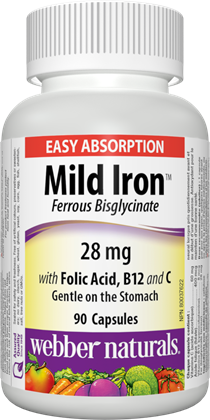
Webber Naturals Mild Iron is uniquely formulated to support your body in making healthy red blood cells. The human body needs to generate a steady supply of new red blood cells to replace old and damaged ones. To do this, it is essential to receive adequate amounts of particular nutrients in the diet, especially iron, vitamin B12, and folic acid.
What makes it unique? This new formula contains vitamin B12, folic acid and ferrous bisglycinate. According to experts, it is a form of iron that is easily absorbed, has fewer side effects and is safer than other forms of supplemental iron.