




Home Blog Page 162

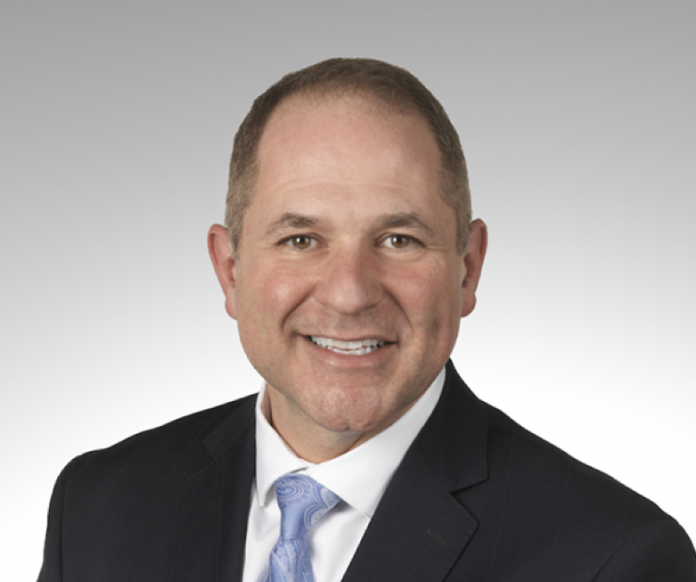
Mike Hannalah seeks to represent pharmacists in district M

0

Mike Hannalah is looking to serve as the Ontario College of Pharmacists’ Council representative, for District M. See below for his letter of intent.

Dear Colleague,

It is with great honour that I seek your support in my election to serve you as your Ontario College of Pharmacists’ Council representative, for District M.

I possess an extensive experience in the practice of pharmacy. Over the past decade I have been practicing as a community pharmacist, a pharmacy manager, an independent pharmacy owner, an entrepreneur, and a director of multiple specialty pharmacy operations. I deal with the joys and the stresses of our profession daily, which keeps me very current with the issues facing pharmacists and the public that we serve.

I have acquired valuable and rewarding experience in the Regulatory sector through serving as a non-Council member of the College, on various committees since 2008 to present. During this time, I have served on committees such as the Professional to Practice committee, Inquiries, Complaints & Reports committee, Discipline committee and Fitness to practice committee. In addition to serving on these committees, I was appointed to the Professional to Practice Committee at the Ontario Pharmacists Associations. I am also an active member of the Pharmacy Program Advisory Committee at the Humber College Institute of Technology and Advanced Learning.

This experience in both the professional and regulatory sectors has enabled me to have comprehensive knowledge and understanding of the unique needs, challenges and opportunities of Pharmacy in Ontario.

The profession of pharmacy in Ontario is continually growing and expanding. Recently we have seen the emergence of new regulations to the Regulated Health Professions Act, which has expanded the scope of practice for both pharmacists and technicians.

Additional amendments to the Drug and Pharmacies Regulation Act allows pharmacists the authority of refill existing prescriptions, provide vaccinations as well as receive reimbursement by the Ontario Government for clinical interventions. I believe that the implementation of these changes needs to be done in a way that upholds the high standard of practice of pharmacy, protecting the needs and interests of our patients and preserves the value of our profession and its members.

The changing dynamics of our profession and the expansion of our roles have allowed the creation of a new fee for service model along with the increased scope of services provided by our practices. The college plays a vital role in supporting, guiding its member to implement those changes as well ensuring the public safety and maintain the self-regulation privilege.

Those of you who know me on either a personal or professional level know I am determined, motivated and an attentive Individual. My strong emphasis on hard work and perseverance will allow me to better serve the growing and changing needs of the pharmacy profession and supporting for expanded scope within our practice.

I believe that I have a firm understanding of the challenges that we in our shared profession share together. With our changing role as health care professionals, we require the ability to cope with and benefit from those changes. We as pharmacists need to take the Initiative and become motivated and mobilized to ensure our shared contribution in the new era of pharmacy practice.

Objectives

1. Encourage and support continued expanded scope of practice. This includes addressing the barriers to additional prescribing. Practicing at full scope and in collaboration with other health care practitioners to ensure direct patient care in all models of practice.

2. Introducing innovative practice models, leveraging technology to support pharmacists and enabling access to patients in contemporary ways.

3. Representing the views of registrants to council, and sharing and discussing council decisions and their impacts with registrant of my district.

4. Work on initiative that increases the awareness, trust and enhances the role of Pharmacist in the newly reshaped model of practice.

5. Assisting on policies in areas of specialization of the profession under the expanded new scope of practice.

Experiences
¥ OCP appointed non- council member, ICRC, Professional to practice, Discipline, Fitness to practice committees, 2008 to present

¥ Fellow of the American College of Apothecaries, TX

¥ Member: PCCA, ACP, IACP, and CHFA

¥ Adjunct faculty: Albany College of Pharmacy (2006-2009)

¥ Teaching tutor, professional to practice lab, pharmacy school U of T & U of W

¥ Board Member of magazine “L’Echo de la Plume”, Communité Francophone

¥ Involved in various educational programs such as expert reviewer for various CE lessons,
facilitator of workshops at the OPA, assisting tutor at the pharmacy students at University of
Toronto and University of Waterloo in advanced compounding course.

¥ Guest speaker and lecturer – Ontario Association of Naturopathic Doctors & University of
Toronto

Your important vote will serve to consolidate the commitment of all pharmacists, in order to find durable solutions to the challenges generated by both professional and community tasks. Being elected by you, I will make sure to represent our views and the views of the registrants of District M to make a real contribution to the public through our profession. I would like to invite you to contact me at any time, by phone or email, should you have any question, query or concern. Thank you for your consideration and support and I look forward to representing your views and serving on the College Council.

Sincerely,

Magued (Mike) Hannalah
mhannalah@rogers.com
(416) 219 4897

Walmart amps up Amazon competition with third-party online selling

0
What is Walmart’s vision for the future of shopping?

Walmart Canada is making a brand-new swipe at Amazon with another foray into the digital realm. The retailer is expanding the offerings on its Walmart.ca website with the addition of third-party selling, allowing for the sale of goods from outside companies and small businesses.


This bold move follows Amazon’s entrance into bricks-and-mortar grocery with Whole Foods.


“This has been in the works for a long time,” says CEO Lee Tappenden. “We will double the SKUS we have online at the launch date, and by early next year we will have millions of SKUs online.”


What’s more, Walmart Canada is launching in-store pickup for online purchases, with 100 stores set to have the feature by Christmas.


Ultimately, this move will allow Walmart to further compete with Amazon’s number one selling point—its vast product selection. As this retail war continues to escalate, independent retailers must continue to offer the excellent customer service they are known for. Additionally, retailers must consider entering into the e-commerce market: this will allow for better competition on all platforms.

Australian review calls for ban on homeopathic products

0

A new review out of Australia suggests that pharmacies should be banned from selling homeopathic products. The study, known as the interim King review, was led by economist Professor Stephen King.

According to the document, homeopathic products pose “unacceptable” risks to patients. The report disputes the safety of homeopathic products, suggesting that instead, they pose a risk to patients who may choose them over conventional treatment.

Specifically, the review cites a 2015 NHMRC assessment, which noted that there were no health conditions for which evidence supported homeopathic treatments. The report also raised concerns about the methods behind the sale of these products.

“Clearly, community pharmacists can play a valuable role in advising consumers on the potential health benefits or dangers of using complementary medicines,” says the document. “[But we remain] concerned that consumers may be misled about the value of complementary medicines in the absence of appropriate evidence-based advice at the point of sale.”

Ultimately, the report suggested that complementary medicines be separated from allopathic remedies, as well as banning them from being displayed behind the counter.

While this is an Australian report, Canadian medical professionals have been known to express issues with the use of homeopathic medication. As members of the natural health industry, it is necessary for all of us to educate and inform consumers and allopathic supporters about the benefits of homeopathy.

Jamieson Wellness raises $300 million in IPO

0
Jamieson Wellness raises $300 million in IPO

Jamieson Wellness Inc., a Canadian manufacturer of natural health products, has raised $300 million in its initial public offering (IPO).


The company has priced its shares at $15.75 each, and will start trading them uder the ticker JWEL next week. The IPO gives Jamieson a market value of about $628 million.

Jamieson has pursued this IPO after last year’s inability to find a buyer. At the time, the company was looking primarily to Chinese buyers, valuing itself at $1 billion.


This move is backed by U.S. buyout firm CCMP Capital Advisors, while the share sale was led by Bank of Montreal and Royal Bank of Canada.


Jamieson’s choice to go public reflects a rebound in Canada’s IPO market, with investors looking to diversify from financial, energy, and materials stocks.

Xylitol Canada announces appointment of new team members

0
Xylitol Canada announces appointment of new team members

Xylitol Canada Inc. has reached an agreement with Mitch Shore to act as its chief marketing officer and Eli Grossman as a special advisor.
“On behalf of our team, I am excited to have Mitch and Eli join our growing natural sweetener company as we continue to build a world class team to promote healthier eating for families by providing innovative, alternative sweetener solutions to reduce the amount of added, refined sugars in their diets” says Steven Haasz, the company’s CEO.

Mr. Shore brings to Xylitol experience across a variety of customer focused companies including start-ups such as Yak Communications and consumer brands such as Dr. Bernstein Diet Centers and Beaver Canoe. Mr. Shore’s most recent achievement was with building, branding, and marketing Mill Street Brewery into one of Canada’s most successful craft breweries which experienced 15 per cent year-over-year growth in sales of its popular organic beers. Mill Street, including Mr. Shore’s ownership, was sold to Labatt Breweries in 2015.

Mr. Grossman brings to Xylitol over 30 years of experience building all aspects of Canada’s leading natural sweetener brand Billy Bee Honey started in 1958. Mr. Grossman was directly involved in global product sourcing, production and processing systems, employee programs, product innovation, packaging design and marketing.

Mr. Haasz explains “that being able to attract the caliber of exceptional people such as Eli and Mitch to the team is a positive milestone in our journey and we look forward to their valuable contributions as we continue our transformation in 2017 into a leading natural sweetener company.”

About Xylitol Canada Inc.

Xylitol Canada is a consumer packaged goods business focused on an assortment of natural sweetener based products including xylitol, coconut palm sugar and honey. The Corporation operates a 30,000 square foot facility in Colorado where it produces and packages a full catalog of natural sweetener products, most notably its natural sweetener alternatives. Xylitol Canada services major retail customers such as Loblaws, Whole Foods, Costco, Trader Joe’s, Sprouts, Walmart, Publix and distributors including UNFI and KeHE.


German retailers make aggressive expansion into North American market

0
German retailers make aggressive expansion into North American market

Aldi, a German grocer, has begun an aggressive expansion into the North American market. Currently, the retailer operates 1,600 U.S. stores, and plans to add another 400 by the end of 2018, as well as spend $1.6 billion to remodel 1,300 of them. Now, Aldi has announced further plans plans to invest USD $3.4 billion to expand its U.S. base to 2,500 stores by 2022.


What’s more, German rival Lidl plans to open the first of its 100 U.S. stores on June 15. The company has said it will price products up to 50 per cent lower than rivals, making market competition even more fierce.


Aldi’s latest store expansion will create 25,000 U.S. jobs and make it the third-largest grocery chain operator in the country behind Wal-Mart and Kroger Co. The furious pace of expansion by Aldi and Lidl is likely to further disrupt the U.S. grocery market, which has seen 18 bankruptcies since 2014.


However, retailers above the border should also take note: this move could spell disaster for the Canadian grocery sector, say experts from New-York based global management consultancy Oliver Wyman. As such, Canadian grocers—especially discount chains—must steel themselves for tough competition ahead. This could mean offering discounts, creating new sales campaigns, or even expansion.

Precision BioSciences welcomes new president of PlantSciences

0
Walgreens calls off Rite Aid takeover

Precision BioSciences has appointed Fayaz Khazi, Ph.D., to serve as the President of Precision PlantSciences, a business unit developing innovative, high impact products in the food and agriculture sectors aligned with Precision’s overall mission to improve life through scientific innovation.


“I am thrilled to welcome Fayaz Khazi to the Precision team,” said Matthew Kane, Chief Executive Officer of Precision BioSciences. “It was essential that we find a leader with demonstrated success in both agricultural innovation and human health and, more importantly, someone who could appreciate the critical connections between the two. With his unique expertise and vision, I am convinced that Fayaz will lead us beyond traditional crop enhancements and develop truly novel products that bridge human health and industry demands.”


Prior to joining Precision, Dr. Khazi was the Chief Executive Officer of KeyGene USA. At KeyGene, Fayaz established highly successful business relationships and strategic R&D collaborations to enable accelerated crop improvement in the plant breeding, food ingredients and sustainable commodities markets in North and South America.


Dr. Khazi holds a doctorate in molecular genetics from Auburn University where he studied DNA repair and recombination. As an HHMI post-doctoral fellow, he trained with Dr. Katherine High at The Children’s Hospital of Philadelphia studying genotoxicity of gene therapy vectors and developing in vivo genome-editing technologies to treat hemophilia B. He then became the founding Director of Translational Medicine at Intrexon Corporation, where he held several executive leadership positions supporting the food, human health and agricultural biotechnology sectors. Dr. Khazi also worked with executive management at Intrexon to help launch a successful IPO in 2013 (NYSE: XON) before moving on to become Chief Executive Officer of KeyGene USA. With Precision’s next-gen ARCUS genome-editing platform, Fayaz will continue to pursue innovative approaches and creative partnerships at the nexus of food, agriculture and human wellness.


“Technology and scientific innovation are no longer limitations to fully addressing generational challenges of nutritional security and wellness. Precision’s technical capabilities and forward-thinking view of the connections between medicine, nutrition and agriculture are what attracted me to embark on this journey,” said Fayaz. “Through innovative integration of Precision’s ARCUS genome-editing platform with novel tools in target discovery and validation, we look forward to making a positive impact on improving global food and nutrition systems, sustainability and human wellness.”


About Precision BioSciences


Precision BioSciences is a genome editing company dedicated to improving life. Our team seeks to solve significant problems in oncology, genetic disease, agriculture, and beyond using a unique, proprietary genome-editing platform called ARCUS. With an industry-leading combination of site specificity, ease of delivery, and breadth of targeting and editing capabilities, our next-gen editing approach overcomes major challenges limiting the translation of promising basic research to products that can fundamentally improve life.


How will Amazon’s Whole Foods buyout affect the industry?

0
Smoke

Amazon has announced that it will be buying Whole Foods for USD $13.7 billion.

After months of speculation, the e-commerce giant has acted on rumours that it would be purchasing the natural health foods retailer. Following this, stocks for Target, Kroger, United Natural Foods, and Walmart fell.


However, this acquisition will not only affect Amazon’s direct competitors: its effects will slowly but surely trickle down into the world of independent grocers.


For independents, this represents the complete integration of online and bricks-and-mortar retail. With Whole Foods and amazon.ca under its belt, Amazon will be able to dominate the Canadian retail market in its entirety. This underlines a need to strengthen e-commerce initiatives, including home delivery options, product selection, and delivery speed.


This buyout also brings even slimmer profit margins to the table. Because Amazon’s business model leaves it with a net income of nearly zero each quarter, a Whole Foods operating under the giant will accept lower margins than it does as an independent chain. This will ultimately drive their prices down, making it incredibly difficult for independent retailers to compete. To fight this, independent grocers must continue to offer unique services, strong client-grocer relations, and a wide range of fresh, attractive products.


The transaction is expected to be finalized at the end of 2017.

Exhausted immune cells linked to IBS

0

For the first time, researchers have discovered that a specific form of irritable bowel syndrome (IBS) is associated with exhaustion of the immune system.

The research focused on patients with various types of irritable bowel disease, following followed them for a year and comparing blood samples. Patients were studied both when they experienced symptoms, and when they were symptom free.

At the end of the research period, all patients with diarrhea-predominant IBS were found to have exhaustion in their T-cells.

“For the first time, we’ve discovered that in patients with irritable bowel syndrome associated with diarrhea, their T-cells seem to be ‘out of puff’ or run down,” says Dr. Patrick Hughes, Senior Lecturer with the Adelaide Medical School, University of Adelaide, and a member of the Nutrition & Metabolism theme, South Australian Health and Medical Research Institute (SAHMRI). “These normally active immune cells are less responsive to stimulation, secreting fewer mediators and dividing less. This type of response is often observed in chronic infections.”

Dr. Hughes adds that more research is needed to see how IBS and stress are linked. While it is known that cortisol and stress hormones can inhibit the immune system, T-cell exhaustion had not been previously described in IBS patients.
“Irritable bowel syndrome takes a real toll on patients,” Dr Hughes says. “It can affect people in the prime of their lives, it’s a chronic disease that can last a long time, and the treatments currently available are poor. Anything we can do to better understand the disease and to help reduce its debilitating effects on patients will be welcome.”

Does acupuncture belong in the emergency room?

0

A new study suggests that acupuncture could be an alternative to pain relievers for some patients in emergency rooms.

The research, which came out of the world’s largest randomized controlled trial on this subject, found that acupuncture was as effective as pain medicine in providing long-term relief for patients who came to emergency in considerable pain.
Led by RMIT University in Melbourne, Australia, the study revealed that pain management still remains a critical issue. Lead investigator Professor Marc Cohen, from RMIT’s School of Health and Biomedical Sciences, notes that pain was the most common reason for emergency room visits, but that it was often inadequately managed.

“While acupuncture is widely used by practitioners in community settings for treating pain, it is rarely used in hospital emergency departments,” says Cohen. “Emergency nurses and doctors need a variety of pain-relieving options when treating patients, given the concerns around opioids such as morphine, which carry the risk of addiction when used long-term. Our study has shown acupuncture is a viable alternative, and would be especially beneficial for patients who are unable to take standard pain-relieving drugs because of other medical conditions.”

The study looked at 528 patients with migraine, acute low back pain, or ankle sprains.
Patients who identified their level of pain as at least four out of 10 randomly received one of three types of treatment: acupuncture, acupuncture plus pharmacotherapy or just pharmacotherapy.

Forty-eight hours after treatment, the vast majority saw pain decrease, with 82.8 per cent of acupuncture-only patients saying they would repeat their treatment. As such, acupuncture is something to consider when it comes to treating patients experiencing pain.