ELSE NUTRITION, a developer of plant-based alternatives to dairy-based baby nutrition, announces that it has received a favourable regulatory assessment of its toddler formula ingredients from EAS Consulting Group, LLC, which conducted a preliminary review of the Else formula in view of FDA requirements.
With vast, global expertise in regulatory approvals and specialty in FDA requirements, EAS has unique experience and capability pertaining to the introduction of food, drinks and new infant formulas.
“The EAS Infant Formula Team has confirmed that Else toddler formula intended to be marketed in the U.S. meets the regulatory requirements for general food as required for a toddler formula,” stated Dr. Fabiana Bar-Yoseph, Else’s Director of Clinical Development, Regulatory and Scientific Affairs. She added, “This regulatory validation marks a significant step as we look to bring a nutritious, plant-based toddler formula to the U.S. market.”
Else Nutrition’s 100% plant-based toddler formula is set to launch in the U.S. market in the second quarter of 2020.
About Else Nutrition Holdings Inc. The Company is a food and nutrition company focused on research, development, manufacturing, marketing, sale and/or license of innovative plant-based food and nutrition products to the infant, toddler, children and adult markets. Its revolutionary 100% plant-based non-soy alternative to dairy-based baby formula received the “Best Health and Diet Solutions” award in the Global Food Innovation Summit in Milan in May 2017. For more information, visit: elsenutrition.com.
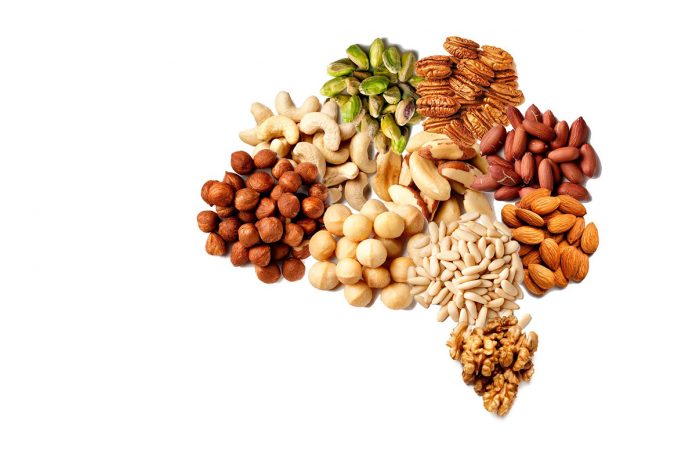
A team of researchers examined whether a diet high in nuts might help protect against age-related cognitive decline over a three-year period.
A total of 119 participants, aged 65 and over with dementia, were selected from the InCHIANTI cohort, a representative population-based study of elderly residents of Chianti, Italy. Participants were selected based on their nut intake: non-nut consumers and regular nut consumers (≥2.9 g/day).
Nut exposure was measured at the beginning of the study with a validated food frequency questionnaire or with an analytical tool for the characterization of phenolic compounds. In addition, cognitive decline was measured using the Mini-Mental State Examination test.
Researchers found that from 119 subjects 38 participants experienced cognitive decline, 28 from the non-nut consumers group and 10 from the nut consumers group. Nut consumption estimated either by the dietary marker or by the urinary marker model was in both cases associated with lower cognitive decline.
“The use of a panel of metabolites provides accurate and complementary information on nut exposure and reinforces the results obtained using dietary information,” said Prof. Andrés-Lacueva, ICREA Academia at the University of Barcelona, Group leader of CIBERFES on Frailty and Healthy Aging and principal investigator of the study.
The study was supported by the INC.
About the International Nut & Dried Fruit Council The INC is the international umbrella organization for the nut and dried fruit industry. Its members include more than 800 nut and dried fruit sector companies from over 80 countries. INC membership represents over 85% of the world’s commercial “farm gate” value of trade in nuts and dried fruit. The INC’s mission is to stimulate and facilitate sustainable growth in the global nut and dried fruit industry. It is the leading international organization on health, nutrition, statistics, food safety, and international standards and regulations regarding nuts and dried fruit.
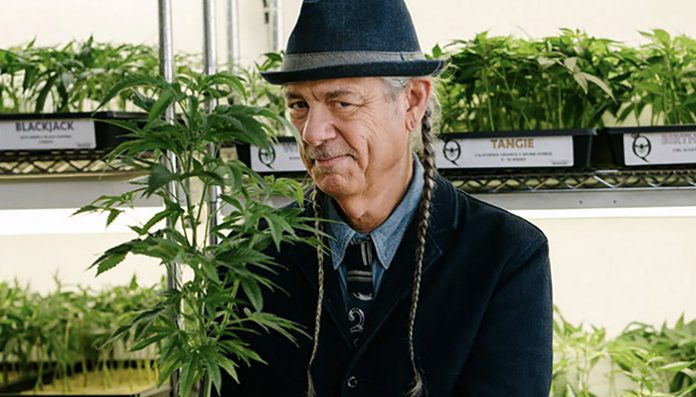
“In the computer industry, there’s only one Bill Gates. In the automotive space, only one Henry Ford. And the marijuana world has only one Steve DeAngelo,” said Marijuana Business Daily in their announcement of the recognition.
The announcement went on to list Steve’s landmark accomplishments:
Co-founding one of the most well-known dispensaries in the world, Harborside
Co-founding the first commercial marijuana testing lab in the United States, Steep Hill
Co-founding the first cannabis-focused investment group, The ArcView Group
Founding member of industry’s first national trade organization, the National Cannabis Industry Association (NCIA)
“Those milestones alone would put DeAngelo in the running as one of the most influential figures in the modern U.S. marijuana industry, having helped lay the groundwork for many other cannabis businesses. But another part of DeAngelo’s story is perhaps just as important, if not more so: His willingness to take on the federal government in court,” the statement read.
Steve was a lead organizer and fundraiser for I-59, Washington DC’s medical cannabis initiative; and is most famous for his successful litigation against the Department of Justice, which halted DOJ’s last-ditch 2011 campaign to shut down California’s medical cannabis dispensaries. Recently, Steve has turned his attention to right the wrongs of prohibition. He recently co-founded The Last Prisoner Project. Its mission is to ensure that every single cannabis prisoner on the planet is released.
“Steve DeAngelo is a pioneer of the industry and we owe him a debt of gratitude for blazing a course of integrity, honour, safety, respect and community for all of us to follow,” said Peter Bilodeau, CEO of Harborside. “Harborside is proud to call Steve our own. We extend a heartfelt congratulations to Steve on this well-deserved recognition.”
“The cannabis plant has profoundly and positively impacted my life and the lives of millions of others around the world. Choosing to fight for reform was the easy part, and it is gratifying to see so many countries across the globe embrace cannabis and its healing properties,” said Steve DeAngelo. “Yet, the fight continues. We can’t stop until everyone has safe and affordable access to cannabis – a plant Nature has given us – and every person unjustly imprisoned for cannabis possession is set free.”
Wanda Jones will be inducted into the Hall of Fame at The Cosmopolitan in Las Vegas alongside Steve at next week’s ceremony. The two 2019 Hall of Fame honorees will be recognized at the MJBizDaily Awards Gala for their impact on the cannabis industry.
About Harborside: Harborside Inc. is one of the oldest and most respected cannabis retailers in California, operating two of the major dispensaries in the San Francisco Bay Area, and opening its third Northern California facility and first Southern California retail facility in late 2019. The Company also operates two dispensaries in Oregon and a cultivation facility in Salinas, California. Harborside has played an instrumental role in making cannabis safe and accessible to a broad and diverse community of California consumers. Co-founded by Steve DeAngelo, Harborside was awarded one of the first six medical cannabis licenses granted in the United States.
Figr Brands, Inc. (Figr), a vertically integrated legal cannabis company, announced its move into the Ontario market, offering three cannabis strains, including two that are brand new to consumers, as well as one of its most well-known strains. All three are now available online at the Ontario Cannabis Store (OCS) and at various retail locations across the province in a variety of sizes in both pre-rolls and dried flower.
OCS will sell one of Figr’s original cannabis strains, FIGR No. 17, which has been available in the Maritimes since legalization in October 2018, in addition to the company’s newly added FIGR No. 14 and soon to be introduced FIGR No. 28.
“Ontario is the first market we’ve entered outside of Atlantic Canada, and is an important step in our plans to expand across the country,” said Harvey Carroll, President, Figr. “Ontario is close to our hearts as it’s home to our Figr Norfolk facility in Simcoe, and is a place where we are looking forward to continued investment and growth.”
As Ontario consumers are introduced to Figr products, they can find information on the company’s products, including where and when the cannabis was harvested, how long it was cured, its terpene and cannabinoid profiles, and more, using the track-and-trace platform, SENTRI℠, available to consumers through the Figr Budtender app* or online via Figr’s website (www.figr.com/quality).
“Entering the Ontario market is a significant achievement for Figr and we’re proud to have worked so closely with the Ontario Cannabis Store on achieving this goal,” said Harvey Carroll. “We’re excited to welcome Ontarians to the Figr family and for them to get to know our products.”
Figr’s products are now available in four Canadian provinces through retail locations and online stores, including Nova Scotia (Nova Scotia Liquor Corporation), Prince Edward Island (Prince Edward Island Cannabis Management Corporation), New Brunswick (Cannabis New Brunswick), and Ontario (Ontario Cannabis Store).
In 2015, Herman Gibb, Ph.D., M.P.H., found that foodborne arsenic, methylmercury, lead and cadmium resulted in more than one million illnesses, 56,000 deaths and more than nine million disability-adjusted life years (DALYs) worldwide. His study, “Global burden of foodborne disease: Introduction and methylmercury,” also revealed Southeast Asia and the Pacific islands (Western Pacific B) was the subregion most impacted.
Aflatoxin, a toxin produced by mold that grows on corn and various nuts, including peanuts and tree nuts such as almonds and pistachios, causes liver cancer in humans at a higher rate than alcohol. Now scientists are learning that aflatoxin also harms humans’ immune systems which can result in an impaired response to infections.
In her study, “Aflatoxin in corn and nuts: Cancer and immunological effects,” Felicia Wu, Ph.D., from Michigan State University found that up to 155,000 liver cancer cases globally, each year, are caused by aflatoxin, but aflatoxin also increases inflammation and dampens antibody responses to viruses.
“This might explain why the success of vaccines in low-income countries worldwide has been poor,” states Wu. “Corn and peanuts are stapled foods throughout much of Africa, Central America, and Asia; and since many resource-poor populations can’t afford to throw moldy food away, we suspect many children worldwide are exposed to high levels of dietary aflatoxin.”
Lead contamination, which can occur naturally or as a result of pollution, affects the nervous system, particularly in infants and children. In his study, “Global estimates for the impact of lead from food on IQ and disability-adjusted life years,” Clark Carrington, Ph.D., found that, on average, lead in food is estimated to result in a decrement of about one IQ point.
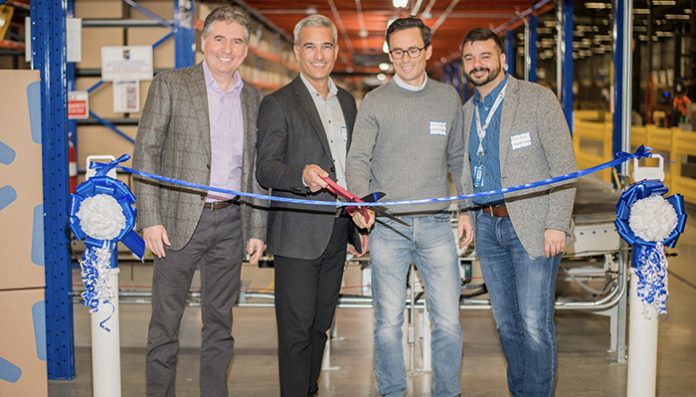
The new distribution centre is a flexible, scalable solution for logistics and fulfilment that is part of Walmart’s strategy to continue growing its e-commerce business in Canada. The need is there, as Walmart Canada’s flagship website walmart.ca is visited daily by over 750,000 customers.
The company sought SCI’s support to develop a customized supply chain solution that streamlines operations.
Facts about the new DC:
The new DC maximizes storage through a four-level, 70,000 square foot pick platform for storing and picking smaller items and pallet racking for larger and higher volume items.
It is equipped with state-of-the-art intelligence software that provides real-time visibility to operations and is fully integrated with SCI’s warehouse management system.
It boasts automation that improves capacity and uses conveyors to transport materials to one of five zones on each level and complete pick totes to a put-wall area from both the platform and pallet racks.
“The retail business is constantly evolving and becoming more complex,” said Guy Toksoy, vice president, operations, SCI. “SCI’s commitment to continuous improvement and innovation helps our clients meet increasing e-commerce demands, and we were excited to partner with one of Canada’s largest retailers to go beyond conventional logistics services and adapt an automated model to best suit Walmart Canada’s needs.”
“It’s exciting that shopping on Walmart.ca continues growing in popularity with our customers. We’ve been modernizing and innovating to ensure products can get to our customers in the quickest and most efficient way possible, without compromising on our everyday low prices and the quality customers expect,” said Alexis Lanternier, executive vice president e-commerce, Walmart Canada.
“We’re proud to have partnered with SCI to create this distribution centre as it provides a customized end-to-end solution that suits our growing business needs.”
About SCI SCI is one of Canada’s leading providers of supply chain solutions that go beyond traditional logistics services.
SCI’s tagline “We’ll make you even better” is a commitment today from a business that’s leading clients into tomorrow.Trusted by clients in the retail, e-commerce, technology, and healthcare sectors, SCI operates the most extensive national distribution and transportation network in Canada, consisting of 30 distribution centres coast to coast along with over 40 critical parts stocking locations and specialized white glove shipping hubs.
About Walmart Canada
Walmart Canada operates a chain of more than 400 stores nationwide serving more than 1.2 million customers each day. Walmart Canada’s flagship online store, Walmart.ca is visited by more than 750,000 customers daily. With more than 85,000 associates, Walmart Canada is one of Canada’s largest employers and is ranked one of the country’s top 10 most influential brands.
The dangers are real. This year, Maria D’Onofrio plead guilty to charges related to illegally importing and selling prescription drugs. The B.C. Provincial Court (Port Coquitlam) sentenced her to 12-months Conditional Sentence including four months house arrest, a four-month curfew and a four-month probationary order. Her associate, Stephen Merry, also plead guilty to charges related to illegally selling prescription drugs. The court sentenced him to 12 months probation and $4,000 fine.
Charges against the two were laid following an investigation by Health Canada into the import and online distribution of thousands of unauthorized prescription drugs, placing the health of Canadians at great risk.
This same year, Robert Lamberton plead guilty to illegally selling and manufacturing natural health products and drugs without a required licence from Health Canada. The B.C. Provincial Court (North Vancouver) fined Mr. Lamberton $10,000 and enforced a one year probation period.
Charges were laid against Mr. Lamberton after a Health Canada investigation uncovered he continued to sell and manufacture health products without required licences, despite repeated warnings to cease his practice.
Health Canada released its first warning to Canadians in 2017, informing them that products manufactured and sold by Robert Lamberton Consulting could pose dangerous health risks.
With these cases open for public knowledge and with serious legal action against illegal drug manufacturers, Health Canada wants Canadians to understand it is taking such activity seriously and that unauthorized health products are not to be trusted or considered as a viable option for health related issues.
Health Canada advises Canadians to look for products with a drug identification number (DIN), natural product number (NPN) or homeopathic medicines number (DIN-HM).
These numbers indicate that these products have been reviewed by Health Canada for safety, efficacy and quality, authorizing them for sale within Canada. Purchasing prescription drugs without being examined in person by a health care practitioner is a risk.
It can result from injury, activity and some medical conditions. Back pain can affect people of any age, for different reasons. As people get older, the chance of developing Trusted Source lower back pain increases, due to factors such as previous occupation and degenerative disk disease.
Lower back pain may be linked to the bony lumbar spine, discs between the vertebrae, ligaments around the spine and discs, spinal cord and nerves, lower back muscles, abdominal and pelvic internal organs, and the skin around the lumbar area.
Pain in the upper back may be due to disorders of the aorta, tumors in the chest, and spine inflammation.
Causes
The human back is composed of a complex structure of muscles, ligaments, tendons, disks, and bones, which work together to support the body and enable us to move around.
The segments of the spine are cushioned with cartilage-like pads called disks.
Problems with any of these components can lead to back pain. In some cases of back pain, its cause remains unclear.
Damage can result from strain, medical conditions, and poor posture, among others.
Strain Back pain commonly stems from strain, tension, or injury. Frequent causes of back pain are:
strained muscles or ligaments
a muscle spasm
muscle tension
damaged disks
injuries, fractures, or falls
Activities that can lead to strains or spasms include:
lifting something improperly
lifting something that is too heavy
making an abrupt and awkward movement
Structural problems A number of structural problems may also result in back pain.
Ruptured disks: Each vertebra in the spine is cushioned by disks. If the disk ruptures there will be more pressure on a nerve, resulting in back pain.
Bulging disks: In much the same way as ruptured disks, a bulging disk can result in more pressure on a nerve.
Sciatica: A sharp and shooting pain travels through the buttock and down the back of the leg, caused by a bulging or herniated disk pressing on a nerve.
Arthritis: Osteoarthritis can cause problems with the joints in the hips, lower back, and other places. In some cases, the space around the spinal cord narrows. This is known as spinal stenosis.
Abnormal curvature of the spine: If the spine curves in an unusual way, back pain can result. An example is scoliosis, in which the spine curves to the side.
Osteoporosis: Bones, including the vertebrae of the spine, become brittle and porous, making compression fractures more likely.
Kidney problems: Kidney stones or kidney infection can cause back pain.
Movement and posture Back pain can also result from some everyday activities or poor posture.
Examples include:
twisting
coughing or sneezing
muscle tension
over-stretching
bending awkwardly or for long periods
pushing, pulling, lifting, or carrying something
standing or sitting for long periods
straining the neck forward, such as when driving or using a computer
long driving sessions without a break, even when not hunched
sleeping on a mattress that does not support the body and keep the spine straight
Other causes Some medical conditions can lead to back pain.
Cauda equina syndrome: The cauda equine is a bundle of spinal nerve roots that arise from the lower end of the spinal cord. Symptoms include a dull pain in the lower back and upper buttocks, as well as numbness in the buttocks, genitalia, and thighs. There are sometimes bowel and bladder function disturbances.
Cancer of the spine: A tumor on the spine may press against a nerve, resulting in back pain.
Infection of the spine: A fever and a tender, warm area on the back could be due to an infection of the spine.
Other infections: Pelvic inflammatory disease, bladder, or kidney infections may also lead to back pain.
Sleep disorders: Individuals with sleep disorders are more likely to experience back pain, compared with others.
Shingles: An infection that can affect the nerves may lead to back pain. This depends on which nerves are affected.
Risk factors
The following factors are linked to a higher risk of developing low back pain:
occupational activities
pregnancy
a sedentary lifestyle
poor physical fitness
older age
obesity and excess weight
smoking
strenuous physical exercise or work, especially if done incorrectly
genetic factors
medical conditions, such as arthritis and cancer
Lower back pain also tends to be more common in women Trusted Source than in men, possibly due to hormonal factors. Stress, anxiety, and mood disorders have also been linked to back pain.
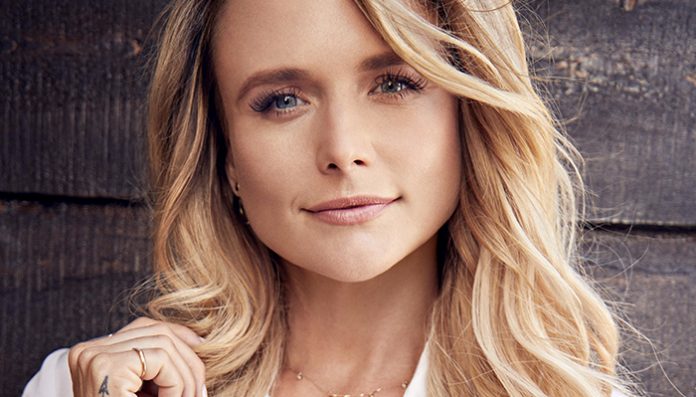
Almost all of Miranda Lambert’s biggest hits center around heartbreak, revenge, and honky-tonk hell-raising. While the 36-year-old country megastar can still serve up plenty of badass attitude onstage, her real life has been full of smiles lately. And for good reason. Lambert has just released her highly anticipated seventh studio album, Wildcard. The songs are fully inspired by where she’s at in her life now—meaning that most are much more upbeat than her last offering, 2016’s successful but somber The Weight of These Wings. The change of tune is due in large part to her happy life as a newlywed. Miranda surprised her legion of fans earlier this year when she revealed she’d secretly tied the knot with NYPD officer Brendan McLoughlin in January, after meeting him just three months earlier during a visit to Good Morning America.
Indeed, this is a time of fresh beginnings for the singer, who publicly waded through a painful divorce from fellow country star Blake Shelton in 2015. She admits that the glare sometimes took a toll, but she’s managed to stay true to who she is at her core: a fiery girl from Texas with a guitar and a whole lot to sing about.
Miranda credits her humble upbringing and tight-knit family with giving her the unwavering sense of self that’s carried her through fame and all the challenges and insecurities that come with it. As strong as she has always been, she admits to having struggled with self-confidence and her weight at times in her career, and hasn’t always felt she looked her best onstage. But with maturity came the understanding of what works for her. “I feel most sexy when I feel happy,” says Miranda. “If I’m dolled up to the nines but I’m miserable, then I don’t feel sexy.”
With the heartbreak behind her, Miranda is happier and healthier than ever—something Brendan, 28, has a lot to do with. The Staten Island native boasts six-pack abs (check out Miranda’s Instagram for a peek), and he’s a stickler for getting in a good workout and bringing her along. “Sometimes I want to kill him, and sometimes I’m thankful for it,” she jokes of their joint sweat sessions.
Here, the singer shares what else she’s thankful for—including leaving drama behind, accepting herself, and embracing a life filled with love, music, and lots of good food.
It’s been 15 years since you released your first single. What has been the biggest change you’ve seen in yourself over this time? The biggest thing I’ve learned is to be a person, too—instead of working constantly and getting lost and letting little moments fly by because I’m too busy thinking about the next thing. I set a lot of goals for myself as a young girl, and I reached them. I’m calmer now and more aware of my surroundings.
Your new album is much more joyful than your last one. What’s behind that? My last album was kind of a sepia tone, and I mean that emotionally as well. This record’s got some color, pizzazz, and pump to it. It was a conscious decision, switching gears, I guess in all the ways—in life and in art…don’t they go hand in hand most times? I’m pretty honest in my music. Who you’re talking to is the same person that’s onstage.
Your 2015 divorce got a lot of attention in the media—that couldn’t have been easy to go through. How did you deal? When everyone’s worried about your personal life, it makes you feel like, “Well, if you could just spend some of that time talking about my actual art, that would be great!” But I guess I asked for it, getting into this business. I’m never gonna get used to the public eye in that way.
You and Brendan met and fell in love quickly—how did you know it was right? I feel like I’ve been through enough in my life to know what I don’t want. So when I know what I do want, I snatch it right up.
Would you call it love at first sight? I guess so. If that’s a thing. I have eight dogs. Had love at first sight with them, too. Must be way easier than I thought.
You’re a country girl, and your husband is as city as it gets. How has it been splitting your time between your serene farm in Tennessee and your new apartment in New York City? I’ve been to New York so many times, but I’ve only ever worked [there]. I’ve never gotten to hang out and wander the city and really take it in. I really enjoy it, but it does drain your energy. That’s why going back to the farm is very important. It refuels me.
What’s the farm like? My farm just outside of Nashville is where I find my center. Honestly, I feel my prettiest when I have on a ball cap, no makeup, and cutoff jeans, and I’m at my farm just with dirt and dogs all around me. That’s where I feel my truest self.
You look amazing, though you’ve said you haven’t always felt that way. What has been your journey to loving who you see in the mirror? I’ve been all sizes. My whole life, I’ve struggled with ups and downs in weight. I’m only 5’4″ so weight shows quickly on me. I’ve hit a comfortable place; this is pretty much my size. I’m a size 6, give or take five pounds, depending on the day. It’s so good to find your place. I don’t like being onstage worrying about my body. That’s the last thing I want to be thinking about. I don’t give my best performance when I’m distracted by my insecurities.
How do you take care of yourself these days? I don’t have any rhyme or reason to my fitness routine or dieting. I’ve been on every diet. Every time I did low-carb, I would gain [the weight] back so quickly. Sometimes I have a couple weeks where I just drink beer and eat cheeseburgers. And then I’ll go, “That was fun, but my stuff doesn’t fit.” Then I’ll spend a month doing Pilates or riding a lot and running. I’m not a runner, but I’m trying to be one.
Brendan is incredibly fit. Do you work out together? Sometimes. He does a pity run with me, and then he does his real run. It’s sad. These days, I just try to feel good about myself and know that I’m trying. And if there’s wine and cheese, sometimes I have it.
Was there a moment that inspired you to stop worrying and embrace the skin you’re in? There was a time when I wasn’t happy about the way I looked—but I was happy about where I was in my career, so I was like, “I’ll worry about that later.” I had a girl come up to me. She was probably my size and age, and she said, “I want you to know I threw my scale away because of you, because you’re so confident. I realized my weight is not in a scale; it’s in how I feel about myself.” That gave me confidence to be like, “Whatever state you’re in, you’ve gotta rock it.”
Speaking of confidence, you rock your tattoos proudly. Which one is your favorite? I’ve got seven. All of my tattoos mean something. I’m not just going to ink it for no reason. I don’t have, like, a Tweety Bird or anything. One of my favorites is the guns and wings on my arm because I got it when my first studio album, Kerosene, went gold. I was just so proud of the work I’d put in. I also wanted a reminder of the work that I needed to continue to do. So every time I hold my guitar, I can see that reminder of my first milestone. I’m proud of that.
You and your mom are very close. What have you learned from her? My mom is so beautiful. She’s a tall Cherokee Indian. If I can look like her at 60, I would be golden. All she ever used was witch hazel and Vaseline. And she’s always been a stickler for taking off your makeup. To me, a good face-wash feels like an emotional cleanse. And nowadays, sunscreen is a big part of my skin routine. It wasn’t when I was young, but now I’m in a hat all the time. I take really good care of my skin, especially being out on the road.
After taking eight months off to get married and enjoy life, how does it feel being back out on tour—this time with Brendan along for the ride? I’m trying to embrace being on the road. We played Tahoe the other day and stayed a couple extra days. As musicians, we go everywhere, but we don’t see very much. I’m trying to explore and enjoy.
So is this easygoing, heart-on-her-sleeve Miranda here to stay? I didn’t leave all my edge behind, but I’m definitely celebrating joy a lot more than I have before. I’ve had a pretty amazing journey.
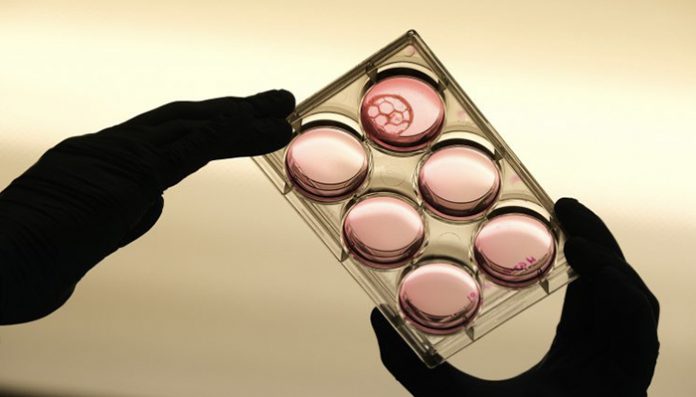
Over lunch at the Canadian Centre for Alternatives to Animal Methods (CCAAM), Charu Chandrasekera nonchalantly mentions one of the projects her team is working on. “We are just printing some human liver tissue right now,” she says.
Chandrasekera launched the CCAAM at the University of Windsor in 2017, with help from the school’s vice-president of research and innovation, Michael Siu, and dean of science, Chris Houser. The centre promotes non-animal methods in biomedical research, education, and regulatory (chemical safety) testing. In October 2019, the centre received a million-dollar gift from the Eric S. Margolis Family Foundation, which Chandrasekera says was instrumental in establishing the state-of-the art research laboratory, and in launching a number of important initiatives.
Chandrasekera says the move away from animal testing to human-based research models isn’t radical but inevitable. After many years working in biomedical research with mouse models of heart disease and diabetes, “It became very obvious that the work I was doing was not translatable [to humans],” she says. “Nothing was really reproducible; there were so many discrepancies and contradictions, even among the top-notch researchers.”
Ninety-five per cent of drugs tested to be safe and effective in animal models fail in human clinical trials, says Chandrasekera. “Alzheimer’s disease—99.6 per cent drug failure rate,” she says. “It has been cured in mice. But we don’t even understand the molecular mechanisms of this disease in humans, much less a cure.”
“Empirical evidence from across a whole host of biomedical science disciplines shows us that animal models are failing both science and human health,” echoes Elisabeth Ormandy, co-founder and executive director of Animals in Science Policy Institute, a registered Canadian charity working to promote better science without animals. “Animal models can falsely show that a drug is effective,” she says. “They can also falsely show no effect, in which case a drug that would have been shown to be effective in humans never gets advanced to human clinical trials.”
The result, she says, is “billions of public tax dollars being wasted on research using ineffective animal models, and diversion of precious research funding away from other lines of scientific inquiry that might hold greater promise in terms of predicting drug safety, risk, and effectiveness.”
Those other promising lines of scientific inquiry, say Ormandy and Chandrasekera, are human biology-based models. “We can use human cells and tissues from cadavers, biopsies, and explanted organs [from surgeries],” says Chandrasekera. “And we can also engineer them. With adult stem cell technology, you can take a small biopsy—like two-to-three millimetres from a person’s skin—to create any cell type in your body,” she says. And if that person has a disease, such as Alzheimer’s, “it will still be present in these cells.” These cells can then be assembled to form tissue-like structures called organoids, or engineered through 3D-bioprinting to create more complex tissues, all of which can be combined to create what has become known as “disease-in-a-dish.” At present, Chandrasekera is creating diabetes-in-a-dish.
Further, those cells and tissues can also be placed onto computer chips the size of thumb drives, “where a large number of drugs can be tested to select what’s most appropriate for you—personalized medicine based on your cells, your tissues, your biology—not mouse biology,” Chandrasekera explained in her April 2019 TedX Talk. “The goal of the scientific community at large is to create a human-on-a-chip to emulate human biology better than animals,” she says, “which I think will happen over the next decade.”
Currently there is no data on the success rates of human biology-based methods, “because there are no drugs that have been approved without animal testing, since animal testing was mandated by regulatory guidelines several decades ago,” says Chandrasekera.
However, a growing body of scientific data and internationally approved guidelines in chemical safety testing, “indicate that alternative methods are equal or superior to animal models in predicting human biology,” Chandrasekera says. “Even computer simulations are out-predicting animal-derived data.”
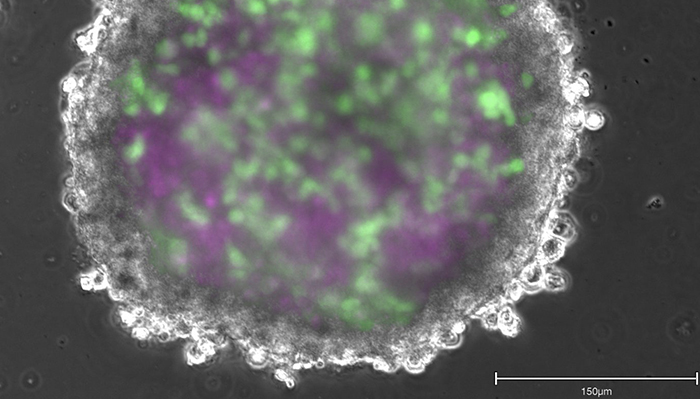
An image of human liver cells self-organized in 3D miniature liver tissue known as liver organoids, taken with EVOSM5000 Imaging System at the University of Windsor. (Courtesy of Dr. Charu Chandrasekera)
“If disease-in-a-dish and toxicity-on-a-chip efforts continue to advance at a fast pace with a sense of urgency—backed by global scientific, financial, legislative, and ethical mandates,” she says, “we will come to a point where we can test drugs without relying on animals.”
And while Chandrasekera is busy both in the lab and on the global stage promoting her work, she is also focused on enlightening future scientists. She’s working on the development of courses and degrees to train the next generation, she says, “to think outside the cage.”