




Home Blog Page 110

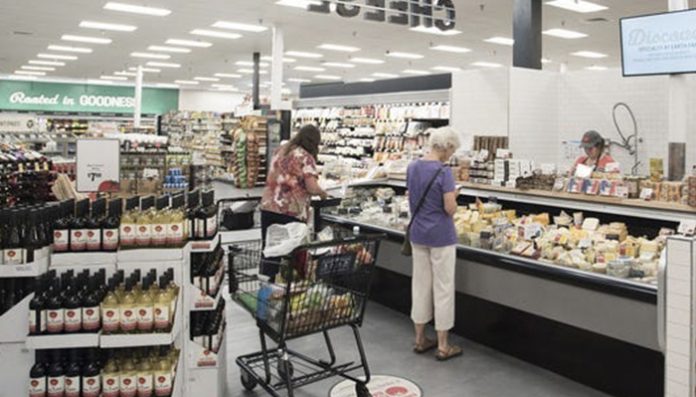
Plant-based foods outpace total food sales during pandemic, PBFA and SPINS data shows 26-May-2020 By Mary Ellen Shoup New data from the Plant Based Foods Association (PBFA) and SPINS shows that US retail sales of plant-based meat, cheese, tofu, and tempeh outpaced total food retail sales for the 16 weeks ending April 19, 2020.

0
Food for Thrive diet

New data from the Plant-Based Foods Association (PBFA) and SPINS shows that US retail sales of plant-based meat, cheese, tofu, and tempeh outpaced total food retail sales for the 16 weeks ending April 19, 2020.


The plant-based foods industry is seeing tremendous growth in the United States, with sales up 20% in dollar sales since last year. According to data PBFA commissioned from Nielsen, a leading retail data company, plant-based food sales topped $3.3 billion over the past year.

Since PBFA released Nielsen retail sales data last year, the growth of plant-based sales has more than doubled.

This growth is significant, especially compared to the sales of all foods, which grew just 2%, so plant-based foods dollar sales are outpacing dollar sales of all retail foods by 10X.

Plant-based dairy alternatives are an explosive-growing category, with 50% growth. This category includes plant-based cheeses, creamers, butter, yogurts, and ice creams (but not plant-based milk). Plant-based milk now represents 15% of the total milk market.

The plant-based food industry is booming. This is exciting news for a growing industry and the millions of consumers who are enjoying the wide variety of great-tasting plant-based foods. And these foods are not just for vegetarians or vegans anymore; now mainstream consumers are also enjoying these delicious and innovative options.

In particular, sales of three plant-based dairy alternatives are growing at particularly very rates:

  • Plant-based cheeses grew an impressive 43%, with $124 million in sales.
  • Plant-based yogurts grew 55% with sales at $162 million.
  • Plant-based creamers grew at an incredible 131% over last year.

Allergies or COVID-19: How to Tell the Difference?

0
Side view of worried and tired doctor sitting on floor in hospital, corona virus concept.

There’s nothing unusual about suffering from seasonal allergies this time of year.  That is, there never used to be – until COVID-19 came along.

Now, what’s making this allergy season out-of-the-ordinary is that some allergy symptoms overlap with symptoms of COVID-19.

The Public Health Agency of Canada lists cough, fever and difficulty breathing among the most common symptoms of the coronavirus. Symptoms can also include sore throat, tiredness, headache, chills, aches and pains, and decreased sense of smell, among others.

Meanwhile, people experiencing common seasonal allergy can have similar symptoms.

So, how can you tell the difference, and when should you consult a healthcare professional?

“Because allergies and COVID-19 can present in similar ways, it’s a good idea to have the facts and be extra cautious to make sure what you’re experiencing is nothing more than allergies,” said Billy Cheung, Executive Director, Pharmacy, Marketing & Professional Affairs of Pharmasave Ontario.

According to Pharmasave, here are key differentiating factors between seasonal allergies and COVID-19:

  • Fever: A fever, and associated symptoms such as chills, are not usually typical of seasonal allergies, so may point to an infection.
  • Itchiness: If your eyes, nose or throat are feeling itchy, especially after you’ve been outside, chances are you’re experiencing seasonal allergies.
  • Nasal congestion: Common among seasonal allergy sufferers, nasal congestion is not a typical symptom of COVID-19, even among those who report decreased sense of smell.
  • Sneezing: Another common seasonal allergy symptom, sneezing is generally not associated with the coronavirus.


“Because every case is different, it’s important to speak to a healthcare professional if you’re unsure about your diagnosis, and your pharmacist is a good place to start,” Cheung said, adding that pharmacists can also offer advice and treatment to curb seasonal allergies.

Pharmasave has also launched a one-stop COVID-19 information portal at www.pharmasave.com, where the public can find all the information they need about COVID-19, including links to COVID-19 self-assessment tools that can help you assess if you’re experiencing symptoms of coronavirus or potentially seasonal allergies.

Ontario will allows specific businesses to reopen over the next week.

0
Night View of Downtown Toronto from Toronto Islands with the Lake Ontario, Canada.

Source: CP24

Premier Doug Ford will allow a slew of businesses to reopen over the next week, including some retail stores that can offer curbside pickup, but that public health measures will remain in place.


“We will move forward, but we will move cautiously,” Ford said at his daily media briefing Wednesday. “We will move with cautious optimism.”

Garden centres and nurseries will be allowed to reopen on May 8, followed by hardware stores and safety supply stores on May 9.

“This means people will be able to shop in stores as long as these businesses follow strict public health measures to protect staff and customers,” Ford said.

He said the same workplace safety requirements that currently apply to pharmacies and grocery stores – such as physical distancing, contactless payment options and sanitizing of surfaces – will apply to those stores.


On May 11, non-essential retail businesses with street entrances will be allowed to reopen to offer curbside pickup and delivery.

The premier also said the province will be expanding the types of residential construction that can continue to include demolition work related to essential projects and below-grade multi-unit residential construction projects like apartments and condominiums.

Ford said the decision was made in consultation with his cabinet, health officials and “key stakeholders.”

“We’ll continue working to get more businesses and services online as safely as we can,” Ford said.

He added that safety guidelines will need to be followed by all businesses.

“I want to be clear. All public health measures remain in place and will be strictly enforced,” the premier said. “We can’t take the progress we’ve made for granted.”

He said the province has watched and learned from other jurisdictions that “giving this virus even an inch can set us back.”

Toronto could take “some creativity”

Asked whether reopening some retail businesses might lead to crowding around stores in densely populated areas such as the GTA, Ford said large lineups are only likely to be a problem in downtown Toronto.

“If you go to Etobicoke, where I live, or Scarborough or North York, you aren’t going to have these big lineups,” Ford said.

He said he understands that Toronto’s downtown “is a whole other kettle of fish” and that he had a “good conversation” with Mayor John Tory last night about how to handle retail in the city.

“Mayor Tory is going to be putting in place the proper protocols,” Ford said, praising him as “an incredible partner” who has been “very collaborative.”

Tory described the conversation with Ford as “candid and collegial” and said it was a frank discussion about the “unique considerations that have to be taken into account” for Toronto.

“It is a unique situation – people don’t like to hear that. But the fact is, we have very dense retail, a very dense and big population and for that matter, we’ve been uniquely and acutely affected by the virus in a way that is not true for other parts of the province. So, therefore, the risk associated with all this is greater,” Tory said.

He said the city will be unveiling further details in the coming days about measures that will be taken to keep people safe as more stores reopen.

He also said he’s hoping retailers won’t act to create unsafe circumstances “by having blow-out sales and whatnot.”


Speaking at a media briefing Wednesday, Ontario’s Chief Medical Officer Dr. David Williams said reopening retail – even just for pickup – will require planning and coordination on the part of retailers.

“It’s going to take some creativity and I think for retailers to work in partnership with each other on how to do this and maintain the safety and the distancing and not put the public at risk,” Williams said.

He pointed out that in many parts of the city, there are stores clustered very close together, which could possibly result in crisscrossing lines and crowds waiting for pickup.

He suggested that businesses could implement appointments for pickup and coordinate lineup directions with neighbours to ensure that those lining up can distance properly and that there are no crowds outside stores.

Williams also said that masks may begin to play a larger role as a means of preventing the spread of infection as more businesses reopen.


A Made-in-Canada Solution to the Coronavirus Outbreak?

0
Michel Chretien with his team in Montreal. From left to right: Jeremy Carver, Richard Mayrand and Majambu Mbikay (Photograph by Will Lew)


Fifteen years ago, a medical researcher named Michel Chrétien and his longtime collaborator Majambu Mbikay, a Congolese scientist, unhatched a theory in their Montreal laboratory. In the aftermath of the SARS epidemic that infected 8,000 patients in 26 countries, Chrétien and Mbikay, researchers at the Clinical Research Institute of Montreal (IRCM), began testing their idea that a derivative of quercetin, a plant compound known to help lower cholesterol and treat inflammatory disease—and common, at low doses, in over-the-counter medication—was a “broad spectrum” antiviral drug that could fight a range of viruses.

When an Ebola outbreak struck West Africa in 2014, the two scientists teamed up with the National Microbiology Laboratory in Winnipeg to test quercetin’s effectiveness on mice infected with Ebola—and found it effective even when administered only minutes before infection. It still needs to undergo clinical trials.

But when a new global health crisis erupted in Wuhan, China late last year, Chrétien and his team once again got to thinking. They believed the drug might work on COVID-19, which has infected nearly 80,000 people and killed 2,600, according to the World Health Organization. They knew a Swiss drug manufacturer, Quercegen Pharmaceuticals, could rapidly produce doses of the treatment in the hundreds of thousands.

The 84-year-old Chrétien was, for a time, the world’s seventh most cited scientist. His name runs atop more than 600 publications and he proudly affixes an Order of Canada pin to his lapel. His achievements rival those of his older brother Jean—an impressive claim given that particular sibling served as prime minister of Canada for a decade. Michel has almost certainly saved more lives in his time.

Michel Chrétien has a long-standing connection to high-level scientists in China. While a student at Berkeley University, he received some training from a Chinese researcher, Dr. C.H. Li, an enduring connection that saw him visit and work in China eight times starting in 1979. In the 1980s, Chrétien was an honorary professor at the Chinese Academy of Medical Sciences and Peking Union Medical College. In 1984, when he started a decade-long stint as president of the IRCM, he trained emerging scientists from China there. One of those relative youngsters was Chen Zhu, a molecular biologist who, back home in China, eventually entered politics and served as minister of health from 2007 until 2013. When a novel coronavirus outbreak exploded in China this past January, Chrétien contacted Zhu with an offer: “Can we help?”

Zhu contacted officials at the highest levels of the National Health Commission, the government agency managing the crisis. Word came back to Chrétien and his team in mid-February. Last week, they invited Chrétien’s team to start clinical trials in China. The plan: send samples of quercetin to the Chinese Academy of Sciences in Wuhan. The Canadian and Chinese scientists would collaborate on the trials, which would include about 1,000 test patients. Chrétien and Mbikay plan to join colleagues from the non-profit International Consortium of Antivirals—which Chrétien co-founded with Jeremy Carver in 2004 as a response to the SARS epidemic—in manning a 24/7 communications centre as soon as clinical trials go ahead.

A worker disinfects a recovered COVID-19 patient departing a temporary hospital in Wuhan, Hubei province, China, on Feb. 22. (EPA/SHI ZHI CHINA OUT)

The U.S.-based Food and Drug Administration has already approved quercetin as safe for human consumption, which means the researchers can skip testing on animals. If the treatment works, it’ll be readily available. Now Chrétien just needs the funding to start the trials. He estimates the teams need $5 million. But the payoff, he says, could be huge.

Chrétien’s team says their treatment would cost only $2 a day. They’ve spent weeks pursuing officials at Global Affairs Canada, including senior staff in the office of Foreign Minister Francois-Philippe Champagne. The request was then flipped to Health Canada. There’s no time to waste, says Chrétien. “I’ve been doing science all my life. I’ve stumbled on things my entire career, and this is probably the most urgent one I’ve been confronted with,” he says.

Quercetin isn’t the only possible treatment for COVID-19; Nature reported that 80 clinical trials on potential treatments are underway in China. But it remains one of the biggest potential leaps in finding a treatment for the deadly coronavirus strain; if it works, it could save thousands of lives.

Chrétien, who has spent most of his extensive medical career wearing a lab coat and testing hypotheses, simply touts the benefits of academic freedom as he and his team go about their work. “Basic science is worth doing for the sake of doing it, not knowing what the results will be in the short term or medium term,” he says. “Long-term returns can be big.”

Credit: McLeans. By

In Memory of a Canadian Natural Health Products Pioneer

0


We are sad to announce the passing of Canadian Pharmacist and Natural Health Products pioneer Sam Ibrahim. Sam was born in Cairo, Egypt in 1937 and went to Germany as a young man to study pharmacy. As part of his pharmacists training in Germany he studied herbal medicine and homeopathy for 5 years. 

In 1968, Sam immigrated to Canada with his young family and settled in Edmonton. Shortly after arriving Sam opened his own pharmacy and unlike any other drugstore at the time, he carried herbal medicines from Germany. Since these products were not widely available in Canada, he contacted his colleagues in Germany to receive “care” packages of various natural medicines he was familiar with and could sell in his pharmacy. 

People who came to the pharmacy were very curious and had many questions regarding the formulas. He explained to them that the herbs were used for coughs, kidney and bladder infections, upset stomachs and other various ailments and he slowly persuaded his customers to try natural remedies. Eventually, he was able to source some of these products from Sigfried Gursche, another pioneer in the Canadian health food movement.

Fast forward to 1995 and Sam had become a celebrated pharmacist, known for his outstanding customer service and expertise in herbal medicine. Customers would drive hours to receive their prescription from him while being invited to share a cup of tea in his office. That year his son Farid joined him in the business to found Nutravite Pharmaceuticals Inc. Nutravite launched with 9 herbal formulas developed by Sam with the goal of distributing these products to other independent pharmacies. The initial 9 products were sold to retailers as an assortment which became known as “Tray Number 1”. Nutravite “Tray number 2” with another 9 products followed shortly after that.

Since no other natural health products companies were supplying pharmacies at the time, Nutravite had success from the start. Son Farid moved to Toronto and called on independent pharmacies in Ontario with the 18-product assortment. The company also established a network of brokers in the western provinces and had a strong relationship with Northwest Drugs, a wholesaler that pre-dated McKesson.

Sam continued to operate his integrative medicine pharmacy and was receiving a lot of media attention for it’s pioneering approach, including feature articles in IHR magazine and McLean’s. Having this store was an advantage for the distribution business also, since the trends were obvious to Sam and his son before they became known nationally. As a result, Nutravite was the only company to have Glucosamine Sulfate available for sale to other pharmacies in 1996 when it received a lot of media attention for helping arthritis. 

The same can be said for Glucosamine Chondroitin and St. John’s Wort.  Nutravite was first to sell these emerging products to pharmacies and often had no competition for up to six months. As a result, the company experienced rapid growth and soon found a home at Shoppers Drug Mart. From there, the brand expanded to almost every national and regional pharmacy and grocery chain. Today, Nutravite continues to exist internationally and on-line, with Nutravite Joint Cream being one of the top-selling topical analgesics on Amazon.ca. In 1999 Sam also developed Kardovite – a product for heart health and circulation that today is widely distributed in the US.

Sam sold his pharmacy in 2002 and he and his wife Ursula retired to Peachland, BC. They became “snowbirds” and bought a home in Panama.  They spent much of their time on lengthy cruises and visiting their grandkids. Sam was 82 and is survived by his wife Ursula, daughter Sandy (Laurence), son Farid (Selena) and grandchildren; Jasper, Lucas, and Jordan.

LATEST! Research Team at Sunnybrook Isolates COVID-19

0
IHR Magazine


A team of researchers from Sunnybrook, McMaster University and the University of Toronto has isolated severe acute respiratory syndrome coronavirus 2 (SARS-CoV-2), the agent responsible for the ongoing outbreak of COVID-19.

Thanks to nimble collaboration, the team was able to culture the virus from two clinical specimens in a Level 3 containment facility.

“We need key tools to develop solutions to this pandemic. While the immediate response is crucial, longer-term solutions come from essential research into this novel virus,” said Dr. Samira Mubareka, microbiologist and infectious diseases physician at Sunnybrook.

The isolated virus will help researchers in Canada and across the world develop better diagnostic testing, treatments and vaccines, and gain a better understanding of SARS-CoV-2 biology, evolution and clinical shedding.

“Researchers from these world-class institutions came together in a grassroots way to successfully isolate the virus in just a few short weeks,” said Dr. Rob Kozak, clinical microbiologist at Sunnybrook. “It demonstrates the amazing things that can happen when we collaborate.”

Dr. Arinjay Banerjee, NSERC post-doctoral fellow at McMaster University, said he knows the collaboration won’t stop there.

“Now that we have isolated the SARS-CoV-2 virus, we can share this with other researchers and continue this teamwork,” he said. “The more viruses that are made available in this way, the more we can learn, collaborate and share.”

Congratulations to Dr. Samira Mubareka and Dr. Rob Kozak of Sunnybrook and University of Toronto; Dr. Arinjay Banerjee and Dr. Karen Mossman of McMaster University.

Credit: Sunnybrook.ca

Diagnosis Test for COVID-19 Now Available

0
Over shoulder view of laboratory researcher in surgical gloves analyzing blood of coronavirus patient


Surgisphere Corporation announces the availability of a rapid diagnostic tool for novel coronavirus. Leveraging the power of its global research network and advanced machine learning, Surgisphere has developed an intelligent tool that uses as few as three common laboratory tests to identify patients likely to have coronavirus infection.

With a sensitivity of 93.7% and specificity of 99.9%, this highly accurate test can help limit transmission of this deadly virus by identifying and isolating affected patients sooner, mobilizing appropriate public health resources, and avoiding the delays associated with current testing.

“Surgisphere exists to help make the world a better place. This tool is the first effective weapon in the fight against this global pandemic. Early diagnosis means faster treatment, which means more lives saved,” stated Dr. Sapan Desai, President and Chief Executive Officer of Surgisphere.

Surgisphere used its cloud-based healthcare data analytics platform (QuartzClinical) to identify patients diagnosed with COVID-19 in five countries. A machine learning model using decision tree analysis was created with clinical and lab data on 430 patients to develop this decision support tool.

This resource is now available for public use at https://www.SurgicalOutcomes.com/. These advances have been submitted to a leading medical journal for rapid peer review and publication.

The power of machine learning grows with high-quality data. Surgisphere is seeking physicians and healthcare systems to work collaboratively by sharing data to increase the sample size of patients infected with COVID-19. Higher quality data means a more accurate model, which can lead to early diagnosis and treatment.

Participation in the global research network is funded by Surgisphere and is free for physicians and healthcare systems. Patients, foundations, and other organizations seeking to support high-quality outcomes research can contribute to this international effort via the website.

An ISO 27001:2013 certified organization and ranked #1 by Frost and Sullivan for machine learning-powered data analytics, Surgisphere has developed one of the most complete, comprehensive and accurate healthcare databases in the world.

With access to point of care data from over 1,200 international partners, this data analytics system monitors the pulse of global healthcare in real time. This international collaboration has led to advances in care for kidney failure, aneurysms, lymphedema, peripheral artery disease, colon cancer, and cardiovascular disease.

Credit: Surgisphere Corporation

CVS To Buy 110 Schnuck Grocer Pharmacies

0


CVS Health said it will buy the retail and specialty pharmacy business of Schnuck Markets, a large Midwestern grocer with 110 pharmacies.

CVS said it will “acquire and operate 99 of the grocer’s pharmacies and will brand them as CVS Pharmacy,” the company said.

The pharmacies are located inside of the Schnuck grocery stores though not all of them will continue to operate. “CVS Pharmacy and its subsidiaries will acquire the prescription files from 11 Schnucks pharmacies and transfer them to nearby CVS Pharmacy locations,” CVS said in a release Tuesday.

Financial terms of the transaction were not disclosed but it will bring a substantial presence to CVS in the Midwest where rival Walgreens Boots Alliance has a larger market share. Schnucks has more than 110 stores in five states: Missouri, Illinois, Indiana, Wisconsin and Iowa, the company’s website says.

CVD said the arrangement with Schnuck is similar to an acquisition the drugstore chain made of the pharmacies inside Target stores five years ago. “By opening CVS Pharmacy locations within Schnucks stores, we’re increasing access to high quality care and meeting customers where they are,” CVS Health chief operating officer Jon Roberts said.

Schnucks said the deal fits its effort to expand its “emphasis on health and wellness” by aligning with CVS.

“This partnership allows us to continue to provide quality pharmacy services to our customers in a manner they’ve come to expect, while supporting our mission to nourish people’s lives,” Todd Schnuck, chairman and chief executive officer of Schnucks said Tuesday. “It also provides our pharmacy teammates an opportunity to further their careers with a premier retail pharmacy chain.”

Credit: Forbes.com By: Bruce Japsen

Plant-Based Food Retail Reaches $5 billion

0


The U.S. market for plant-based foods hit the $5 billion mark in 2019, fueled by year-over-year sales growth of 11.4%, according to the Plant Based Foods Association (PBFA) and The Good Food Institute.

Plant-based food sales climbed five times faster than overall U.S. retail food sales, which rose 2.2% for 2019, PBFA and The Good Food Institute said Tuesday. Growth was slightly higher than in 2018, when sales of plant-based food increased 11% to $4.5 billion, compared with 2% growth for the total food retail market.

“Plant-based foods remain a growth engine, up 29% over the last two years,” Julie Emmett, senior director of retail partnerships at PBFA, said in a statement. “Growth is fueled by innovation in categories across the store, and retailers are responding by expanding shelf space to satisfy the rapidly expanding consumer base seeking more plant-based foods.”

Among plant-based food categories with sales of at least $100 million in 2019, the biggest gainers were creamer (+34.3%), yogurt (+31.3%), meat (+18.4%), ready-to-drink beverages (+18.4%) and cheese (+18.3%). Milk, meat, dairy alternatives and meals remain the largest plant-based food segments and continue to be the top sales drivers, PBFA noted.

By far, the biggest category is plant-based milk, which last year tallied sales of $2 billion, up 5%. Plant-based milk sales now account for 14% of the entire milk category, PBFA said, adding that cow’s milk sales were almost flat in 2019.

Rounding out the 10 largest plant-based food categories in 2019 were meat ($939 million), meals ($377 million), ice cream ($336 million), creamer ($287 million), yogurt ($283 million), butter ($198 million), cheese ($189 million), tofu and tempeh ($128 million) and ready-to-drink beverages ($122 million).

The 18.4% sales growth in plant-based meat topped the category’s 2018 growth of 10%. PBFA said refrigerated plant-based meat is fueling the segment’s expansion, with sales growth of 63% in 2019. Plant-based meat now represents 2% of retail packaged meat sales, the association reported. Conventional meat sales rose 3% in 2019.

PBFA said plant-based dairy categories are expanding as these items are introduced to more households, whereas sales of many conventional animal-based dairy products have remained flat or declined.

For example, conventional yogurt sales fell 1% (versus 31.3% for plant-based yogurt), while conventional cheese sales edged up 1% (versus 18.3% for plant-based cheese). Also, with sales growth of over 34% in 2019, plant-based creamers saw its share of the overall creamers market rise to 5% from 4% in 2018.

Several smaller plant-based categories also saw robust growth in 2019, including plant-based eggs (+191.7% to $10 million); plant-based spreads, dips, sour cream and sauces (+53.7% to $30 million); and plant-based condiments, dressings and mayonnaise (+10.9% to $64 million).

“Clearly, plant-based is a lasting trend that is gaining power over time. We see a steady rise in plant-based products year over year across regions, which indicates that this is not a bubble or a fad, but a real change in consumer behavior. This is a tipping point, with so much product innovation yet to hit the market,” commented Caroline Bushnell, associate director of corporate engagement a The Good Food Institute.

“Shifting consumer values have created a favourable market for plant-based foods, which have significantly outpaced overall grocery sales increases for three years running, making plant-based foods a growth engine for both manufacturers and retailers,” Bushnell said. “This is really only the beginning. Plant-based foods will continue to expand rapidly across the store in response to demand as consumers increasingly switch to foods that match their changing values and desire for more sustainable options. We expect further acceleration in 2020.”

Credit: Supermarket News. By: Russell Redman

ANNOUNCEMENT: Nova Scotia Naturopathic Conference Dates & Sponsorship Packages

0


Registration for the Nova Scotia Naturopathic Conference is now open. The conference will take place Saturday October 24 – Sunday October 25 at the Best Western Chocolate Lake Hotel.

Included are the sponsorship packages that outline the options available this year. There is also a link for registration through Eventbrite. Social event details are pending and we will announced when there is more information.

Sponsorship Package 2020

On behalf of the Nova Scotia Association of Naturopathic Doctors we are pleased to announce that this year’s Nova Scotia Naturopathic Conference will be taking place on Saturday October 24th and Sunday October 25th at the Best Western Plus Chocolate Lake Hotel. 

The Nova Scotia Naturopathic Conference is the premier annual naturopathic conference in Atlantic Canada. Our mission is to improve patient care by providing a high caliber continuing education opportunity for naturopathic and medical doctors on the East Coast as well as offering our sponsors the opportunity to showcase their products and services. 

We are thrilled to have another excellent line up of presenters this year! Details will be on the website once they are finalized. We anticipate an attendance of 50 – 60 doctors and are therefore pleased to offer our sponsors significant time to get to know each of our attendees, including an optional social function on the Saturday evening.

Below please find details on the event location, sponsorship opportunities, registration and accommodations. Upon registration further information will be sent to out you. 

We would like to thank you in advance for considering this opportunity and would be thrilled to have your company join us for this event! Please feel free to contact us with any questions that you may have.

Yours in Health,

Dr. Bryan Rade B.Sc., N.D.                                Dr. Kira Woolaver B.Sc., N.D.
Naturopathic Doctor                                            Naturopathic Doctor
Nova Scotia Naturopathic Conference Co-chairs

E-mail: contact@nsnc.info
Conference Website: www.nsnc.info

Sponsorship Registration:
We are pleased to offer secure online registration for our sponsors. Please copy and paste the link below into your browser to find a selection of sponsorship opportunities. A detailed description of these opportunities can be found on page 3 of this document.
https://www.eventbrite.ca/e/nsnc-2019-sponsor-registration-tickets-58015850972 Password (case sensitive): exhibitors   

*Please Note: Registration for the reception will be open to all attendees and sponsors on Saturday evening. It is the last option on the sponsorship opportunities list. This year the reception will be conveniently located at the Best Western Hotel. 

Venue:
BEST WESTERN PLUS Chocolate Lake Hotel
250 St. Margaret’s Bay Road | Halifax | Nova Scotia | B3N 1J4
T 902.444.8657  • F  902.404.3376
http://chocolatelakehotel.com/

Accommodations:
Conference rate reservations can be made at the Best Western Plus Hotel. When making reservations mention the Nova Scotia Association of Naturopathic Doctors to receive a discounted rate. Reservations can be made directly by calling the hotel: 1-902-444-8657.