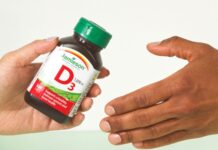




Kirin Holdings is paying about C$2.5 billion for Jamieson Wellness, and the growth behind that price sits outside Canada. Jamieson’s domestic revenue rose 5.7 per cent last quarter. China rose 46.6 per cent and the United States 21.7 per cent. A Japanese buyer paid a 27 per cent premium for a Canadian label it can aim at faster-growing markets, together with the plants and licences that make the label portable.
For the Canadian trade, the valuation logic matters more than the transaction. The country’s anchor VMS brand has been priced on what it sells abroad. Anyone who competes with Jamieson, stocks it, or benchmarks against it should read that carefully.
What the segment split says about the domestic aisle
Second-quarter revenue broke down as C$91.6 million in Canada, C$54.3 million in China, C$50.1 million in the United States and C$14.3 million across other international markets. Canada remains the largest line and the slowest one. Normalized gross margin in the Jamieson Brands division improved 160 basis points to 45.7 per cent, which management credited to geographic mix favouring the higher-margin China business.
Strip away the corporate language and there is a plain statement about this market inside those figures. Domestic VMS behaves like a penetrated, promotion-driven category. Growth arrives through innovation in specific need states, with sleep and stress carrying the quarter, and through promotional execution at a handful of large accounts. New households are not entering the category in numbers that move a national brand.
Kirin’s own position explains why that profile was still worth the cheque. Its health science division turned profitable for the first time in FY2025, on revenue up 43.4 per cent to ¥251.4 billion and normalized operating profit of ¥11.1 billion, built largely on Blackmores in Oceania and FANCL in Japan. The division is chasing ¥500 billion in revenue at a 15 per cent operating margin. Canadian shelf growth cannot deliver that on its own. A trusted Canadian brand already selling into Asia and the United States, backed by domestic manufacturing capacity, can contribute to it.
Where this leaves the independent tier
A better-capitalized owner behind the mass-market anchor usually intensifies the pressure independents already feel. Expect heavier innovation spend, faster line extensions, deeper promotional funding in grocery and pharmacy, and a larger research budget aimed at mainstream need states. Kirin brings Blackmores’ and FANCL’s formulation libraries and Kyowa Hakko Bio’s ingredient science into the same group as Canada’s most recognized supplement label.
Price is the one lever specialty retail should not reach for here. The defensible ground is the part of the category a global CPG owner serves slowly: practitioner-grade formats, single-ingredient SKUs chosen for a mechanism, staff who can explain why a form or a dose matters, and suppliers whose claims hold up under scrutiny. Consolidation at the mainstream tier has historically widened the gap that specialty operators sell into, provided they genuinely sell on proof.
A supply-side question deserves attention on a shorter timeline. When a country’s largest supplement manufacturer becomes one node in a global platform, contract manufacturing priorities and co-packing capacity get reviewed against group objectives. Jamieson’s Strategic Partners division reached C$23.6 million in the quarter. Brands running private label or partner production through that capacity should be asking about terms and horizons now, well ahead of closing.
Two regulators, two different messages
The deal mechanics are routine. A plan of arrangement under Ontario’s Business Corporations Act, two-thirds shareholder approval at a special meeting expected in September, a C$70 million termination fee, and a target close in the fourth quarter. The Canadian regulatory questions are the interesting part.
Kirin is ultimately controlled in Japan, a CPTPP party, which makes it a trade agreement investor under the Investment Canada Act. The 2026 net benefit review threshold for that category is C$2.179 billion in enterprise value, and the announced enterprise value of roughly C$2.5 billion sits above it. Enterprise value under the Act follows a defined calculation that will not necessarily match a figure in a press release, but a transaction of this size involving a household Canadian brand is squarely in review territory, and the Minister retains a separate national security screen at any value. Net benefit approvals are typically resolved through binding undertakings covering head office location, employment, capital investment and sourcing. Those undertakings are where the domestic interest actually gets settled, and they are worth reading closely when the management information circular reaches SEDAR+.
Health Canada sends the opposite signal, and it constrains the buyer rather than the seller. Nothing in the Blackmores or FANCL catalogue enters this market on foreign paperwork. Every product requires its own Natural Product Number, a licensed Canadian site, and claims drawn from what that NPN authorizes. Australian and Japanese marketing copy carries no standing here. The same framework rewards an owner holding real clinical assets, because an evidence-backed licence produces claims a competitor cannot copy off a label. Underneath all of it sits the bilingual Product Facts Table requirement, mandatory by June 2028, which will land in the middle of integration across a very large catalogue.
What to watch, and what to do this quarter
Three signals will show how this settles. The undertakings attached to any Investment Canada Act approval will indicate whether Canadian manufacturing and head-office functions are protected in writing or only in quotation. Innovation spending on the Canadian portfolio over the next two years will show whether this market is being grown or managed for cash while capital follows growth abroad. Contract manufacturing terms for third-party brands will reveal how much of Jamieson’s capacity stays available to the wider Canadian industry.
The immediate move for retailers is a supplier concentration audit. Count the facings and the margin dollars that now trace back to one foreign-owned parent, then identify which of your differentiated lines depend on capacity that parent controls. For brand builders, the lesson sits in what commanded the premium: regulatory credibility, manufacturing control, and demand in more than one market. None of those can be assembled in the quarter a business goes up for sale.
Frequently Asked Questions
What is Kirin buying with Jamieson Wellness?
Kirin is acquiring all outstanding shares at C$45.75 in cash, valuing the company near C$2.0 billion in equity and C$2.5 billion in enterprise value. The purchase covers the brand portfolio, Canadian manufacturing capacity, a licensed product catalogue, and established export businesses in China and the United States.
Does the Investment Canada Act apply to this transaction?
Japan is a CPTPP party, so Kirin qualifies as a trade agreement investor, and that category’s 2026 net benefit review threshold is C$2.179 billion in enterprise value. The announced enterprise value exceeds it, which makes a review likely. A national security review remains separately available to the Minister at any transaction value.
Can Kirin sell Blackmores or FANCL products in Canada right away?
No. Every natural health product sold in Canada needs its own Natural Product Number, a licensed Canadian site, and claims limited to what the NPN authorizes. Foreign approvals and foreign marketing copy do not transfer. Moving group brands into Canada means a full licensing process for each individual product.
What happens to brands that use Jamieson’s contract manufacturing?
Nothing changes at signing, but new ownership normally triggers a review of third-party production against group priorities. Jamieson’s Strategic Partners division booked C$23.6 million last quarter. Brands relying on that capacity should confirm contract length, renewal terms and capacity commitments before the transaction closes rather than after.
This is independent editorial analysis from IHR Magazine. It references the Kirin–Jamieson Wellness transaction as one example of a broader shift in how Canadian natural health assets are valued, and is not an endorsement of any company, brand or security, nor investment advice. Retailers and brand partners should verify current NPN status, site licensing and authorized claims before making purchasing decisions.