



Independents rarely lose on service or product knowledge. They lose on selection and shipping scale. The IHR Plugin for retailers is built to hand both back, and it is signing up its first stores now.
What is the IHR Plugin for retailers? It is the retailer side of the IHR Plugin (ihrplugin.com), a decentralized health commerce platform. It links your independent store into a national fulfilment network. You can sell thousands of products you never stock, because the network ships them for you. At the same time, the stock you already own starts to earn when orders route to your shelf. There is no new website, no warehouse, and no code.
Walk into any good independent health store. You will find something the big platforms cannot buy. The staff know the difference between two magnesium forms, and customers trust them for it.
What the store cannot match is scale. It cannot match a giant’s selection, and it cannot match a giant’s shipping. For twenty years, those two gaps have capped independent growth. You can only sell what you can afford to shelve. You can only ship as fast as one location allows.
The Plugin is built to close both gaps at once. It is currently in beta, ahead of a September 2026 launch. Better still, it does this without asking you to raise capital, hire developers, or rebuild what you already run.
The infinite shelf: sell what you do not stock
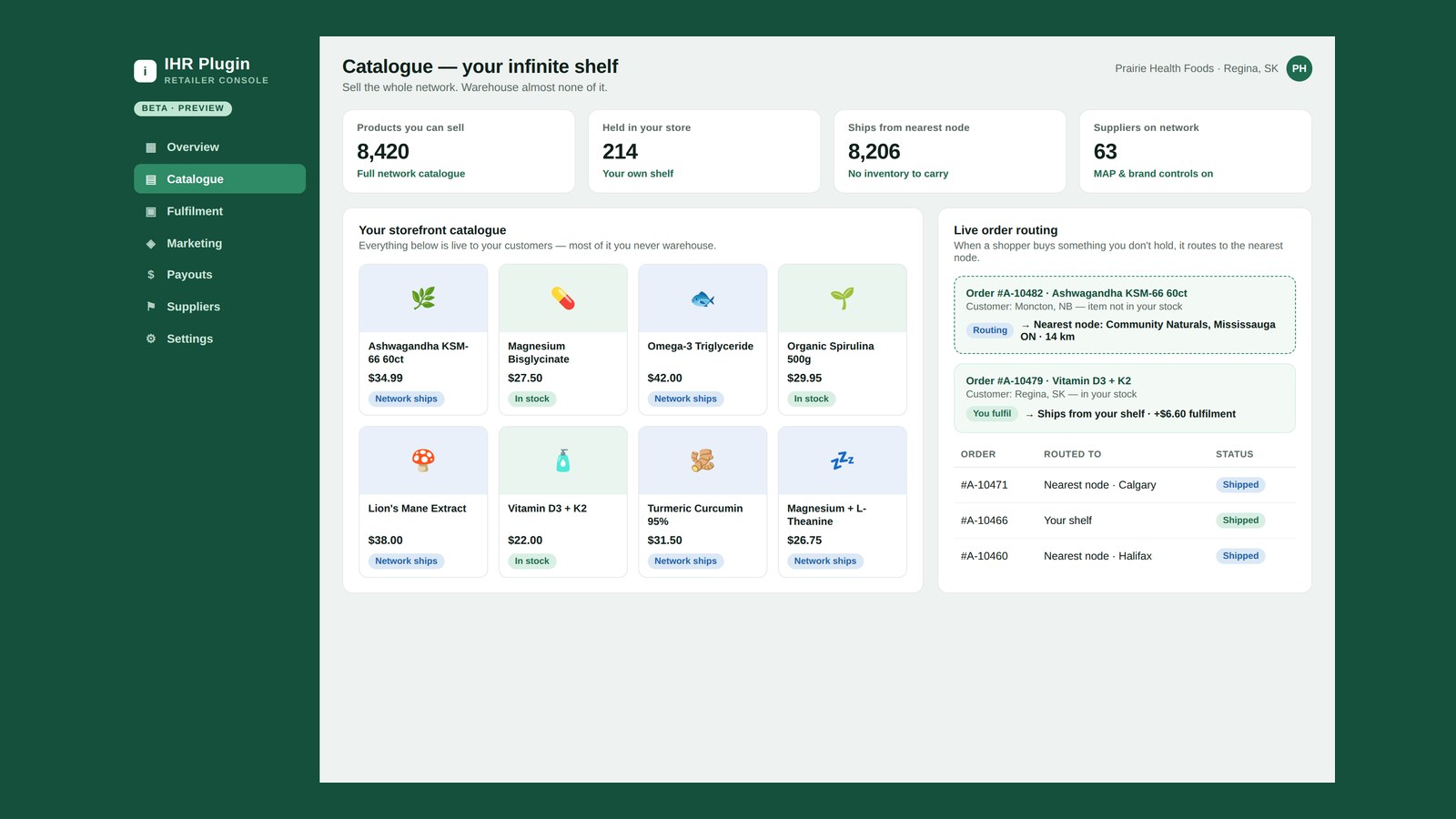
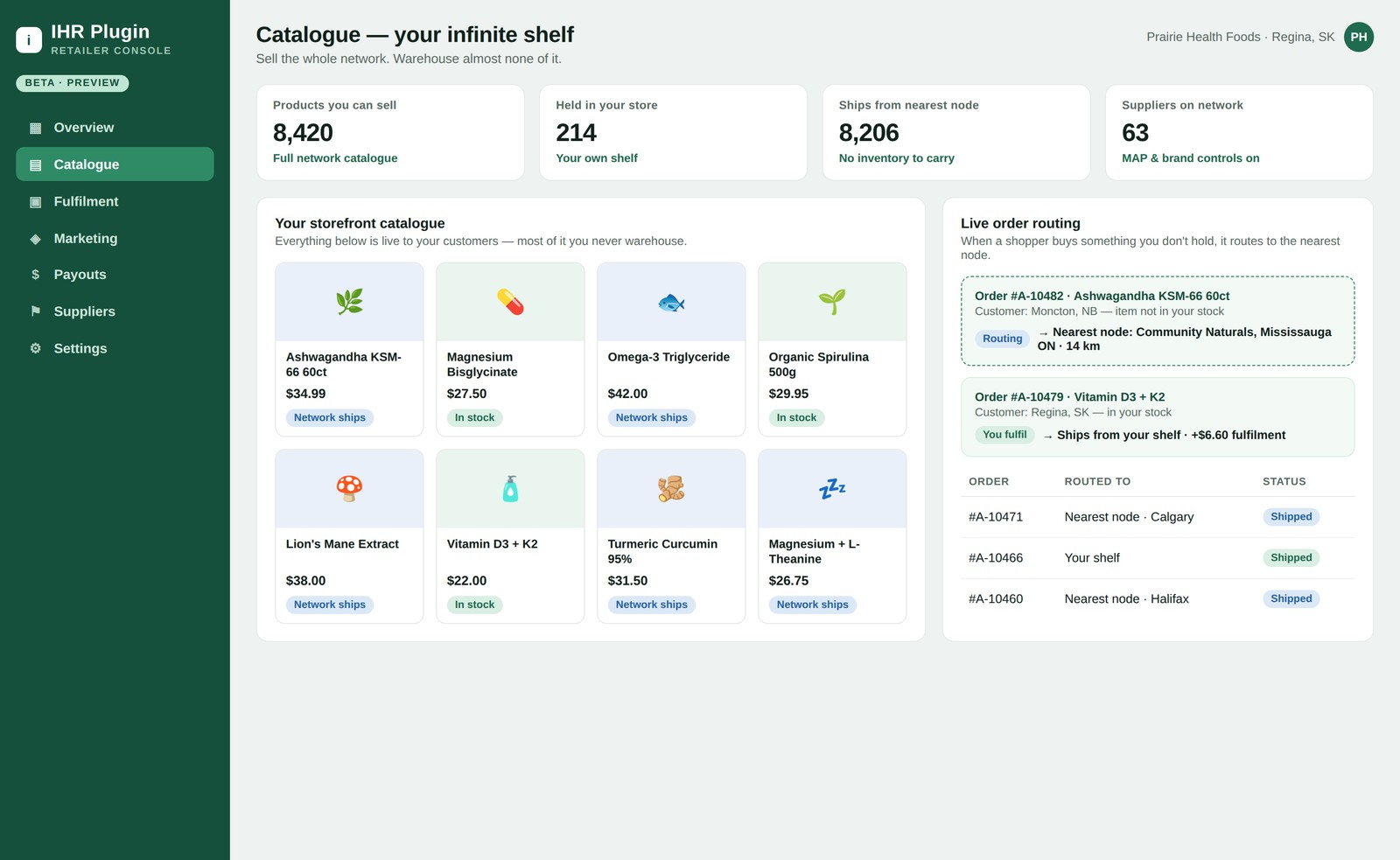
The most visible change is selection. Through the Plugin, your storefront shows the full network catalogue. That is not a few hundred products from the back room. It is thousands of products, held across every store and vendor on the network. To the shopper, you look like a large, well-stocked retailer. Behind the counter, you hold almost none of it.
What makes this work is the routing underneath. A customer buys an item you do not have. The Plugin then checks the network in real time. It finds the closest store that holds the stock, and sends that store the order.
For example, a shopper in Moncton buys a line your store never carried. A store in Mississauga holds it and ships the parcel. Both of you are paid on the sale. So you never touch the product, you never tie up cash in it, and you never lose the customer to a search engine.
Suppliers still keep control. A brand can set a minimum advertised price. It can also choose which retailers carry its goods. As a result, the catalogue grows without a race to the bottom on price. Orders can arrive through manual entry, Shopify, or WooCommerce. Because of that, your existing store becomes the storefront, and there is nothing new to build.
Your back room starts paying rent
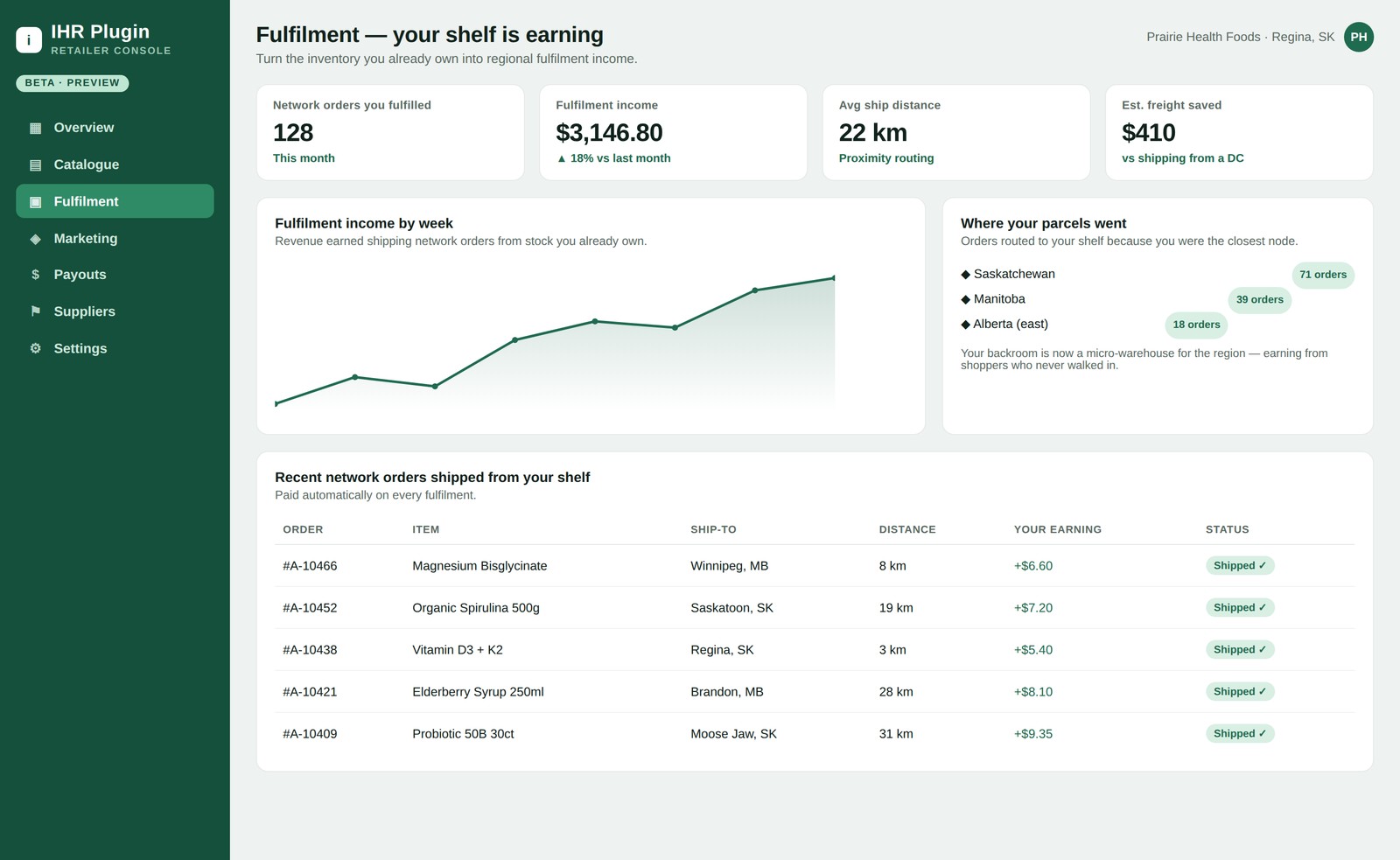
The second shift runs the other way, and most retailers underestimate it. Inventory is the largest cheque an independent writes. It is also the slowest to come back. On the Plugin, every store is treated as a micro-warehouse. So the stock already on your shelves becomes a fulfilment asset the moment you connect.
Here is how it pays. Network demand appears near your store. Maybe you are closest to the customer. Maybe you hold a line others do not. Either way, the order routes to you, and you ship it. You now earn from shoppers who have never heard of your store, using goods you already bought for your own floor.
Proximity routing is the quiet engine. Each parcel leaves the nearest shelf, not a distant warehouse. As a result, freight costs and delivery times fall across the network. That is the same economics that made national fulfilment so hard to beat. The difference is simple: here, the margin stays inside the independent channel.
Marketing built in, without the payroll
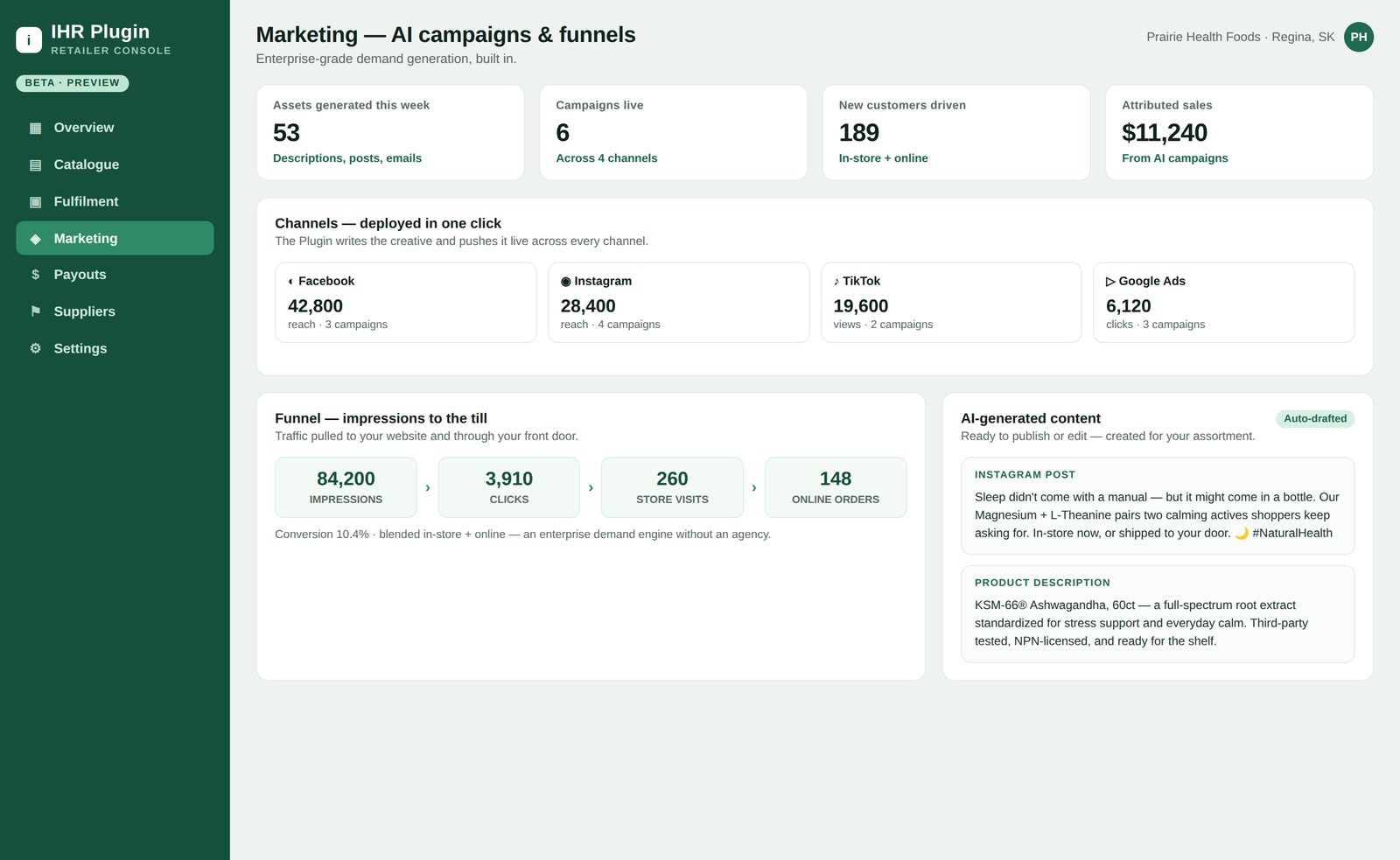
Selection and fulfilment only matter if customers arrive. This is where independents are usually outgunned. The problem is rarely product. It is the marketing budget a funded rival can spend. The Plugin closes that gap by building the demand engine in.
The platform writes the assets you would normally pay an agency for. That means product descriptions, social posts, and full email campaigns. From there, you can push a promotion across Facebook, Instagram, TikTok, and Google in one action. You can also stand up funnels that pull shoppers to the website and through the front door. So the infinite shelf actually gets discovered, because the catalogue and the demand to move it arrive together.
Money that settles itself
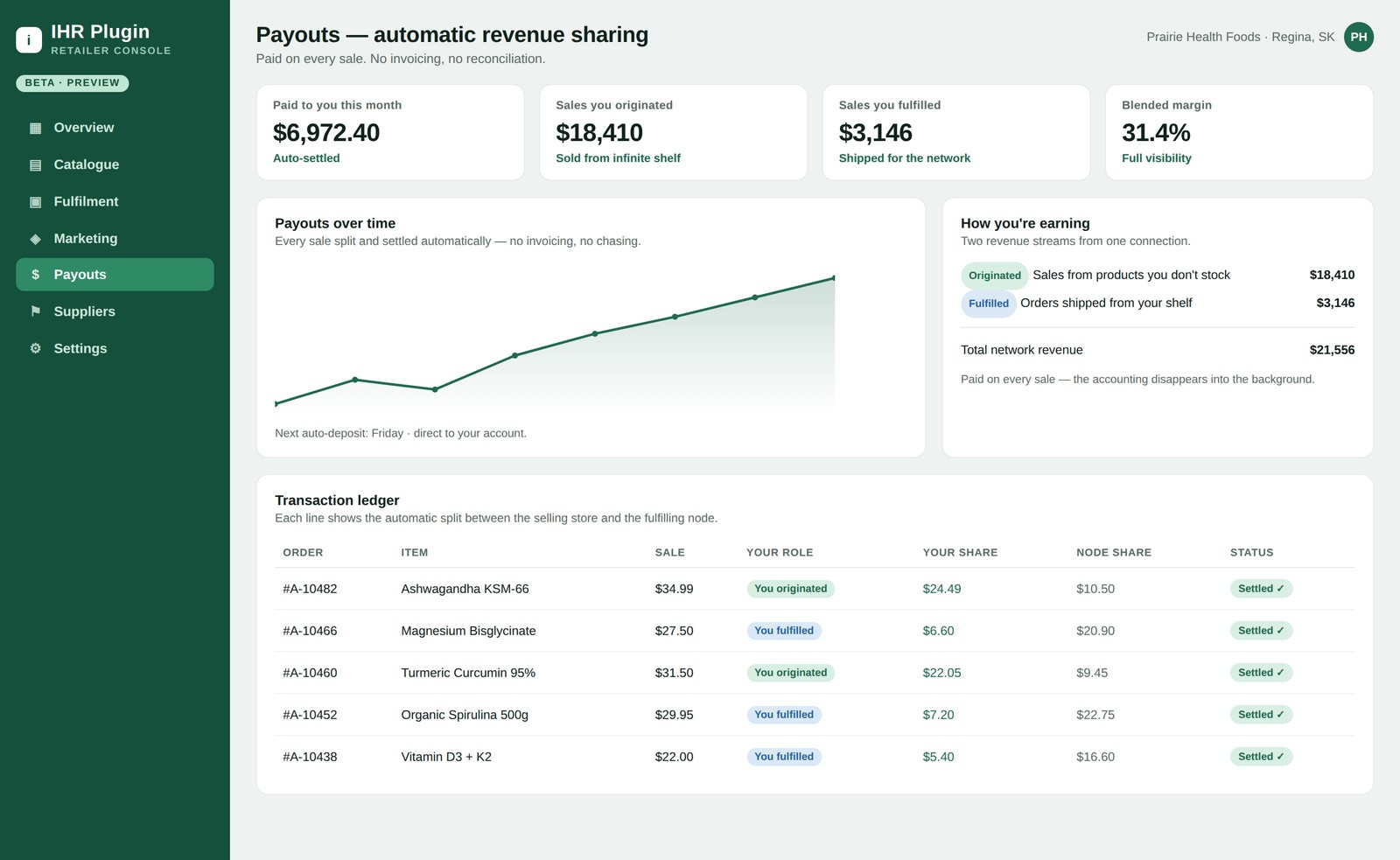
A shared network only works if nobody chases anybody for money. Automatic revenue sharing solves that. A sale may involve two parties: the store that made it and the store that shipped it. The Plugin then calculates the split and settles it on its own.
So there are no invoices between retailers. There is no month-end reconciliation. And there is no waiting on a stranger three provinces away to pay you. Everyone is paid on every sale. One dashboard shows margin and performance across the whole operation, so you can see what the network adds to the business.
Why the IHR Plugin for retailers matters now
Put the four mechanics together, and the independent’s disadvantage flips. Selection stops depending on floor space. Frozen inventory gets a second job. The marketing gap shrinks to something one owner can run. And the settlement friction simply disappears. For banner groups and buying co-ops, the effect compounds, because every new location makes fulfilment faster and the shared catalogue deeper.
The reason to act now is position. The Plugin is in beta and free to join. Retailers who connect during this window become the founding nodes of the network. They are first into their regions. They are first to earn from network demand. And they help shape the catalogue before launch. That first-mover advantage only comes once.
This move fits a wider shift in the channel, where independents are pooling the shelves they already have into one network instead of competing alone. It also rewards credibility-led retailers who win on proof rather than price.
So what would the IHR Plugin for retailers mean for your own floor? You can start free at ihrplugin.com. Or book a call to walk through the network and claim a founding-node position while the beta is open. To book, email olivier@thergmgroup.net.
Key takeaways
- Sell a national catalogue you never warehouse. Orders route to the nearest store that holds the stock.
- Turn your own inventory into fulfilment income. Nearby orders route to your shelf, and you ship them.
- Get built-in AI marketing across Facebook, Instagram, TikTok, and Google, with no agency to hire.
- Get paid on every sale. Revenue sharing settles automatically, with no invoicing.
- The platform is free in beta, ahead of a September 2026 launch. Early stores become founding nodes.
Frequently asked questions
How can my store sell products I do not stock?
The Plugin shows your customers the network’s full catalogue as an infinite shelf. When a customer buys something you do not hold, the Plugin routes the order to the nearest store that does, and they ship it. You capture the sale without carrying the inventory.
How do I earn as a fulfilment node?
Every store is treated as a micro-warehouse. When network demand is best served by your location, the order routes to you and you ship it. So you earn from shoppers who have never viser visited your store, using stock you already bought for your own floor.
Do I need a new website or any coding to join?
No. The Plugin connects to what you already run. It accepts orders through manual entry, Shopify, or WooCommerce. There is no new website to build, no warehouse to rent, and no code to write. Your existing store simply becomes a node in the network.
How does getting paid work across the network?
It is automatic. When a sale involves a selling store and a fulfilling store, the Plugin calculates the split and settles it on every sale. There is no invoicing and no reconciliation. One dashboard shows your margins across the whole operation.
What does the IHR Plugin for retailers cost?
The subscription is free. The platform is in beta ahead of its September 2026 launch, and stores that join now become founding nodes in their regions. You can start free at ihrplugin.com, or email olivier@thergmgroup.net to book a call and see the network before launch.
Why should I act during the beta?
Position. Founding nodes are first into their regions and first to earn from network demand. They also help shape the shared catalogue. That first-mover advantage only comes once, so booking a call now secures it before the network goes fully live.
The IHR Plugin (ihrplugin.com) is a decentralized health commerce platform for natural health food retailers, built by the RGM Group. It is currently in beta, with a full launch scheduled for September 2026.