



Brown seaweed has just entered a category that rarely sees good news. Researchers have published the first fucoidan prostate trial, and the result is positive. Better still, the extract proved safe. Yet the finding is early. So for Canadian retailers, how they sell this ingredient will matter more than the headline.
What the fucoidan prostate trial found
The study appeared on 15 July 2026 in Research and Reports in Urology. It followed 88 men aged 45 to 80, all with moderate BPH, for 90 days. Each man took either 1,000 mg of high-purity fucoidan from Undaria pinnatifida, which Tasmanian supplier Marinova makes, or a placebo. To track symptoms, the team used the International Prostate Symptom Score, or IPSS. That scale rates weak stream, straining, frequency and night-time waking.
The numbers favoured fucoidan. That group improved by about 3.4 IPSS points, or 28 per cent. Meanwhile, the placebo group gained just 0.9 points, or 8 per cent. In absolute terms the gap looks small. Still, it reached statistical significance.
Trade coverage has led with two big numbers: a “nine-fold” gain in voiding symptoms and a “two-fold” gain in storage symptoms. Read them carefully, though. These figures compare the two groups; they do not capture the change a man would feel. In reality, the effect was moderate. It sits near the smallest improvement clinicians call meaningful. So a store that oversells the multipliers will lose trust later, once the product delivers an honest, modest benefit.
Why it matters to the trade
Prostate care is one of the largest under-served categories in men’s health. Roughly half of men in their sixties develop BPH, and most men in their eighties do too. Yet the natural shelf has offered them little that holds up. Saw palmetto, the long-time anchor, has failed to beat placebo in repeated Cochrane reviews, even at triple doses. A credible new option is therefore rare here. And rarity is something a retailer can merchandise.
The shopper is already walking in. Alpha-blockers and 5-alpha-reductase inhibitors work, but their side effects, including sexual ones, push many men toward a gentler first step. As a result, that man often visits an independent health store before a pharmacy counter.
Fucoidan also holds a head start, because the raw material already sells. Marinova’s Maritech fucoidan carries GRAS status in the United States and Novel Foods approval in the European Union. It already goes into immune and gut-health formulas. So a prostate angle would extend a familiar ingredient rather than introduce a stranger. In short, this rewards the operator who can explain a study, not the one who competes on price.
The Canadian catch
Here the story splits at the border. Canada’s Natural Health Product framework rewards evidence. Indeed, a published, registered, placebo-controlled trial is exactly the proof Health Canada weighs. As a result, fucoidan now has a cleaner path to a real prostate claim than the vague “supports men’s health” wording on most shelves.
Still, no one has walked that path yet. Fucoidan’s current Canadian licences cover immune and digestive uses. No monograph authorises a BPH or urinary claim, and one small study will not unlock one. So, for now, no Canadian label can say fucoidan relieves prostate symptoms. Copy borrowed from a US brand does not cross the border intact. Worse, prostate language slips easily into disease-treatment territory, where a brand loses both regulators and shopper trust.
The evidence also asks for patience. The authors themselves flag the small sample, the single site and the short window. Marinova funded the work, and a contract researcher, Vedic Lifesciences, ran it. Two secondary measures, urine flow and PSA, did not move. None of this sinks the finding. Rather, it makes the study a promising first data point, not a closed case.
What to do now
For now, the smart move is preparation, not a purchase order. First, watch for Marinova or a licensee to launch a finished prostate product. Then watch harder for the first Canadian brand to seek a fucoidan prostate claim for urinary symptoms. Whoever wins that licence will hold a defensible spot in an aisle where almost no one can make a real claim. At that point, the ingredient becomes a stocking decision.
Until then, get the category ready. Men’s prostate health stays thin on most independent shelves, despite the demographic behind it. So brief the staff on the emerging evidence, caveats and all. They can then move fast when a licensed product lands. In the meantime, they can sell today’s saw palmetto and beta-sitosterol options with more candour. Fucoidan is the ingredient to track. And telling its story straight is the skill worth building.
Frequently Asked Questions
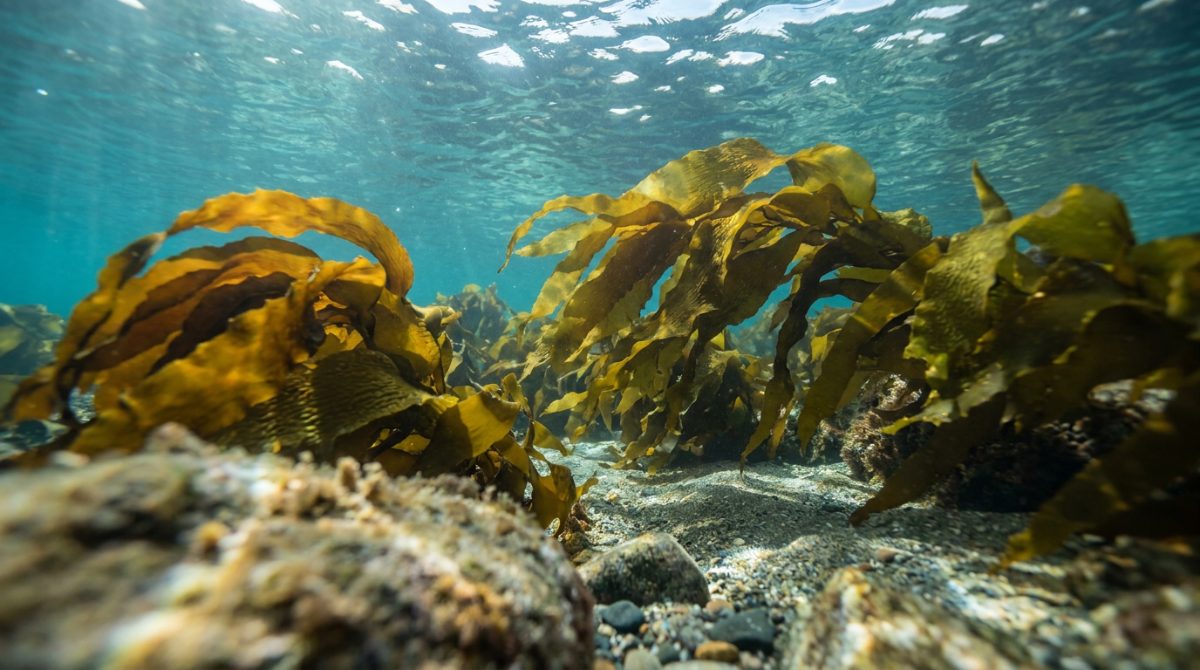
What is fucoidan, and where does it come from? Fucoidan is a sulphated polysaccharide from brown seaweed. The trial used a high-purity extract of Undaria pinnatifida, which Tasmanian supplier Marinova makes. Today the compound already sells for immune and gut-health uses, and it holds GRAS status in the US plus Novel Foods approval in the EU.
Can Canadian brands claim fucoidan relieves prostate symptoms? Not yet. Fucoidan’s current Canadian licences cover immune and digestive uses, so no monograph authorises a BPH or urinary claim. First, a brand would need to file a product-specific licence application backed by clinical evidence. Only then could such a claim appear on a Canadian label.
How strong were the trial results? Modest but real. The fucoidan group improved by about 3.4 IPSS points over 90 days, against 0.9 on placebo, so 28 per cent versus 8 per cent. However, the widely quoted “nine-fold” and “two-fold” figures compare the groups; they do not measure the absolute effect.
How does this compare with saw palmetto? Saw palmetto anchors the category, yet it has repeatedly failed to beat placebo for BPH in Cochrane reviews. Fucoidan, by contrast, now shows a positive, peer-reviewed, placebo-controlled result. Still, it rests on one small study, while saw palmetto carries a large body of trials.
This is independent editorial analysis for the natural health trade. It references Marinova’s fucoidan research as one example of an emerging category trend, and it does not endorse any product. Verify NPN status and licensed claims before you make any product claim in Canada.