All In Nutritionals
Home Blog Page 97

The benefits of organic agriculture

0


Modern consumers have more choices than ever before. Whether they’re buying appliances, books, clothing or any of the myriad necessities of daily life, consumers have a wealth of products to choose from.

An abundance of options also is available at the grocery store. That’s especially true in the produce aisle, where many stores have expanded their fresh fruit and vegetable offerings. That expansion reflects a growing preference among consumers for fresh products, including fresh produce. A 2018 report from the market research firm IRI and the Food Marketing Institute found that sales of fresh foods comprised just under 31 percent of food industry sales in 2017.

Customers who prefer fresh fruits and vegetables to frozen alternatives may wonder if they should be even more selective when purchasing their favourite foods in the produce aisle. That decision may come down to whether or not to purchase organic produce.

Organic produce can be significantly more expensive than non-organic fruits and vegetables, so it’s understandable if budget-conscious consumers cannot afford to go entirely organic. However, it’s important that consumers recognize the many ways that organic agriculture is having a positive impact on the health of humans and the planet they call home.

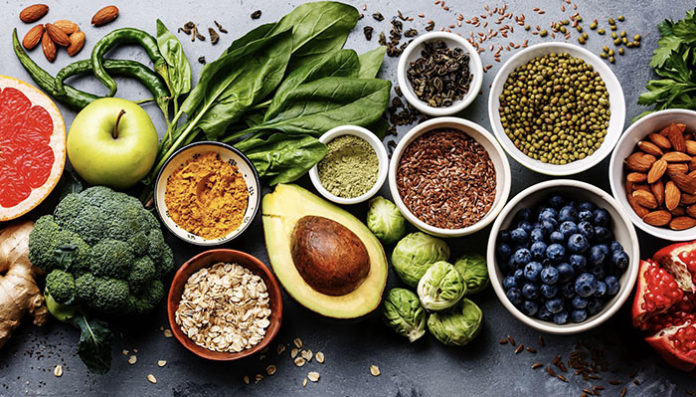
• Organic produce reduces exposure to pesticides and antibiotics. UC Davis Health notes that organic produce has been proven to reduce consumers’ exposure to pesticides and antibiotics. That’s a significant benefit, as pesticide exposure has been shown to lead to neurodevelopmental issues and has been linked to higher cancer risk. Consumers shopping on budgets can pick and choose which organic foods they purchase, as UC Davis Health notes that certain foods have been shown to have higher pesticide residues than others. Apples, celery, grapes, spinach, strawberries and tomatoes have high levels of pesticide residues, so choosing organic versions of these foods may be a wise choice. Avocados, broccoli, cabbage, and cantaloupe are some of the foods that typically have low levels of pesticide residue.

• Organic agriculture reduces environmental degradation. The Organic Trade Association notes that synthetic pesticides and fertilizers used on some conventional farms can deplete the soil of valuable nutrients and increase environmental degradation. Organic farmers do not use such pesticides or fertilizers, instead of utilizing such practices as composting, cover cropping and crop rotation, each of which can have positive, long-term effects on soil quality.

• Organic agriculture benefits local wildlife. A 2015 study from researchers in Argentina that was published in the journal Agriculture, Ecosystems & Environment found that small mammals were more abundant around organic farms than conventional farms. That’s not just good for those mammals, but also for the farmers, as small mammals can feed on insects that would otherwise adversely affect crops.

Many grocery stores are increasing the availability of organic fruits and vegetables. Such foods can benefit human health, as well as the health of the planet.

Source: wvnews

Adults with obesity treated with semaglutide 2.4 mg achieved and maintained a significant amount of weight loss in a 68-week trial

0


New results from the STEP phase 3a clinical trial programme demonstrated weight loss with the investigational treatment of once-weekly subcutaneous semaglutide 2.4 mg versus placebo. In the STEP 4 trial, study participants who reached the maintenance dose of semaglutide 2.4 mg during a 20-week run-in period were randomized to either continue treatment with semaglutide 2.4 mg or switch to placebo for 48 weeks. (1) The full results of the STEP 4 trial were presented today at the virtual Endocrine Society (ENDO) 2021 Annual Meeting and published in the Journal of the American Medical Association.

“For people with obesity, maintaining weight loss in the long term is challenging as both physiological and hormonal changes that occur following an initial weight loss can lead to weight regain. These changes, known as metabolic adaptation, result in lasting increased levels of hunger and desire to eat while reducing energy expenditure,” said Dr. Domenica Rubino, lead investigator of the STEP 4 trial and Director of Washington Center for Weight Management and Research. “Like any other chronic disease, obesity requires a long-term, individualized approach to care, inclusive of medication and lifestyle components.”

Following the 20-week run-in period, people who continued treatment with semaglutide 2.4 mg for an additional 48 weeks continued to lose weight with a statistically significant additional mean weight loss of 7.9% (1) (8.8% for the trial product estimand (2)) from week 20 to week 68. People who were switched to placebo following the 20-week run-in period regained 6.9% (1) of their body weight from week 20 to 68 (6.5% for the trial product estimand (2)). The estimated treatment difference [ETD] for the treatment policy estimand was -14.8% (95% confidence interval [CI]: -16.0, -13.5; p<0.0001). People who stayed on semaglutide 2.4 mg throughout the entire 68-week trial achieved a total weight loss of 17.4% (1) (18.2% for the trial product estimand (2)). Both treatment groups followed a reduced-calorie diet and increased physical activity programme throughout the study.(1)

“Obesity is a chronic disease that requires ongoing management and the results from STEP 4 trial strengthens the evidence around the potential of semaglutide 2.4 mg to transform the medical management of obesity,” said Martin Holst Lange, executive vice president, Development at Novo Nordisk. “Millions of people living with obesity are in need of additional treatment options to help them lose weight and keep it off. The results from STEP 4 show that to sustain weight loss it is important to maintain treatment and that semaglutide 2.4 mg has the potential to offer sustained weight loss of more than 17% after 68 weeks of treatment.”

The semaglutide 2.4 mg safety profile is in line with observations seen previously with GLP-1 receptor agonists. It is generally well-tolerated, and the most common adverse events among people treated with semaglutide 2.4 mg were gastrointestinal events.(1)

About STEP 4 and the STEP clinical trial programme

STEP 4 was a 68-week phase 3a randomised, double-blind, multicentre, placebo-controlled trial that compared the safety and efficacy of once-weekly subcutaneous semaglutide 2.4 mg versus placebo on change in body weight. The trial was designed to assess the effect of continuing versus discontinuing semaglutide 2.4 mg in adults with obesity (BMI 30 kg/m2), or overweight (BMI 27 kg/m2) with at least one weight-related comorbidity and without type 2 diabetes (HbA1c <6.5%). During the 20-week run-in period (Week 0 to Week 20), participants were treated with semaglutide (16 weeks escalation, followed by 4 weeks at the target dose) as an adjunct to lifestyle intervention (–500 kcal/day diet together with 150 minutes/week of physical activity). Following the run-in period, the 803 people who reached the maintenance dose of semaglutide (2.4 mg) reduced their mean body weight from 107.2 kg (Week 0) to 96.1 kg (Week 20) and were randomized (in a 2:1 ratio) to continue treatment with semaglutide 2.4 mg or switch to placebo for a further 48 weeks (Week 20 to Week 68) with lifestyle intervention.(2)

The primary endpoint of the trial was the percentage change in body weight from randomization (Week 20) to the end of treatment (Week 68). Confirmatory secondary endpoints included change in waist circumference, systolic blood pressure, and physical functioning score on the 36-item Short Form Survey (SF-36), assessed from randomization (Week 20) to the end of treatment (Week 68). Supportive secondary endpoints included percent change in body weight from baseline (Week 0) to the end of treatment (Week 68).(2)

STEP (Semaglutide Treatment Effect in People with obesity) is a phase 3 clinical development programme with once-weekly subcutaneous semaglutide 2.4 mg in obesity. The global clinical phase 3a programme consists of four trials and has enrolled approximately 4,500 adults with overweight or obesity.(3)

About subcutaneous semaglutide 2.4 mg for weight management

Once-weekly semaglutide 2.4 mg is under investigation for chronic weight management and not yet approved for people with obesity. It is currently under regulatory review in several countries, including the U.S. Food and Drug Administration (FDA) and the European Medicines Agency (EMA).

Semaglutide is an analogue of the human glucagon-like peptide-1 (GLP-1) hormone, with 94% similarity to the native human GLP-1 molecule. (4,5)  It induces weight loss by reducing hunger, increasing feelings of fullness and thereby helping people eat less and reduce their food cravings.(4)

References:

  1. Domenica R, Abrahamsson N, et al. Weight loss maintenance with once-weekly semaglutide 2.4 mg in adults with overweight or obesity reaching maintenance dose. Presented at ENDO Annual Meeting. March 20-23, 2021.
  2. Warkentin LM, Das D, Majumdar SR, et al. The effect of weight loss on health-related quality of life: systematic review and meta-analysis of randomized trials. Obes Rev. 2014; 15:169–182.
  3. Kushner RF, Calanna S, Davies M, et al. Semaglutide 2.4 mg for the Treatment of Obesity: Key Elements of the STEP Trials 1 to 5. Obesity. 2020; 28:1050-1061.
  4. Blundell J, Finlayson G, Axelsen M, et al. Effects of once-weekly semaglutide on appetite, energy intake, control of eating, food preference and body weight in subjects with obesity. Diabetes Obes Metab. 2017; 19:1242-1251.
  5. Lau J, Bloch P, Schaffer L, et al. Discovery of the Once-Weekly Glucagon-Like Peptide-1 (GLP-1) Analogue Semaglutide. J Med Chem. 2015; 58:7370-7380.
  6. Wadden TA, et al. Intensive Behavioral Therapy for Obesity Combined with Liraglutide 3.0 mg: A Randomized Controlled Trial. Obesity 2019;21:75–86.

Plant–based diets are growing, with innovative solutions popping up to meet demand

0


55% of UK consumers claim they’re actively reducing or considering reducing their meat intake. Many are motivated by the perception that these diets are healthier (46%), more ethical (45%) or better for the environment (38%)1.

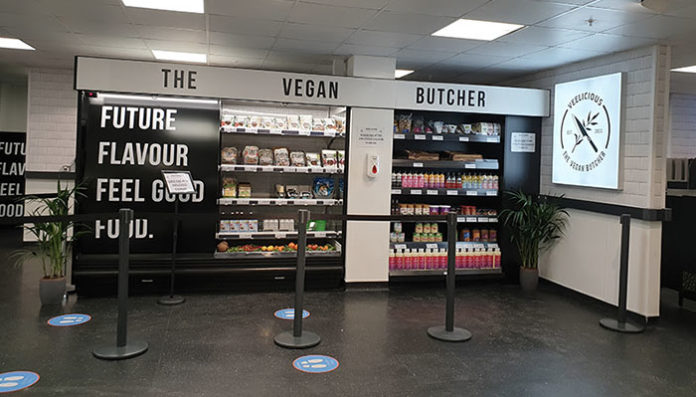
This is not a passing fad. Tesco has recently announced its intention to increase sales of plant-based meat alternatives by 300% by 2025 and since January, Asda has featured dedicated bays for plant-based ambient products in store. My local even has a large Vegan butcher.

One challenge that comes with wide appeal is the struggle to define a target audience. Our Appetite for Change research2 shows people of all ages and demographics are interested in plant-based alternatives but have different motivators and barriers to purchasing these products. This can make product placement challenging.

Our research uncovered that vegetarian shoppers often find it uncomfortable to shop the meat aisle for plant-based meat alternatives, and in contrast, flexitarians are frequently deterred by vegetarian or vegan bays- not associating themselves with these labels and linking these products with poor taste.

So, where might plant-based products fair best in-store, on the go and when eating out?

In-Store

Within our Appetite for Change research, we used reaction time testing to check the likely effectiveness of interventions. This technique asks people if they would consider an intervention and the speed at which they answer indicates whether they would act in real life.

In our research, 88% of people agreed that ranging meat-free in the meat aisle would help them choose healthier and more sustainable foods. 57% of respondents gave a fast yes, suggesting this would be a genuinely effective approach (Sample of 1000 UK consumers, Nov 2019)2.

Spotlight on Tesco

Prior to the Covid-19 pandemic, Tesco ran a trial to investigate the sales impact of moving meat alternatives into the meat aisle.

Placement is a known lever to drive behaviour change and so the trial was promising. Click here to learn more about behaviour levers.

Ten meat alternative products were moved from a chilled, plant-based aisle into the meat, fish and poultry aisle in large stores. The initial results included 21 weeks of data to 23rd February 2020 and compared sales results of the trial stores with 10 matched control stores.

Some customers struggled to find their usual products, which was an initial barrier, but informing store colleagues of changes and having shelf call-outs helped to resolve the issue. If you are considering trialling this in your business, the use of signage like floor stickers and shelf barkers may help to inform customers of the change.

The trial was a success, with sales being positively impacted during the trial. It will be interesting to see if it prompts longer-term shifts to plant-based meat alternatives.

Spotlight on Kroger

There are also lessons from across the pond. Pre-Covid, the Plant-Based Foods Association (a trade association that represents 170 plant-based food companies in the USA) conducted a study with Kroger3 – one of the largest grocery retailers in the US.

Plant-based meat products were placed in the meat aisle of 60 grocery stores in Colorado, Indiana, and Illinois. This 12-week intervention ran from December 2019 through to February 2020.

In Denver, the study found plant-based meat sales were up by 13 percent. In Indiana and Illinois, plant-based meat sales surged 32 percent and a survey found there was a growing number of people following flexitarian diets in this region – suggesting ranging vegan products in the meat aisle appeals more to flexitarians than vegans specifically.

An analysis of all 60 stores showed that on average the sale of vegan meat alternatives increased by 23 percent when sold in the meat aisle. This reinforces how important product placement is in shifting consumers towards healthier and more sustainable diets.

Why does this work?

When changing diets, research shows that people consider easy solutions the most. They don’t want to hunt down a new product but may pick it up if it interrupts their usual shopping trip. Many shoppers who buy plant-based proteins have also been shown to consume meat, therefore thinking of the ‘meat aisle’ as the protein aisle may be a way to bring plant-based meat alternatives into the mainstream. Doing this could encourage the first trial for those who already eat meat and reduces the sense of loss and risk when picking up a meat alternative for the first time.

However, it’s important to highlight our Appetite for Change research shows that cost is the biggest barrier to healthy, sustainable diets so care must be taken to list plant-based products at the right price point2.

Out of Home

The concept of integrating rather than segregating also applies out of home (with a few exceptions). In Menu for change4, the Behaviour Insights team highlighted this as an opportunity that could have a positive impact but was highly feasible.

Don’t put vegetarian options in separate aisles or in boxes on menus, but integrate them with the meat options. This means cafes and retailers should integrate meat and non-meat products by product category, putting veggie burgers with the burgers, and soy/oat milk with the cows’ milk, etc. Restaurants should discard the separate ‘vegetarian’ sections of menus. – Menu for Change

Why does this work?

Studies have shown that placing vegetarian items in a separate box on menus can reduce ordering rates by 56%5 and that having “veggie only” refrigerators in Pret reduced sales compared to integrating products6.

Separating these items makes them feel different. It reinforces that they are ‘designed for vegans and vegetarians’ – a label many don’t associate with. Additionally, when we enter a café or restaurant, we have to make a choice what to eat, often from a large variety of options. Our brain naturally seeks shortcuts and can easily exclude a whole section of products as irrelevant.

Mixing in plant-based options and giving them prime positioning allows the meal to shine rather than a vegan categorization and would encourage more browsing for those who do not typically eat this type of food. Gregg’s vegan range is a great example of how this can be executed with excitement!

The exception to this is where plant-based becomes an exclusive offering and the key pull. Whilst having segregated veggie fridges in Pret may not have worked, Veggie Pret stores seem to buck the trend. The first Veggie Pret opened as a pop-up experiment back in 2016 and there are now 10 Veggie Pret stores – and an ambition to convert as many as 90 EAT sites into Veggie Prets7. It seems that a store dedicated to segregation can help to create excitement and relevance – especially in London and Manchester, where plant-based diets are popular. Does this fit the trend bucket more than normalizing plant-based diets? – it’s hard to know…

Original article: https://www.igd.com/articles/article-viewer/t/segregation-or-integration-ranging-plant-based-products-to-drive-sales/i/27924

Source IDG

GreenSpace Closes Private Placement

0


GreenSpace Brands Inc. is pleased to announce that it has closed its previously announced private placement financing of 49,285,714 units (the “Units“) of the Company at a price of $0.07 per unit (the “Offering Price“) for gross proceeds of $3,449,999.98 (the “Offering“). This includes the exercise by the Agents of their over-allotment option.  The Company intends to use the net proceeds of the Offering for working capital and general corporate purposes.

Each Unit consists of one common share in the capital of the Company (“Common Share“) and one-half of one Common Share purchase warrant (each whole warrant, a “Warrant“). Each Warrant will entitle the holder of the Warrant to purchase one Common Share for $0.10 (the “Exercise Price“) for up to 24 months from the date of issuance thereof (the “Expiry Date“), provided that if at any time between the date that is four months and one day from the date of issuance thereof and the Expiry Date, the daily volume-weighted average price of the Common Shares on the TSX Venture Exchange is greater than $0.20 for ten consecutive trading days, then the Company shall have the option to accelerate the expiry of the Warrants by delivering notice to holders of the Warrants (the “Acceleration Notice“). In such instance, the Warrants will be exercisable only until the 30th day following the delivery of the Acceleration Notice.

The Offering was made through a syndicate of agents led by Canaccord Genuity Corp. and including PI Financial Corp. and Richardson Wealth Limited (collectively, the “Agents“). In connection with the Offering, the Agents received, as compensation: (i) cash commission of $217,500; and (ii) non-transferrable broker warrants exercisable at $0.07 per Common Share until the day that is 18 months from the closing date to acquire an aggregate of 3,107,143 Common Shares.

All securities issued or issuable under the Offering will be subject to a statutory hold period of four months plus one day from the closing date in accordance with applicable securities legislation

New Wave Subsidiary, Way of Will Inc., Launches Functional Mushroom Capsules and Functional Mushroom Powder

0


Way of Will, a natural wellness brand under New Wave and known for its aromatherapy-based products, revealed earlier this year that it will be introducing a new line of functional mushroom products in the upcoming months. Further to the announcement, the company is releasing the Functional Mushroom Powder and the Functional Mushroom Capsules from the collection to the U.S. market. Paving the way to a larger collection of specialty mushroom products, the mushroom powder and capsules will be the first step in Way of Will’s journey into the psychedelics space.

The product launch, featuring a house blend of five functional mushrooms and fungi available in both capsule and powder format, aims to naturally boost immunity. They are loaded with vitamins, nutrients, and antioxidants that support a healthy immune system. The capsules are designed with ease of consumption and convenience in mind, while the powder allows for versatile use by mixing and incorporating it into foods and beverages.

“Mushrooms are gaining popularity rapidly right now, but they’re not a new phenomenon in food and medicine. They have been used in certain regions of the world for centuries for a plethora of health and wellness purposes,” said Willie Tsang, founder and CEO of Way of Will. “Mushrooms are chock-full of nutrients that our bodies love and need to function at its best. Our goal here is to source the best-quality mushrooms possible and maximize their benefits through well-researched formulations developed by our team. We are excited to introduce these capsules and powders to the U.S. market. We’re working tirelessly to roll out the rest of the products as we’ve got a lot of customers and buyers who are eager to see our entire functional mushroom collection available in stores and online.”

Canada-Denmark Plant-Based Opportunity Webinar

0


Food and protein ingredients are currently the biggest growth segments in the Danish food industry. Denmark, like Canada, is an export-oriented agrifood manufacturer that offers great potential for partnerships with a global market orientation.

Learn more about that opportunity by attending a Canada-Denmark webinar, organized in collaboration with our partners at Food & Bio Cluster Denmark. Representing more than 250 Danish and international agrifood organizations, including Danish companies Chr. Hansen, Novozymes and Sicca Dania, Food & Bio Cluster Denmark is a great starting point for growing your business connections in Denmark and the EU, whether for innovation collaboration, business development or other purposes.

Join us on April 15, 8:00 am CST, to hear from speakers in the public and private sectors in Denmark and Canada about their work in plant-based food and connect with speakers and other webinar participants to explore collaboration opportunities.

Note: Participants will receive a link to the TEAMS-invitation two days prior to the webinar.

REGISTER HERE

Empire reaches an agreement to purchase 51 percent of Longo’s and Grocery Gateway accelerates growing presence in Ontario

0


  • 36 Longo’s locations to join Empire’s growing store network in Ontario
  • Grocery Gateway adds 70,000 long-standing online customers to Empire’s e-commerce business
  • Longo’s and Grocery Gateway will continue to be operated by the successful Longo’s leadership team, led by President and CEO, Anthony Longo
  • Empire and Longo’s will together unlock non-customer facing synergies and other benefits
  • The acquisition price of $357 million for 51% is based on an enterprise value of $700 million
  • Expected to be accretive to earnings per share in the first full fiscal year after closing

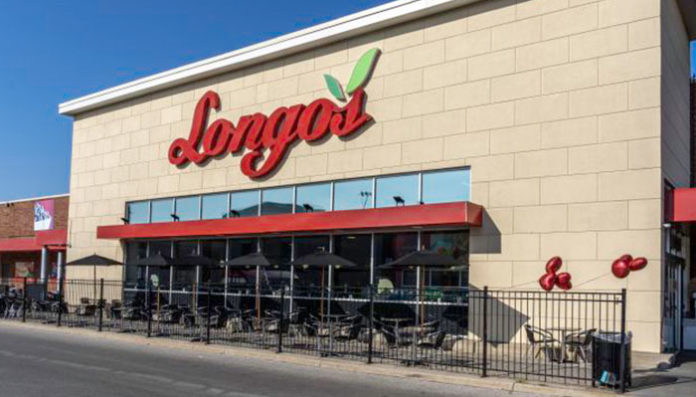
Empire Company Limited announced today that it has signed an agreement to purchase 51% of Longo’s, a long-standing, family-built network of specialty grocery stores in the GTA of Ontario, and the Grocery Gateway e-commerce business.

The transaction immediately adds two high-quality banners to Empire’s growing grocery store and
e-commerce businesses in Ontario. Longo’s and Grocery Gateway are powerful strategic additions to Empire’s family of brands in the province – Sobeys, Foodland, FreshCo, Farm Boy and Voilà. Longo’s operates an excellent business with a very strong brand in the GTA and Southwestern Ontario, the largest grocery market in Canada, and furthers Empire’s strategic goal of growing its market presence in Ontario.

“Empire has strong momentum and we are laser-focused on our Project Horizon growth plans in key markets like the GTA, both in bricks and mortar and e-commerce,” said Michael Medline, President and CEO, Empire. “Longo’s has built one of the most successful and sought-after brands in the GTA and Southwestern Ontario. Longo’s is a crown jewel of grocery and as a values-driven company, Longo’s culture aligns closely with Empire. We couldn’t be happier to be partnering with Anthony and the Longo’s team.”

Empire’s success with the Farm Boy acquisition has set a strong foundation to welcome the Longo’s and Grocery Gateway businesses into its family of banners. The Company will continue to grow the Longo’s and Grocery Gateway businesses while unlocking benefits through non-customer-facing synergies. Longo’s and Grocery Gateway customers will see no changes to their experience. Longo’s plans to open several new stores over the next five years.

“With strong alignment to our family values and purpose, we look forward to working together with Empire to bring the Longo’s experience to even more Canadian families,” said Anthony Longo, President and CEO, Longo’s. “The more we learned about Empire, the clearer it became that this was the right team to partner with to support our next chapter of growth. And of course, we will continue to offer the same high-quality service and fresh products, exceptional private-label offering and the convenience of e-commerce that our guests have come to know and love.”

Grocery Gateway, which currently serves 70,000 loyal customers, will continue as a stand-alone business. Empire will continue to invest in the growth of Grocery Gateway’s customer base while seeking efficiencies through collaboration with Empire’s fast-growing Voilà online business.

Longo’s will continue to be led by President and CEO, Anthony Longo, and his team of talented food retail executives. Although managed separately, Longo’s will benefit from Empire’s infrastructure and capabilities, in areas such as Sourcing, Logistics and Real Estate. The Longo’s commitment to community and philanthropy through the Longo’s Family Charitable Foundation will continue and, with Empire’s support, is expected to grow over time.

Founded in 1956, the first Longo’s store was opened by three brothers, Tommy, Joe and Gus Longo. Today the business has grown to 36 locations in the GTA, including 10 new stores in the last 5 years and the Grocery Gateway e-commerce business. Sales were approximately $1.1 billion for the year ended February 28, 2021. Longo’s has developed strong customer loyalty by focusing on providing guests (customers) in their stores with fresh, high-quality products, including a variety of prepared foods, and an exceptional assortment of private label products, all paired with remarkable service from their team members.

The Longo family has expressed their intentions to remain as long-term shareholders of Longo’s.

TRANSACTION TERMS

Empire will initially acquire 51% of Longo’s issued and outstanding shares based on a total enterprise value of $700 million.

The transaction structure allows Empire to achieve 100% ownership of Longo’s overtime. After the fifth anniversary of the transaction, Longo’s shareholders have an option to sell up to a 12.25% interest to Empire per annum, at a multiple applied to the last twelve months EBITDA, which will vary depending on the achievement of certain business results. If Longo’s shareholders exercise an option to sell, Empire will have a corresponding call option for the same percentage in the following year. After the tenth anniversary of the transaction, both Empire and Longo’s have mutual put and call options for any remaining minority shares outstanding. Empire intends to finance the transaction through the issuance of up to $125 million non-voting Class A shares (“Class A shares”) to the vendors, subject to TSX approval, cash of approximately $197 million and acquired debt of approximately $35 million.  Following the completion of the current normal course issuer bid (“NCIB”), Empire intends to apply to renew its NCIB with the TSX, for several shares higher than those issued through this transaction.

The transaction is subject to customary closing conditions and is expected to close in the first quarter of fiscal 2022.

Loblaw Companies announces senior management changes as President, Sarah Davis, retires, and Galen G. Weston returns as Chairman and President

0


George Weston Limited (“GWL” or “George Weston”) (TSX: WN) and Loblaw Companies Limited (“Loblaw”) (TSX: L) jointly announced today the upcoming retirement of Loblaw President, Sarah Davis, on May 6, 2021. She will be succeeded by Executive Chairman, Galen G. Weston, who will become Chairman and President in addition to his current role as Chairman and CEO at GWL. The companies also announced that Robert Sawyer will join Loblaw as Chief Operating Officer (“COO”) and that Richard Dufresne, President and Chief Financial Officer (“CFO”) of GWL, will expand his responsibilities to include becoming CFO of Loblaw on May 6, 2021.

“In light of George Weston’s strategic decision to focus on retail and real estate which was announced today, Sarah and I agreed that now is the right time for her to pursue her plans for an early retirement, which she first shared with me upon becoming President in 2017,” said Galen G. Weston. “Sarah has made an invaluable contribution to the company and I appreciate her leadership over the last 14 years. Her authentic, understated style, and commitment to the potential of others, have been hallmarks of her time with Loblaw. She has been an advisor and friend to many, especially to me. We wish her well.”

Sarah Davis has been with Loblaw in positions of increasing responsibility since 2007, including both CFO and CAO, during which time she played a crucial role in transforming the company from a regionally managed grocer into an omni-channel food, health, and wellness retailer with $52.7 billion in revenue. As President, Sarah led the company to reduce costs by over $1 billion through innovative productivity improvements. She established the company’s leadership in data and analytics, including the creation of Canada’s most loved loyalty program, PC Optimum.  Her tenure included Loblaw’s bold expansion in financial services through the growth of PC Financial’s MasterCard, and the launch of the PC Money Account. Most significantly Sarah championed an approach to leadership and culture that put colleagues and customers first in pursuit of helping Canadians live life well.

“After 14 years at Loblaw, I am immensely proud of what the company has accomplished during my time here and look forward to the next chapter,” said Ms. Davis.

In returning to the role of Chairman and President, a position he held from 2014 to 2017, Mr. Weston said, “The sale of Weston Foods will allow me to dedicate renewed time and energy at Loblaw as we increase our momentum in both our bricks-and-mortar network, and our leadership in digital and data.”

Regarding Mr. Sawyer’s appointment as COO at Loblaw where he will have responsibility for the company’s retail divisions, supply chain, and procurement, Mr. Weston said, “I am delighted that Robert has made the decision to join the team at Loblaw. He brings a keen understanding of our business and an extensive track record of success. I look forward to Robert’s contributions including his commitment to developing the next generation of talent in the organization.”

Robert has spent over 40 years as a Canadian retail executive including an extensive career at Metro where he was COO, as well as a highly successful tenure as President and Chief Executive Officer of Rona. He has served as a Director on the Board of GWL since 2016.

“Loblaw is Canada’s leading retailer with some of the most exciting assets in the industry, including its loyalty and private label programs,” said Mr. Sawyer. “I am very much looking forward to joining the team.”

As Mr. Dufresne expands his responsibilities to include CFO of Loblaw, Mr. Weston said, “Richard is an exceptional executive with extensive experience as a CFO. With George Weston’s decision to divest the bakery business, he now has the capacity to return to the dual CFO role which he held between 2014 and 2017. I look forward to working with Richard as we accelerate Loblaw’s momentum in its core business and strategic growth areas while increasing speed and agility in both organizations.”

As part of this transition, Darren Myers will be leaving Loblaw after its Annual General Meeting on May 6, 2021. “During his tenure, Darren has been a financial steward of the organization, actively worked to improve capital discipline across the company, and contributed to Loblaw’s enormous progress against its process and efficiency agenda. He is a key member of the Management Board and his collaborative leadership style drove improvements to the finance function and the company’s management system. I would like to thank Darren for his contributions to the company as CFO over the last three and a half years and to express appreciation for his support over the coming weeks,” said Mr. Weston.

Small Business Pulse Survey Updates

0


Based on responses collected March 8 through March 14, the Small Business Pulse Survey estimates that:

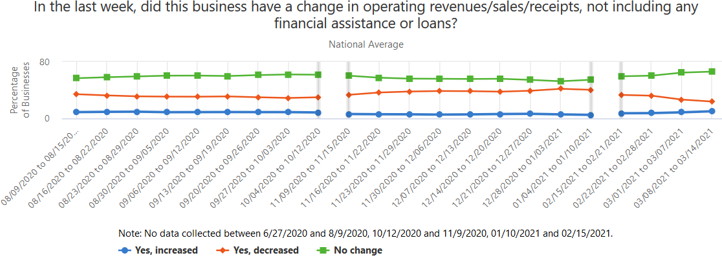
  • 10.1% of U.S. small businesses experienced an increase in operating revenues/sales/receipts in the last week. For responses collected 3/1 – 3/7, this statistic was 8.6%

A graph showing if businesses had a change in operating revenues/sales/receipts in the past several weeks, not including financial assistance.
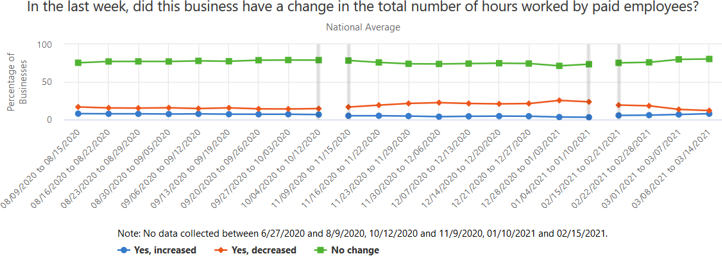
  • 7.7% of U.S. small businesses have experienced an increase in the total number of hours worked by paid employees in the last week. For responses collected 3/1-3/7, this statistic was 6.7%

A graph showing how businesses have had a change in the total number of hours worked by paid employees, over the past several weeks.
  • 7.1% of U.S. small businesses experienced an increase in the number of paid employees in the last week. For responses collected 3/1-3/7, this statistic was 6.1%

  • 18.0% of U.S. small businesses have received financial assistance from the Paycheck Protection Program (loan forgiveness) since December 27, 2020

  • 40.1% of U.S. small businesses believe more than 6 months will pass before their business returns to its normal level of operations. For responses collected 3/1-3/7, this statistic was 41.6%

  • 52.2% of U.S. educational services small businesses have experienced a large negative effect from the coronavirus pandemic

  • 12.4% of U.S. healthcare and social assistance small businesses required their employees to test negative for COVID-19 in the last week before coming to work

The Operational Challenges Index, which assesses the overall effect of the pandemic on business operations, has decreased challenges for the second week in a row, indicating an increasingly positive effect.

Plant-based Meat Market Size To Reach $13.8 Billion By 2027, Owing To Rising Adoption Of Vegetarian Eating Habits Among Fitness Aware Consumers

0


Increasing acceptance of vegetarian eating habits between fitness-aware clients, particularly in the developed nations, is projected to impel the expansion of the market for plant-based meat, during the period of the forecast. Rising concerns about Greenhouse Gas (GHG), produced by the procedures of the meat business, in addition to the animal wellbeing, accompanied by the support of public figures for vegetarian eating habits, are estimated to boost the demand for plant-based meat foodstuffs, in the market. Mainly, the plant-based meat is used up in the Hotel/Restaurant/Café (HORECA) subdivision.

The crucial companies of the industry are working together with the restaurant chains as well as the fast-food establishments, to encourage the acceptance of their foodstuffs. For example, fast-food junctions, like Subway, Burger King, and MacDonald’s are introducing new-fangled vegetarian meat foodstuffs, to take the advantage of the industry, which is dominated by fitness-aware clients.

Due to the increasing concerns of the end-users about the usual meat goods, after the eruption of the Covid-19 pandemic, plant-based meat burgers are expected to show a stable expansion. These categories of burgers hold low down fat and gluten stuffing that formulates them, extremely preferential merchandise, between the fitness aware persons.

Starbucks, in association with Impossible Foods Inc., presented the Impossible Breakfast Sandwich, in June 2020. This was prepared using the plant-based sausage and was added to its list of options, at the majority of its sites, in the U.S. It was started like the Starbucks’ sustainability program, to encounter the increasing demand from the customers, for the plant-based meat alternative.

Olivier Felicio

1:01 PM (2 hours ago)
to me

In italic is for social media

Plant-based Meat Market Size To Reach $13.8 Billion By 2027, Owing To Rising Adoption Of Vegetarian Eating Habits Among Fitness Aware Consumers.

Key Factors Responsible for the Growth of Plant-based Meat Market:

Increasing acceptance of vegetarian eating habits between fitness-aware clients, particularly in the developed nations, is projected to impel the expansion of the market for plant-based meat, during the period of the forecast. Rising concerns about Greenhouse Gas (GHG), produced by the procedures of the meat business, in addition to the animal wellbeing, accompanied by the support of public figures for vegetarian eating habits, are estimated to boost the demand for plant-based meat foodstuffs, in the market. Mainly, the plant-based meat is used up in the Hotel/Restaurant/Café (HORECA) subdivision.

The crucial companies of the industry are working together with the restaurant chains as well as the fast-food establishments, to encourage the acceptance of their foodstuffs. For example, fast-food junctions, like Subway, Burger King, and MacDonald’s are introducing new-fangled vegetarian meat foodstuffs, to take the advantage of the industry, which is dominated by fitness-aware clients.

Due to the increasing concerns of the end-users about the usual meat goods, after the eruption of the Covid-19 pandemic, plant-based meat burgers are expected to show a stable expansion. These categories of burgers hold low down fat and gluten stuffing that formulates them, extremely preferential merchandise, between the fitness aware persons.

Starbucks, in association with Impossible Foods Inc., presented the Impossible Breakfast Sandwich, in June 2020. This was prepared using the plant-based sausage and was added to its list of options, at the majority of its sites, in the U.S. It was started like the Starbucks’ sustainability program, to encounter the increasing demand from the customers, for the plant-based meat alternative.

Report Scope

Report Attribute Details
The market size value in 2020 USD 4.0 billion
The revenue forecast in 2027 USD 13.8 billion
Growth Rate CAGR of 19.4% from 2020 to 2027
The base year for estimation 2019
Historical data 2016 – 2018
Forecast period 2020 – 2027
Quantitative units Revenue in USD million and CAGR from 2020 to 2027
Report coverage Revenue forecast, company ranking, competitive landscape, growth factors, and trends
Segments covered Source, type, product, end-user, storage, region
Regional scope North America; Europe; Asia Pacific; Central & South America; Middle East & Africa
Country scope U.S.; Canada; Mexico; Germany; U.K.; Italy; The Netherlands; France; China; Japan; Australia & New Zealand; Brazil; Argentina; UAE
Key companies profiled Beyond Meat; Impossible Foods Inc.; Maple Leaf Foods (Field Roast & Maple Leaf); Vegetarian Butcher; Conagra, Inc. (Gardein Protein International); Kellogg NA Co. (MorningStar Farms); Quorn; Amy’s Kitchen, Inc.; Tofurky; Gold&Green Foods Ltd.; Sunfed; VBites Foods Limited; Kraft Foods, Inc.; Lightlife Foods, Inc.; Trader Joe’s; Yves Veggie Cuisine (The Hain-Celestial Canada, ULC); Marlow Foods Ltd. (Cauldron); Ojah B.V.; Moving Mountains; Eat JUST Inc.; LikeMeat GmbH; Gooddot; OmniFoods; No Evil Foods; Dr. Praeger’s Sensible Foods
Customization scope Free report customization (equivalent to up to 8 analysts working days) with purchase. Addition or alteration to country, regional & segment scope.
Pricing and purchase options Avail customized purchase options to meet your exact research needs.

Product Insight

On account of the increasing requirement for these foodstuffs, the plant-based sausages section is projected to record the highest CAGR, during the period of the forecast. Strong funding by the companies to launch the novel tastes to their plant-based meat sausages, like spinach pesto, sweet Italian, and hot Italian, are expected to prompt the demand for the product.

The sector of plant-based burgers directed the market and was accounted for over a 29.0% share of the universal revenue in 2019. The constituents in these burgers try hard to reproduce the feel, smell, and taste of meat.

Source Insight

In 2019, soy-based meat ruled the plant-based meat market and held a global revenue share of above 48.0%. Soy is a good quality resource of Branch Amino Acids (BCAAs) and it helps to construct and make stronger the muscles. Not only do the soy-based meat foodstuffs decrease the formulation overheads but show a lesser carbon footprint also, as contrasting to usual dairy and animal-based foodstuff goods.

The pea-based meat source sector is expected to record the highest CAGR for the duration of the forecast. Pea-based meat is simple to cultivate and its farming is reasonably priced. It is loaded with nutrients, like vitamin K & C, manganese, fibre, folate, phosphorous, and thiamine. The capability of the product to support preserve metabolic actions in the individual body, as well as cell separation and lipid synthesis, is estimated to increase its requirement during the period of the forecast.

Regional Insight

The European market is expected to observe the best development, during the forecast period due to the optimistic viewpoint of the consumers, on vegan-meat and vegetarian foodstuffs as well as the strict set of laws in contrast to the animal brutality. Important manufacturing companies are implementing tactical plans, such as mergers & acquisitions, capacity growth and product improvement, to boost their trade in the local market.

In 2019, North America ruled the global plant-based meat market and held a revenue share of more than 39.0%. The enlargement of the provincial market is credited to the increasing utilization of the meatless meat foodstuffs, together with the increasing wakefulness of the clients about the probable possibility of consuming unhygienic meat provisions.

Companies

The companies are concentrating on the research & development actions and on expanding their range to introduce fresh and inventive unconventional meat goods, which imitate the feel and flavour of unusual meats, comprising veal and lobster. The most important companies, operating in the market, are distinguished by a strong sales network amid the restaurants along with global retail chains, for the delivery of their goods.

Some of the companies for plant-based meat market are:

• Dr. Praeger’s Sensible Foods
• Omni Foods
• Like Meat GmbH
• Moving Mountains
• Marlow Foods Ltd. (Cauldron)
• Trader Joe’s
• S Kraft Foods, Inc.
• Sun fed Ltd.
• Tofurky
• Quorn
• Conagra, Inc. (Gardein Protein International)
• Maple Leaf Foods (Field Roast & Maple Leaf)
• Beyond Meat
• No Evil Foods
• Good dot
• Eat JUST Inc.
• Ojah B.V.
• Yves Veggie Cuisine (The Hain-Celestial Canada, ULC)
• Light life Foods, Inc.
• VBites Foods Limited
• Gold&Green Foods Ltd.
• Amy’s Kitchen, Inc.
• Kellogg NA Co. (Morningstar Farms)
• Vegetarian Butcher
• Impossible Foods Inc.