




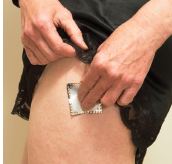
The aim of the current study was to quantify the magnitude of risk reduction for venous thromboembolism events associated with an estradiol transdermal system relative to oral estrogen-only hormone therapy agents. A claims analysis was conducted using the Thomson Reuters MarketScan database from January 2002 to October 2009. Participants included women aged 35 years or older who were newly using an estradiol transdermal system or an oral estrogen-only hormone therapy with two or more dispensings. Venous thromboembolism was defined as one or more diagnosis codes for deep vein thrombosis or pulmonary embolism. Cohorts of estradiol transdermal system and oral estrogen-only hormone therapy were matched. Among the matched estradiol transdermal system and oral estrogen-only hormone therapy users (27 018 women in each group), the mean age of the cohorts was 48.9 years; in each cohort, 6044 (22.4%) and 1788 (6.6%) participants had a hysterectomy and an oophorectomy at baseline, respectively. The incidence of venous thromboembolism was significantly lower in participants receiving an estradiol transdermal system compared to estrogen-only hormone users (unadjusted incidence rate ratio: 0.72; 95% CI: 0.57-0.91; P = 0.006) and this effect remained after adjustment for confounding factors. Menopause. 2011 Oct;18(10):1052-9. PMID: 21775912.
Prenatal smoking exposure is related to the use of psychotropic medication up to young adulthood

This study was conducted to determine the relationship between prenatal smoking exposure and the use of psychotropic medication up to young adulthood. Population-based longitudinal register data consisting of all singletons born in Finland from 1987 to 1989 (n = 175 869) was assessed. Information on maternal smoking was determined during antenatal care and received from the Finnish Medical Birth Register. Information on the children’s psychotropic medication (1994–2007) was received from the Drug Prescription Register and the children’s psychiatric diagnoses related to outpatient (1998–2007) and inpatient (1987–2007) care were derived from the Finnish Hospital Discharge Register. A total of 15.3% of the children were exposed to prenatal smoking. The incidence of psychotropic medication use was 8.3% in unexposed children, 11.3% in children exposed to <10 cigarettes per day (95% CI: 1.29-1.43), and 13.6% in children exposed to >10 cigarettes per day (95% CI: 1.53-1.74). The exposure was significantly associated with the risk for all medication use and for both singleand multiple-drug consumption even after adjustment for possible confounders. These findings show that exposure to smoking during pregnancy is linked to both mild and severe psychiatric morbidity. Am J Epidemiol. 2011 Sep 15;174(6):681-90. PMID: 21821539.
Essential amino acid supplementation improves quality of life in elderly patients

The current study was undertaken to assess the efficacy of supplemented essential amino acids (EAA) on depressive symptoms, nutrition, muscle function, daily physical activity, and health-related quality of life (HRQoL) in institutionalized elderly patients. Forty-one patients (58.5% women; mean age 79.8 years) with sequelae of coronary artery disease (73%) and femoral fracture (34%) were randomly assigned to receive oral EAA (4 grams 2 times a day) or an isocaloric placebo for eight weeks. Before randomization and eight weeks after the protocol started, the following variables were measured: depressive symptoms (Geriatric Depression Scale, GDS), nutritional panel (Mini Nutritional Assessment, MNA; serum albumin and prealbumin levels), muscle strength (Hand Grip, HG), Activity Daily Life (ADL), Quality of Life (SF-36, HRQoL), and amino acid profile. Compared with the placebo group, EAA patients experienced improved nutrition (MNA score p < 0. 04, albumin p < 0.01), GDS (< 0.001), HG (p = 0.001), ADL (p < 0.04), and both physical and mental components of SF-36 (p < 0.002). The authors concluded that oral supplementation with EAA improved several determinants of quality of life in institutionalized elderly patients, including depressive symptoms, nutrition, muscle function, and daily life activity. Clin Nutr. 2011 May 31. PMID: 21636183.
Pfizer Canada is proud to be one of Canada’s top 100 employers
Pfizer Canada Inc. has been selected as one of Canada’s Top 100 Employers for 2012 in a list announced in The Globe and Mail newspaper. Canada’s Top 100 Employers list is based on research conducted by Mediacorp Canada Inc., a publisher specializing in employment-related issues. The competition is based on two main criteria: an organization must be a leader in its industry in attracting and retaining quality employees and that it offers reasonable employment prospects. The editors of the contest reviewed the recruitment histories of more than 75 000 employers across Canada and invited 500 of these to participate in the extensive application process.
A universal CPAP compliance monitoring solution is now available
Umbian Inc. has announced U-Sleep, which is the first commercially available, universal CPAP compliance monitoring solution. U-Sleep monitors CPAP device usage, providing critical daily feedback to CPAP users and sleep specialists. The monitoring of CPAP device usage encourages regular use and subsequently improves the effectiveness of therapy. The current release of U-Sleep supports CPAP devicesfrommultipleleadingmanufacturers and U-Sleep’s flexible design allows usage data to be submitted via multiple methods. Once data is submitted, U-Sleep quickly assesses individual compliance and provides immediate notification of compliance outcomes via email, phone, or text message. For more information on U-Sleep, please visit www.u-sleep.com.
Canada’s future physicians make choices to ensure personal -professional life balance
Data released from the medical student and resident component of the 2010 National Physician Survey (NPS) shows Canada’s future physicians want to work smarter to meet the growing and increasingly complex health care needs of Canadians. Of the nearly 5600 medical students and residents who responded to the 2010 NPS, 53% identified a balance between personal and professional life as the most important factor for a satisfying practice. NPS is Canada’s largest census survey of physicians and physicians-in-training and the data provide meaningful information on attitudes among the country’s present and future physicians toward a wide range of critical issues. For more information and to see the NPS 2010 data and highlights of the results, please go to www. nationalphysiciansurvey.ca.
Bayshore Home Health launches monthly e-newsletter aimed at seniors’ health
Bayshore Home Health officially launched the first edition of its new monthly e-newsletter, Eye on Health. The newsletter is designed to support families and informal caregivers in caring for their elderly loved ones. Each month, Eye on Health will feature a new theme related to seniors’ health and well-being, and offer tips and solutions to help manage health issues and alleviate the stresses associated with caregiving. In the not so distant future, seniors will comprise 13% of the Canadian population, with Statistics Canada predicting that by 2026 this will increase to 21%. As seniors become a greater proportion of the Canadian population, arthritis and other common diseases will become more prevalent if the necessary preventative steps are not taken. To access and subscribe to editions of Eye on Health, please visit www.bayshore.ca.
Crib bumper pads a risk for sleeping babies
Once thought to protect babies from injury, bumper pads on cribs may lead to suffocation, according to new guidelines for sleeping babies released by the American Academy of Pediatrics. They caution against lining cribs with the protective cushion, saying that there is no evidence that bumper pads prevent injuries. The guidelines also recommend soft objects and loose bedding, such as quilts and pillows, not be kept in cribs and that babies should sleep on a firm surface and should sleep in the same room as parents, but not in the same bed. In addition, the guidelines state that infants should not regularly have routine sleep time in sitting devices such as car seats and strollers and should not sleep in a bed where they might suffocate. A series of 18 recommendations from the academy are intended to help guide parents, health care providers, and others who care for infants following an increase in sleep- related deaths over the last few years. The expanded recommendations aim to reduce the risk of sudden infant death syndrome, suffocation, entrapment, and asphyxia.
MD Physician Services responds to Healthscreen client requests
MD Physician Services Software announced that it is introducing an electronic medical record (EMR) Migration Support Program in Ontario to financially assist physicians transitioning from their current EMR system to PS Suite® EMR. MD is waiving migration fees and will not be charging upfront licence fees. Migration will include all clinical and demographic data ensuring minimal impact to physicians’ practices and patient care. In addition, MD is providing free clinical workflow consulting and system assessment. The EMR Migration Support Program is available until December 31, 2011. Ontario physicians interested in participating can contact MD at 1-800- 361-9151 or visit md.cma.ca/emr.
Challenge to accelerate clinical value using technology
Canada Health Infoway (Infoway) has launched its ImagineNation Outcomes Challenge, which will accelerate the use of innovative IT solutions with the potential to improve healthcare quality and the patient experience. “The ImagineNation Outcomes Challenge taps into the desire of Canadians and their clinicians to develop and spread innovations that improve healthcare,”saidRichardAlvarez,President and CEO, Canada Health Infoway. The Outcomes Challenge offers more than $1 000 000 in awards to teams whose solutions are used most and those with the strongest growth in users in any of the four Challenge categories: 1) e-scheduling; 2) patient access to health information; 3) medication reconciliation; and 4) clinical synoptic reporting. Challenges are a good way of eliciting and spreading innovation. Infoway has committed to engage in open challenges to encourage broader innovation in a cost-effective and timely way, while fostering a community of innovators across the country. To learn more, visit http:// www.imaginenationchallenge.ca.