




All In Nutritionals
Home Blog Page 308

Where are they now: Jimmy Vaid, iLevel Management Inc.

0
Where are they now: Jimmy Vaid

Jimmy Vaid had a rather unconventional start in the natural products industry, though starting his own brokerage firm was not a far cry from his accounting background.

While working for a family-run seafood company, he was asked to join them in their dream of launching a product into the natural and organic industry, though Vaid was inexperienced with natural foods. It turns out the move was a good one for him, as he was able to learn all the facets of the business ranging from research and development, production, packaging, marketing, sales, logistics and distribution.

Vaid counts himself lucky that his accounting background prepared him so well for his newfound experience in the natural products industry, giving him a solid foundation of knowledge that allowed him to grow to where he is today.

After getting started in the industry over 15 years ago, Vaid knows that everything he learned in the past brought him to the point he is at now, owning his own brand management company, which has recently celebrated its first year in business.

“Learning and growing over the past 15-plus years has allowed me to start this business with a level of experience in all functions, which was a major bonus. That is the reason I have been able to grow this business over its first year,” he says.

Vaid had wanted to start his own brokerage firm for years. When it got up and running, he took iLevel Management in a new direction by taking on a few clients at a time and doing it well.

“We have a view that you can’t be everything to everyone, so we only work with brands we believe in. Further, we aren’t looking to take on multiple brands and overload our sales staff,” says Vaid.

If Vaid has any advice for someone entering this industry, it would be to stay agile. “Don’t be afraid of change and challenging the norm. Just because it has been done a certain way, that doesn’t mean you can’t improve on it,” he advises.

Vaid does not view other brokerages as competition in the natural products industry, instead choosing to band together to win customers from the more mainstream channels.

“We try not to get caught up in the competition side of things. We are still a small industry with lots of room to grow,” he says. “It is better for us to focus on growing as a whole and taking our market share from the conventional side, versus trying to split the small piece we share.”

Vaid’s thoughts on regulations are pragmatic and his company works hard to adhere to them. “Although they are tough, they are needed and it helps to keep companies honest. To understand them fully we usually work with consultants that specialize in regulations,” he says. “This relates to what makes us different. We know what we know and when we don’t, we use people that do. There is no point in spinning your tires.”

Vaid notes that it is very important to keep informed about what is happening outside of the business. “As the marketplace shifts, we look at how we can shift and be in a position to capitalize on it rather than being a step behind. That is one of the reasons we are launching a new customized customer relations management tool,” he says.

When asked why so many people who are unfamiliar with the natural products industry are getting more involved in it, Vaid believes that since the industry is growing, people from the outside must be brought in to accommodate that growth, and those new additions may have a different set of skills than those in the industry are used to. Since the industry is growing as a whole, the major players are taking notice and have realized that to stay relevant, they must be involved, since natural and organics seem to be here to stay.

“With them getting involved, it is a bit of a double edged sword. On one hand, there is an influx of players and the industry grows, yet you also have the influx of people and corporations that sometimes don’t understand that our industry has a lot of nuances that you can’t just sweep away,” says Vaid. “These big players are also able to bring in new products that are innovative and help bring the costs down (as they get great economies of scale), which for the consumers is great as it makes the products affordable. That in turn helps the industry continue to grow, thus allowing our retailers to flourish with increased sales.”

Vaid is not worried about those new additions, however. “It’s a cycle that is great and that is where brokers like iLevel Management help, as we understand the industry and can help bridge the gaps. (https://thecenturionreport.com) ”


Jennifer Hyde joins the Ontario Natural Food Co-op

0
Jennifer Hyde joins the Ontario Natural Food Co-op

The Ontario Natural Food Co-op (ONFC) has hired Jennifer Hyde as its new Private Label Brand Manager.  She brings over eight years of marketing and brand management experience to her new role, and was most recently a Product Manager with Organic Meadow.

In her new position, Jennifer will manage the entire marketing life cycle of ONFC’s Private Label portfolio, which will include strategic marketing initiatives and day-to-day activities. As the company’s private label brand manager, Jennifer will work alongside the purchasing and sales teams, buying clubs, retailers, vendors and customers.

For more information on the ONFC, please visit www.ontarionatural.ca.

Wal-Mart to focus on small-scale stores and e-commerce

0
Walmart launches Grab & Go service across Ontario

Wal-Mart showed in its second quarter earnings that its U.S. division has had declining traffic for seven quarters in a row, lacking sales growth for six. However, the company is investing in its small-scale stores and e-commerce. Same-store sales had a 5.6 per cent increase and a 4.1 per cent traffic growth at Wal-Mart’s Neighbourhood Markets. These smaller stores are located in urban areas and take up one third of the space of the supercentre stores.

“We’re encouraged by the performance of our small-format stores and e-commerce, areas where we’re investing significantly this year. But we wanted to see stronger comps overall in Walmart U.S.,” Wal-Mart chief executive Doug McMillon said in an official statement last week.

Wal-Mart has plans to open 180 to 200 more Neighbourhood Market stores within this year to add to the already existing 22 from the last quarter.

Target Canada to develop expansion and guest experience

0
Target's U.S. stores achieve better-than-expected profits

Target Canada has announced plans to improve its Canadian expansion and provide a better guest experience for customers following the administrative changes last spring. The chain retailer has several merchandise initiatives in the works, including a collaboration with celebrity designer Sarah Richardson. The new line with Richardson will consist of home décor to be sold exclusively at Target Canada in the fall of next year.

“We’ve been listening to our guests and taking a hard look at where we need to improve,” Target Canada President Mark Schindele told The Washington Post. “We’ve uncovered the root cause of some of our challenges and are focused on three main areas: improving in-stocks, sharpening our pricing strategy and enhancing our merchandise assortment.”

Target Canada has also teamed up with Roots to extend the Beaver Canoe line with home décor and new apparel for this fall. Some new fashion brands such as women’s wear brand Nick & Nora and Altuzarra for Target will be available in Target Canada stores soon, including a new line for plus sizes, and a new line from cosmetic brand e.l.f., among others.

E-commerce on mobile devices shows room to grow

0
E-commerce on mobile devices shows room to grow

A recent report by ShopVisible shows that 38 per cent of all e-commerce traffic came from mobile and tablet devices for the first half of this year. Companies on ShopVisible had an online sales increase of 18 per cent overall, with a 42 per cent increase for June specifically. While there has been a continuous increase of mobile device use for the website, the study showed that there is room for customers to adapt fully to mobile and tablet use for ecommerce purchases. The report showed that average order values were lower on mobile devices than those on a traditional desktop or laptop.

ShopVisible credits the increase to the effort that has gone into increasing site optimization, marketing, and data-driven merchandising. 67 per cent of the visits on the website were from first time visitors, with an overall traffic increase of nine per cent.


Survey shows Canadians prefer healthy diet

0
Survey shows Canadians prefer healthy diet

According to a recent survey by Catelli Foods, a growing number of Canadians are embracing a healthy diet made from wholesome diets like Catelli’s recently relaunched Healthy Harvest brand. The brand features products made from 100 per cent whole grain wheat.

The survey’s results showed that 95 per cent of the 16,000 participants have been making healthier food choices than they were five years ago. 54 per cent of the participants expressed that they felt more vibrant and happier when consuming healthy food.

“We do these kinds of surveys all the time in order to understand new trends and to help us better market our products,” Catelli’s marketing director Sandra Kim told Canadian Grocer. “But this one provides insights that we thought consumers would find interesting, and part of our (goal) is to engage consumers.”


The number of farmer’s markets in Canada is rising

0
The number of farmer's markets in Canada is rising

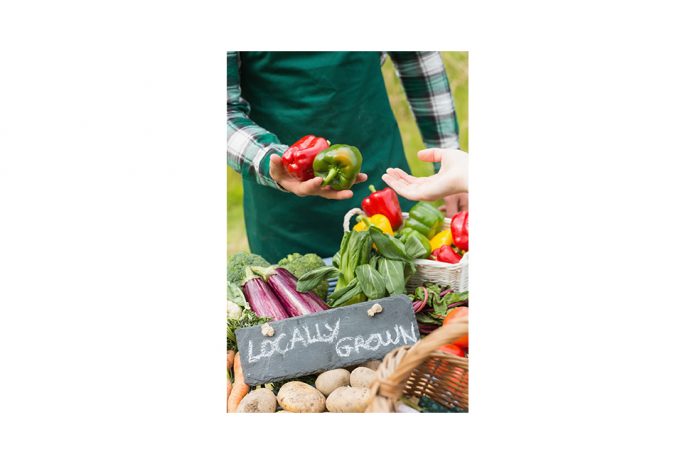
Farmers’ markets are popping up all over America. According to the U.S. Department of Agriculture (USDA), there are more than 8,200 farmers’ markets operating in the country today, a 76 percent increase since 2008.

The number of farmers’ markets in Canada has increased substantially as well. In Ontario alone, the number of farmers’ markets has increased by three times since 1980. In 2008, there were 508 recognized farmers’ markets across Canada, and according to Farmers Markets Canada, that number grows by five to seven per cent each year. This year, there are approximately 635 farmers’ markets in Canada.

In 2009, Farmers’ Markets Canada conducted its National Farmers’ Market Impact Study, which involved farmers’ markets from every province, making it the most comprehensive study of farmers’ markets ever conducted in North America.

508 markets took part in the study and accounted for estimated sales worth $1.03 billion and an economic impact of $1.55 to $3.09 billion per year. That averages to approximately 28 million shippers spending an average of $32 per visit.

“The success of farmer’s markets can be attributed to a number of factors,” says Robert Chorney, chair of Farmers’ Markets Canada. “Consumers have expressed a clear desire to return to healthier, fresher, locally produced products. They have a strong belief in the integrity of shopping within their community. And, over 60 per cent of shoppers indicated that buying their food directly from a local farmer is extremely important to them.”

Target extends store hours at some U.S. locations

0
Target's U.S. stores achieve better-than-expected profits

To remain competitive in the ongoing battle against online retailers, over half of U.S Target stores will stay open until midnight to win over late-night shoppers.

While previously, most Target stores closed at 10 p.m. Monday through Saturday and 9 p.m. on Sunday, this would apply to store hours on weeknights, according to the Wall Street Journal.

According to a U.S. Labor Department survey, 0.3 per cent of customers prefer to shop after 10 p.m. and Target hopes to attract these customers over online retailers.

Among other recent changes made by the company, it recently cut prices as well as its yearly outlook following declining same-store sales.


Metro appoints Carmen Fortino as its new senior vice-president

0
Metro appoints Carmen Fortino as its new senior vice-president

Carmen Fortino has been named Metro’s senior vice-president and leader of its Ontario division, effective Sept. 2. He steps into the role that was vacated by Johanne Choinière in April of this year. Metro CEO Eric La Flèche made the announcement during a conference call.

Fortino is a former Loblaw executive, where he served as executive vice-president of the Ontario region. He has also held executive positions at Seroyal International, Atrium Innovations, and most recently at GNC Holdings Inc. as its executive vice-president of business development.

“Carmen is a seasoned operator with a broad experience in all facets of food retail, and more recently in the health and wellness sector internationally,” says La Flèche. “I look forward to working with Carmen and our Ontario executive team to build on the momentum we’re seeing in the business today.”

MaraNatha and Trader Joe’s peanut and almond butters are recalled due to possible salmonella contamination

0
MaraNatha and Trader Joe’s peanut and almond butters are recalled due to possible salmonella contamination

The Canadian Food Inspection Agency has issued a recall on August 18 for two brands of peanut and almond butters due to a possible salmonella contamination.

The recall is for nearly 12 almond and peanut butters under the brand names MaraNatha and Trader Joe’s, which may be responsible for four illnesses in the United States, although no illnesses have been reported in Canada.

The almond and peanut butters in question have been sold in Canada, the U.S., the Dominican Republic, Hong Kong and the United Arab Emirates. The products should be thrown out or returned to the store where they were purchased.

According to the CFIA, salmonella-contaminated food may not appear spoiled, yet can still cause illness, especially in young children, pregnant women, the elderly, and those with weakened immune systems. Short-term symptoms of salmonella poisoning include fever, headache, vomiting, nausea, abdominal cramps and diarrhea. Salmonella can also cause long-term symptoms such as severe arthritis.