All In Nutritionals
Home Blog Page 249

Loblaw union contract settlement cancels all strikes

0
United Biopharmaceuticals Inc. announces partnership with Naturally Perfect Consulting

Employees from 69 Loblaw-owned stores in Ontario have accepted a six-year contract offer from Loblaw Companies Ltd. and have ended the strikes that commenced in nine stores from Ottawa to Windsor on July 2.

[blockquote style=”center” color=”#1a1818″ bg_color=”#f7f2f2″ border_color=”#c42020″]In a press release statement, Loblaw Companies Ltd. says, “In a competitive market, the terms of the contract provide both our colleagues and our company a fair deal and security. Ultimately, it sets the stage for an even stronger relationship.”[/blockquote]

According to a PR Newswire press release, the Real Canadian Superstore, Zehrs Great Food and Loblaws Great Food locations were represented by United Food and Commercial Workers union along with locals UFCW 1000A and UFCW 175 & 633.


MasterCard launches offensive in m-commerce

0
MasterCard launches offensive in m-commerce

The payment processor is now adding food-ordering apps to its range of consumer-focused mobile solutions in the field of digital payments platform.

Marketing Magazine got a closer look at a demo held by MasterCard‘s innovation labs team testing in Canada and around the world.

The demo showed off Qkr (pronounced “quicker”), as a food-ordering app that is currently under testing in sections of Air Canada Centre in Toronto. With this app, patrons can place an order for a hot dog or a beer using their phones.


MORE INDUSTRY NEWS


The prepared order is delivered to the seat identified by the customer or by scanning a QR code present on the ticket.

The Qkr app is free and there are no charges on transactions for vendors or consumers. The assumption is that people ordering food from their seats tend to eat more, which leads to more food being ordered.

The ultimate goal MasterCard wants to achieve with Qkr is to introduce sports goers to its digital wallet known as MasterPass, which is incidentally already incorporated in the app.

Walmart Canada introduces grocery pickup option for online shoppers in Ottawa

0
Walmart Canada introduces grocery pickup option for online shoppers in Ottawa

For a $3 fee, Walmart store staff with put together a grocery package you order online to be picked up when you want.

Last week, the retail giant made available to its Ottawa customers, the option to set up a pickup package. The service will be made available at other locations if there is demand for it.

Walmart says the service costs $3 and customers must place an order for a minimum of $50 and at least one day ahead of planned pickup.


MORE INDUSTRY NEWS


Walmart’s senior vice president, ecommerce, says the company wants to make it convenient for customers to do their grocery shopping while at work or waiting at the doctor’s.

Walmart is following suit after other companies such as Loblaw and Amazon Canada launched similar operations. Loblaw added its “Click and Collect” service at three stores in Toronto last October, while Amazon Canada currently offer delivery for a selection of dried goods with AmazonFresh available only in a limited number of U.S. markets.

Online sales of fresh food currently represent only a small percentage of grocery ecommerce sales in Canada, Retail Prophet’s founder, Doug Stephens believes it is a trend that will soon catch on.


Grocery wars could be heating up again with Overwaitea expanding eastward

0
Grocery wars could be heating up again with Overwaitea expanding eastward

The B.C.-based retailer, Overwaitea Food Group, plans on opening 40 stores in Manitoba and Saskatchewan in the next three to five years pushing its Save-on-Foods banner further east.

The expansion will begin with seven stores set to launch in the spring of 2016 in Winnipeg, Manitoba and Regina, Saskatoon, Yorkton and Moose Jaw in Saskatchewan.


MORE INDUSTRY NEWS


Owned by billionaire Jimmy Pattison, the group currently runs 145 stores in British Columbia and Alberta.

In an interview to the Financial Post, president of Overwaitea Food Group, Darrell Jones, said that the company would like to focus on communities where they plan to grow and that is what makes them stand apart from their competitors.

This move leads to speculation whether Metro Inc., Canada’s third-largest grocery chain will step up to acquire Overwaitea as a way of making an entry into the western provinces.

These speculations ran high after Sobeys acquired Canada Safeway in 2013 for $5.8 billion. However, Jones says this is currently only speculation and does not seem likely to become a reality any time soon.

New CEO for Walgreens Boots Alliance

0
New CEO for Walgreens Boots Alliance

Stefano Pessina has been named the new CEO of Walgreens Boots Alliance moving him from the interim position to a permanent one.

Pessina, who is a Monaco resident, had led the European-based Alliance Boots as its executive chairman before he put together a deal with Walgreens Co. in the U.S.A.


MORE INDUSTRY NEWS


As a result, Walgreens Boots Alliance became the biggest competitor for CVS Health Corp. and Rite Aid Corp., who have recently struck up partnerships with Target and UnitedHealth Group Inc. respectively.

Currently, Walgreens Boots Alliance Inc. runs more than 13,200 stores and 350 distribution centres in 11 countries. This widespread influence gives the company great benefit when it comes to negotiating prices for healthcare products and medicine.

In addition to this announcement, Walgreens Boots Alliance declared that it has earned $1.71 billion in its fiscal third quarter. Analysts at Zacks Investment Research forecast an average earning of 87 cents per share.

Sex Hormones & Gastrointestinal Health

0

Introduction


Numerous studies exist highlighting the impact of hormonal changes during pregnancy on various gastrointestinal conditions, including improvement in irritable bowel syndrome (IBS) and aggravations in constipation. Epidemiologically there is a variation in digestive concerns between men and women, with higher rates of IBS, inflammatory bowel disease (IBD), gallstones affecting women and higher rates of gastric ulcer and gastric cancers occurring in men.


The sex hormones discussed in this narrative include testosterone, estrogen and progesterone. Estrogen and progesterone are secreted predominantly from the ovaries, though recent studies report local production and effect of estrogen in other areas of the body, far removed from the reproductive system. Estradiol receptor β (ERβ) is found in enteric nerve cells as well as colonic smooth muscle cells suggesting estradiol, the more potent type of estrogen, may regulate intestinal motility. ERβ is linked to Na+/H+ exchanger protein in membranes of cells of the proximal colon; where 17β-estradiol (E2) stimulates its upregulation resulting in changes in water balance, potentially influencing the consistency of stool. Progesterone may also indirectly contribute to intestinal motility regulation through cytokine and prostaglandin release. The impact of testosterone, produced in Leydig cells of the testes, on intestinal motility is less known (Wang 2009).


This narrative will explore the impact that sex hormones have on several gastrointestinal conditions as well as examine the physiological processes underlying these connections, including impact on the gut immune system, microbiota and digestive hormone secretion.


Gastric Ulcers


Gastric ulcers are sores or openings in the inner lining of the stomach which typically produce symptoms of epigastric pain, nausea, frequent bouts of hunger and possible weight loss. Ulcers are more prevalent in men than women, and according to an animal study by Machowaska et al (2004) may be aggravated by testosterone. The administration of testosterone significantly reduced blood flow to the ulcerated area, prevented gastrin release (a peptide with protective and healing properties), and increased the release of a pro-inflammatory cytokine, interleukin 1-β. In the study conducted by Drago (1999) removal of testosterone, by way of testectomy, improved healing time of gastric ulcres. Interestingly, the administration of progesterone had the same effects. Manipulating estrogen did not yield clear results as E2 was reported to have pro-ulcerogenic effects in one study (Drago 1999) and protective effects in another (Smith 2008).


Inflammatory Bowel Disease (IBD)


IBD is a chronic inflammatory condition that involves various parts of the gastrointestinal tract and produces symptoms of bloody diarrhea, abdominal pain, reduced appetite and low grade fever. Ulcerative colitis (UC) and Crohn’s disease are examples of this condition and are more prevalent in women than men. Dehydroepiandrosterone (DHEA), a precursor to several sex hormones, has been shown to be reduced in patients with IBD. This may contribute to the pathogenesis as DHEA has direct anti-inflammatory properties. What leads to low DHEA levels and whether its reduction leads to alternations in testosterone and E2, its downstream metabolites, is unclear. The administration of DHEA appears to offer protection as demonstrated in a pilot study by Andus et al (2003). Twenty participants with UC and Crohn’s were supplemented with 200mg DHEA once/day for 56 days. Supplementation resulted in clinically significant improvement in both groups with 6 of 7 patients with Crohn’s and 6 of 13 patients with UC achieving remission and a decrease in blood diarrhea, abdominal pain and liquid stools. No masculinization effects were observed.


Irritable Bowel Syndrome (IBS)


IBS is defined as a sensory-motor disorder of the digestive tract with symptoms of abdominal pain and alternating bowel habits, ranging from constipation to diarrhea. Prevalence of IBS varies between 3:1 and 5:1 depending on the clinical setting, with higher rates in female patients (Mulak 2014). The hormonal influence is evident as symptoms of IBS change throughout the menstrual cycle and respond to oral contraceptive and hormone replacement therapies. Their mechanism of influence is believed to be through changes in gastrointestinal transit time, visceral hypersensitivity and gut permeability. Estrogen has an inhibitory effect on colonic contractility resulting in slower transit time, while progesterone appears to have dual function, with high dose reducing motility and low dose administration increasing motility. Fluctuations of progesterone throughout the menstrual cycle could play a role in the alternating constipation and diarrhea symptoms seen with IBS. Animal studies examining abdominal pain sensitivity report similar dual impact from estradiol with standard dose causing hypersensitivity and high dose resulting in anti-nociception.


Maintenance of an intact intestinal barrier is important in water balance, immune defense, healthy absorption and other digestive functions. A decrease in intestinal permeability has been reported with estradiol supplementation, as well as BPA and soy exposure, suggesting a protective role of estrogen in gut barrier maintenance (Meleine 2014). While there are several plausible physiological explanations for the hormonal impact on IBS, the exact mechanism remains to be defined.


Gallbladder Disease


Gallstones, in particular stones predominantly made of cholesterol, occur twice as frequently in women than men and are believed to be promoted by estrogen. Oral contraceptives and conjugated estrogen hormone replacement therapy both result in increased cholesterol gallstone formation, with similar impact demonstrated in men receiving estrogen for prostatic cancer therapy (Wang 2009). E2 promotes lithiasis (stone formation) by upregulating the expression of ESR1 in the liver. This results in increased secretion of cholesterol and supersaturation of bile. Conversely, progesterone has been demonstrated to reduce gallbladder emptying time resulting in stasis, which can further promote lithiasis (Tierney 1999). It is interesting that soy, a phytoestrogen, has been demonstrated to reduce the cholesterol content of gallstones (Tomotake 2000), though its effect may be independent of its estrogenic-like activity.


Colon Polyps


Colon polyps are produced from a local overgrowth of colonic cells and are typically asymptomatic. The frequency of colonic polyps, also known as adenomas, is higher in men and their onset is earlier. Amos-Landgraf et al (2014) examined the role of testosterone and estrogen on the formation of adenomas in an animal study. The removal of estrogen, by ovariectomy, did not impact the formation frequency in female rats, while orchiectomy yielded a significantly protective effect on adenomas, which was reversed with testosterone supplementation. As there were no androgen receptors found in the tumors, testosterone is thought to have indirect impact on adenomagenesis. This impact may occur through the modification of gut microbiota, which has been demonstrated to be different between men and women and responsive to hormonal changes (Yurkovetrskiy 2013).


Colorectal Cancer (CRC)


Estrogen has been linked to not only reproductive cancers, such as breast and uterine, but also non-reproductive cancers like colorectal cancer. The connection between hormones and CRC has been supported by the Women’s Health Initiative observation study that demonstrated a 30% reduction in CRC incidence in post-menopausal women receiving hormone replacement therapy (HRT) (Caizza 2015). The protective mechanism of HRT appears to be dependent on the estrogen-receptor β (ERβ). Studies examining animals without the ERβ (genetic knock-outs) demonstrate increased hyperproliferation of colonic cells, loss of differentiation and reduced apoptosis, all of which predispose to carcinogenesis. Clinically, ERβ can be present in both healthy and cancerous cells, with advanced cancer cells demonstrating a reduction and/or complete loss of ERβ. Additionally, the lack of ERβ within cancer cells (ERβ negative status) is associated with a poorer prognosis.


Xenoestrogens, which are endocrine disruptors with estrogen-like effects, have been implicated in colon carcinogenesis. Bisphenol A (BPA) has been demonstrated to have anti-estradiol activity preventing the apoptosis of colon cancer cells in an in vitro study (Marino 2014). On a positive note, flavonoids that act on the ERβ, such as quercetin and naringenin have been shown to have an anti-colon cancer effect, also demonstrated in vitro (Marino 2014).


Conclusion


While the full extent of the role that sex hormones play in gastrointestinal health remains to be further explored, their possible contribution to gastrointestinal pathology presents a new target for therapeutic interventions. Clinically exploring the connection between sex hormones and gastrointestinal health in patient care may yield additional therapeutic approaches and interventions that may not have been considered otherwise.


References


Amos-Landgraf JM, Hejimans J, Wielenga MC, Dunkin E, Krentx KJ, Clipson L et al. Sex disparity in colonic adenomagenesis involves promotion by male hormones, not protection by female hormones. Proc Natl Acad Sci USA. 2014 Nov; 111(46): 16514-9


Andus T, Klebl F, Rogler G, Bregenzer N, Scholmerich J, Straub RH. Patients with refractory Crohn’s disease or ulcerative colitits respond to dehydroepiandrosterone: a pilot study. Aliment Pharmacol Ther. 2003 Feb; 17(3): 409-14


Caiazza F, Ryan EJ, Doherty G, Winter DC, Sheahan K. Estrogen receptors and their implications in colorectal carcinogenesis. Front Oncol 2015 Feb 2; 19


Machowska A, Szlachcic A, Pawlik M, Brzozowski T, Konturek SJ, Pawlik WW. The role of female and male sex hromones in the healing process of preexisting ligual and gastric ulcerations. J Physiol Pharmacol 2004 Jul; 55 Supp 2: 91-104


Marino M. Xenoestrogens challenge 17Beta-estradiol protective effects in colon cancer. World J Gastrointest Oncol. 2014 May; 6(3): 67-73


Meleine M, Matricon J. Gender-related differences in irritable bowel syndrome: potential mechanisms of sex hormones. World J Gastroenterol. 2014 Jun; 20(22): 6725-43


Mulak A, Tache Y, Larauche M. Sex hormones in the modulation of irritable bowel syndrome. World J Gastroenterol. 2014 Mar; 20(10): 2433-48


Smith A, Contreras C, Ko KH, Chow J, Dong X, Tuo B, Zhang HH, Chen DB, Dong H. Gender-specific protection of estrogen against gastric acid-induced duodenal injury: stimulation of duodenal mucosal bicarbonate secretion. Endorcrinology. 2008 Sep; 149(9): 4554-66


Tierney S, Nakeeb A, Wong O, Lipsett PA, Sostre S, Pitt HA, Lillemoe KD. Progesterone alters biliary flow dynamics. Ann Surg. 1999 Feb; 229(2): 205-9


Wang HH, Liu M, Clegg DJ, Portincasa P, Wang DQ. New insights into the molecular mechanisms underlying effects of estrogen on cholesterol gallstone formation. Biochim Biophys Acta. 2009 Nov; 1791(11): 1037-47


Yurkovetskiy L, Burrows M, et al. Gender bias in autoimmunity is influenced by microbiota. Immunity. 2013 Aug; 13(1): 400-12


 

Naturopathic Medicine Week

0

The week of May 11 to May 17, naturopathic doctors across Canada were conducting free public events to share their knowledge on health benefits of naturopathic medicine and natural approaches to health promotion and disease prevention. Presentations were focused, but not limited to stress reduction, digestive health, fertility, women’s, men’s and children health. Held annually since 1999, Naturopathic Medicine Week is a national initiative, co-ordinated by the Canadian Association of Naturopathic Doctors.


“Naturopathic Medicine Week is a national initiative started by the Canadian Association of Naturopathic Doctors,” says Karamjit Singh, media and community relations officer with the Canadian College of Naturopathic Medicine. “It is an excellent opportunity for naturopathic doctors in Canada to promote naturopathic medicine in their communities and educate people who are still on the fence when it comes to naturopathic medicine.”


Fertility and Reproductive Health Focus Initiative

Canadian College of Naturopathic Medicine

Presented by Dr. Christina Meffe

1 IMG_8649web

 
On May 12, IHP Magazine had the pleasure of attending Fertility and Reproductive Health Focus Initiative – a free information session held by the Canadian College of Naturopathic Medicine as a part of Naturopathic Medicine Week.


According to the session presenter Dr. Cristina Meffe, unfortunately, general public doesn’t have enough information on the benefits of naturopathic medicine, though “the situation is becoming a lot better than it used to be.”


“I am doing a lecture to predominantly let patients know about the new focus shift that we have, giving them very basic information on causes of fertility issues – both from the sort of conventional perspective and naturopathic perspective – and educating them a bit about the naturopathic medicine in general and how we can help them with fertility issues,” Dr. Meffe said in her interview with IHP Magazine.


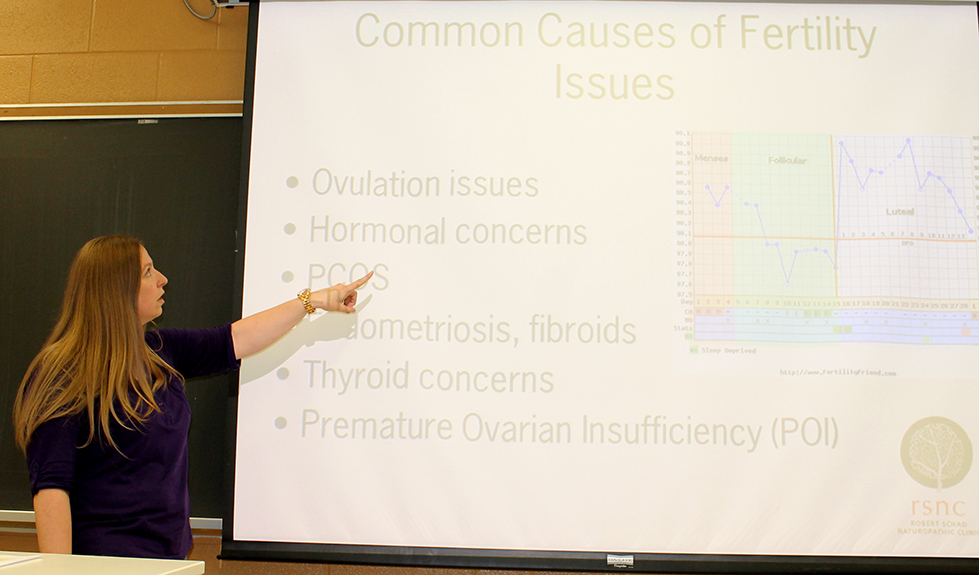
1 IMG_8662webAccording to Statistics Canada, the number of couples experiencing infertility issues has doubled since the 1980s. Today, roughly one in six Canadian couples has difficulties getting pregnant. With statistics being so discouraging, naturopathic doctors work with natural treatment modalities to address the needs of patients struggling with fertility issues. As Dr. Meffe mentioned during her lecture, she doesn’t think of infertility as a diagnosis, but rather as a symptom of other underlying health problems, such as ovulation issues, hormonal or thyroid concerns, PCOS, sperm and testicular problems. Dr. Meffe uses a wide variety of treatment methods, such as diet, nutrition and lifestyle counseling, botanical medicine, homeopathy, hydrotherapy, traditional Chinese medicine and acupuncture to help couples experience the joy of parenthood.


The information session was held in a very friendly and informal atmosphere with Dr. Meffe answering multiple questions from those in attendance.


TEA with an ND

Integrative Health Institute

Presented by Dr. Jen Newell and Dr. Shannon Vander Doelen

IMG_8694web

On May 15, IHP Magazine had the pleasure to attend a tea party at the Integrative Health Institute (IHI) in Toronto to celebrate Naturopathic Medicine Week. IHI naturopathic doctors Jen Newell and Shannon Vander Doelen were talking about different tea ingredients and answering questions about naturopathic medicine and natural therapies.


“Regardless of the fact that many people drink coffee, there is always a place for tea, and tea has such a medicinal benefit that you can add in different herbs or tinctures, or infusions in ways that it’s easy to incorporate enormous medicinal benefit into your life,” says Dr. Newell. “You can really choose the type of tea or an infusion that your body needs at any given time. So today we will talk about four different types and the uses for them, a lot of ways on how you can integrate tea into your therapeutic protocol.”


IMG_8705webAbout ten people in attendance had a chance to learn about the health benefits of four types of tea: Shiitake mushrooms, dandelion and rose hip tea, red raspberry leaf tea, spearmint and peppermint teas.


According to Dr. Newell, a lot of people are drinking tea on a regular basis and sometimes, to get the most benefits, it’s just about tweaking the tea you are drinking.


“I always ask people to look for clean sources that are organic, that are wild-sourced, so you are not getting teas that have been commercially grown and sprayed with chemicals,” Dr. Newell recommends. “Find the teas that you like the taste of. If you absolutely hate the taste of it, the cost benefit is not really there because that therapeutic aspect of tea is also the ritual where you are sitting and enjoying and relaxing is a part of that process.”


Santa Cruz Group acquires Life Science Nutritionals

0
Vitality hires new directors at the annual general meeting

On Tuesday, June 30th, Life Science Nutritionals was sold to Santa Cruz Nutritionals, one of the leading suppliers of confection-based nutritional delivery.

As Canada’s only manufacturer of vitamin gummies, Life Science adds a “great portfolio of brands including IronKids and Adult Essentials” as well as “innovative and different technology in the gummy space” to Santa Cruz Nutritionals, says Rob Lewis, previous vice-president of sales for Life Science.


MORE INDUSTRY NEWS


Founded in 2005 by Stuart Lowther, Life Science is dedicated to developing nutritional products with unparalleled quality that benefit the health of all consumers. The corporation was recently named the second fastest growing company on the Canadian 2014 Profit 500 ranking.

Claude Daigneault of the Jean Coutu Group Inc. retires

0
Claude Daigneault of the Jean Coutu Group Inc. retires

Claude Daigneault of The Jean Coutu Group (PJC) Inc., has retired from his position as buyer last Friday, July 3rd. Marie Christine Roy has taken over as his replacement.


MORE INDUSTRY NEWS


The Jean Coutu Group is one of the most trusted names in Canadian pharmacy retailing, operating out of 416 franchised stores in Quebec, New Brunswick and Ontario. For more information on the business, visit their company website.

A new role for zebrafish: larger scale gene function studies

0

A relatively new method of targeting specific DNA sequences in zebrafish could dramatically accelerate the discovery of gene function and the identification of disease genes in humans, according to scientists at the National Human Genome Research Institute (NHGRI), part of the National Institutes of Health.


In a study posted online on June 5, 2015, and to be published in the July 2015 issue of Genome Research, the researchers reported that the gene-editing technology known as CRISPR/Cas9 is six times more effective than other techniques at homing in on target genes and inserting or deleting specific sequences. The study also demonstrated that the CRISPR/Cas9 method can be used in a “multiplexed” fashion – that is, targeting and mutating multiple genes at the same time to determine their functions.


“It was shown about a year ago that CRISPR can knock out a gene quickly,” said Shawn Burgess, Ph.D., a senior investigator with NHGRI’s Translational and Functional Genomics Branch and head of the Developmental Genomics Section. “What we have done is to establish an entire pipeline for knocking out many genes and testing their function quickly in a vertebrate model.” Researchers often try to determine the role of a gene by knocking it out – turning it off or removing it – and watching the potential effects on an organism lacking it.


Such larger scale – termed high-throughput – gene targeting in an animal model could be particularly useful for human genomic research. Only 10 to 20 per cent of recognized human genes have been subjected to such rigorous testing, Dr. Burgess said. The functions of many other genes have been inferred based on analyzing proteins or have been identified as possible disease genes, but the functions of those genes have not been confirmed by knocking them out in animal models and seeing what happens.


“This is a way to do that on a more cost-efficient and large scale,” Dr. Burgess said.


“The study of zebrafish has already led to advances in our understanding of cancer and other human diseases,” said NHGRI Director Eric Green, M.D., Ph.D. “We anticipate that the techniques developed by NHGRI researchers will accelerate understanding the biological function of specific genes and the role they play in human genetic diseases.”


The CRISPR/Cas9 method of gene editing is one of the two essential components in the NHGRI team’s high-throughput method. Modeled on a defense mechanism evolved by bacteria against viruses, CRISPR/Cas9 activity was first described in 2012. Since then, its use has spread quickly in genomic research labs in the United States and abroad.


The acronym CRISPR stands for “clustered, regularly interspaced, short palindromic repeat,” referring to a pattern of DNA sequences that appears frequently in bacterial DNA. Scientists believe the CRISPR sequences reflect evolutionary responses to past viral attacks.


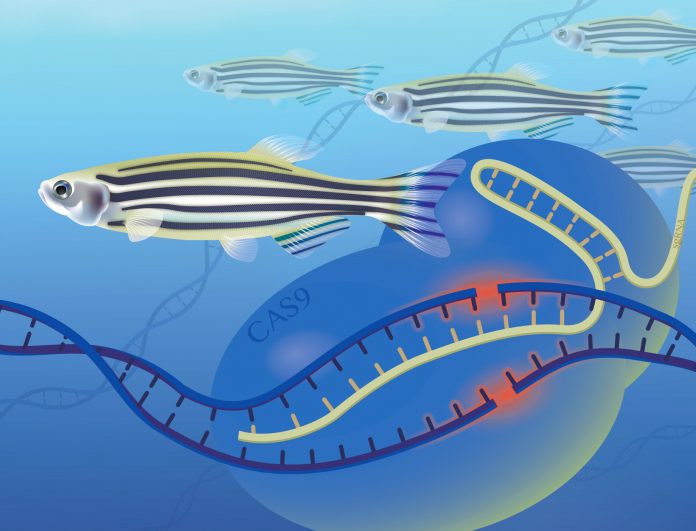
The Cas9 protein is a nuclease, an enzyme that snips a stretch of DNA in two places, in effect cutting out a piece. Bound together, CRISPR/Cas9 becomes a powerful research tool that permits researchers to target and delete a particular sequence or to insert a new sequence into the DNA of animal-model embryos.


The other essential component of the NHGRI team’s method is the zebrafish. The zebrafish and the mouse are the most commonly studied vertebrate laboratory animals whose genomes have been completely sequenced. The zebrafish is better suited to larger scale gene editing because about 70 per cent of zebrafish genes appear to have human counterparts and the fish are far less costly to maintain than are mice. They multiply astonishingly quickly; a female may produce as many as 200 eggs at one time. And the embryos are fertilized externally and are transparent, making them readily accessible to researchers.


To demonstrate the feasibility of high throughput editing, the researchers targeted 162 locations in 83 zebrafish genes – about 50 of which are similar to human genes involved in deafness. (Hearing is one of the other interests of Dr. Burgess’s lab.) This produced mutations in 82 of the 83 genes.


In screening embryos by fluorescent polymerase chain reaction (a technology that allows researchers to produce millions of copies of a specific DNA sequence) and high-throughput DNA sequencing, the researchers determined that overall, mutations were passed on to the next generation in 28 per cent of cases. The transmission rate was higher for some genes than for others, but in most cases, screening offspring from parent fish should be enough to spot most mutations, the researchers reported.


The results demonstrated that using the CRISPR/Cas9 technique in zebrafish will make it possible to both generate mutants for all genes in the zebrafish genome and carry out large-scale phenotyping, they noted in the Genome Research paper.


The CRISPR/Cas9 methodology works in mice, too, but it is more costly and takes far longer. Although mice actually reach sexual maturity earlier than zebrafish, they produce far fewer offspring.


Ultimately, Dr. Burgess hopes that his lab will use the new method to knock out about 10 per cent of the zebrafish’s roughly 25,000 genes, and he would like to see an even broader effort. “We’ve shown that with relatively moderate resources, you can analyze hundreds of genes,” Dr. Burgess said. “On the scale of big science, you could target every gene in the genome with what would be a relatively modest scientific investment in the low tens of millions of dollars.”


Coauthors of the Genome Research paper with Dr. Burgess were: Gaurav Varshney, Ph.D., Wuhong Pei, Ph.D., Matthew LaFave, Ph.D., Lisha Xu, M.S., Viviana Gallardo Mendieta, Ph.D., Blake Carrington, M.S., Kevin Bishop, M.S, Mary Pat Jones, M.S, Ursula Harper, M.S, and Raman Sood, Ph.D, all of NHGRI; Mingyu Li , Ph.D, and Wenbiao Chen, Ph.D, both of Vanderbilt University School of Medicine in Nashville; Sunny Huang, B.S, formerly of NHGRI, now of the University of Iowa in Iowa City; Jennifer Idol, M.S., formerly of NHGRI, now of the Jackson Laboratory in Bar Harbor, Maine; and Johan Ledin, Ph.D., of Uppsala University in Uppsala, Sweden.