All In Nutritionals
Home Blog Page 219

In Memoriam: David Holmes

0
In Memoriam: David Holmes

Pharmachem mourns the loss of a great entrepreneur, leader and philanthropist

David Holmes, founder and president of Pharmachem Laboratories Inc., passed away on Monday, November 30 at his home. Throughout his life, the New Jersey native was loved deeply by his business partners, friends and family for his incredibly caring and giving spirit.

In 1979, Holmes established Pharmachem with the purchase of Stanley Blackman Laboratories, a leading supplier of natural and nutritional ingredients. As the emerging market expanded, so did the company—since its formation, it has evolved into a key force among ingredients developers and suppliers.

Today, Pharmachem is comprised of 13 processing and manufacturing facilities in North America, each of which is a major leader in its own field. Together, they specialize in the production and supply of custom and branded nutritional ingredients, as well as process services.

Not only have Holmes’s entrepreneurial achievements left a tremendous impact on the natural ingredients world: his legacy also lives on through his immense passion for humanitarian work.

He was an especially avid supporter of Vitamin Angels, a charitable organization based in Santa Barbara, California. The charity, founded by Howard Schiffer in 1994, helps at-risk populations in need—specifically, pregnant women, new mothers, and children under five—to gain access to lifesaving and life-changing vitamins and minerals.

“Dave Holmes donated generously to Vitamin Angels for many years,” recalls Schiffer. “I remember when I first told Dave about Vitamin Angels at a Pharmachem industry reception, he didn’t hesitate and said ‘Whatever you need, just call me.’”

Schiffer notes that Holmes’s commitment to the charity was lifelong, beginning with a generous donation of multivitamins to its project in Tibet.

“When I told Dave about Dr. Nancy Harris, a friend of ours who had found [Tibetan] children to be incredibly vitamin deficient, Pharmachem immediately jumped on board and began supplying two to three million children’s multiples every month,” says Schiffer. In 2010, Pharmachem came to be Vitamin Angels’ first $1 million donor, pledging an ongoing yearly donation with a five-year commitment.

Holmes was also a devoted supporter of Eva’s Village, a New Jersey-based social service organization with a mission to feed the hungry, shelter the homeless, treat the addicted and provide free medical and dental care to the poor. As of 2012, Pharmachem was the first Gold sponsor for the local charity’s Fund-A-Meal program, which allows corporate teams to sponsor and serve meals to those in need.

“[Dave] was always a class act, a real stand up guy,” adds Schiffer. “He called me a few weeks ago and before he hung up he said, ‘Just remember Howard, if you ever need anything, help is on the other end of this line.’ We will all really miss him.”

Holmes is survived by his children, David Addison and Christina Marie; his wife, Catharine; and his siblings, Katherine, Christine, and Paul. He was a great man and is missed terribly by those who had the privilege of knowing him.

BY CORRINA MOSCA

Preventing spinal curve progression and surgery in children

0

The 2013, multi-center National Institutes of Health (NIH)-funded study, Bracing in Adolescent Idiopathic Scoliosis Trial (BrAIST), documented significant success in preventing spinal curve progression and surgery in children who were screened, diagnosed, and treated with a custom brace.


The revised statement highlights the BrAIST research and strongly recommends that screening examinations for spine deformity be part of medical home preventive care visits for girls at age 10 and age 12; for boys, once at age 13 or 14. Also, it recommends that recommends that screening programs have well-trained personnel who can appropriately administer forward bending tests, and the use of a scoliometer to correctly measure and identify abnormal spine curvature, and to refer patients for additional tests and imaging as needed.


“The BrAIST study provided high quality evidence that bracing for adolescent idiopathic scoliosis can decrease the rate of progression of spinal curve to the surgical level,” says M. Timothy Hresko, MD, co-author of the revised statement. “Early detection of scoliosis is essential to identifying patients who may benefit from the use of a spinal brace. The new, 2016 joint position statement—released jointly by four prominent child health organizations—reflects the importance of early scoliosis detection.”


A specialized lollipop can end a kid’s earache in nine of ten cases

0

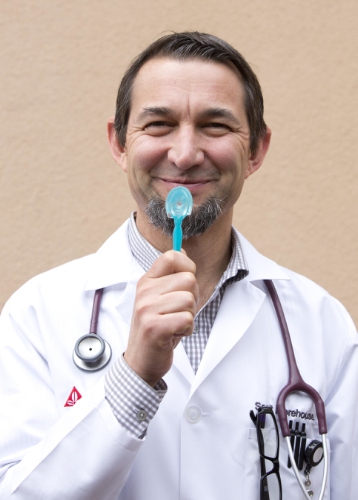
Dr. Scott Morehouse has developed ClearPop—a lollipop with a patented shape optimized to pull congestion out of the middle ear and into the mouth. It works by equalizing  pressure in the obstructed Eustachian tube of the infected ear.


“Eardrops don’t work,” says Dr. Morehouse, founder of ClearPop, “because the Eustachian tube, where the pain occurs, is connected to the mouth, not the outer ear.”


Due to increasing concern about antibiotic overuse, the American Academy of Pediatrics now recommends against the use of antibiotics to treat routine ear infections in children over 2.


Clinical tests were done to support the efficacy of ClearPop. Children diagnosed with Acute Otitis Media, or ear infection, consumed the xylitol and Vitamin C-based product in pediatric offices. After 20 minutes, 88.5 per cent reported their ear pain dramatically reduced or vanished. The earache episode was totally resolved for 80 per cent of children.

Study Provides Additional Insights for AIDS Vaccine Design

0

A new study by researchers from the International AIDS Vaccine Initiative (IAVI) and partners, was published on January 14th in PLOS Pathogens. It helps AIDS vaccine researchers further understand how HIV interacts with its host, and how some people naturally produce antibodies against the virus’ many variants.


IAVI and many fellow researchers are working to design and develop a vaccine that can mimic and accelerate the lengthy process of producing powerful antibodies that can neutralize many of the virus’ variants.


This research utilized samples from 439 newly infected volunteers in Protocol C, a large observational study by IAVI and partners in Eastern and South Africa supported by the United States Agency for International Development (USAID). About 15 per cent of the volunteers developed broadly neutralizing antibodies (bNAb) responses, on average three years after infection. Researchers say gender, age and geographical origin have no influence on the development of bNAbs. However, the study showed that broad neutralization was associated with high viral load, low levels of particular immune cells, infection with one particular HIV subtype and the presence of a particular gene in the host.


According to Mark Feinberg, IAVI President and CEO, “the volunteers who participate in these studies are critical and valued partners in the effort to design a safe and effective AIDS vaccine.”

Fresh Thyme continues its expansion in Detroit

0
United Biopharmaceuticals Inc. announces partnership with Naturally Perfect Consulting

Fresh Thyme Farmers Market is making plans to build a 28,000-square-foot store in Metro Detroit.

The specialty grocer commenced operation in 2012, opening its first store in suburban Chicago. Currently, Fresh Thyme Farmers Market has four stores over six states. The new store is under construction with another store set to open its doors in Grand Rapids, Michigan, this winter.

“The concept behind Fresh Thyme is reaching out and bringing the natural organic lifestyle to the masses, and not making it this huge national chain that is really intimidating to shop at and really expensive,” CEO Chris Sherrell told MLive in a 2014 interview.

New Dietary Guidelines recommend using herbs to reduce sodium

0
New Dietary Guidelines recommend using herbs to reduce sodium

The recently released 2015-2020 Dietary Guidelines for Americans (DGA) urges Americans to help reduce their sodium by using spices and herbs.

According to the Dietary Guidelines, Americans should consume less than 2,300 milligrams per day. However, according to a news release from McCormick & Company, Americans consume 3,440 milligrams daily—nearly 50 percent higher the recommended daily intake.

“We know that great flavor is the key to consistently making healthy choices,” said Alan Wilson, McCormick Chairman and Chief Executive Officer. “That’s where spices and herbs can help. By learning to prepare foods with spices and herbs, people can meet dietary guidelines for sodium without sacrificing taste. We offer more than 450 salt-free and reduced sodium products in the U.S. to help people do just that.”

Pharmacists play role in chronic kidney disease detection

0
Pharmacists play role in chronic kidney disease detection

Pharmacists have made a discovery while screening at-risk patients for chronic kidney disease (CKD). In a recent study, pharmacists found previously unrecognized disease in one of every 6.4 patients tested.

The study’s primary author, Dr. Yazid Al Hamarneh, a pharmacist, said that the results came as a surprise to researchers. “We knew that we would find unrecognized cases, but not that many.” The study’s findings were recently published in the Canadian Pharmacists Journal.

The Canadian Medical Association Journal reports that chronic kidney disease affects one in 10 Canadian adults. The disease is often missed because patients do not exhibit any symptoms in the early stages. Undiagnosed CKD can have life-threatening long-term effects, such as heart disease and stroke.

Wal-Mart to close 269 stores worldwide

0
Walmart Canada introduces grocery pickup option for online shoppers in Ottawa

Wal-Mart recently announced its plans to close 269 stores globally. The retailer will close 154 stores in the United States and focus their efforts on e-commerce as well as other operations.

Most U.S. stores scheduled for closure are the smaller Wal-Mart Express locations. The retailer launched Wal-Mart Express in 2011 in hopes of expanding the brand beyond the typical big box format.

Current Issue: January 2016

0
Current Issue: January 2016

Read the current issue of
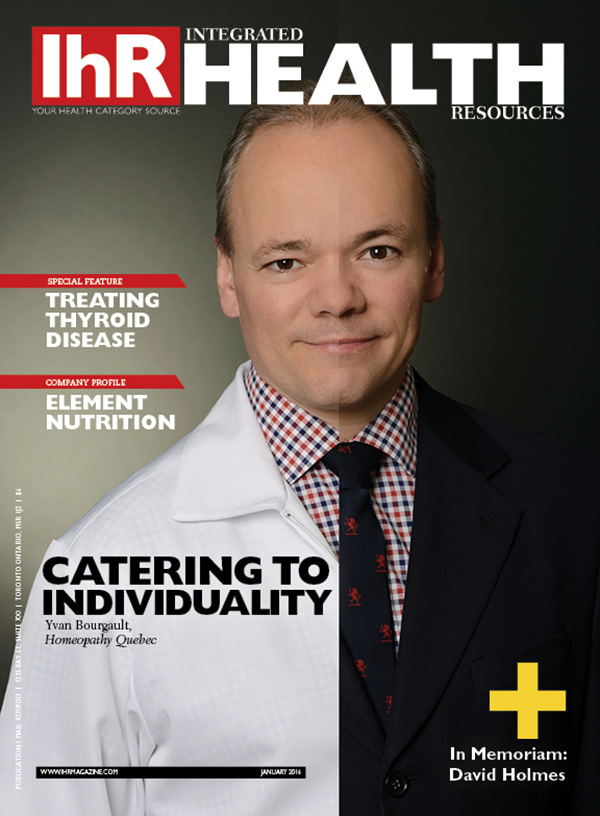
Integrated Health Resources Magazine.

Treating Thyroid Disease

0
Treating Thyroid Disease

Evidence for novel, therapeutic, natural options

Thyroid supplements tend to be specialized products—typically, customers visit natural health retailers looking for assistance for thyroid support. Customers will present the retailer with a prescription note from their naturopath or natural doctor, with a recommended name brand or product.

Daniel Lupu, the owner of the Nutrition House location at Hudson Bay Centre on Bloor Street, Toronto, says that he likes to engage his customers with questions in order to open up a dialogue as to determine their top priorities and chief health complaints.
“At the end of the conversation, the customer is usually left in a position to think about their choices and the information we have provided, and make their final decision without any pressure from staff,” he says.

Yvan Bourgault, pharmacist and co-owner of Homeopathy Quebec, adds, “It takes knowledgeable staff that can understand the difference between the different products on the market. Other than that, we merchandize them the same way we do with other products. However, most of our sales are done after a consultation with one of our experts.”

The importance of having knowledge and experience within the natural health field, Lupu adds, can make a difference in helping to improve the lives of customers. “Thyroid issues tend to be overlooked, misdiagnosed, mistreated, or completely forgotten altogether. The thyroid is one of the most important glands in the human body, yet it rarely gets the attention it deserves until usually it’s too late and the body is in total distress.”

THE 411 ON THYROID
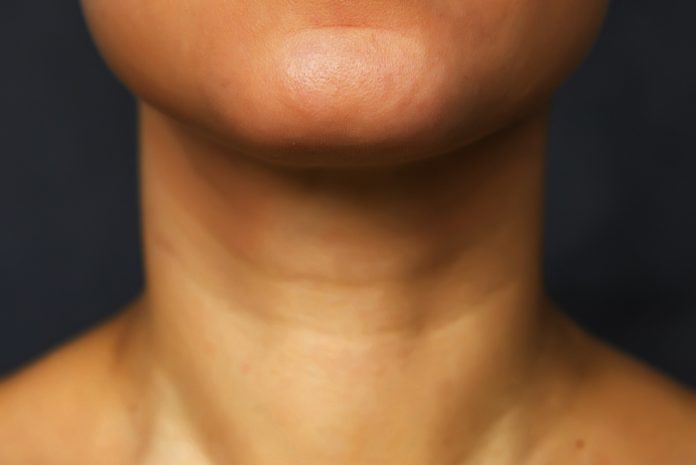
Thyroid disorders affect about 200 million people in the world (0.8 to five per cent of the population), and are four to seven times more common in women. These disorders are found everywhere in the context that they are the root of many other diseases. Thyroid conditions include hyper/hypothyroidism, goiter, thyroid cancer, Graves’ disease (GD) and Hashimoto’s thyroiditis.
Conventional treatment option for nodules and cancer is surgery. Medications are also used for many thyroid conditions. Pharmaceutical medications that are common for hypothyroid status include Synthroid and Cytomel. Hyperthyroidism is treated by radioactive iodine or anti-thyroid medications, such as Methimazole.

There are several natural options available to treat thyroid conditions that can be used in conjunction with these medications or on their own, such as selenium, kelp and zinc. However, more recent attention has been drawn to other options, such as magnesium, vitamin D and carnitine.

MAGNESIUM
Magnesium is a vital part of cellular reactions; it is involved in metabolism, DNA replication, repair, transport mechanisms and cell proliferation. Food sources that are high in magnesium are whole and unrefined grains, seeds, cocoa, nuts, almonds, green leafy vegetables, avocados and fish.
Magnesium has been used in treating arrhythmia, hypertension, high cholesterol, premenstrual syndrome, asthma, diabetes and attention deficit hyperactivity disorder (ADHD), in doses of 100 to 400 milligrams on average, taken with meals. More recently, the relationship between magnesium abnormalities and the development of thyroid disorders has been considered.

Evidence for magnesium
A growing body of evidence has shown the role and pattern of magnesium levels in thyroid disorders, including thyroid cancer and autoimmune thyroid disease. For example, after factoring out ethnicity, one meta-analysis showed a significant association between serum magnesium and thyroid cancer. This retrospective analysis found that individuals with thyroid cancer had lower serum levels, but higher levels of copper than healthy average individuals.

A study on metabolic disorders indicated that mineral deficiencies, including magnesium, were found in patients with autoimmune thyroid disease. This suggested that an improved diet via maintenance of required daily intakes of vitamins and minerals could help decrease symptoms and prevent recurrence of malnutrition-induced thyroid disease.

Another study demonstrated that using conventional medication in the treatment of hyperthyroidism due to Graves’ disease helped normalize magnesium levels. These results are useful with further investigation on whether magnesium could be used therapeutically and if a correction of magnesium deficiency could be beneficial towards correcting thyroid abnormalities.

VITAMIN D
Vitamin D is a fat-soluble vitamin that is found in certain foods and can be produced internally when ultraviolet rays hit the skin. It is inactive and has to go through two transformations to be biologically active: primarily, the liver converts vitamin D to calcidiol, and secondly, the kidney converts calcidiol into calcitriol.

The vitamin’s function in the body is for bone and cell growth, neurological function, normal inflammatory response and thyroid optimization. Food sources of vitamin D include cod liver oil, swordfish, salmon, milk and liver.

Evidence for Vitamin D
The role that vitamin D plays in the development and treatment of thyroid conditions, such as Graves’ disease and thyroid cancer, remains to be uncovered.

One study showed that the prevalence of vitamin D deficiency was significantly higher in Graves’ disease patients. It also suggested that vitamin D deficiency might have been an independent risk factor for predicting failure of radioactive iodine therapy in patients suffering from Graves’ disease.
Overall, given that thyroid conditions can be detrimental if they are not treated and overlap with other diagnoses, it is important to consider several effective treatment options, including conventional and natural ones.

Evidence has suggested a pattern between lower magnesium levels and thyroid disease. Perhaps uncovering a possible relationship between these factors could highlight their potential in treating autoimmune and other thyroid-related diseases. Vitamin D has shown efficacy in preventing migration of certain thyroid cancer cells, helping predict the success of some conventional thyroid treatments. These two powerful supplements have shown promise as potential effective therapeutic targets in thyroid disease, enabling a greater spectrum of choice of natural treatments for practitioners and their patients, as well as knowledge for retailers and their customers.

CARNITINE
Carnitine is found in different forms. L-Carnitine (LC) is made up of methionine and lysine. This transporter is part of an effective shuttling mechanism that transports long chain acyl groups into the mitochondrial matrix to produce energy from fat. LC metabolism within the body occurs via dietary intake, synthesis, and reabsorption in the kidney.

Usual therapeutic dosage ranges are between 500 to 2000 milligrams per day, depending on the use. This option has been used for diabetes, osteoporosis, kidney and liver disease, and more recently, for thyroid diseases.

Evidence for Carnitine
Research has suggested that diminished fatty acid oxidation can be corrected by carnitine supplementation. One randomized, double blind, placebo-controlled study consisted of women who were given thyroid hormones to treat benign thyroid nodules.

The women were divided into three groups; a) those who received a placebo for six months, b) those who received a placebo for two months followed by carnitine: two to four grams per day for two months, then back to the placebo, and c) those who were given carnitine: two to four grams per day for four months and then, given placebo treatment.

The placebo group displayed symptoms of hyperthyroidism, such as muscle weakness, shortness of breath, heart palpitations, nervousness, and insomnia, amongst others. The second group had hyperthyroid symptoms during the two months of placebo treatment, but those symptoms disappeared after two months of carnitine supplementation. However, these symptoms returned again during the last two months of placebo treatment. The last group had no hyperthyroid symptoms until they stopped receiving carnitine at the end of the first four months.

The results, although not reaching statistical significance, were still meaningful from a clinical standpoint, and showed a time-sensitive benefit of carnitine supplementation in hyperthyroidism.
The basis of why carnitine supplementation is useful for many clinical thyroid settings is derived from the understanding that hyperthyroidism lowers tissue carnitine levels. One study showed that urinary excretion of carnitine was increased in hyperthyroid individuals. Another study showed that there were no differences found in the serum ALC profiles between hypo-, hyper- and euthyroid states before and after treatment with thyroxine or Thionamide therapy.

OTHER NATURAL OPTIONS
Overall, given that thyroid conditions can be detrimental if they are not treated and overlap with other diagnoses, it is imperative that several effective treatment options be considered, including conventional and natural ones. Thyroid supplements come in different forms such as regular capsules, vege-caps, softgels, and liquids.

Vitamin D has shown efficacy in preventing migration of certain thyroid cancer cells, helping predict the success of certain conventional thyroid treatments. Carnitine effectively modulates thyroid metabolites in peripheral tissues and can correct inherent carnitine deficiencies caused by hyperthyroidism.

These three powerful supplements have recently shown promise as potential effective therapeutic targets in thyroid disease, enabling a greater spectrum of choice of natural treatments for practitioners and their patients, as well as knowledge for retailers and their customers.

TOP SELLERS
“Over the past two years, I have found that the top selling thyroid supplements are Preferred Nutrition’s Thyrosense, TriStar Naturals Thyroid Plus, AOR’s Thyroid Support, Organika’s liquid Thyodine, and Trophic’s Liquid Iodine.”
-Daniel Lupu, owner of Nutrition House in Toronto

HEFTY PRICE TAGS
Daniel Lupu, owner of Nutrition House in Toronto, “Customers may be surprised to learn that thyroid products come with a higher price tag. We always have more affordable options, such as straight Kelp capsules, or the very effective liquid Iodine drops, which are highly absorbed.”

BY ROCHELLE FERNANDES, MSc., ND (cand) & PHILL FELTHAM