Combining the best of conventional and complementary medical practices
By Inna Levchuk
Currently, there are not that many Canadian clinics where medical doctors and complementary health practitioners work side-by-side. P3 Health Clinic strives to provide personalized, participatory and preventive programs and services that combine the best of both conventional and alternative health-care models.
The 2,500-square-foot clinic, located in a heritage building at the corner of Frederick and Front Streets in Toronto was officially opened in May 2014.
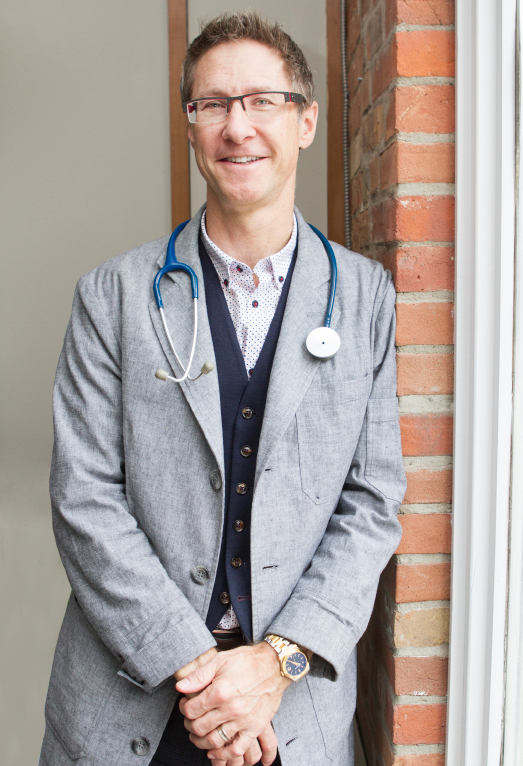
“The intention of setting up this clinic was to provide integrative care and get the message out to the right people, concurrently without stepping on the toes of conventional doctors,” says Dr. Tim Cook, the founder and owner of P3 Health.
He adds that key differentiators of P3 Health include true integration across conventional and complementary medicine founded on an electronic medical record system accessible to all; equal attention to cutting-edge technology, such as advanced genomic testing and the CardioHealth Station, which makes them one of only five clinics in Canada with this device, as well as the ancient healing practices of yoga, meditation and nutrition, and a completely functional medical approach.
“Our intention on opening P3 Health was to bring together the most evidence based and most helpful of Western medicine and complementary medicine into a personalized ‘IAP’—Integrative Action Plan,” says Dr. Cook. “This has the potential to benefit many patients who are currently ‘falling through the cracks’ of our conventional health-care system.”
Dr. Cook hopes that the approach that P3 Health is taking in treating their patients will eventually become the “standard of care and will be funded by our provincial government health insurance plans.” This, he believes, would make integrative care accessible to all.
FROM MILITARY TO INTEGRATIVE MEDICINE
Being an internal medicine practitioner by training, Dr. Cook worked as a medical officer for the Canadian military for 20 years. There, he had “flexibility to spend more time with complex patients” because he was salaried.
“Whereas in a fee-for-service system, such as a hospital clinic, there is pressure to see more patients faster as there is a huge demand with limited supply of service,” says Dr. Cook.
“At P3 Health, I book new patients for an hour or 90 minutes if they are complex; Lyme patients, for example, and follow-ups get a minimum of 30 minutes,” he continues. “This is at least twice the amount of time that internists usually give with provincial health coverage.”
During his career with the Canadian Forces, Dr. Cook had deployments to Haiti, India, Central America and East Africa and that’s where he started to have a different perspective on the world’s health-care systems.
At the time of his retirement from the military, Dr. Cook began working as an internist at Mount Sinai Hospital in Toronto. There, he saw a lot of patients suffering from chronic fatigue often with symptoms that weren’t explained by conventional subspecialists—something that made these patients seek integration on their own.
Later, Dr. Cook obtained a Master’s degree from the London School of Hygiene and Tropical Medicine in England, focusing on health promotion, disease prevention and public health. In 2006, he took a mindfulness stress-reduction course, and that’s where he understood that his career path wasn’t leading where he wanted it to lead.
“I began to realize that my passions lie not just in terms of health promotion and disease prevention, but also in encouraging people to appreciate the impact of stress on their illnesses.”
In 2007, Dr. Cook was invited by David Zakus, a professor at the University of Toronto, to help him set up a course in complementary and alternative medicine practice.
All of these experiences changed Dr. Cook’s perspective on how the health care system should function, which ultimately led to the idea of founding P3 Health together with Bryce Wylde and Sam Gibbs, his business partners.
P3 HEALTH PATIENTS
Services currently offered at P3 Health include naturopathy, acupuncture and traditional Chinese medicine, cardiac health support, chiropractic medicine, holistic psychotherapy, intravenous therapy, lifestyle and wellness coaching, mind-body medicine, registered holistic nutrition, osteopathy and registered massage therapy.
The clinic also has a versatile natural health product dispensary, which helps practitioners provide patients with necessary nutritional and vitamin support.
Currently, the clinic has 15 full- and part-time team members. Busiest months at P3 Health are usually January, September and October. Top health concerns that P3 Health patients have include Lyme disease, chronic fatigue, metabolic disorders, such as obesity, diabetes, hypertension and dyslipidemia that often lead to cardiovascular disease, as well as hormonal issues.
According to Dr. Cook, there are two ends in the spectrum of care provided at P3 Health—services for people who want a greater life span as well as those developed for patients who are already suffering from a particular condition.
“We have patients who are healthy but want to ‘live forever’: they are interested in health promotion and disease prevention, and anti-aging,” explains Dr. Cook. “At the other end of the spectrum are people who have a predetermined diagnosis.”
Dr. Cook says often these people aren’t satisfied with what has been advised from conventional doctors and they are looking for an integrative or complimentary approach to managing their health.
For some patients in this subgroup, P3 Health is developing centre of excellence for Lyme and tick borne disease management. Dr. Cook says, unfortunately, many patients suffering from Lyme disease are often undiagnosed. P3 Health finds it very rewarding to get them on appropriate therapies that usually include a combination of antibiotics and probiotics—and lifestyle management.
“If you are not encouraging people to make dietary changes or teaching them how to meditate, it’s going to be very difficult for them to ultimately get better,” says Dr. Cook.
Dr. Cook encourages all his patients—whether they are interested in their health promotion or they suffer from a certain condition—to explore mindfulness practices.
“Neuroscience supports the critical importance of regular engagement in mindfulness meditation—yoga, tai chi, chi gong, prayer—whatever it is, it’s important to do something because ultimately, even if you eat well and you exercise but don’t do these brain exercises, you are not getting the maximum benefit of longevity and wellness.”
Top products that Dr. Cook recommends to his patients are VSL and Bio-K+.
“We use them when having to prescribe long-term antibiotics for patients with Lyme and tick co-infections,” he says.
Other products that are helpful are AOR SoluFibre (prebiotic that goes with the probiotics), R+NAC, Magnesium BisGlycinate, EPA, ZenBev, California Poppy, Curcumin, Wobenzyme and Resveratrol.
These products are recommended by Dr. Cook and sold by his natural health colleagues.
SPREADING THE WORD
The clinic’s launch strategy was crafted by Bryce Wylde. As Dr. Cook’s business partner and a homeopath, Wylde believes wholeheartedly in an integrative approach, and in reputation, he is popular in the media.
Following Wylde’s success with his own highly rated television show, Wylde on Health, that ran on CP24, he has been invited to many national shows. It was through his numerous TV appearances, including those on CityTV Breakfast Television and CityLine, that the public first heard of P3 Health.
Being a highly knowledgeable natural health practitioner, whose name has been recognized and opinion trusted, people were following him not only on TV, but also through his social media, paying attention to his posts about P3 Health.
“For the first year or so, we let Bryce do all the marketing, otherwise it was more or less word-of-mouth,” says Dr. Cook. “We didn’t have a really big outreach campaign.”
“We now have close to 10,000 legitimate (that is, consented) email addresses in our database,” he continues. “We send a newsletter monthly and blogs weekly.”
Dr. Cook says what was missing in their marketing campaign was a call to action—something that P3 Health is now trying to catch up on with its DARI (diabetes and related illnesses) metabolic health program.
“We’ve decided to create one big program that would capitalize on all the things that we think are important for people suffering from these illnesses, such as high blood pressure, cholesterol, belly fat, and ultimately, heart attack and stroke risk,” says Dr. Cook.
The $7,500 four-month-long program includes a thorough evaluation of the patient from micronutrient, genomic and physical perspectives with extensive testing and consultations with a physician, geneticist, holistic nutritionist and health coach.
Additionally, the P3 Health team builds an integrative action plan for each patient that includes nutrition, fitness, mindfulness and stress-reduction programs, supplements, and possibly, intravenous therapies. The patient is also checked for clotted arteries to pinpoint the earliest indications of vascular disease.
Snail mail has been an effective tool in marketing the program, with thousands of post cards being sent to people who might be interested in supporting their health. DARI also has an online landing page on the clinic’s website and a digital marketing campaign in place.
“Our January launch of DARI gave us an opportunity to engage in digital media more,” says Dr. Cook. “We are also working to increase our organic Google presence by putting regular, original blogs and videos on our website.”
CHALLENGES
According to Dr. Cook, one of the challenges around starting any business is making sure there is a sound business plan in place as well as sufficient funds.
“Also, to find doctors who want to work in this environment has been a bit challenging, but even finding the right complementary practitioners who would like to work in a group has not been as easy as I thought it would be,” continues Dr. Cook.
He is encouraging his colleagues “on the conventional side of the house” to learn more about complementary practices and the evidence around them.
“We are never going to be able to meet in the middle and integrate if there is not a dedicated focus on gathering evidence on efficacy and lack of harm [of complementary practices],” he says. “By the same token, I want to make sure that the folks on the complementary side of the spectrum realize that if they wish to integrate, they need to come towards the middle as well. There needs to be an openness to understand both sides.”