A petition with over 150,000 signatures is calling to close all retail shops on December 26. However, the government has responded saying it is not for them to tell businesses how to run.
Labour MP Helen Jones has stated that the current Boxing Day system is exploiting lower paid workers, and deprives them time with their families over the holidays. Jones felt that recent evidence submitted to her committee has convinced her that the government should take action.
“I went from feeling quite indifferent about Boxing Day openings to believing it does exploit very low paid workers, who often have to work late on Christmas Eve to get the shops ready and then have to go in very early on Boxing Day morning,” she says.
Along with public transport and childcare running on holiday hours, making it difficult just to be at work, the additional pay has all but disappeared across the sector.
“What I’ve not seen is anything to convince me that Boxing Day generates extra trade, as opposed to just moving it from another day. No one died because a shop was shut, and I think we are exercising our freedom to shop whenever we want on the backs of some very low-paid workers, who are being exploited and being denied the freedom to expect to have time with their families.”
However, boxing day has been a tradition for many families. In Canada, over 120,000 made their way to Yorkdale Shopping Centre on December 26 this year—compared to an average 75,000 weekend turnout. Many consumers prefer boxing day over Black Friday or Cyber Monday. In fact, one in three consumers were estimated to go shopping and to spend an average of $244 across all retail sectors. While Canada does extend their sales for a full week after Christmas, one has to wonder how shutting down on the most popular shopping day of the year would affect sales.
Old-school values and modern practices make Boiron a true industry leader
By Corrina Mosca
While the old adage suggests that the past is something to be put behind us, an understanding of history is often what drives us forward. This is especially true in the world of business; although it is essential for corporations to look ahead whilst navigating their growth plans, some forget the importance of where they came from.
For Boiron, the largest manufacturer of homeopathic medicines in the world, personal history is a catalyst for progress: rather than hindering its success, an appreciation for the past has helped the business to evolve. Filled with immense success, lasting values, and its fair share of obstacles, Boiron’s rich history is a core facet of its current operations.
PAST TENSE
Daniel Dereser, CEO of Boiron Canada
Boiron’s story begins in 1932 in Lyon, France. At this time, twin brothers Jean and Henri Boiron were working for René Baudry, a highly respected homeopathic pharmacist. As this partnership progressed, the brothers noticed an increasing demand in the market for high-quality and reliable homeopathic medicines: something they had the expertise and willpower to provide.
From there, the pair founded Boiron, seeking to manufacture and develop high-quality, homeopathic solutions for health-care practitioners and consumers alike. By the late 1970s, the business had already grown drastically: with several regional French establishments and a facility in Italy, the company had established itself both on the national and international stage.
Then, in 1988, Boiron Canada was opened in Saint-Bruno-de-Montarville, Quebec. Just like its European forefathers, this brand-new centre sought to offer an ever-growing line of homeopathic health-care products to the market.
Now, with eighty years of experience under its belt, the company has become the top player in its industry: with 20 subsidiaries across the globe, four production sites, 3600 dedicated employees and a presence in more than 50 countries, Boiron has become nothing short of an empire. However, although the company has grown tremendously since its inception, it still maintains the feeling of a family business—something that few multinational companies are able to accomplish.
“Since its inception, Boiron has remained an independent, family-based pharmaceutical laboratory,” says Daniel Dereser, CEO of Boiron Canada. “Collectively, our team is dedicated to a public health mission through the development of homeopathy around the world.”
OLD IDEALS, MODERN METHODS
Today, Boiron is focused on maintaining its past values, whilst also tailoring them to the modern market. With the birth of a new eco-friendly era, the company has found a need to embrace environmental sustainability in its procedures—without sacrificing product quality.
In order to manage this, Boiron has enacted an extensive manufacturing process. This involves a comprehensive market analysis as well as scientific investigation, which is run through the company’s active research programs.
“The development of new products is research-driven,” notes Dereser. “As such, we utilize the talents of university research teams, homeopathic practitioners, physicians and veterinarians from around the world.”
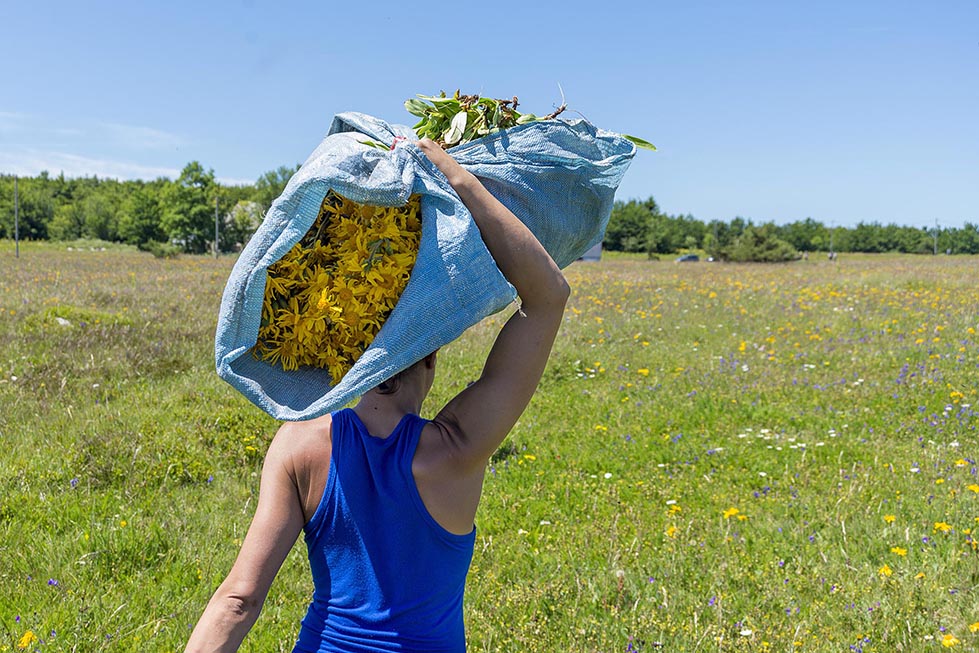
Once this is complete, the company sources the bulk of its ingredients from local suppliers who share their core value: excellence. When gathering these raw materials, Boiron surrounds itself with qualified, regional professionals and promotes re-supplying wild or organically-farmed plants when possible.
“These standards not only help to ensure the traceability of our ingredients, but are also meant to ensure safe and high-quality products,” explains Dereser. “Furthermore, when collecting plant species for our homeopathic medicines, we work with suppliers who share our objective in optimizing the traceability and sustainability of plant substances.”
This respect for the environment is “at the heart of Boiron’s procurement practices,” adds Dereser. This is evidenced by the company’s compliance with the practices of plant harvesting laid out by the World Health Organization (WHO). Moreover, to maintain these environmental standards across the board, Boiron’s partners and suppliers are also regularly audited for compliance.
ALL IN THE FAMILY
While Boiron has modernized its standards when it comes to its ingredients, some aspects of the business certainly haven’t changed. Although it is now a multinational company, it still maintains close relationships with its employees, consumers, and peers.
Despite its colossal staff of almost 4000 individuals, Boiron still manages to create a close-knit atmosphere in its offices—a sentiment that hearkens back to its roots as a family business.
“It is Boiron’s deep conviction that the key to the performance and the growth of the company depends on the creativity and motivation of its employees,” notes Dereser. “We are keen on developing specific benefits for our employees to enrich their well-being.”
For Dereser, this is well reflected in the company’s Quebec location, where each employee is treated with the utmost respect, individuality and care.
“We strive to create an enjoyable work environment for every employee, and our building in Saint-Bruno is a reflection of that,” he continues. “Its inspiration was derived from the very values we call our own: innovation and professionalism, rigour and passion, as well as performance and pleasure.”
However, Boiron’s care for the individual doesn’t stop at its employees: through its educational initiatives, the company extends unparalleled attention to its clients and industry peers.
“At the heart of our marketing program lies a grassroots strategy to educate health-care practitioners and consumers about homeopathic medicine,” says Dereser. “Additionally, we have developed different training programs for health-care practitioners that are very well received. We also reach out to individuals directly and invite them to discover our products.”
Boiron’s strong web presence absolutely supports this desire to educate others. Through its comprehensive company website and frequent activity on social media, Boiron ensures that both practitioners and consumers have up-to-date information about the organization, its values, and homeopathic medicine in general. Last summer, the company further enhanced its site with a blog called “Healthy Together,” which shares various health and wellness tips with the general public.
ONWARD AND UPWARD
Moving forward, the company will continue to keep these old-school values in mind—while also leading the market in innovation.
“We are always looking to innovate, and we are continually working on the development of new products,” says Dereser. “Boiron strives to match the needs of health care practitioners and consumers, as well as to stay on top of market trends.”
Besides creating groundbreaking products, Boiron has also embraced the needs of its contemporary consumers with a foray into the digital market.
“E-commerce is a reflection of the change in the consumer’s behaviour over the last several years,” he continues. “We have adapted to this change, and forged some terrific partnerships with online retailers.”
Boiron has thus carved itself a unique niche in the market—one that other brands simply are unable to fill. With its juxtaposition of classic values and novel ways of conducting business, it has become a brand that consumers past, present, and future may know and trust.
Costco says it will open seven locations in Canada next year after opening its first business centre this fall.
The Washington State-based big-box retailer currently operates 91 stores across the country and 715 around the world.
The first Canadian store geared to business customers is slated to open soon near Toronto, raising the total number of international business centres to 15.
Business centres are about two-thirds the size of a regular Costco and offer a wider selection of business-oriented merchandise and services — but no consumer products like apparel, toys and bakery items.
Meanwhile, Costco said it hasn’t yet decided whether to increase membership fees in Canada and the United States despite raising annual charges in September in Taiwan, Korea, Japan, Mexico and the U.K.
Costco normally increases membership fees every five or six years. The last increase, equal to 10 per cent, took place in November 2011.
Hain Celestial announced a number of new team members, including new Chief Operating Officer Gary W. Tickle, who previously served in a variety of executive roles at Nestlé Group. Most recently, Tickle was President and CEO of Nestle Infant Nutrition North America, overseeing Gerber and Nestlé brands.
Former Kraft Foods Inc. manufacturing and procurement manager Jerome Erskin joins Hain as Chief Supply Chain Officer. James Fay, former senior vice president of global sales for Nature’s Path Foods, joins Hain as Chief Customer Officer.
As well, Leah Dunmore joins Hain as Vice President of Marketing for Better-for-You Pantry, bringing experience from her tenure as vice president of U.S. soup at Campbell Soup Company and as marketing director for M&M’s Business at Mars Chocolate, North America.
Nine former Whole Foods store managers filed a class-action lawsuit in D.C. Superior Court, which claims they were wrongfully terminated and defamed after they blew the whistle on “a nation-wide, corporate practice throughout Whole Foods stores that deprived employees of earned bonuses under the Whole Foods ‘Gainsharing’ program.”
Each plaintiff, whose tenures range from nine to 25 years with the company, is seeking $25 million in damages.
Whole Foods has not responded to any requests for comment.
According to the lawsuit, the Gainsharing program is designed to distribute the surplus of any departments coming in under budget among the employees. The program was undermined by a corporate practice of shifting labour costs, where an over-performing department had to shift their incentive to an under-performing department to cover costs—therefore losing their bonus.
According to the lawsuit, during the Whole Foods investigation that followed an employee’s complaint of the practice, the plaintiffs refused to adopt talking points that the practice of shifting labour costs was isolated to a few stores, and were subsequently fired.
A new study out of the University of Illinois suggests that lutein, a pigment found in leafy green vegetables, aids in the preservation of “crystallized intelligence.”
Lead researcher and U of I grad student Marta Zamroziewicz notes that lutein plays a “neuroprotective role” in the brain, aiding in the conservation of the skills and knowledge one has acquired over a lifetime.
“Previous studies have found that a person’s lutein status is linked to cognitive performance across the lifespan,” Zamroziewicz said. “Research also shows that lutein accumulates in the gray matter of brain regions known to underlie the preservation of cognitive function in healthy brain aging.”
The study, which involved 122 healthy participants aged 65 to 75, had subjects answer questions on a standard test of crystallized intelligence. Then, researchers collected blood samples to test blood serum levels of lutein. An MRI was also conducted to determine the volume of different brain structures.
Results showed that participants with higher blood serum levels of lutein did better on tests of crystallized intelligence. Zamroziewicz notes that while serum levels are only indicative of recent dietary intake, they are associated with brain concentrations of lutein in older adults, which reflect long-term dietary intake.
Moreover, those with higher serum lutein levels usually had thicker gray matter in the parahippocampal cortex. According to the researchers, this part of the brain is also preserved in healthy aging.
The results of this study are certainly promising. In order to keep your patients on the path to healthy aging, encourage them to eat lutein-abundant foods like leafy green vegetables, cruciferous vegetables, and egg yolks. Additionally, a variety of lutein supplements are available on the market for those who need extra help.
Researchers out of Japan and the US have found that vitamin B3 (or nicotinamide) may help to treat preeclampsia in pregnant women. This is because it works to prevent strokes and also stimulate fetal growth.
This potentially fatal disease affects up to eight per cent of pregnant women. Characterized by high blood pressure, blood vessel damage, high levels of protein in the urine and fluid retention, preeclampsia is also believed to restrict a fetus’ growth.
Currently, the only treatment for this issue has been delivery of the baby. However, the new study found vitamin B3 to relieve preeclampsia in mouse models.
Researchers concluded that nicotinamide is the first safe drug that lowers blood pressure, reduces urine protein and alleviates blood vessel damage in preeclampsia-affected mice. Additionally, they demonstrated that in many cases, nicotinamide also prevents miscarriage, prolongs pregnancy period and improves the growth of the babies in mice with preeclampsia.
The team hopes that if found to work in humans, nicotinamide could help treat preeclampsia and prevent fetal growth restriction associated with the disease in pregnant women.
Loblaw Companies Limited has announced plans to reduce its carbon footprint 20 per cent by 2020 and 30 per cent by 2030. Currently, the company ranks among Canada’s top energy users, due to its extensive retail network and trucking fleet.
Now, Loblaw will enact an action plan focused on energy-efficient stores and distribution centres, fuel-efficient transportation, and managing refrigerants and organic waste diversion.
“At Loblaw, we recognize the growing environmental, social and business impact of greenhouse gas emissions,” says Galen G. Weston, executive chairman and president of Loblaw. “As one of Canada’s largest energy users, we are committed to being part of the solution. We will deliver carbon-reduction in line with our nation’s targets and demonstrate, along with other forward-looking Canadian companies, that these goals can be achieved without sacrificing economic growth.”
Since 2011, Loblaw has initiated a variety of carbon reduction measures. These include centralized energy management, lighting conversions, methods to control refrigerant leaks, equipment upgrades, and improvements to truck aerodynamics and fuel use.
The company plans to achieve the full 30 per cent reduction through the installation of new refrigeration systems that use carbon dioxide as a refrigerant, the calibration and optimization of energy management systems, and the reduction of waste to landfill.
By 2030, Loblaw plans to have reduced its electricity consumption by 35 per cent, transportation by 25 per cent, and refrigerants by 50 per cent. Additionally, it will improve waste diversion to 80 per cent in stores and 95 per cent in distribution centres.
In a time where environmental care is at the forefront of everyone’s consciousness, retailers must take action to reduce their carbon footprint. Consider revamping your business’s environmental initiatives to help make a difference.
In tandem with record levels of consumer demand for probiotics in 2016, Ganeden has announced year-end numbers confirming its leadership in the healthy bacteria industry. The functional ingredient supplier affirms its success with record numbers of launches, continued innovation in clinical studies, an expanded patent portfolio, additional certifications and international growth. A review of the probiotic company’s recent accomplishments shows success in multiple categories:
1. Product Launches & Partnerships
Currently, Ganeden’s flagship probiotic ingredient, GanedenBC30®, can be found in more than 550 probiotic food, beverage and companion animal product SKUs worldwide — making it one of the top probiotic ingredient options globally. The company kicked of 2016 with partners launching more than 60 new SKUs at Natural Products’ Expo West, and that growth continued through the following months with an additional 75+ SKUs launched at the Institute of Food Technologists (IFT) expo. As of December, there has been more than 200 new probiotic launches in 2016, which also include personal care products launched with Bonicel, Ganeden’s probiotic-derived skincare ingredient shown to reduce six signs of aging.
2. Clinical Studies, Patents & Certifications
The benefits and efficacy of Ganeden’s probiotic ingredients, including GanedenBC30 and Bonicel, are backed by 24 published and peer-reviewed studies. Ganeden’s most recent studies confirm the positive effects GanedenBC30 has on the utilization of both animal and plant-based proteins. Additional studies are currently underway. Ganeden’s ingredients are also supported by over 130 issued patents and numerous certifications. Most recently, GanedenBC30 became Non-GMO Project verified, leading the way for ingredient suppliers to receive this notable designation.
3. International Growth
GanedenBC30 is approved for use in 58 countries worldwide, and has already been shipped to more than 36 of these countries. This year, the probiotic company expanded its sales and marketing teams by adding 6 professionals in 4 different countries.
4. Sales Overview
With worldwide brand recognition and a larger international presence, Ganeden’s 2016 sales numbers boasted over a 56% increase compared to 2015 — making it the company’s most successful year to date. “We have always felt confident in our science-backed ingredients and strategic business approach, but it is extremely rewarding to see it reflected in the numbers and overall growth,” said Mike Bush, president of Ganeden. “As a company, we are extremely passionate about the probiotic space and appreciate to the opportunity to serve as innovative leaders and educators for the industry.”
About Ganeden
Ganeden is at the forefront of probiotic research and product development with an extensive library of published studies and more than 130 patents for probiotic technologies in the food, beverage, animal health, sports nutrition and personal care ingredients markets. Ganeden is best known for GanedenBC30® (Bacillus coagulans GBI-30, 6086), its patented, FDA GRAS, non-GMO, highly stable probiotic ingredient. Ganeden’s newest ingredient, Bonicel, is the first science-backed, probiotic-derived, personal care ingredient shown to dramatically reduce signs of aging. For more information about Ganeden and licensing opportunities, visit GanedenProbiotics.com.
LifeAid, known for its foregoing of traditional retail channels, will now work with select natural and conventional grocers.
Originally, co-founders Orion Melehan and Aaron Hinde decided to sell their goods in gyms, at golf courses and online. However, the company has now confirmed that it will sell four of its products at Whole Foods, Sprouts, Wegman’s, and Safeway.
In addition to this, LifeAid is also set to become the Official Recovery Beverage of the 2017 and 2018 Crossfit Games, according to BevNet. Co-founder Hinde told BevNet that this partnership has allowed the company to expand internationally, with its goods now selling in 22 countries.
As of now, 70 per cent of the brand’s sales are online. Melehan told BevNet that the company is currently selling 10 million cans a year, with growth forecasted to double annually over three years.
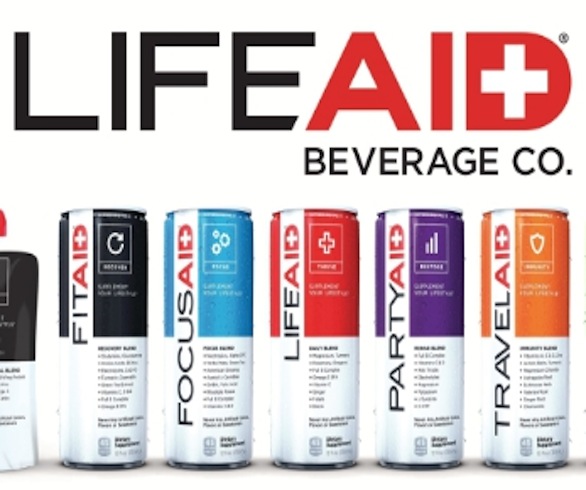
The company’s product selection is comprised of six different lines: FitAid, FocusAid, LifeAid, PartyAid, TravelAid, and GolferAid. FitAid and GolferAid focus on the athletic market; FocusAid is aimed at students and office workers; LifeAid is marketed as a daily supplement drink; PartyAid is meant for crowds at concerts or sports events; and TravelAid helps to soothe nervous flyers and boost the immune system. For more information, visit LifeAid’s website at lifeaidbevco.com.