Home Blog Page 105

Eat Beyond, supporter of innovation in plant-based & alternative foods, appoints new Chair

0


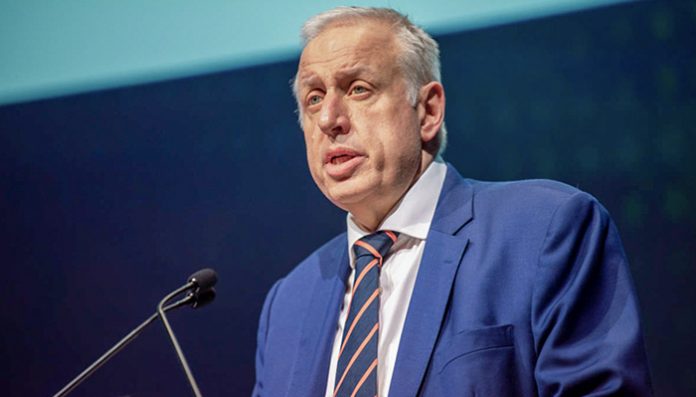
Eat Beyond Global Holdings, an investment issuer focused on innovation in the global plant-based and alternative food sector, is pleased to announce that Don Robinson, who previously joined the Company to serve on the board of directors, and previously served as CEO of Mars Canada, has been appointed to Chair of the Board.

At Mars Canada, he transformed the business from an unprofitable operation losing $20M annually to a business with $25M in profit, with annual sales in excess of $500M.

“Eat Beyond stood out as the perfect opportunity for me to put my decades of experience to use for a movement I personally feel so passionate about. I myself went vegan about a year and a half ago, and it has had innumerable benefits for me. I believe that we will see the trend toward plant-based eating continue to grow, the environment and our collective health depend on it,” said Mr. Robinson. “This is why I am so personally excited about working with the team on identifying the next generation of great products and innovations that will move us toward a healthier and more sustainable future. (https://flixtor2.to) ”

Mr. Robinson’s experience spans three decades and four continents and includes leadership roles with industry giants including Mars Inc., Mars Canada, CARA Operations Ltd., and Kraft/Nabisco. Most recently, he served as Chairman, CEO and President of CARA Operations Ltd. (2006-2013), where he was responsible for successfully leading a $1.8B business with an EBITDA of $70M for a period of 7 years, this included 700 restaurants, 35,000 people and 5 restaurant chains.

“Mr. Robinson has brought tremendous value to the team as we have continued to scout and assess hundreds of companies in the global, plant-based, and alternative food sector,” said Patrick Morris, CEO of Eat Beyond. “We are very excited that Don has agreed to be our chairman of the board. His leadership and operational experience are key. We are not just providing capital to our portfolio companies, we are actively involved in the companies to help them scale and grow effectively.”

Mr. Robinson is also the Chairman of the Confectionery Manufacturers Association of Canada and is the Executive Vice-Chair of the Food and Consumer Products Association of Canada.

Source: Food In Canada

Mother Raw Raises $6.1 Million in Series A Funding to Encourage Everyone Everywhere to Eat More Plants

0


Toronto based  Mother Raw, the line of fresh, consciously crafted and delicious plant-powered dressings, marinades, dips, condiments and quesos, announced today the closing of their $6.1M USD Series A financing round. The round of funding is led by new investor Forage Capital Partners, alongside Export Development Canada (EDC) and with substantial support from existing investor Whitecap Venture Partners. The new capital will help further propel rapid growth of Mother Raw across North America, well-timed with the massive growth in the plant-based foods sector and booming consumer demand. The brand plans to expand its distribution footprint, increase R&D efforts for new product innovation, and amplify marketing and sales initiatives.

Building on the initial Canadian-based start-up and following a significant rebranding and reformulation effort led by Mother Raw CEO Kristi Knowles, the brand has achieved an impressive market presence and is now in approximately 3,700+ stores across North America. Sales for Mother Raw have grown 247% from 2019 – 2020 and they have secured over 1,600 new retailers in the U.S. including Meijer, Pavilions, Sprouts, Target, Walmart Canada, Whole Foods and more, even during the pandemic. Since the initial launch of Mother Raw in early 2019, the brand’s growth is rooted in their commitment to organic plant-based ingredients, the agility of self-manufacturing, prominent placement in the growing refrigerated segment, delicious product variety and an accomplished and tenacious team.

Despite the obvious business duress of 2020, Mother Raw flexed their scrappy start-up muscles, rising up to navigate challenges ranging from manufacturing continuity, cancelled consumer and trade events, retailer disruptions and changes to shelf reset timing. The added funding further enables the brand to continue to advance its mission to “Put Good on GoodTM” by encouraging everyone everywhere to eat more plants, while elevating the plant-based eating category to new heights with their delicious, versatile and convenient offerings.

“The Mother Raw team remains steadfast in our focus to delight our consumers, retailers and suppliers as we advance our mission and business to make consciously crafted plant-based foods that deliver on taste,” said Mother Raw CEO Kristi Knowles. “Now with added partners on board, Mother Raw is excited about the future ahead with investment partners who wholeheartedly believe in our mission, are a strategic fit and possess expertise and knowledge to complement our business.  I’m confident our combined efforts and timely boost to the business will bring even greater success.”

“We were thoroughly impressed by the depth and accomplishments of the Mother Raw management team and their plans for the future, even more so during this very challenging time for most businesses,” said Jim Taylor, Partner at Forage Capital Partners. “We’re delighted to invest in Mother Raw during a critical time in the company’s development and are looking forward to being a part of their continued success.”

Mother Raw‘s impressive growth is attributed to its focus on innovation and quality products that meet the demand of a growing industry,” said Carl Burlock, Executive Vice-President and Chief Business Officer at EDC. “We are pleased to support Mother Raw through EDC’s investment Matching Program which will enable the company to increase investment in business development and innovation efforts, helping it execute on its ambitious growth plans across North America.”

The first investors behind Mother Raw, Whitecap Venture Partners, who have supported its growth since inception, have once again invested and are looking forward to what the future holds. “The team at Mother Raw is building a leading plant-based food brand and we are proud to continue our partnership with the company,” said Russell Samuels, Partner at Whitecap Venture Partners. “Having watched the business develop since 2016, we have never been more excited about the opportunity. We are excited to welcome both Forage and EDC to the Mother Raw team.”

NYC-based online grocer FreshDirect to be acquired by Ahold, Centerbridge

0


The online grocer FreshDirect agreed on Wednesday to be acquired by the supermarket operator Ahold Delhaize and private equity firm Centerbridge Partners, as the coronavirus pandemic and growing acceptance of e-commerce prompt more consumers to buy groceries online.

Ahold will take a majority stake and Centerbridge will own 20% of FreshDirect, which will keep its name and operate independently. Terms of the transaction were not disclosed, and a closing is expected in the first quarter of 2021.

Based in the Bronx, New York City, and known for its green-and-orange trucks, FreshDirect specializes in fresh food, which it says represents more than 60% of sales.

The privately-held company was founded in 2002 and operates in seven U.S. states, including the New York City and Philadelphia metropolitan areas, and Washington, D.C.

Ahold is based in the Netherlands and has several U.S. brands, including Stop & Shop, Food Lion, Giant Food and Hannaford.

A recent study by e-commerce specialist Mercatus and the research firm Incisiv said online purchases should account for 10.2% of this year’s $1.04 trillion U.S. grocery market, triple the percentage in 2019.

The study also said online purchases may command 21.5% of a total $1.16 trillion grocery market in 2025, close to 60% above pre-pandemic estimates.

Larger retailers, including Amazon.com Inc and Walmart Inc, are also increasing online sales of essentials such as food.

Goldman Sachs and the law firm Latham & Watkins advised FreshDirect on the transaction. Bank of America and the law firm Kirkland & Ellis advised Ahold, and the law firm Fried, Frank, Harris, Shriver & Jacobson advised Centerbridge.

Source: CNBC

GURU Organic Energy Virtually Opens The Market

0


Carl Goyette, President and CEO, GURU Organic Energy (TSX: GURU), and his team joined David Chelich, Sector Head, Global Energy and Diversified Industries, TMX Group to celebrate the Company’s new listing on Toronto Stock Exchange and open the market.

GURU pioneered the world’s first natural, plant-based energy drink. Through a distribution network of more than 15,000 points of sale, this dynamic, fast-growing beverage company has built an inspiring brand with a clean list of organic plant-based ingredients. GURU is committed to achieving its mission of cleaning the energy drink industry across Canada and the United States, an industry valued at more than US$15 billion with a growing appetite for organic, plant-based alternatives. 
Source: newswire.ca

Grocers are re-imposing purchase limits

0
© Alexi Rosenfeld/Getty Images


On some items as consumers have begun stockpiling groceries again due to the surging pandemic.

According to FOX Business, Kroger is putting limits on bath tissue, paper towels, disinfecting wipes and hand soap.

“To ensure all customers have access to what they need, we’ve proactively and temporarily set purchase limits to two per customer on certain products,” a Kroger spokesperson told FOX Business. The limits will apply in-store, as well as to e-commerce orders.

Last week, Publix implemented customer purchase limits on paper towels and bath tissue due to much higher customer demand. Harris Teeter is putting limit signs on certain items in its cleaning section. “We’ll continue to monitor the situation, and if we see a need, we may re-introduce limits to other items,” a Harris Teeter spokesperson told Fox Business.

San Antonio-based grocer H-E-B is imposing purchasing limits on certain grocery products, including what seems to be the most coveted item during the pandemic: toilet paper.

On October 31, H-E-B announced that stores in Central Texas, as well as the San Antonio, Gulf Coast, and border regions, will limit shoppers to purchasing two bath tissue items per shopping trip/transaction.

According to H-E-B, “limits are a proven way to stabilize the supply chain. We utilize this temporary tool to prevent supply disruption, which could impact availability.” The grocer also noted H-E-B stores are in “strong supply” of these limited-purchase products and stores continue to restock products daily.

The industry-wide decisions to roll back the number of items consumers can purchase comes as coronavirus infections top 10 million across the United States, according to Johns Hopkins University.

Source: Progressive gorcer

Bio-K+ International Inc. sold to Kerry Group

0


Bio-K+ International Inc., an industry leader in premium probiotics, completed the sale of its business to Kerry Group, a global leader in taste & nutrition solutions for the food, beverage and pharmaceutical markets.

This strategic transaction, effective immediately, allows the Bio-K+ brand to expand globally through the Kerry Group. Having also acquired the building and the land in Laval, Kerry will continue to produce Bio-K+ probiotic products in the unique plant, thus making it possible to maintain all current jobs in place while creating future jobs with the growth in sales.

The Roy-Chevalier family has built over 25 years a company whose mission is to improve the health and quality of life of people through the research, manufacturing and sale of scientifically proven quality probiotic productsOur family is proud of the work accomplished. Isabèle, François-Pierre, Monique and I would like to warmly thank our teams for their commitment as well as our advisory committee for their support. We also salute the healthcare professionals who have been ambassadors of our clinically recognized products.” explains Claude Chevalier.

With undisputed notoriety and # 1 in the country for the past 10 years, this transaction allows the company to materialize the next phase of its development with Kerry which has 148 sites on six continents worldwide.

In founding the company, the dream of my father Claude Chevalier and the family was to offer quality products with unique virtues capable of improving the health and quality of life of people. Our mission for Bio-K+ has always had a global focus. The sale of the business allows our family’s mission to be realized in the short term.” explains Isabèle Chevalier. “My brother and I grew up in this company, we have developed with it and we devoted ourselves to it, so this decision is emotional for us but we know that it is the right thing to do for the organization. This will allow Bio-K+ to fully soar by making its products we know have a major impact on people’s health available worldwide.”

Bio-K+ is an undeniable success both scientifically and commercially and we are very excited to have the opportunity to promote the brand and their high-quality products worldwide” announces John Quilter, Vice President of Global ProActive Health Technology at Kerry. “We are also very proud to be able to continue the expansion of Bio-K+ in Quebec with a great team.

PricewaterhouseCoopers Corporate Finance inc. and Fasken served as financial and legal advisors on the transaction.

November is Pancreatic Cancer Awareness Month

0


Did you know this year, according to the American Cancer Society, an estimated 57,600 adults (30,400 men and 27,200 women) in the United States will be diagnosed with pancreatic cancer?

New data quantifies the game-changing environmental impact of replacing animal food with plant-based

0


Global meat production and consumption is increasing year by year, consumption per capita is higher than ever before and for the next decade, the growth trend is expected to continue, driven by Asia, albeit at a lower rate. The burden of meat production on the environment is massive – a comprehensive study by Blue Horizon Corporation with the support of PwC shows for the first time the ecological impacts in a consistent framework across different meat categories and geographies.

The analysis illustrates that plant-based alternative protein sources have a much lower environmental impact, although the variation is considerable, depending on location and farming system. The monetization of the related costs shows a clear picture: On average, one kilo of conventionally farmed beef generates environmental costs of no less than USD 7.26. This contrasts with costs of only USD 0.48 per kilo for its plant-based alternative. For chicken and pork, the gap is smaller but still significant:  USD 1.66 compared to USD 0.30 per kilo for poultry and USD 0.72 versus USD 0.21 for pig meat.

The global consumption of meat reached 385 million tonnes in 2018. According to the analysis, this accounts for at least 1.7 gigatonnes CO2 emissions, occupies 380 million hectares of land, and requires almost 87 billion m3 of water to produce. By looking at the potential impacts of switching away from animal products to more sustainable alternatives, the study delivers impressive facts and figures. The study finds that by 2030, with a 10% switch to plant-based alternatives, 176 million t CO2 emissions could be avoided, 38 million hectares of land could be freed and 8.6 billion m3 water saved per year. In other words: If 10% of the global animal market was replaced by alternative plant-based products, by 2030 we could expect to save CO2 emissions equivalent to 2.7 billion trees, an area of land bigger than Germany, and enough water for everyone in the state of New York for five years.

The environmental footprint of plant-based alternatives has proved to be significantly lower than their animal counterparts. The strongest gap can be observed for beef mince. Here the impact of alternative protein is 15x lower than conventionally farmed beef, followed by chicken, with a 5.5x higher impact, and pork at 3.4. Even for eggs, the animal-based product with the lowest environmental footprint, the impact of the alternative is more than 3x lower than a conventionally farmed egg. On average across the products, greenhouse gases account for around a third of the impact. Land use accounts for just over half of the environmental footprint while water consumption makes up the smallest proportion of the impact.

Björn Witte, CEO of Blue Horizon, comments: “This study provides detailed and robust information about the true price of consumption of animal proteins and their vegetable alternatives. This work is an important step in helping people to understand how the decisions we make about our protein consumption impact our environment. In addition, it enables investors to better assess the market opportunities in the food 4.0 sector.”

Figure 1: Valued environmental impact of animal products and plant-based alternatives.

Considerable effects on land use, GHG emissions, and water consumption.

Worldwide, around 38% of habitable land is used for industrial animal agriculture, equivalent in size to the United States, Russia, China, and India combined. In terms of water, 16% of freshwater withdrawals every year go to animal agriculture, while in the area of global greenhouse gas emissions 14% comes from industrial animal agriculture in the process of food digestion. In contrast, plant-based protein alternatives are not only animal-free but also require significantly fewer resources in all three categories. The quantified results of the study show that in the case of land use, plant-based alternatives are between 33% and 91% less land-intensive. The impact is most significant for beef with a potential reduction of 91%, while for pork it is lowest at 33%. In terms of location, Brazilian beef farming has by far the largest footprint, which is mostly attributable to the social costs associated with the large areas of land deforested from the Amazon for cattle farms.

With regard to greenhouse gas emissions, plant-based meat is 69-92% less intensive. The impact is most significant for beef with 92%. Pork and chicken have an equally high potential at 89% and 88% respectively. Egg comes at the end with a still high potential of 69%.  Looking at water consumption, the data show that plant-based protein similarly less resource-intensive. Results vary between 95% in the case of eggs and 53% for beef. Chicken (-82%) and pork  (-84%) also show considerable potential. Chinese farming systems have the highest savings potential when shifting their population to a plant-based diet as they use much more water per kg of egg compared to Europe and the US.

Figure 2: Variation in the environmental impact of animals by location (predominant farming system)

Plant-based alternatives prove to be a cost-effective and environmentally friendly alternative

Overall, the environmental footprint of plant-based alternatives has proved to be significantly lower than their animal counterparts across all products, locations and farming systems. Although there is much less variation in the impact between plant-based alternatives compared to animal products, there are still some significant differences – ranging from $0.18 to $0.60 of impact per kg. Variation between the environmental impact of alternatives is primarily caused by the choice of protein substitute ingredient included in the recipe, which can make up by weight anything from 15 to 45% of the product. Additionally, where oils make up a large proportion of the recipe, the environmental footprint can increase significantly. Greenhouse gas emissions per product can vary from 1.4t CO2/t (protein isolates) to 3.7t CO2/t (protein concentrates). The more highly processed an ingredient, the higher the GHG emissions produced. The lowest land use is those of mung bean protein isolates (0.05ha) while isolated proteins (0.81ha) and textured vegetable proteins (0.78ha) use most surface. The variation in water consumption is also considerable, ranging from only 61m3 for mung bean protein isolates to 309m3 for soy protein isolates.

Source: Bio market insight

Diamond Herpanacine of PA Celebrates 30 Years of Natural Health and Award-Winning Vitamins

0


October 21, 2020, marked the 30th anniversary for Diamond Herpanacine of PA, a family-owned and operated natural health company formed on October 21, 1990. For three decades, DH of PA has shared the amazing vitamin formulas of Dr. Wayne Diamond, ND, a Philadelphia Naturopath and pioneer in Natural Medicine and Product Development. Starting initially with his first formula ‐ Herpanacine Skin Support ‐ an award-winning vitamin formula for radiant, outbreak‐free skin and immune support, DH of PA has continued to add additional Dr. Diamond formulas to the line over the years.

“We are thrilled to have changed so many lives in a healthy, positive way while reaching this milestone,” says company President Leslie Diamond. “Sharing Wayne’s mission of healing through the benefits and results of quality, natural remedies will remain our mission into our next decades,” she said. “Thanks to the hard work, passion and dedicaƟon of our incredible team of  family, and employees who are like family, we look forward to starting our 30th-year continuing to  support the health of customers worldwide, seeking out healthy alternatives for their family and  lifestyles.”

DH of PA takes great pride in working towards safe, effective and quality ways to handle healthy living naturally. Dr. Diamond’s innovative formulas like Herpanacine, DiamondMIND, Diamond Eye  Health, Diamond Etern‐L and Healthy Horizons Stress Fighting Mega Multi all address real issues plaguing real people. “Keep a lookout for some new products, specials and a new look,” reports Diamond. “These are just a few of the things we have planned for this year‐long celebration.”

iHerb Commits US $100 Million Investment in Russia

0


This commitment will include a variety of areas such as exporting Russian products, partnerships with Russian logistics companies, expansion of our technology development center, and the building of robotic fulfillment centers. Such investments will enable vital health and personal care products to arrive at our customers’ homes more quickly and efficiently in furtherance of iHerb’s mission.

“We are committed to our mission of offering our global customer base the earth’s best selection of available natural products, at the best possible value, delivered with the most convenient experience,” says iHerb President Emun Zabihi. “I am confident that this investment will get us closer to our mission and what we offer to our valued customers in Russia.”

iHerb’s renewed commitment in Russia builds on our already strong relationship with valued local customers and further demonstrates iHerb’s determination to do its part to continue in helping bolster Russia’s economy, both at the local and national levels.

iHerb has invested extensively in offering the best overall value in the world for more than 30,000 quality brand name natural products, shipped directly from our state of the art climate-controlled facilities. Our expanded investment in Russia further demonstrates iHerb’s commitment to quality, customer experience, and delivering health and wellness products safely to where our customers live and work.