



What every natural health retailer needs to know about Asparagus racemosus
Walk the supplement aisle of any well-stocked natural health store today and you will likely find Shatavari — quietly gaining shelf space between the Ashwagandha and the Maca, fielding questions from shoppers who have heard about it from a podcast, a naturopath, or a friend going through perimenopause. Known botanically as Asparagus racemosus, it is one of Ayurveda’s most celebrated herbs, and it is arriving in the North American market at exactly the right moment: when consumer demand for women’s hormonal health solutions is at an all-time high and shoppers are actively seeking knowledgeable guidance rather than just a label to read. For store teams who understand what this herb actually does — and when to exercise caution — that knowledge is a direct business asset.
What Is Shatavari?
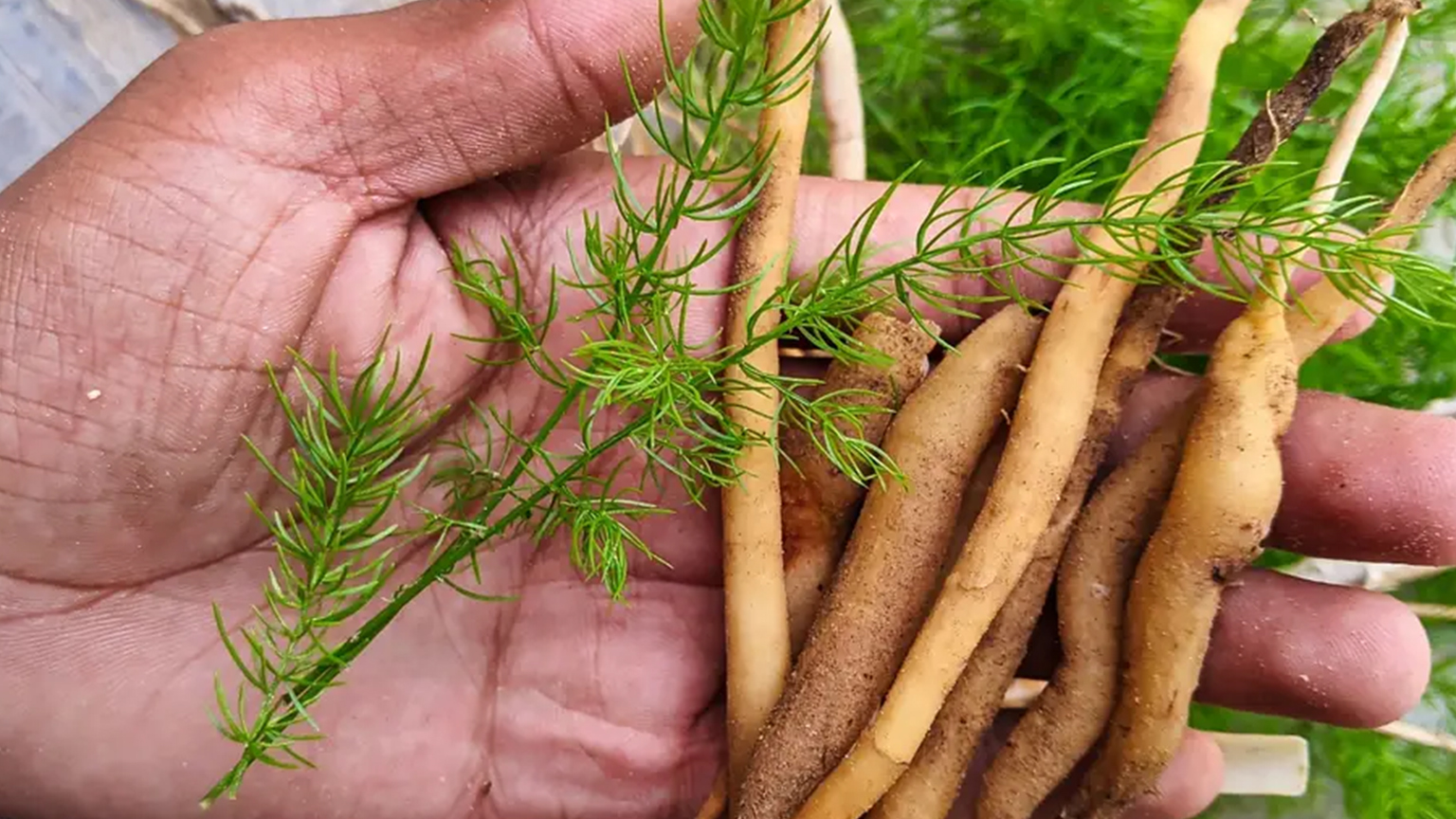
Asparagus racemosus is a climbing shrub native to India, Nepal, Sri Lanka, and parts of Australia and Africa. A member of the Liliaceae family, it thrives in tropical and subtropical forest environments, and its tuberous, fleshy roots are the primary plant part used medicinally. The Sanskrit name translates loosely as “she who possesses a hundred husbands” — a cultural metaphor for the plant’s long-revered association with female reproductive vitality and endurance.
In the Ayurvedic pharmacopoeia, Shatavari holds the classification of a rasayana — a rejuvenating tonic believed to promote longevity, vitality, and resilience. It is considered one of the most important herbs for female health, alongside Ashwagandha and Triphala in the broader Ayurvedic canon. As with many adaptogens now finding commercial traction in North America, however, its applications extend well beyond any single demographic or therapeutic category, which is part of what makes it such a versatile shelf proposition.
The Science Behind the Product
Understanding the basic pharmacology of Shatavari is what separates a knowledgeable recommendation from a shrug. Shoppers who ask “how does it actually work?” deserve an answer, and the answer begins in the root.
The biological activity of Shatavari is attributed primarily to a group of steroidal saponins called shatavarins (I through XI), with Shatavarin I and IV receiving the most scientific attention. These glycosides are found predominantly in the root and are believed to exert estrogen-modulating, immunomodulatory, and adaptogenic effects. Additional bioactive constituents include:
- Isoflavones — contributing phytoestrogenic activity
- Racemosol — a potent antioxidant phenolic compound
- Polysaccharides — implicated in immune-supportive and mucosal-protective effects
- Sarsasapogenin — a steroidal sapogenin with neuroprotective properties in preclinical models
- Asparagamine A — a polycyclic alkaloid with antioxidant properties in in vitro studies
- Mucilage and saponins — contributing to the herb’s traditionally noted digestive and soothing properties
The phytoestrogenic components are the ones that generate the most customer questions — and the ones that matter most when screening for safety. Unlike synthetic estrogens, phytoestrogens act as selective estrogen receptor modulators (SERMs), binding to estrogen receptors with lower affinity than the body’s own estradiol and producing tissue-dependent effects. This is why Shatavari can meaningfully support hormonal balance in many women while requiring caution in others — a distinction that makes floor-level knowledge essential.
What Customers Are Buying It For — And What the Research Says
“I want to support my milk supply.”
Among the most replicated findings in Shatavari research is its efficacy as a galactagogue — a substance that supports breast milk production. A randomized, double-blind, placebo-controlled trial published in Phytomedicine (Sharma et al., 2020) found that postpartum women receiving standardized A. racemosus root extract showed a statistically significant increase in prolactin levels compared to placebo, along with greater infant weight gain over the study period — a meaningful proxy for milk output. The mechanism is hypothesized to involve the corticosteroid-like activity of shatavarins stimulating lactogenic hormone pathways. This is one of the herb’s best-supported applications and a strong talking point for shoppers in the postpartum category.
“I’m going through perimenopause and I want something natural.”
This is likely the most common reason shoppers reach for Shatavari, and the research supports the conversation. A 2019 randomized controlled trial (Journal of Ethnopharmacology) examined 117 perimenopausal women over 12 weeks: those receiving 500 mg of standardized A. racemosus extract twice daily reported significant reductions in hot flash frequency, night sweats, and anxiety scores compared to placebo. No significant adverse effects were reported and hormonal parameters remained within normal ranges. Shoppers should understand it is not a replacement for medical care — and that the evidence base, while promising, is still growing compared to more established botanicals like black cohosh or red clover — but for those seeking a traditionally-grounded, well-tolerated option, the data are encouraging.
“I’ve been so stressed. I heard it’s an adaptogen.”
Shatavari’s adaptogenic classification is supported by studies examining its effects on the hypothalamic-pituitary-adrenal (HPA) axis — the system governing the body’s stress response. A 2022 human pilot study (Complementary Medicine Research) involving 60 adults with self-reported stress found that 8 weeks of supplementation with 500 mg standardized root extract produced significant reductions in perceived stress scores and serum cortisol levels, alongside improvements in sleep quality. The sample size limits broad conclusions, but the findings align with preclinical data and with the experience of practitioners who have long used this herb alongside better-known adaptogens like Ashwagandha and Rhodiola.
“I want to support my immune system.”
Polysaccharide fractions from A. racemosus root have shown immunostimulant activity across multiple studies, including enhanced macrophage activation, increased natural killer (NK) cell activity, and elevated immunoglobulin production. A study in Immunopharmacology and Immunotoxicology (2012) found that oral administration of these polysaccharides in immunocompromised mice significantly restored immune parameters including white blood cell counts and antibody titres. This application is worth knowing — and worth knowing when it becomes a contraindication (more on that below).
Antioxidant, Anti-Inflammatory, and Digestive Support
Racemosol and other phenolic constituents exhibit significant free radical scavenging activity, while in animal models of inflammation, A. racemosus extract has been shown to suppress pro-inflammatory cytokines including TNF-α and IL-6. The herb’s mucilaginous saponins also exert cytoprotective effects on the gastric mucosa — increasing mucus secretion and reducing oxidative damage — which explains its traditional use for gastric discomfort and hyperacidity. For shoppers managing both stress and digestive sensitivity, this multi-layered profile is worth highlighting.
Safety, Contraindications, and the Art of the Right Conversation
Here is where product knowledge becomes genuine customer service. Shatavari is well-tolerated in the general population, but its hormonal and immune-modulating mechanisms create real contraindications that staff should be able to navigate confidently. The goal is not to gatekeep — it is to make sure the right product reaches the right person. A well-handled screening conversation builds trust that no marketing campaign can manufacture.
When Hormones Are Already in Play
Because shatavarins exert mild estrogenic effects in certain tissues, Shatavari warrants caution for anyone with a hormone-sensitive condition: estrogen receptor-positive (ER+) breast cancer, ovarian or uterine cancer, endometriosis, or uterine fibroids. Estrogen-sensitive tissues may potentially be stimulated by phytoestrogen exposure, and while evidence specific to Shatavari is insufficient to confirm this risk with certainty, the absence of exonerating data justifies a referral rather than a sale.
The same caution applies to shoppers on medications that depend on precise hormonal balance — oral contraceptives, hormonal IUDs, and estrogen-based HRT. More critically, tamoxifen and aromatase inhibitors — used in breast cancer treatment to block or reduce estrogen activity — face a theoretical risk of counteraction from any estrogenic botanical. This population visits natural health stores regularly, often without volunteering their oncology history.
Thyroid medications are also worth flagging: preliminary in vitro evidence suggests possible interaction with thyroid receptor signalling, and anyone on levothyroxine or similar medications should check with their prescribing physician before adding any adaptogen.
Good questions to work into the conversation naturally:
- “Are you on any hormonal medications — birth control, HRT, or anything related to a cancer treatment?”
- “Has a doctor ever mentioned endometriosis, fibroids, or a hormone-sensitive condition to you?”
If yes to either: “This one works on hormone receptors, so it’s worth a quick check-in with your doctor or naturopath first — they’ll be able to give you a clear answer based on your full history.”
The Asparagus Connection
Asparagus racemosus shares its botanical family with common asparagus. Case reports — including one published in Annals of Allergy, Asthma & Immunology — document IgE-mediated allergic reactions in asparagus-sensitive individuals, ranging from mild urticaria to respiratory symptoms. It is rare and entirely preventable with one question.
Ask: “Any food allergies — particularly to asparagus?” A shopper who flags asparagus sensitivity should be offered an alternative adaptogen and thanked for the information. That kind of exchange leaves an impression.
Pregnancy: Traditional Herb, Modern Caution
Shatavari’s reputation as a women’s herb leads many expecting mothers to reach for it, often assuming “traditional” means universally safe. Several animal studies have noted uterotonic effects at high doses, raising a theoretical concern about uterine stimulation in early pregnancy. Clinical safety data in pregnant humans do not yet exist. Health Canada’s general NHP guidance is clear: insufficient pregnancy safety evidence means no first-trimester recommendation, and any later use should be supervised by a healthcare provider.
Ask: “Are you currently pregnant, or in your first trimester?” If yes: “It’s traditionally celebrated as a women’s herb, but the clinical data in pregnancy are still limited — your midwife or OB will want to weigh in before you start.” Short, warm, and responsible.
Autoimmune Conditions and Immunosuppressive Therapy
The immune-stimulating properties that make Shatavari useful for general immune support become a liability for anyone whose condition is managed by suppressing immune activity. Rheumatoid arthritis, lupus, multiple sclerosis, Crohn’s disease, and psoriasis all fall into this category. So do shoppers on post-transplant regimens or medications like methotrexate, cyclosporine, or azathioprine. Stimulating the immune system when a treatment protocol is working to suppress it can theoretically trigger flares.
Ask: “Do you have any autoimmune conditions, or are you on medications to keep your immune system in check?”
Kidney and Liver Conditions
High-saponin botanicals are metabolized in the liver and eliminated through the kidneys. Anyone with compromised function in either organ — chronic kidney disease, hepatitis, cirrhosis — may experience altered metabolism and a higher risk of accumulation. Until clinical studies specifically examine this population, the precautionary principle applies: refer to their physician.
Ask: “Do you have any kidney or liver conditions your doctor monitors?”
The Five-Question Floor Screen
In a busy store, not every interaction allows for a deep conversation. These five questions — worked into a natural, friendly exchange — capture the most important safety considerations in under two minutes:
- “What are you looking to use this for? I want to make sure it’s the right fit.”
- “Are you on any prescription medications — particularly for hormones, immunity, or a chronic condition?”
- “Any history of hormone-related conditions — fibroids, endometriosis, or breast or ovarian cancer?”
- “Are you pregnant, breastfeeding, or trying to conceive?”
- “Any known allergies — especially to asparagus or plant supplements?”
This is not gatekeeping. It is product knowledge in action — and it is what separates a specialty wellness destination from a shelf full of products nobody understands. Shoppers who feel genuinely looked after become loyal customers. Those who don’t will order online next time.
When a situation exceeds what floor staff can confidently navigate, the right move is always a warm referral — to a naturopathic doctor, an NHP-trained pharmacist, or an integrative medicine physician. Knowing how to make that handoff gracefully, without leaving a shopper feeling dismissed, is one of the most valuable skills a wellness team can develop.
What to Look for on the Label: Regulatory and Quality Benchmarks
In Canada, Shatavari is regulated as a Natural Health Product (NHP) under the Natural Health Products Regulations(NHPR) administered by Health Canada. Every product on shelf should carry a valid Natural Product Number (NPN)— confirmation that Health Canada has reviewed it for safety, efficacy, and quality. If a product cannot produce an NPN, it should not be on the shelf.
Beyond regulatory compliance, standardization is the key quality differentiator when evaluating which products to stock. Look for extracts standardized to shatavarin content, expressed as a percentage of total saponins. Products standardized to a minimum of 2.5–5% total saponins are generally considered therapeutically meaningful. Organic certification, third-party testing documentation, and transparent sourcing are additional markers worth requiring from suppliers — and worth communicating to shoppers who ask how to choose between products.
Formats, Trends, and Where the Category Is Heading
The global adaptogen market is projected to surpass USD $20 billion by 2028, with women-focused botanicals among its fastest-growing segments. Perimenopause support, postpartum recovery, and hormonal wellness are not niche conversations anymore — they are mainstream, and Shatavari sits squarely at their intersection.
On the format side, standalone root powders and capsules remain the volume leader. Multi-herb adaptogenic blends pairing Shatavari with Ashwagandha, Maca, or Vitex (Vitex agnus-castus) are gaining strong traction with shoppers who want a comprehensive hormonal support formula rather than a single-herb approach. Functional food and beverage crossovers — adaptogenic lattes, protein powders, wellness teas — are extending the herb’s reach into lifestyle categories, opening natural health retail to shoppers who might not have walked the supplement aisle before.
The opportunity in this space is not just about stocking the right SKUs. It is about owning the conversation. Shoppers who discover Shatavari through a social media post or a podcast will eventually walk into a store looking for someone who can tell them more than the internet did. The stores that have invested in staff knowledge — that can connect the traditional story to the current science, and do so with appropriate safety framing — are the ones that turn a first visit into a long-term relationship.
Dosage at a Glance
For reference when guiding shoppers to appropriate products, standard dosing ranges used in clinical literature include:
| Preparation | Typical Dose | Frequency |
|---|---|---|
| Dried root powder | 3–6 g | Once or twice daily |
| Standardized extract (5:1) | 500–1,000 mg | Once or twice daily |
| Liquid extract (1:2) | 3–5 mL | Twice daily |
A minimum 8–12 week trial is generally recommended to assess results for hormonal and stress-related indications — important context to share with shoppers who may expect faster outcomes and give up too soon.
In conclusion
Shatavari is not a trend herb. It is one of the most time-tested botanicals in the world’s oldest medical tradition, gaining modern clinical validation at a moment when the market is ready for it. The category is growing, consumer interest is genuine, and the shoppers walking through the door with questions about hormone health, postpartum recovery, and stress resilience are not going away.
What they are looking for — beyond the product itself — is someone who understands it. That expertise, paired with the confidence to ask the right safety questions and the judgment to refer when needed, is what builds the reputation that sustains a wellness business long after any single product trend has run its course.
The herb has endured for millennia. The stores that understand it will be the ones best positioned to serve the customers who need it.