




Home Blog Page 169

Can probiotics reverse depression?

0

According to researchers at the University of Virginia School of Medicine, probiotics could be a potential treatment for depression.

The study looked at the effects of stress on mice, noting a significant loss of Lactobacillus in the process. They found that this decline resulted in the manifestation of depression symptoms, and that feeding the mice foods containing lactobacillus reuteri could return them to normal.
Researchers note that Lactobacillus appears to affect the levels of a blood metabolite called kynurenine, which is known to trigger depression.
Because lactobacilli are commonly found in probiotics, this supplementation could greatly benefit patients with depression.
“The big hope for this kind of research is that we won’t need to bother with complex drugs and side-effects when we can just play with the microbiome,” says lead researcher Alban Gaultier. “It would be magical just to change your diet, to change the bacteria you take, and fix your health—and your mood.”
Further, these results are reflective of a systematic review published in the journal CNS & Neurological Disorders Drug Targets. This document suggests that gut microbiota play a key role in regulating stress response, confirming that probiotics help mitigate anxiety and depressive-like behaviors in animal models.

How imperative is the brain-gut axis to your patients’ health?

0

According to health psychologists, the connection between your patients’ gut and brain health may be stronger than you might think. Now, these health-care professionals have begun treating gastrointestinal disorders that are largely contributed to by stress, including irritable bowel syndrome (IBS), Crohn’s disease, functional heartburn, functional dyspepsia, and ulcerative colitis.

This is because biochemical signaling between the brain and the GI tract—or the brain-gut axis—can have major implications on gastrointestinal health. For instance, the normal stress of daily life can make certain gastrointestinal conditions worse, while worrying about GI symptoms can make symptoms worse, as well as increase stress.

Dr. Sarah Kinsinger, PhD, ABPP, a Loyola Medicine health psychologist, offers behavioral treatments designed to target the brain-gut pathways. Specifically, she provides cognitive-behavioral therapy, a proven treatment for irritable bowel syndrome, as well as relaxation techniques, including diaphragmatic breathing and gut-directed hypnotherapy.

Dr. Kinsinger notes that for many patients, psychological or behavioral interventions can be more effective than medications.

“It is very gratifying to see patients get better after in some cases suffering for many years,” she says. “Psychological and behavioral interventions do not cure their disease, but the treatments can provide patients with safe and effective coping mechanisms and greatly reduce the severity of their symptoms.”

If your patients are suffering from gastrointestinal disorders, consider suggesting this method of healing as an adjunct treatment.

Walmart part of new initiative to source from women-owned businesses

0
What is Walmart’s vision for the future of shopping?

Walmart has announced that it is one of nine corporations joining in a collaborative effort to source from women-owned businesses (WOBs). Over the course of the next five years, the company will track and report sourcing from self-identified and certified WOBs.


This marks the first time the Women’s Business Enterprise National Council (WBENC), the largest third-party certifier of businesses owned, controlled, and operated by women in the U.S., will launch a formal initiative to publicly report aggregated spending on WOBs. Walmart helped form this unified front of major corporations, including Campbell Soup Company, The Coca-Cola Company, ExxonMobil, General Mills, Johnson & Johnson, Mondelēz International, PepsiCo and Procter & Gamble, in order to create a more visible movement and raise awareness for the importance of sourcing from WOBs.


“We are proud to be part of this important initiative, and together we can make an even bigger impact in elevating these successful women-owned businesses,” says Doug McMillon, president and CEO of Wal-Mart Stores, Inc. “Our customers care where products are sourced, and we believe supporting women-owned businesses helps us put innovative products on our shelves while helping these businesses thrive and grow.”


The initiative comes at a critical time when female entrepreneurs report having smaller and less diverse networks, leaving them at a disadvantage for growth, innovation and global relevance.


“By participating in this initiative, these companies will help fuel innovation and growth for women-owned businesses across the U.S.,” says Pamela Prince-Eason, president and CEO of WBENC. “With women-owned businesses currently supporting the creation or maintenance of 23 million American jobs, investing in their growth means investing in more opportunities for the workforce overall.”


This announcement comes on the heels of the culmination of Walmart’s five-year Global WEE Initiative, which included a set of goals to help empower women around the world through sourcing, training and supporting diversity and inclusion. As part of the WEE Initiative, Walmart sourced $20 billion from women-owned businesses in the U.S. and increased sourcing from women-owned businesses internationally. Additionally, in 2014, working with WBENC and WEConnect International, Walmart helped fund the creation of the “Women-Owned” logo. This can be used by any woman-owned supplier certified by those organizations at any retailer to highlight their products to consumers. Today, Walmart has more than 1,500 suppliers who identify as women-owned businesses, producing everything from apparel to produce.


For additional details on Walmart’s Global WEE Initiative, visit http://corporate.walmart.com/womensempowerment.

Health Canada asks for further public input on NHP regulations

0
The fight against NHP regulations continues

Health Canada is initiating a second set of public consultations about the regulation of self-care products, including natural health remedies, over-the-counter medications, and cosmetics. Public meetings to discuss these issues began this week, starting in Saskatoon and continuing across the country for the next three months.

Last fall, the agency conducted a web-based gathering of opinion. Health Canada received a lot of negative feedback from health providers, industry representatives, consumers, and public groups, who expressed concerns over the suggested overhaul.

With the new regulations, self-care products labelled as moderate- or high-risk would necessitate a science-based government review, while lower-risk products would not be reviewed by Health Canada. In addition, lower-risk products would no longer be able to make claims about efficacy for certain health issues.

“Health Canada is of the view that self-care products in general are lower risk and therefore will not be treated [like] prescription drugs,” says Manon Bombardier, director-general of Health Canada’s Natural and Non-Prescription Health Products Directorate.

The Canadian Health Food Association (CHFA) opposed last fall’s proposal, and is waiting to see what this round of consultations has in store.

“The initial proposal back in the fall lacked clarity and details, and we were concerned it could have negative implications for the 79 per cent of Canadians that are using natural health products,” says Long. “Once the next round of consultations actually begins, I expect that we we’ll get a bit more of a glimpse into where they’re proposing to go next.”

The remaining consultations will take place as follows:

April 20, 2017      1:00 pm – 4:30 pm           Yellowknife, NWT                    Register Now
April 24, 2017      1:00 pm – 4:30 pm           Montreal, QC                          Register Now
April 28, 2017      1:00 pm – 4:30 pm           Halifax, NS                              Register Now
May 2, 2017        1:00 pm – 4:30 pm           Toronto, ON – Downtown        Register Now
May 3, 2017        1:00 pm – 4:30 pm           Toronto, ON – Airport              Register Now
May 5, 2017         9:00 am – 12:20 pm         Web Consultation (English)    Register Now
May 5, 2017         1:00 pm – 4:30 pm           Web Consultation (French)    Register Now
If you are interested in making your voice heard, please attend one of these sessions.

Amazon’s Pickup stores offer new challenge to independent grocers

0
Smoke

Amazon has revealed the details of its grocery click-and-collect sites, AmazonFresh Pickup. The service, which will be debuted in Seattle, will provide a full array of grocery and household items, and will be free to Prime members.

The sites are currently located in Seattle’s Sodo and Ballard neighborhoods. However, industry experts expect the e-commerce giant to open as many as 30 outlets this year.

Amazon Pickup allows shoppers to make their purchases online and select a delivery time, which could be ready in as little as 15 minutes. Then, they may pull in to any of the store’s several drive-up spaces, where employees will load groceries into their cars within minutes.

This new service is Amazon’s second foray into physical food stores. Previously, it launched its Amazon Go convenience store, which allows shoppers carry out their purchases without stopping for checkout. However, that store has postponed its public opening, as the company must address remaining technical issues.

As this offering expands across the U.S. and into the Canadian market, independent grocers and retailers will have to up the ante. In order to compete with fast, automated services like this one, they will need to provide consumers with options that are otherwise unavailable. Offering in-store experiences, demos, and promotions will help to draw buyers back into the traditional shopping experience. One thing’s for sure: in order to compete, you’ll need to get creative.

Flash Beauté appoints new Export & Marketing Manager

0
Walgreens calls off Rite Aid takeover

Flash Beauté, the company behind cosmetics brand Kariderm, has announced the appointment of Nicolas Dupont as its new Export and Marketing Manager.


Prior to his work with Kariderm, Dupont worked with Chinese exporting trading houses in Shanghai.


“I am relatively new in the biocosmetic industry,” says Dupont. “Being new has some drawbacks, but also brings a lot of advantages. My previous experience gives me a unique perspective of the exporting business. Being able to see from both sides of the looking glass is definitely an advantage when you want to develop your brand at the international level.”


At Flash Beauté, Dupont is working to build new distribution channels both in Canada and internationally. Additionally, he manages the promotional activities of the company, including developing product offerings, visiting and exhibiting at national Expos, creating local and national marketing campaigns, and managing the social media/online presence of Kariderm.


“Flash Beauté is a great entrepreneurial story. It was born out of a simple idea and became a pioneer of the fair-trade biocosmetic industry,” says Dupont. “The company helps to change the way the average person sees its beauty and skin care routine. Obviously, it is of the upmost personal relationship between people and their skincare. We have the privilege to have a direct and positive impact on people’s daily life.”

Nutiva expands recalls on organic plant based protein

0
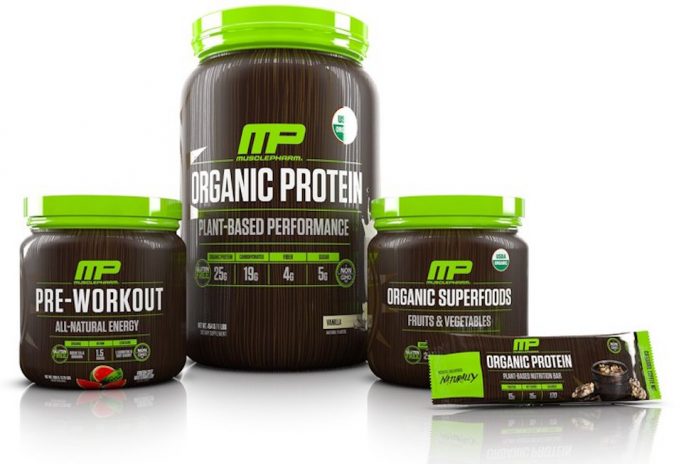
Nutiva expands recalls on organic plant based protein

Nutiva, an Organic Superfoods company, has decided to expand its initial voluntary product recall of the Organic Plant Based Protein Superfood 30 Shake – Vanilla to include all lots of both Vanilla and Chocolate flavored products after identifying that this product may contain trace amounts peanuts. People who have an allergy or severe sensitivity to peanuts run the risk of serious or life-threatening allergic reaction if they consume this product. “We are choosing to voluntarily recall all of our Organic Plant Based Protein Superfood 30 Shakes as a precautionary measure to provide the safest products for our customers,” states John W. Roulac, Nutiva’s CEO.


These items were sold on the internet and through distributors in Alabama, California, Colorado, Connecticut, Florida, Georgia, Indiana, Iowa, Kansas, Kentucky, Nevada, New Hampshire, New Jersey, New York, North Carolina, Oregon, Pennsylvania, Texas, Virginia, Washington, and Wisconsin.

Consumers who have purchased these items and have an allergy or severe sensitivity to peanuts are urged to not eat the product, and to dispose of it or return it for refund to where it was originally purchased. Nutiva has taken these steps strictly as a precautionary measure to assure our customers of our commitment to quality. No other Nutiva items are impacted by this recall.

Customers with questions may contact (800) 993-4367 between the hours of 8:00 a.m. – 3:00 p.m., Monday – Friday, or email help@nutiva.com.

ABOUT NUTIVA:
Nutiva was founded in 1999 with a single purpose in mind—to revolutionize the way the world eats. Today Nutiva nurtures vitality by conscious curating of the world’s finest plant-based organic foods including coconut, hemp, chia and red palm. We contribute one percent of sales ($4M to date) to projects supporting healthy communities and sustainable agriculture. For more information, please visit nutiva.com

Walmart.com enters e-commerce duel with Amazon

0
What is Walmart’s vision for the future of shopping?

Walmart.com is hiring hundreds of workers at its tech operations to boost its free two-day shipping offer for online orders. This move comes as part of its continuing competition with Amazon Prime. (xanax)

Recently, the retailer also launched free two-day shipping on orders of US$35 or more, with no subscription required. This challenges Amazon’s offering of free two-day shipping for Prime customers, which costs $99 per year. Walmart is also pushing free grocery pickup for products bought online.

This reflects the plight of retailers everywhere, who are now trying to create new omnichannel sales strategies.

“Our integrated offering means customers are shopping with us through multiple channels,” says executive vice-president and CFO Brett Biggs.

Walmart is now the second-largest U.S. online retailer by revenue, one of the top three online retailers by traffic, and its Walmart app is among the top three apps in retail.

With these two online giants battling it out, smaller e-tailers and independents with online stores will have to up their game. Ensuring that you have great product selection, as well as expedited shipping options, will further your success. If possible, consider offering free shipping—or other rewards, such as free product—when customers spend over a certain amount of money. Moreover, amp up your in-store game with various promotions—while e-commerce is booming, many consumers still prefer a bricks-and-mortar experience to online shopping.

New study shows importance of long-term funding for cancer research

0

According to a new study by Bentley University, new drugs to treat cancer are the end products of research begun in the 1970s and ’80s. Researchers say that this demonstrates the importance of long-term research in bringing new therapies to market.
 
The article, published in PLOS One, examines the path by which discoveries in basic, biomedical science are translated into new drugs. The results show that the time from the initiation of new areas of research to the approval of new drugs using modern, targeted or biological technologies is typically 30 to 40 years.

“Our analysis shows that the emergence of new cancer therapeutics follows predictable patterns of technology innovation,” says Dr. Laura McNamee, the lead author of the paper and a research associate in Bentley’s Center for Integration of Science and Industry. “Basic research is essential. Until this research base is established, very few targeted or biological therapeutics are successfully approved.”
 
“This new research emphasizes the critical importance of long-term funding for basic research,” says Dr. Fred Ledley, founding director of the center and a co-author of the paper. “Most scientific discoveries are only the first step in basic science that may take decades to mature. It is important to recognize that reducing support for basic research may hurt new drug development for decades to come.”

The work was supported by a grant from the National Biomedical Research Foundation. 

Add this natural, cancer-fighting compound to your patients’ diet plan

0

Researchers out of Oregon State University have found that broccoli may be better for you thank you might think. During a recent study, they found that sulforaphane, a dietary compound in the vegetable, may help to prevent prostate cancer through its influence on long, non-coding RNAs (lncRNAs).

The team notes that this evidence is another step forward in new research on the underlying genetics of cancer development. The research provides more evidence for how lncRNAs, which were once thought to have no particular value or function, may play a critical role in triggering cell malignancy. In fact, lncRNAs often control which genes are expressed: scientists now believe that when lncRNAs are dysregulated, they can contribute to multiple disease processes, including cancer. If scientists can control these genes, they may be able to slow the growth of malignant cells.

Specifically, the study showed that one such gene, known as LINC01116, is upregulated in a human cell line of prostate cancer. However, it can be decreased by treatment with sulforaphane.

“This could be a turning point in our understanding of how cancer may be triggered and spreads,” says Emily Ho, the endowed director of the Moore Family Center for Whole Grain Foods, Nutrition and Preventive Health at OSU, a professor in the College of Public Health and Human Sciences and principal investigator with the Linus Pauling Institute. “It’s obviously of interest that this dietary compound, found at some of its highest levels in broccoli, can affect lncRNAs. This could open the door to a whole range of new dietary strategies, foods or drugs that might play a role in cancer suppression or therapeutic control.”

“We showed that treatment with sulforaphane could normalize the levels of this lncRNA,” says Laura Beaver, a research associate in the Linus Pauling Institute and College of Public Health and Human Sciences, and lead author on the study. “This may relate to more than just cancer prevention. It would be of significant value if we could develop methods to greatly slow the progress of cancer, help keep it from becoming invasive.”

To help boost their chances of fighting off cancer, encourage your patients to add more broccoli into their diet. Additionally, sulforaphane supplements are available on the market. Adding these to your storefront or your patients’ supplementary regimens could boost your sales—and their health.