




A sport-doping certification just landed on prenatal vitamins. That move signals how the entire category will compete next—and which brand managers will be left behind.
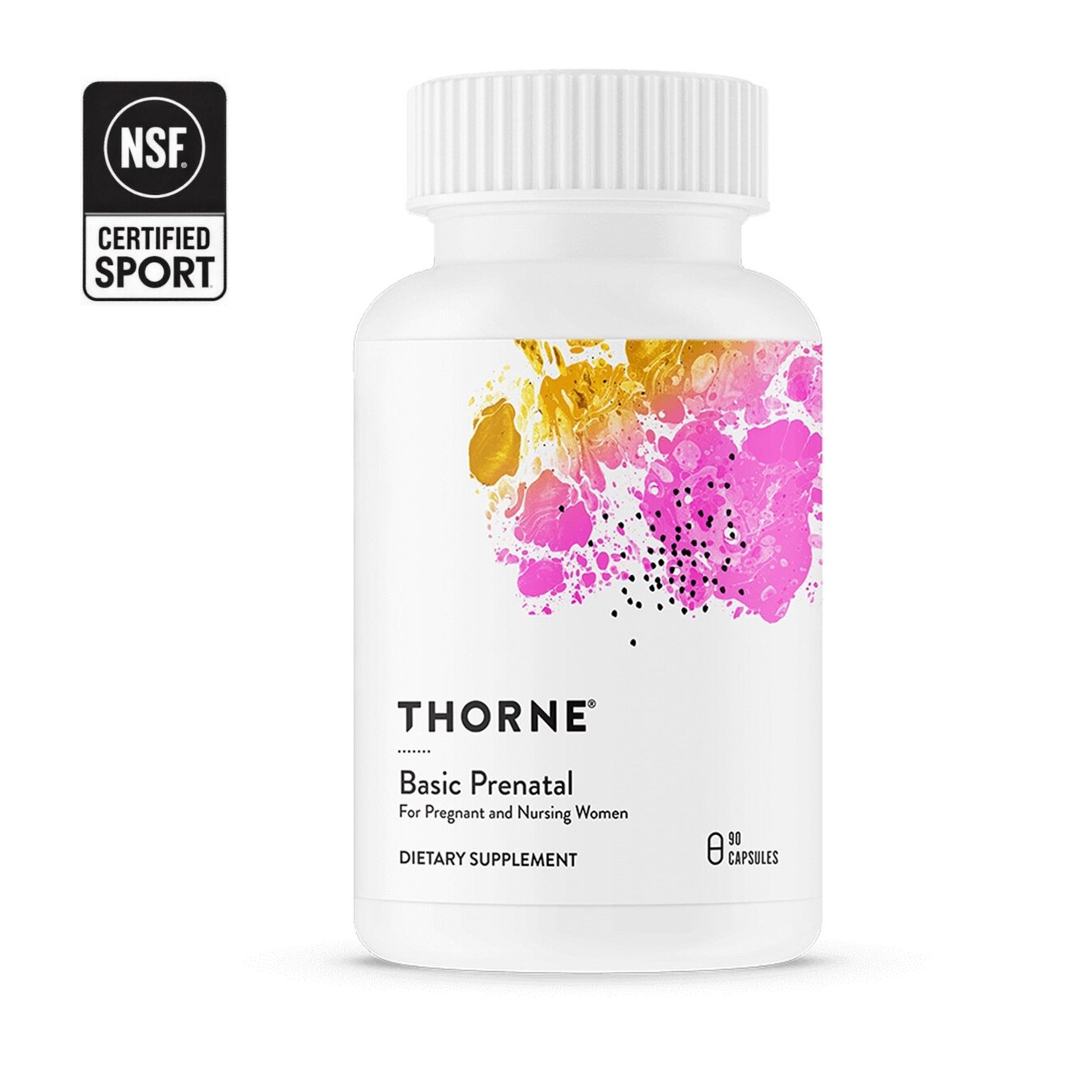
Prenatal vitamins have a new competitive standard. In late July, Thorne announced its Basic Prenatal as the first certified prenatal supplement in the category to earn NSF Certified for Sport status. That’s a banned-substance verification built for Olympic athletes—now applied to pregnancy products.
What does that mean for brand managers? Simple: expectant mothers are starting to shop like drug-tested athletes. They want proof. Not claims. Proof.
Thorne’s timing matters. California’s SB 646 will require all prenatal makers to test for heavy metals and publish results online by January 2027. Brands that get certified now can say they chose verification as philosophy. Brands that wait will be saying a law forced their hand. In front of a customer making the most risk-averse purchase of her life, that difference is worth real shelf space.
For retailers, the implication is clearer: a store that can explain NSF Certified for Sport will win the prenatal shopper. A competitor stocking only uncertified products will struggle to defend that choice. The certification window is open now. In eighteen months, it may become table stakes.
What happened
In late July, Thorne announced that its Basic Prenatal became the first prenatal with a bioactive form of folate to earn NSF Certified for Sport status. The formula itself did not change. What changed is the verification behind it. Every production lot is now screened for lead, cadmium, mercury and arsenic, checked against California’s Proposition 65 thresholds, and tested to confirm the label matches what is in the bottle. The company made the announcement alongside a wave of certified women’s health launches covering perimenopause, libido and skin.
The brand is one data point. The pattern is the story. This certification exists for one reason: to protect drug-tested athletes from a failed doping test. A prenatal customer will never face a doping control officer. So when a company pays for that level of scrutiny on a pregnancy product, it is not selling to athletes. It is betting that expectant mothers now shop the way athletes do — by demanding proof.
Why this was coming
The prenatal category earned its scrutiny. In April 2025, researchers at the University of Miami, working with the Clean Label Project, published a study in Environmental Research that tested 156 over-the-counter prenatal supplements. They found detectable lead in 83 per cent of products, cadmium in 73 per cent, and phthalates in more than a quarter. Fifteen per cent exceeded California’s legal threshold for lead. Prescription products fared little better, and a 2023 U.S. Government Accountability Office review had already found lead in half the prenatals it sampled.
Lawmakers responded quickly. Last October, California passed SB 646, the first law in North America requiring prenatal multivitamin makers to test for the four major heavy metals and publish the results online, product by product. It takes effect January 1, 2027, and because almost every major brand sells into California, it will reshape the entire continental supply chain.
Put the study and the law side by side and the certification news reads differently. Mandatory disclosure is arriving in the category’s largest market within eighteen months. Brands that get verified now can present transparency as a philosophy. Brands that wait will be explaining that a law forced their hand. In front of a customer making the most risk-averse purchase of her life, that difference is worth real market share.
The Canadian advantage nobody mentions
Canada quietly holds a strong position here, and almost no one tells the story at shelf level. Every prenatal legally sold in this country carries a Natural Product Number, and Health Canada’s quality rules impose contaminant limits, including heavy metals, before a licence is ever issued. In other words, the baseline California just legislated toward is close to where the Canadian framework already stands. That is a genuine selling point sitting unused in nearly every natural health store in the country.
An honest caveat belongs beside it. A licence confirms a product met its specifications; it does not publish this batch’s lead result for a shopper to read. Third-party programs fill that gap, which is why they carry commercial weight even in a regulated market. And since the major contamination studies are American, the accurate claim is that Canadian products face stricter pre-market controls — not that they are proven cleaner.
One compliance warning rounds out the picture. Imported marketing language such as “athlete-grade” or “certified pure” does not automatically match the claims authorized on a Canadian licence. Any brand manager bringing U.S. copy north should check every statement against the NPN first, because a credibility campaign that triggers a Health Canada advertising complaint defeats its own purpose.
The play for retailers
Start on the floor. The prenatal shopper researches harder than anyone else in the store, and she is increasingly reading about heavy metals before she walks in. Train staff to answer three questions plainly: what an NPN already guarantees, what third-party testing adds, and why tablets performed worse than gummies and softgels in the contamination studies. A store that answers those questions wins her — and likely keeps her through the postpartum repurchase cycle, the fastest-growing corner of a global women’s supplement market that Grand View Research pegs at US$57.4 billion in 2024, heading to US$77.5 billion by 2030.
Then look upstream. Category managers should put three questions to every prenatal supplier: do you test each lot for heavy metals beyond what licensing requires, will you share certificates of analysis, and how will you respond when SB 646-style disclosure takes effect? As IHR argued in its analysis of the claim-substantiation market, proof is becoming a condition of listing. The prenatal set is where that standard lands first, because the cost of getting it wrong is highest.
Two developments deserve watching through 2027. The first is whether disclosure laws spread — to other states, and eventually as pressure on Ottawa to add public batch results to the NHP framework. The second is whether rival certifiers follow NSF into everyday women’s products. If they do, verification stops being a differentiator and becomes table stakes, and the advantage moves to whoever explained it to customers first. That window is open now.
Frequently Asked Questions
What does NSF Certified for Sport certification actually verify?
The program tests every certified production lot for more than 280 substances banned by major athletic organizations, confirms that label claims match actual contents, and screens for contaminants including lead, cadmium, mercury and arsenic. Built for drug-tested athletes, it is increasingly used as a general consumer trust mark.
Are prenatal vitamins sold in Canada already tested for heavy metals?
Yes, at the licensing stage. Every legal prenatal carries a Natural Product Number, and Health Canada’s quality rules impose contaminant limits, including heavy metals, before a licence is issued. What licensing does not provide is batch-by-batch public disclosure of results — the gap that certification programs and new disclosure laws are built to fill.
What is California’s SB 646 and does it affect Canadian businesses?
SB 646 takes effect January 1, 2027. It requires prenatal multivitamin makers selling in California to test for arsenic, cadmium, lead and mercury and post the results publicly online. It has no legal force in Canada, but brands selling into both markets will comply continent-wide, and Canadian consumer expectations will likely follow.
How should retailers respond to heavy-metal concerns in the prenatal category?
Stock products with transparent testing, whether third-party certification or published certificates of analysis, and train staff to explain what an NPN covers. Ask suppliers for lot-level heavy-metal data. Avoid purity claims that go beyond what a product’s licence authorizes, since advertising must match the approved NPN claims.
This is independent editorial analysis from IHR Magazine. It references Thorne’s Basic Prenatal certification as one example of a broader industry trend toward third-party verification in women’s health, not as an endorsement of any company or product. Retailers and brands should verify current NPN status and licensed claims before making purchasing or marketing decisions.






[…] it paid for the right, Snackish cannot and has no need to, and for a category manager building a women’s health set that difference decides which product carries the in-store […]
[…] principle for an athlete set that survives legal review. As IHR noted when sport certification moved into the prenatal aisle, proof is becoming a condition of […]