





From hydration and collagen support to elasticity, UV defence and radiance, there is now a product engineered for nearly every beauty goal. A shopper can name the benefit and find a bottle for it. That abundance was supposed to be a gift to retailers. Increasingly, it is a liability, and the shift toward multifunctional ingredients is the industry’s clearest response. A recent industry report found that 72% of consumers feel overwhelmed by the sheer volume of new product launches. Overwhelmed shoppers do not build bigger baskets. They freeze, they defer, and too often they leave the category altogether.
The consumer response to that fatigue has a name. “Skinimalism” is the less-is-more philosophy that stripped bloated skincare routines down to a handful of effective essentials. It has moved from a social-media talking point to a genuine purchasing behaviour. Analysts project the skinimalism-aligned market to grow at roughly 9.8% annually through 2034. For an industry that has spent a decade adding SKUs, the signal is uncomfortable but clear: shoppers are no longer rewarding more. They are rewarding smarter.
What should interest Canadian retailers and brand managers most is where that mindset is heading next. Skinimalism is no longer confined to the bathroom shelf. It is migrating into the daily supplement stack, where the same logic applies with even greater force. Consumers who have learned to consolidate three serums into one are now asking why they take six capsules. The winners of that consolidation will be multifunctional ingredients: single inputs that credibly support several health goals at once. The brands and retailers who organize around them win too.

The category problem hiding behind a growth story
On paper, beauty-from-within is one of the healthiest stories in the supplement world. The global beauty supplements segment is expanding at about 7% annually. The broader women’s health and beauty supplements market is forecast to approach US$77 billion by 2030. In Canada specifically, the menopause market generated roughly C$1 billion-equivalent (US$729.7 million) in 2024, with dietary supplements the single largest treatment segment.
But topline growth disguises a structural problem on the shelf. Category expansion has been driven largely by proliferation: more brands, more formats, more single-benefit products. All are competing for the same finite linear footage and the same finite consumer attention. Each new launch promising one more isolated benefit adds to the 72% overwhelm rather than relieving it. The result is a category that grows in dollars. It also becomes harder to shop, harder to merchandise, and harder to staff with credible advice.
This is the commercial tension skinimalism resolves. When a shopper consolidates, the retailer does not necessarily lose revenue — but the basket reorganizes around fewer, higher-trust, higher-velocity products. The strategic question for every buyer is no longer “what new launch do I add?” It is “which ingredients earn the right to anchor the category?” That reframing favours the multifunctional over the single-note. It rewards retailers who curate rather than simply stock.
Why multifunctional ingredients win the consolidation
The economics of consolidation point in one direction. If a consumer is going to carry fewer products, each remaining product must do more work. An ingredient that supports a single endpoint competes on a crowded, commoditized shelf where price is the main lever. An ingredient that credibly touches several foundational systems at once becomes a destination purchase and a margin anchor. The key is that it can be explained in a single, evidence-backed sentence to a shopper.
This is also where the science and the commerce finally align. The most defensible multifunctional ingredients are not random combinations; they are compounds whose breadth of benefit traces back to a shared biological mechanism. When circulation, oxidative-stress balance and connective-tissue support all improve from the same input, the “does more” claim is not marketing reach. It is mechanism. That distinction matters enormously for buyers trying to separate durable category anchors from launch-cycle noise. It matters just as much for compliance teams who need claims grounded in evidence rather than enthusiasm.
It is against exactly this backdrop that Pycnogenol® has become a useful case study in what a multifunctional anchor looks like.
Pycnogenol as a category case study
Pycnogenol is worth examining not as a product endorsement but as an illustration of the ingredient profile retailers should be learning to recognize. It is one of the most extensively researched natural ingredients in the world, backed by more than 160 clinical studies involving over 13,000 participants. More than 450 published papers and review articles have accumulated over roughly 40 years. It already appears in more than 1,000 dietary supplements and health products worldwide. That means it arrives at the shelf with both a research dossier and existing consumer familiarity, two things that lower a retailer’s risk.
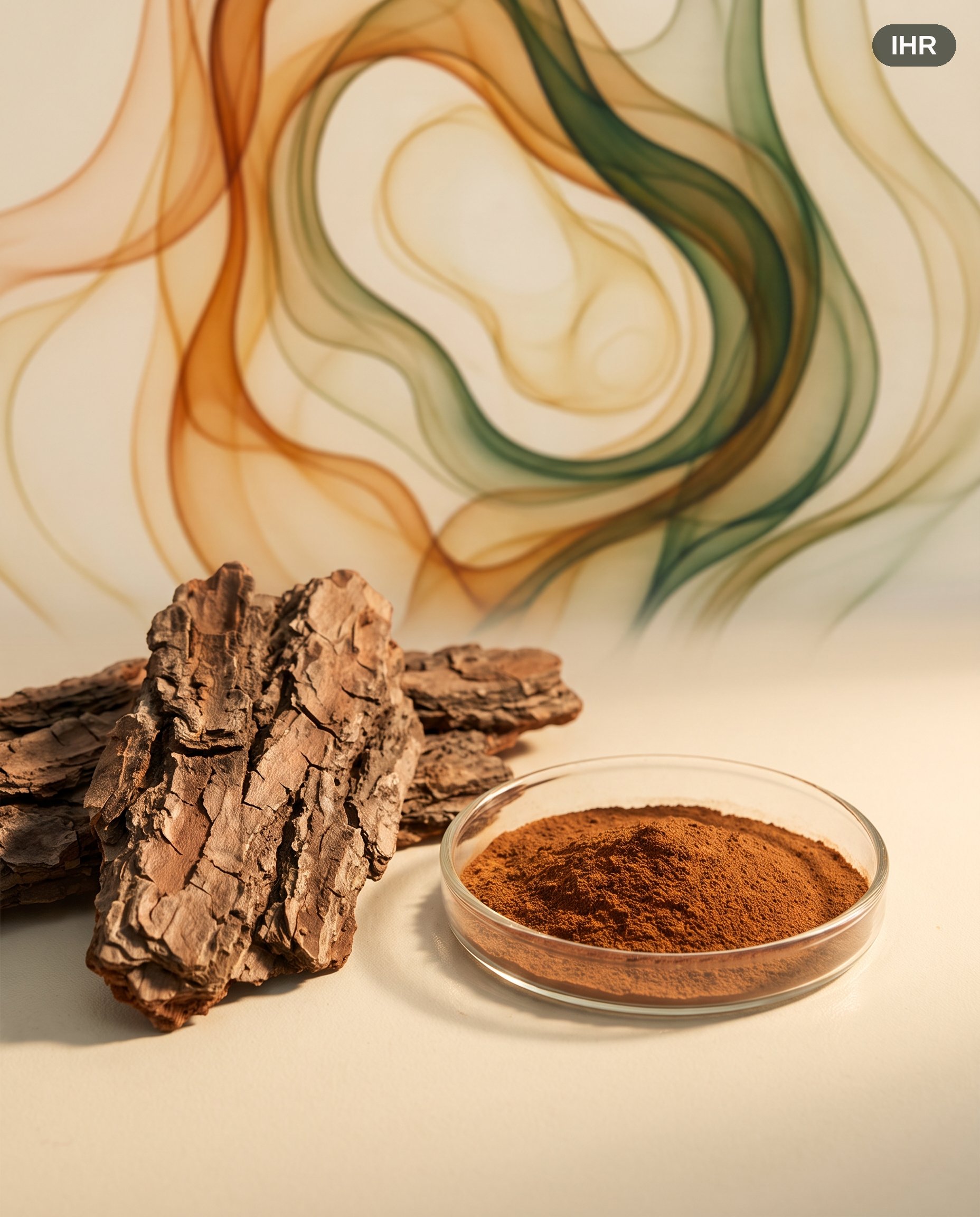
Mechanistically, it is the opposite of an isolated compound. Pycnogenol is a standardized blend of naturally occurring procyanidins, bioflavonoids and phenolic acids, and that botanical complexity is precisely what explains its range. Research has linked it to antioxidant activity, a healthy inflammatory response, endothelial function, microcirculation and connective-tissue health. These are the foundational systems that, in turn, influence a surprising number of consumer-facing concerns.
For the women’s wellness shopper specifically, that translates into several benefit areas that would otherwise sit in separate aisles:
Research-backed benefits for women’s wellness
Menopause and life-stage support. Effects across women’s life stages have been examined in 29 clinical studies including 2,370 women, reportedly without affecting hormonal levels. That is a meaningful point of differentiation in a category increasingly cautious about hormonal claims. In a randomized, double-blind, placebo-controlled six-month study of 155 peri-menopausal women, supplementation was associated with significant improvement versus placebo. Symptoms tracked included headaches, fatigue, hot flashes, sweating, sleep disruption, vaginal dryness and cardiovascular concerns. The non-hormonal positioning is commercially significant: it widens the addressable shopper base and simplifies the compliance conversation.
Skin health from within. This is where skinimalism and supplementation literally converge. Research indicates Pycnogenol® may help reduce melasma by limiting pigment overproduction. It may also increase skin elasticity and moisture by stimulating the synthesis of new collagen and hyaluronic acid. In a placebo-controlled three-month study of outdoor workers in an urban setting, skin elasticity improved by 13%. The seasonal decline in skin moisture through the hot summer months was reduced by 14%. For a retailer, that is a beauty-aisle benefit delivered from a single wellness-aisle product — exactly the cross-category consolidation the trend rewards.
Circulation and vascular function. Multiple randomized controlled trials have associated Pycnogenol® with improved endothelial function, a key marker of vascular health. Trials also link it to support for normal blood pressure and glucose levels through improvements in flow-mediated dilation and reductions in oxidative-stress markers. Circulation underpins so much else. This is the connective thread linking the skin, energy and cardiovascular benefits back to one mechanism.
Joint comfort and mobility. Research has shown Pycnogenol® can help reduce inflammatory mediators including COX-2 and 5-LOX. A separate study found that its polyphenols distribute directly into the synovial fluid of osteoarthritis patients, a finding that helps explain a targeted role in joint comfort rather than a vague systemic claim.
Newer research continues to widen the relevance for women’s wellness, including support for lipedema-related concerns such as leg swelling, heaviness, tenderness and bruising. One study reported a 29% reduction in symptoms by day 60, and additional work suggests a role in reducing the appearance of cellulite.
“The next evolution of women’s wellness is not about adding more to the routine; it is about choosing ingredients with more intention,” says natural physician and author Dr. Fred Pescatore. “Pycnogenol speaks directly to that shift. Its benefits are connected by foundational systems like circulation, oxidative-stress balance and connective-tissue support. That makes it a smart daily essential for women who want their health stack to feel simpler, not bigger.”
What Multifunctional Ingredients Mean for Canadian Retailers and Brands
The strategic takeaway is not “stock one ingredient.” It is that the basis of competition in women’s wellness is changing, and category strategy should change with it.
For retailers, the immediate opportunity is in merchandising around systems rather than symptoms. The aisle has historically been organized the way the shopper is overwhelmed: a shelf for skin, a shelf for joints, a shelf for menopause, a shelf for heart health. A skinimalist shopper does not think in those silos; she thinks in routines. Cross-merchandising multifunctional anchors across those zones raises basket value and reduces the decision paralysis that kills conversion. Clear in-store education on why one product can credibly span them makes the case. The retailers who win the consolidation are the ones who make “buy less, more confidently” easy.
For brands and formulators, the implication is sharper still. The market is signalling that another single-benefit launch into an overcrowded shelf is the weakest possible play. Ingredients with deep clinical dossiers and mechanism-based breadth are the ones that earn shelf space, survive line reviews and justify premium positioning. This also dovetails with the broader 2026 white space everyone is chasing: GLP-1 companion nutrition, healthy-ageing and women’s-health-across-life-stages. All of these reward multifunctional, foundational ingredients over narrow ones.
For everyone, there is a compliance dimension that cannot be an afterthought. In Canada, ingredient claims must align with Health Canada’s Natural Product Number framework and the relevant monograph positions. The commercial advantage of an evidence-dense, mechanism-based ingredient is precisely that its claims are more defensible. But “well-researched” is not a substitute for “compliant,” and buyers should confirm that supplier claims map cleanly to NPN-licensed permissions before building a category story around them.
The outlook
Skinimalism is not a passing aesthetic; it is the consumer-facing edge of a deeper correction. After a decade of proliferation, the market is rediscovering that attention and trust are the scarcest resources on the shelf. More products do not automatically mean more sales. The category is consolidating around intention, and the units of that consolidation will be ingredients that do several jobs well and can prove it.
The practical move for the Canadian health and wellness industry is to get ahead of the reorganization rather than react to it. That means auditing the women’s wellness set for single-benefit redundancy and identifying the mechanism-rich multifunctional ingredients that can anchor a simplified routine. It also means rebuilding both the planogram and the staff conversation around systems instead of symptoms. The shopper has already decided she wants her routine to feel simpler, not bigger. The only open question is which retailers and brands will make money helping her get there.
Frequently Asked Questions
What is skinimalism, and why does it matter to supplement retailers?
Skinimalism is a “less-is-more” consumer philosophy that prioritizes a few effective essentials over an overloaded routine. It began in skincare but is now shaping how consumers buy supplements. It matters to retailers because shoppers are consolidating their purchases around fewer, higher-trust products. That reorganizes the basket around multifunctional ingredients rather than single-benefit launches.
Why are multifunctional ingredients a retail opportunity?
With 72% of consumers feeling overwhelmed by new product launches, ingredients that credibly support several health goals at once become category anchors. They also become margin drivers. They reduce shopper decision paralysis, support cross-merchandising across skin, joint, menopause and heart-health zones, and are harder for competitors to commoditize on price.
What is Pycnogenol?
Pycnogenol is a standardized French maritime pine bark extract composed of naturally occurring procyanidins, bioflavonoids and phenolic acids. It is backed by more than 160 clinical studies involving over 13,000 participants and is found in more than 1,000 products worldwide. That makes it a useful example of a mechanism-based, multifunctional wellness ingredient.
What women’s wellness benefits has Pycnogenol been studied for?
Research has examined its role in menopause symptom support (without affecting hormonal levels), skin elasticity and moisture, circulation and endothelial function, and joint comfort. Newer research covers areas such as lipedema-related symptoms and the appearance of cellulite.
What should Canadian retailers check before building a category story around an ingredient?
Retailers should confirm that supplier claims align with Health Canada’s Natural Product Number (NPN) framework and the relevant monograph. A strong clinical dossier supports more defensible claims, but evidence does not replace regulatory compliance.