



The American organic dairy sector is entering one of the most consequential legal battles in modern agricultural policy. A coalition of organic dairy farmers and processors is challenging the United States Department of Agriculture’s Federal Milk Marketing Order (FMMO) system, arguing that the decades-old pricing structure forces organic producers to subsidize conventional dairy operations while receiving little or no benefit in return.
For Canadian retailers, distributors, and health-focused consumers, the lawsuit represents far more than a regional policy dispute. It highlights a growing international tension within food systems: whether legacy agricultural frameworks are capable of supporting modern premium food categories such as organic, regenerative, and specialty dairy.
The case could reshape how governments worldwide regulate organic agriculture.
A System Built Before Organic Dairy Existed
The FMMO program was originally designed during the 1930s to stabilize milk prices and ensure a reliable supply of conventional dairy products across the United States. At the time, organic dairy did not exist as a commercial category.
Today, however, organic milk has evolved into a major consumer segment. According to the Coalition for Organic Dairy Exemption (CODE), organic dairy now represents approximately 7 per cent of all U.S. fluid milk sales despite accounting for only about 3 per cent of total milk production.
That imbalance is central to the lawsuit.
Organic dairy farmers argue that the FMMO system pools revenues in a manner that redistributes money generated through organic dairy sales into conventional dairy channels. The plaintiffs claim organic producers are effectively subsidizing a supply chain they do not participate in and from which they derive limited economic benefit.
The lawsuit does not seek to dismantle the FMMO program entirely. Instead, it asks for an exemption recognizing that organic milk operates under fundamentally different economics, production standards, supply chains, and regulatory obligations.
Why Organic Dairy Operates Differently
Organic dairy production is structurally more expensive than conventional dairy farming.
Certified organic operations must comply with stringent federal regulations governing feed quality, land management, animal welfare, medication restrictions, and processing standards. Organic milk also requires strict segregation throughout transportation, storage, and manufacturing.
Conventional milk cannot simply be substituted into organic production streams.
That distinction matters because the FMMO system was built on the assumption that all milk entering the pool is interchangeable. Organic producers argue this assumption no longer reflects market reality.
The legal filings also point to rising consumer demand for traceability, sustainability, and premium food sourcing. Organic consumers increasingly view dairy not merely as a commodity, but as a differentiated wellness product tied to environmental stewardship and production ethics.
That positioning places organic dairy closer to functional food categories than traditional commodity agriculture.
Canada’s Dairy System: Different Structure, Similar Questions
Canada’s dairy industry operates under a fundamentally different framework through supply management, which controls production quotas, pricing, and imports to stabilize the domestic market.
Unlike the United States’ FMMO system, Canada’s dairy pricing environment already recognizes differentiated milk classes, including components tied to specialty products and industrial uses.
That distinction may provide Canadian dairy producers with more structural flexibility than their American counterparts.
However, Canada is not immune to the same underlying pressures.
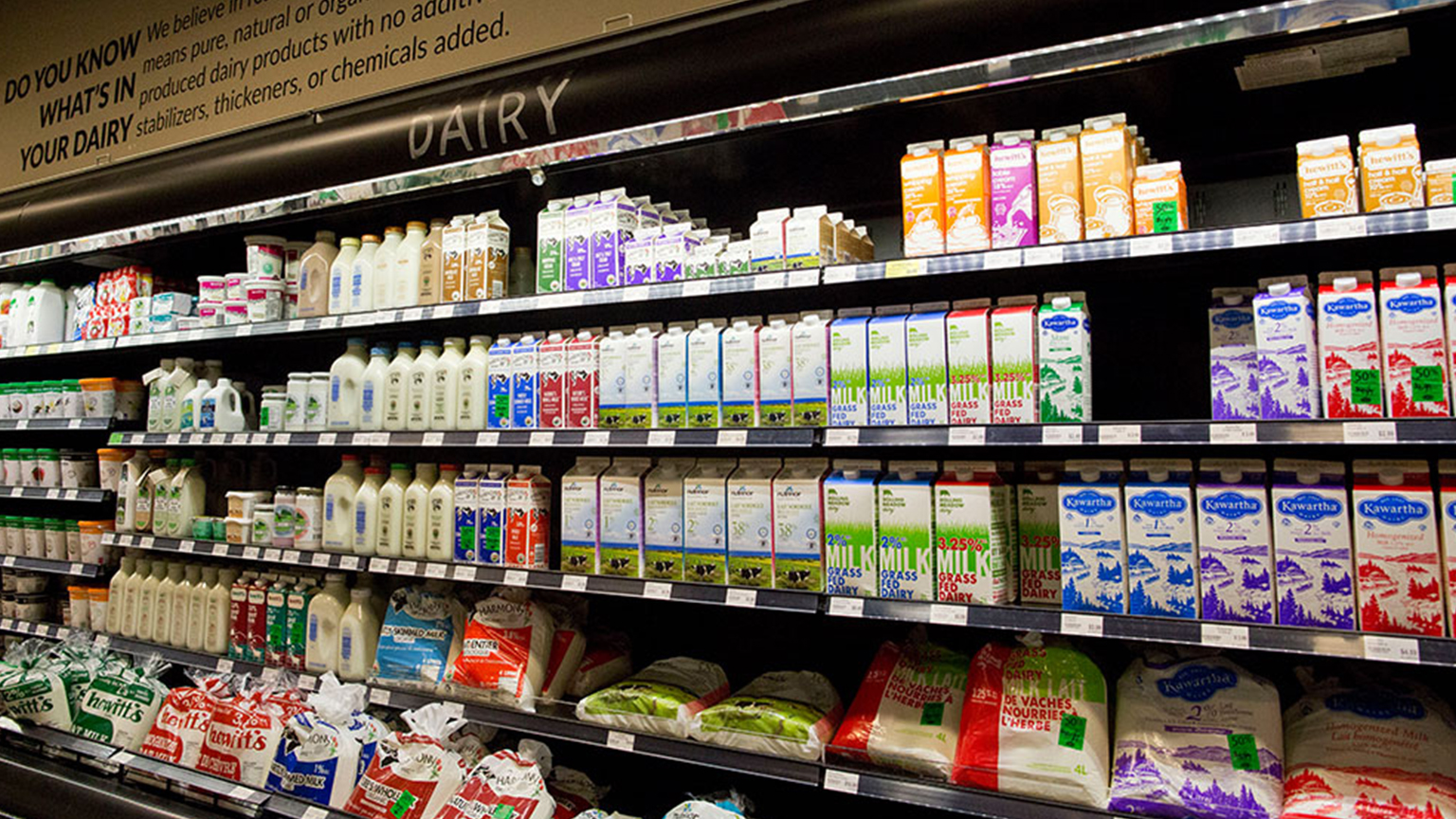
Consumer demand for organic dairy, grass-fed products, A2 milk, regenerative farming, and clean-label nutrition continues to accelerate across Canadian retail shelves. As these categories expand, questions surrounding pricing equity, production incentives, and supply allocation may eventually emerge here as well.
The American lawsuit could therefore become a preview of future policy conversations within Canada’s own dairy landscape.
Retailers Are Watching Consumer Behaviour Shift
For retailers, the story extends well beyond agricultural regulation.
Organic dairy has become a high-value category associated with premium consumers, wellness-oriented households, and younger demographics seeking transparency in food production. These consumers are often willing to pay significantly higher prices for products aligned with environmental values and perceived health benefits.
The legal battle in the United States reveals how rapidly consumer demand can outpace regulatory modernization.
Retailers increasingly face shoppers who no longer see organic as a niche category. Instead, organic dairy is becoming part of a broader lifestyle movement tied to clean eating, sustainability, and preventative wellness.
That trend creates both merchandising opportunities and sourcing challenges.
If policy frameworks fail to support organic production economics, retailers may eventually encounter tighter supply conditions, higher wholesale costs, or reduced category expansion opportunities.
The Bigger Global Question
The most important issue raised by the lawsuit may not be dairy pricing itself.
It is whether agricultural systems originally designed for commodity farming can successfully adapt to premiumized food economies built around differentiation, traceability, and consumer values.
Organic dairy farmers argue that they are operating inside a regulatory structure designed for a completely different era of agriculture. Their claim reflects a broader transformation occurring across the global food industry, where consumers increasingly reward identity-driven production rather than pure volume efficiency.
Canada’s dairy system may currently provide greater insulation from some of these tensions, but the same market forces are clearly emerging here as well.
As organic and specialty dairy continue gaining market share, the pressure to modernize agricultural policy frameworks will likely intensify on both sides of the border.
For the health retail sector, the lawsuit represents an early signal that the future of dairy may depend as much on regulatory evolution as on consumer demand itself.
Sources
Coalition for Organic Dairy Exemption (CODE) statements
United States Department of Agriculture (USDA)
Federal Milk Marketing Order (FMMO) documentation
Organic Trade Association market data
Canadian Dairy Commission information