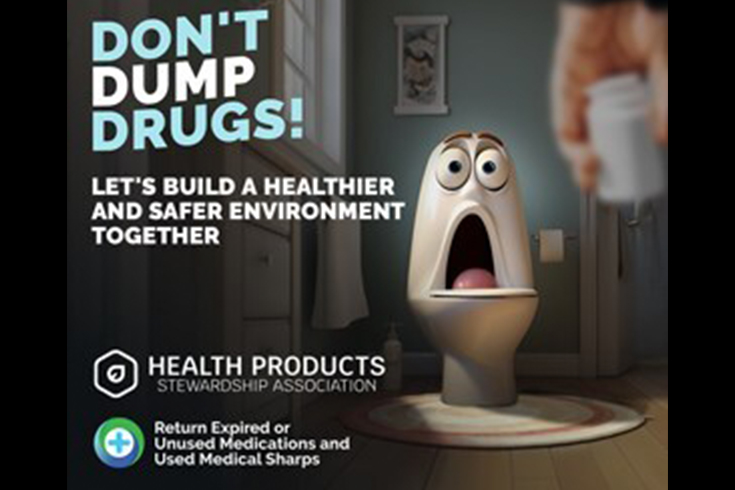
Quebec has made important strides in establishing take-back options for unused medications and used medical sharps, yet real-world participation remains lower than expected. The Health Products Stewardship Association (HPSA) released its 2025 consumer survey—conducted by Léger across six provinces, now including Quebec and New Brunswick for the first time—to gauge awareness, attitudes and disposal behaviours. More than 1,500 community pharmacies and several veterinary clinics serve as collection sites, underpinning a truly national stewardship programme.
Despite 59 per cent of Quebecers saying they know where to return unused medications and 67 per cent aware of sharps drop-off locations, nearly 40 per cent fail to adopt correct disposal behaviours. Although 85 per cent claim to understand what actions to take, just 74 per cent demonstrate true mastery of safe practices. Proper disposal entails sealing pills and powders in a clear plastic bag, leaving liquids and creams in their original containers, and placing sharps in a rigid, biohazard-marked box.
Some products continue to puzzle consumers—lotions, inhalers and natural health products often end up in household waste despite being present in nearly all Quebec homes. The survey found 97 per cent of households store prescription and over-the-counter medications, 84 per cent hold natural health products and 26 per cent possess medical sharps.
These disposal gaps carry environmental and public health risks. Improperly discarded pharmaceuticals can contaminate waterways (acknowledged by 67 per cent of respondents), soil (58 per cent) and even enter the food chain (49 per cent). The Canadian healthcare sector generates 5 per cent of national greenhouse-gas emissions, with pharmaceuticals accounting for 1 per cent. On the public health front, the Quebec Poison Control Centre logs over 50,000 potential poisoning cases annually—nearly half involving medications—and reports that accidental exposure ranks as the second leading cause of hospitalisation among children aged 0–4.
Addressing these challenges will require sustained public education, convenient collection points and collaboration across government, pharmacies and manufacturers to turn awareness into action.