The Pharmacist’s Touch: Why AI Makes the Counter Worth More
Canadians who followed AI health advice reported harm five times as often, and nearly half of pharmacy patients combine natural health products with prescriptions. The pharmacist's dispensing record, legal accountability and interaction check are the skills no chatbot can copy, and the stores that sell them win the NHP aisle.
By Yehuda B Abraham,
Shoppers now walk in holding a chatbot’s answer. The store whose pharmacist checks it against the full medication profile keeps the sale, the customer and the liability in its own hands.
Canadians who acted on an AI tool’s health advice were five times as likely to report a harm, a Canadian Medical Association survey of 5,001 people found. Where pharmacists and AI meet is now the most valuable square metre in health retail. It is the counter, where a chatbot’s answer gets checked against a real medication list before the sale.
Demand is not in doubt. About half of the survey’s respondents already ask AI about their health, though only 27 per cent trust what it tells them. Thirty-eight per cent have used ChatGPT for treatment advice. Each of those shoppers arrives with half an answer, and the store that completes it earns the basket.
The scale is global. OpenAI says more than 230 million people ask ChatGPT a health or wellness question every week. In January it opened ChatGPT Health, a separate space that can link medical records in the United States. In Canada, 73 per cent of adults use natural health products (NHPs), and 57 per cent of users take them daily, according to a 2024 Health Canada survey. Pharmacies carry most of that trade. In a 2021 federal audit survey, 51 per cent of Canadians named the pharmacy as their usual NHP source, against 24 per cent for specialty stores. NAPRA counted 50,069 licensed pharmacists at the start of 2024.
A fluent answer is not a checked answer
Anyone can get a fast answer now; what shoppers will pay for is a checked one.
Pharmacists at Long Island University put 39 real drug-information questions to the free version of ChatGPT. Only 10 answers met their standard. Eight responses carried references, and every one of those citations was invented. Asked whether Paxlovid interacts with the blood pressure drug verapamil, the chatbot said no interaction had been reported. Taken together, the two can cause a large drop in blood pressure, with dizziness or fainting.
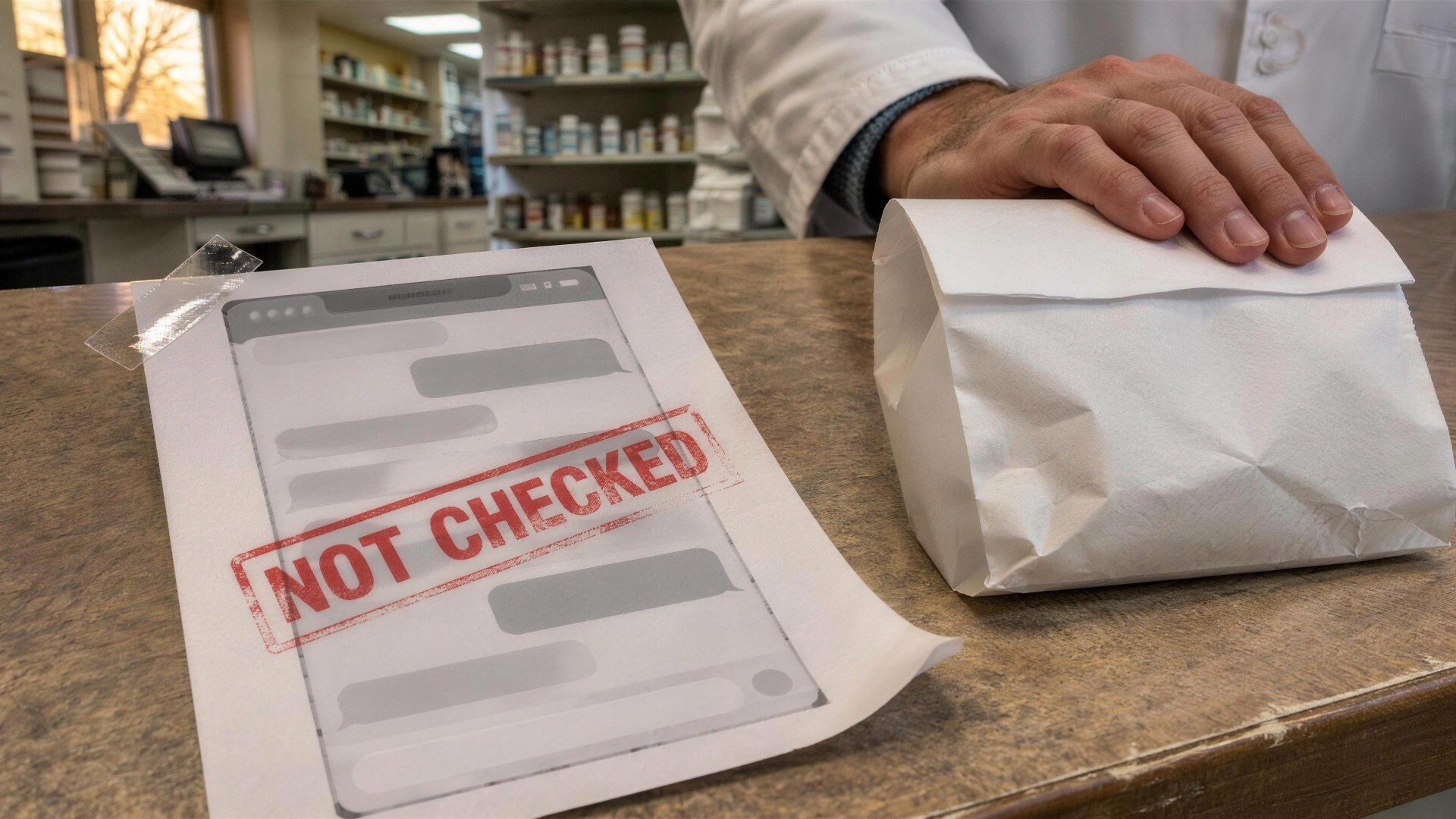
Models have improved since that 2023 test, and pharmacists still hesitate. In TELUS Health’s 2026 Pharmacy Trends Report, 62 per cent of 152 retail pharmacists cited unreliable outputs as a barrier to wider AI use.
When a customer says “the AI said it was fine,” the sale is still there to win. A two-minute profile check can turn it into a recommendation the customer trusts more than the screen.
Pharmacists and AI see different halves of the basket
The chatbot only sees what the shopper types; the pharmacist sees the prescription history, and nearly half of pharmacy patients need that second look.
The SONAR active-surveillance studies, run with Health Canada in community pharmacies, found that 45.4 per cent of patients combine NHPs with prescription drugs. Of that group, 7.4 per cent reported an adverse event. Passive reporting systems are estimated to capture only 1 to 10 per cent of such events, so most never reach a regulator.
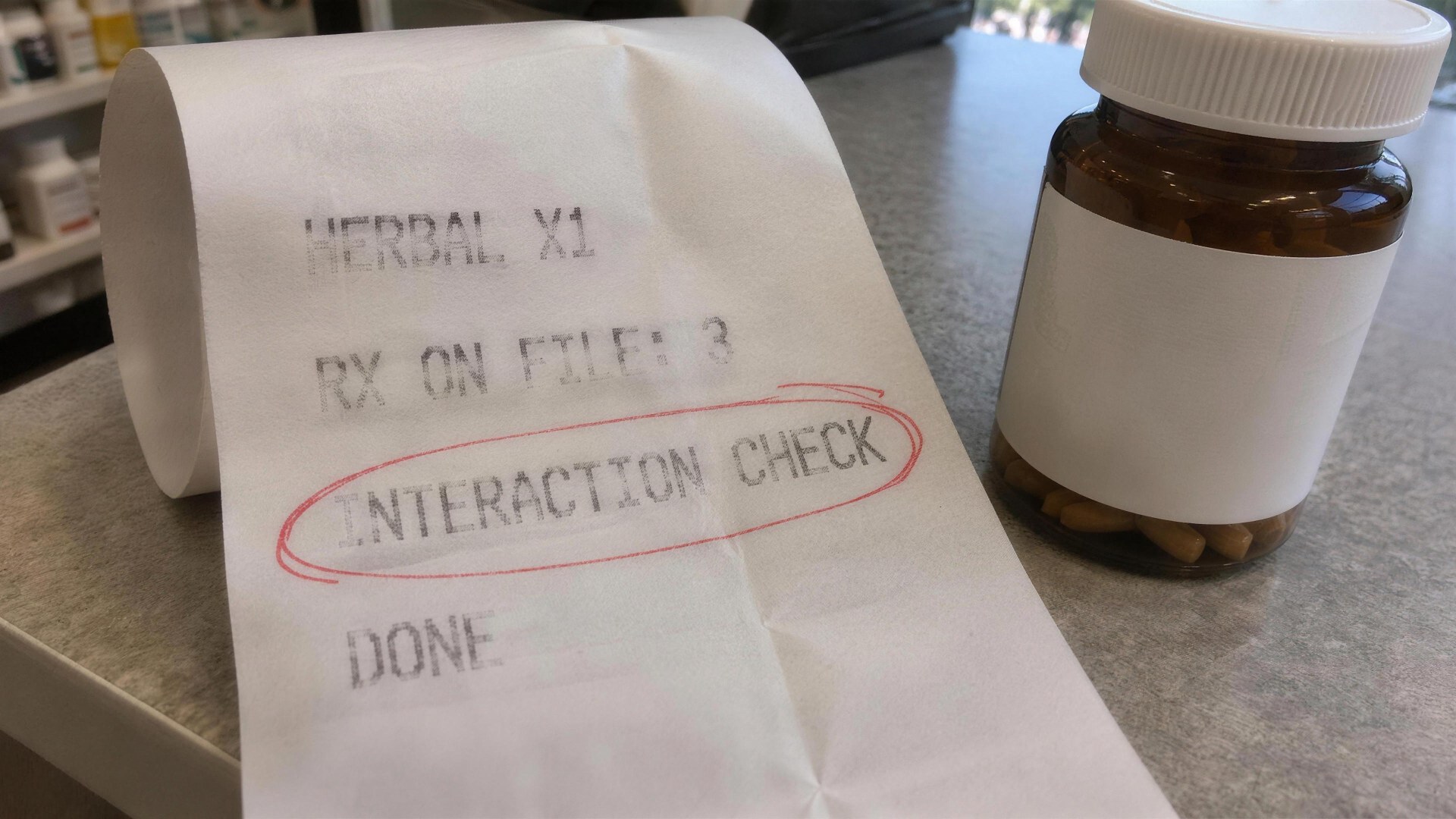
Shoppers rarely raise the question themselves. In a University of Alberta survey, pharmacists estimated that only 5 per cent of NHP buyers ask about drug interactions. A chatbot works from whatever it is told. Behind the counter, the record shows the antidepressant filled last month, the blood thinner and the new diabetes prescription.
That dispensing record is the store’s moat. Every NHP recommendation made against it is safer, harder to copy online and more likely to become a repeat purchase.
The law reserves some sales for a human. NHPs are not among them
Canada already writes the pharmacist into certain sales. Under NAPRA’s National Drug Schedules, Schedule II drugs need pharmacist intervention before release. Schedule III drugs sit in self-selection with a pharmacist available, and Ontario requires that area within 10 metres of the dispensary.
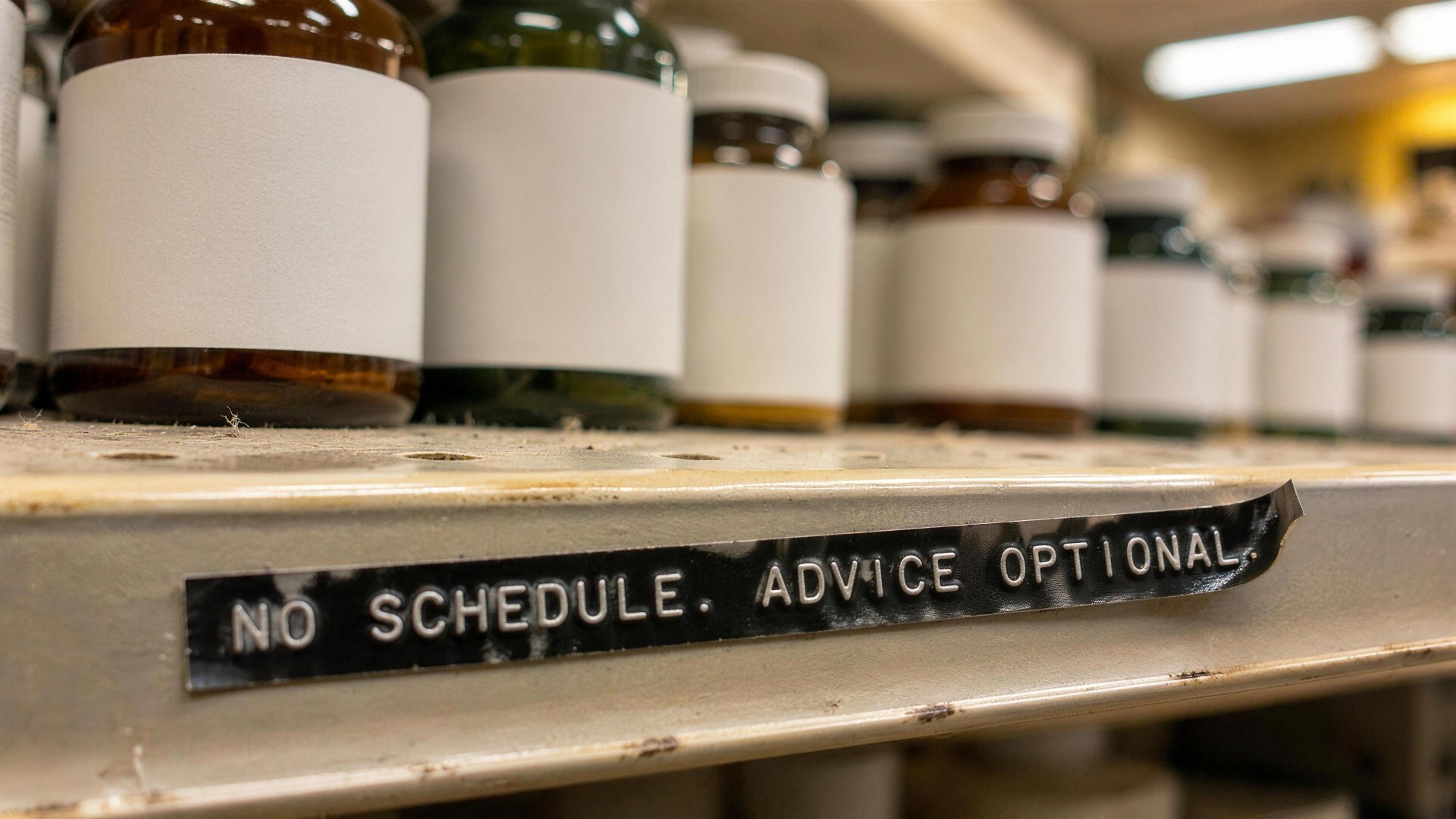
Because no rule forces advice on NHPs, the stores that give it stand out.
NAPRA finished removing NHPs from its schedules in 2022, apart from ephedrine and pseudoephedrine, which followed in 2024. A licensed product can now sell from any shelf with no advice at all. Pharmacists keep one lever: Alberta’s college notes they may still hold an unscheduled NHP behind the counter when a patient needs assessment.
The label will not close the gap soon. Health Canada’s standardized Product Facts Table was due on all NHPs by June 2028. A May 2026 licensing bulletin said the department will make those rules more flexible and propose a transition beyond that date, with drafts targeted for spring 2027. Shoppers, and the AI tools reading packages for them, will face inconsistent labels for years.
There is risk on the store’s side too. A shelf talker drafted by a chatbot can import U.S. structure-function copy that does not match the Canadian licence, or drift into Schedule A disease wording. A University of Toronto study found Ontario community pharmacists already using AI “in unstandardized and unregulated ways.” Pasting a patient’s details into a public chatbot is, first of all, a privacy breach.
The paradox: automation is what frees the touch
Every minute a machine takes off the dispensing bench can go back to the counter.
Pharmacists are not resisting the technology. In the TELUS survey, 47 per cent called AI integration the single most important trend in pharmacy. Seventy-two per cent saw a role for it in drug interaction screening. Yet only 3 per cent use AI tools most of the time. Among pharmacists already using central fill, 58 per cent reported more time for counselling and clinical services.
That time already has a destination. Ontario pharmacists have completed more than 2.4 million minor ailment assessments since 2023, and over 99 per cent of the province’s pharmacies take part. The list reached 28 conditions in July 2026, with up to 33 planned for early 2027. At an Ontario Pharmacists Association event in May, one speaker named the squeeze plainly: scope keeps growing, and time does not.
Every assessment ends at a shelf. Dry eye, dandruff, head lice and nasal congestion joined the list this year. Each one sits next to a self-care set the pharmacist can walk the patient to.
Brands now face two filters, one human and one machine
Shoppers increasingly meet a brand twice: first in an AI answer, then at the counter. Answer engines summarize whatever evidence is public. The pharmacist decides whether that evidence holds up for this patient. Nearly eight in 10 Canadians believe pharmacies can make health care more efficient by offering more services, according to a November 2025 Abacus Data poll for Neighbourhood Pharmacies.
A brand that publishes its NPN, licensed claim, dose and cautions in plain text gives both filters something solid to cite. A brand that leans on lifestyle copy gives the chatbot little to quote and the pharmacist little to defend. Retailers can make that page a listing condition.
For examples of evidence-led category work, see IHR’s analysis of relative energy deficiency in sport and of cognitive health research by life stage.
Five moves for the counter
- Invite the AI answer. Train front-store staff to ask, “Did you look this up anywhere?” Any chatbot response goes to the pharmacist for a profile check.
- Put NHPs on the patient profile. Ask the interaction question at every NHP sale near the dispensary, because almost no buyer raises it unprompted.
- Merchandise by interaction risk. Keep categories with known interaction flags, such as St. John’s wort, within sight of the dispensary rather than in a distant aisle.
- Write a one-page AI policy. Ban patient identifiers in public chatbots, and require a human check of every AI-drafted sign against the licence wording.
- Ask suppliers for a pharmacist evidence sheet. One page, also posted online: NPN, exact licensed claim, dose, cautions and known interactions.
The next customer will probably have asked a chatbot first. Whether the sale stays in the store depends on what the pharmacist does with that answer.
Frequently Asked Questions
Will AI replace pharmacists in Canada? Not under current law. Dispensing prescriptions and releasing Schedule II drugs both require a licensed pharmacist, and provincial colleges license people, not software. AI is moving into dispensing workflow, claims and interaction screening. That shifts pharmacist time toward assessment, minor ailment prescribing, vaccination and counselling rather than removing the role.
What else did the CMA’s AI health survey find? Abacus Data surveyed Canadians online from November 3 to 13, 2025, for the Canadian Medical Association’s third Health and Media Tracking Survey. Sixty-four per cent had met online health information they later learned was false. Seventy-seven per cent worried about false health information from the United States, and 85 per cent trust physicians to help them navigate it.
How can a store confirm that a natural health product is licensed in Canada? Find the eight-digit Natural Product Number (NPN) on the label. Search it in Health Canada’s Licensed Natural Health Products Database, which lists the licensed uses, dose, duration and risk information for each product. Shelf signs and staff advice should stay within those licensed uses, word for word.
How should a pharmacy use AI tools safely? A 2025 University of Toronto study found Canadian and U.S. pharmacy regulators favour principle-based guidance. Core principles named were transparency, redundancy, audit and feedback, quality assurance, data privacy, ethical alignment and interoperability. In practice, use approved tools, keep patient identifiers out of public chatbots, and have a pharmacist review any output before a patient sees it.
Sources
- Canadian Medical Association, Health and Media Tracking Survey (Abacus Data, Nov. 2025)
- OpenAI ChatGPT Health launch, 230 million weekly health users (Fortune, Jan. 2026)
- ASHP / Long Island University, ChatGPT drug-information study (2023)
- TELUS Health 2026 Pharmacy Trends Report, as reported by HRD Canada
- Vohra et al., SONAR active surveillance study, PLoS ONE (2012)
- Necyk, SONAR national estimate (University of Alberta)
- University of Alberta pharmacist survey on NHP adverse events (2007)
- Health Canada / EKOS, Canadians’ Views and Use of NHPs (2024)
- Office of the Auditor General, NHP survey infographic (2021)
- NAPRA, National Drug Schedules Policies
- Ontario College of Pharmacists, Pharmacy Profession At-A-Glance
- Health Canada, NHP Licensing Bulletin No. 10 (May 2026)
- Canadian Pharmacists Association, Ontario scope expansion (May 2026)
- Gregory and Austin, Responsible Adoption of AI in Pharmacy Practice, Pharmacy (2025)
Sections: Merchandising Retail News Tech News
More in Merchandising
- Pea Protein Now Has a Passport: What NordPea Means for Canadian Shelves
- Target’s New Director Built Clif Bar. Her Seat Signals What Canadian Wellness Brands Will Face at Target
- The US$2.50 Prenatal: A 15-Nutrient Yardstick for the Canadian Shelf
- What Canada’s Shrinking Organic Farmland Means for the Organic Shelf
- Pycnogenol® in Women With Osteopenia: What a 14-Point Pain Result Means for the Bone Aisle
- Cizzle Brands’ Share Consolidation Puts the Supplier Balance Sheet on the Planogram