




Five figures in a listed supplier’s own filings show whether a growth brand can pay for its shelf space. Here is where to find them, with the maker of CWENCH Hydration as the worked example.
By Olivier Fel., IHR Magazine. November 10, 2026.
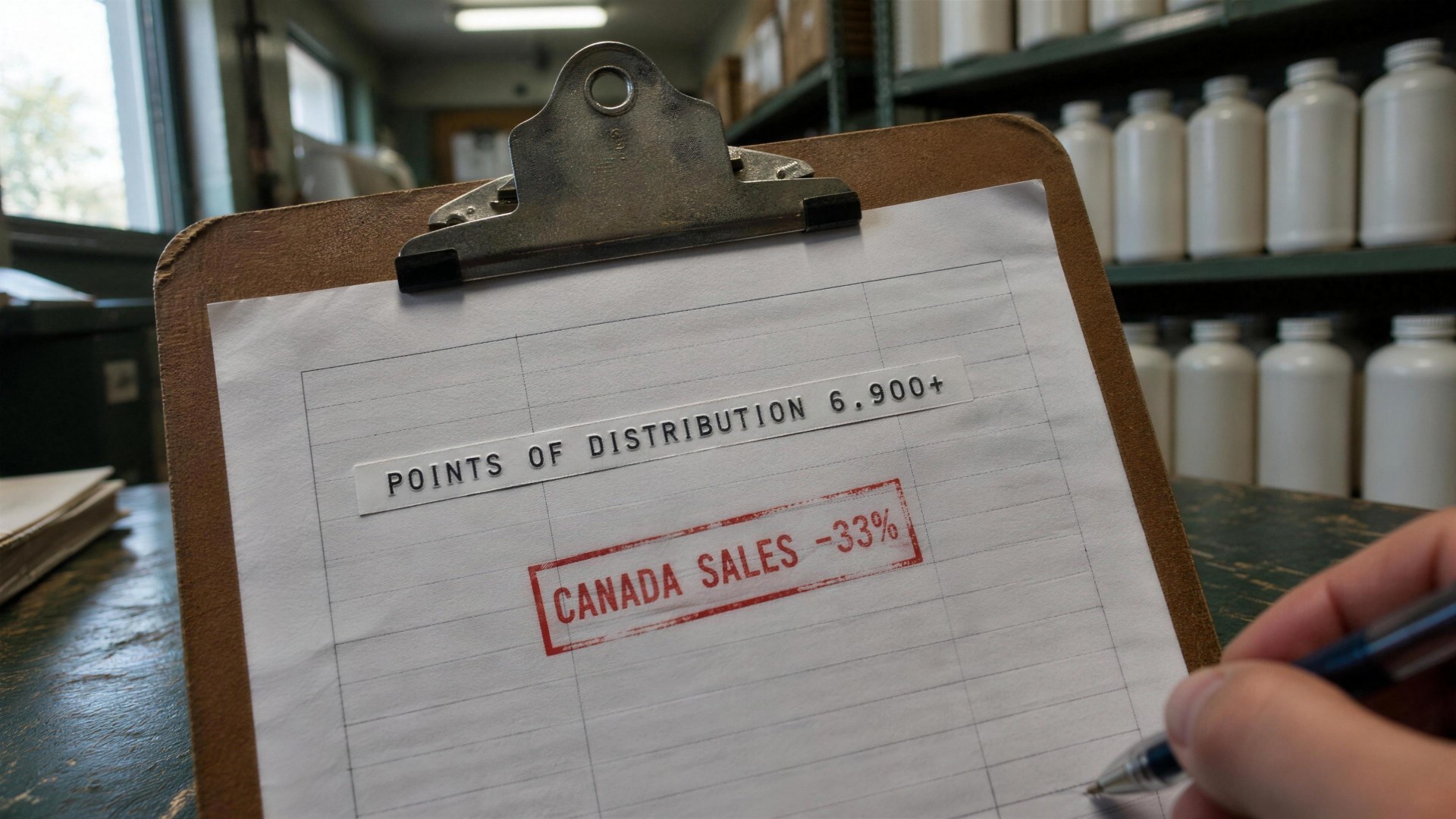
Cizzle Brands put CWENCH Hydration into more than 6,900 points of distribution last fiscal year, and its Canadian brand revenue fell 33 per cent. The Cizzle Brands share consolidation, 25 old shares for one new, is the visible end of that gap. Behind it sit the numbers that decide whether promotions get funded, deductions get paid and cases keep arriving.
The category is not the problem. Statista puts Canadian sports and energy drink revenue at US$2.17 billion for 2025, and SPINS shows US hydration and electrolyte sales up 29 per cent to US$2.2 billion. Capital is the problem. BioSteel entered creditor protection in September 2023. Flow Beverage’s manufacturing arm was sold out of receivership in December 2025, and the buyer was Cizzle. Any buyer who lived through either should read the next four sections with a planogram open.
The Cizzle Brands share consolidation is a Nasdaq entry ticket
Verdict: a listing mechanic that changes nothing on the shelf until new money follows it.
Nasdaq closed its cheaper doors this fall. A uniform US$4.00 minimum price for initial listings on the Nasdaq Capital Market took effect on October 7, 2026. Cizzle, which has applied to list on Nasdaq, priced its preliminary prospectus at US$4.92 to US$6.15 a share after the fold. Divide by 25 and each old share is worth about 20 to 25 US cents. The company had 230,252,282 shares at July 31, so the fold leaves roughly 9.2 million.
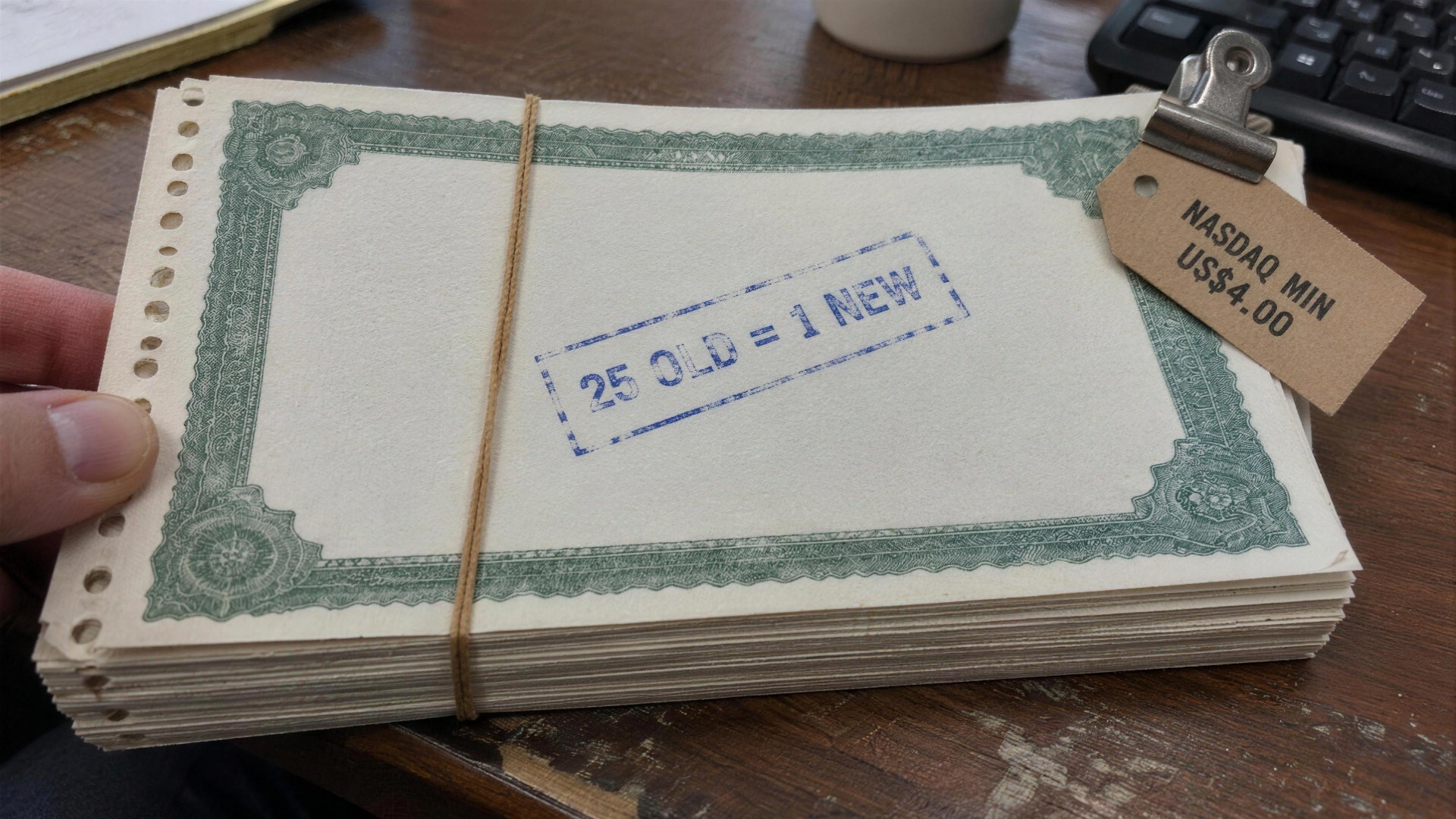
The effective date moved twice: October 29, then November 3, then November 5. When this article was filed, IHR had found no notice that the US offering had closed or that Nasdaq had approved the listing. Until one appears, any supplier commitment that depends on fresh capital is a plan, and should be booked as one.
More doors, less revenue
Verdict: distribution grew faster than sell-through paid for it.
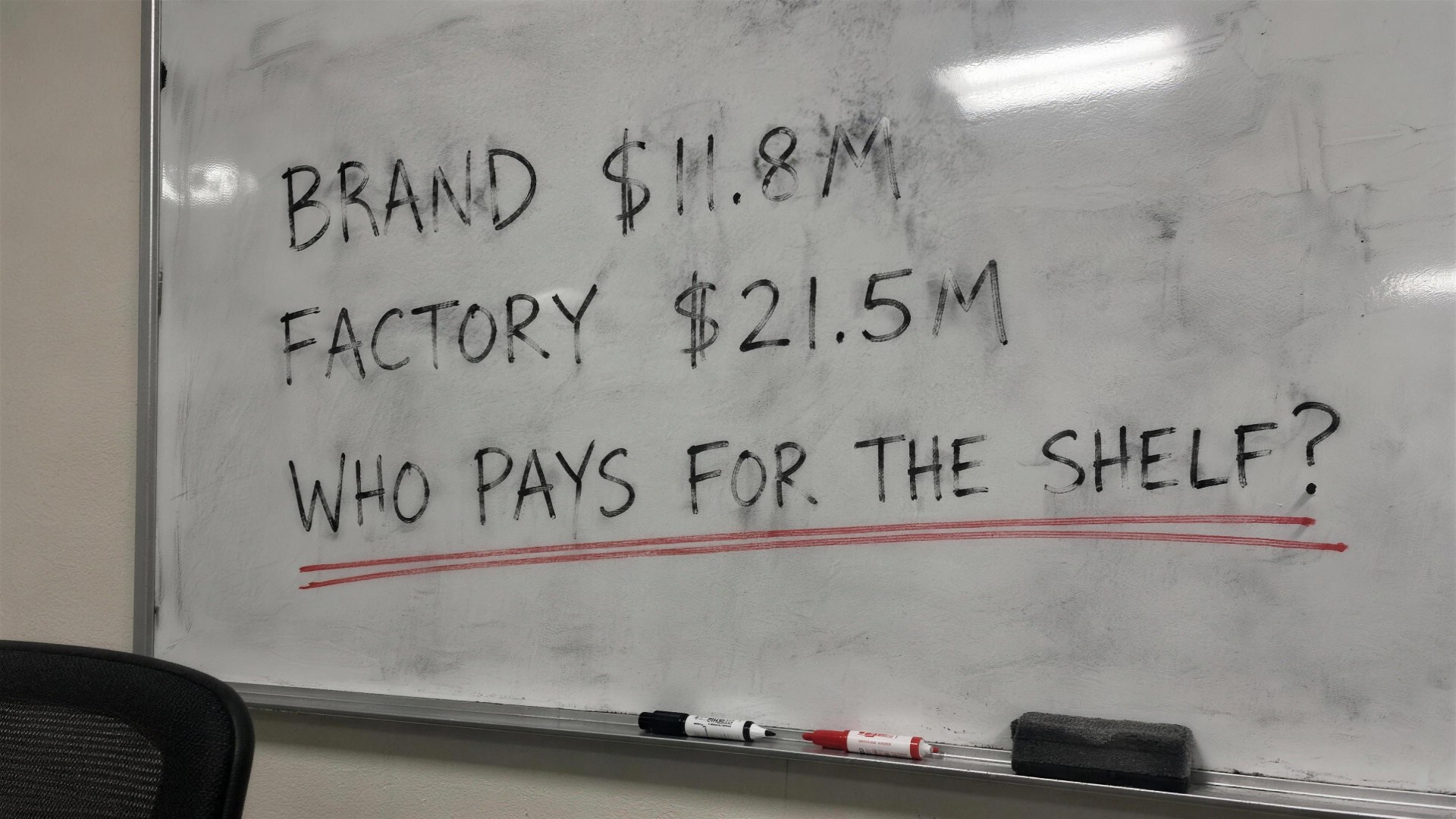
Total revenue rose 153 per cent to $33.4 million in the year ended July 31, 2026. (Company figures are Canadian dollars unless marked.) Nearly two-thirds, $21.5 million, came from making other companies’ drinks. The Brands Business, which holds CWENCH, Spoken Nutrition and HappiEats, slipped from $13.2 million to $11.8 million.
Canada explains the drop. Brand revenue here fell from $8.8 million to $5.9 million, while US brand revenue rose 55 per cent to $5.4 million. Management cites lower Canadian distributor sales, higher trade investment and the non-repeat of “pipe fill” orders. Pipe fill is the one-time stock that loads a new listing’s shelves and warehouses. The fourth quarter was weaker still: $2.5 million against $4.0 million a year earlier.
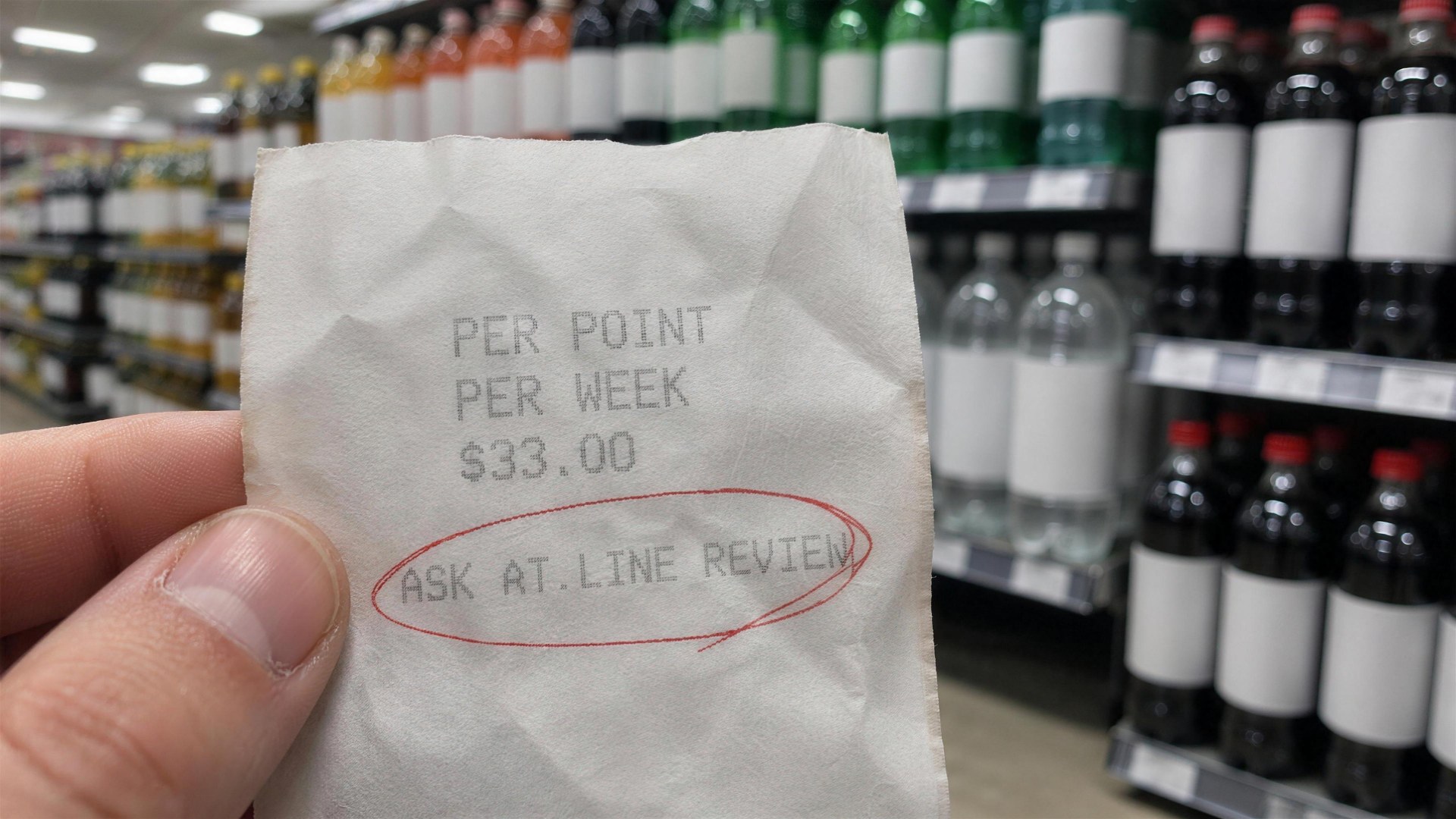
Now the arithmetic no sell sheet shows. Spread $11.8 million over 6,900 points and each returned about $1,700 to the supplier in a year. That is roughly $33 a week, before online sales are taken out. Pull the same figure from scan data for the category leader, facing for facing, and the next line review has its opening question.
The factory now carries the brand
Verdict: the supplier’s biggest customer is another drink.
One contract manufacturing client supplied about 38 per cent of everything Cizzle billed. The prospectus names BeatBox and the spun-out Flow brand as the plant’s main customers. It adds that BeatBox is now majority-owned by Anheuser-Busch, which has factories of its own.
There is real protection here. The contracts are take-or-pay, with a floor near $158 million against $184 million of booked volume, and the plant can fill 204 million units a year. Adjusted EBITDA, a measure of operating profit before interest and non-cash items, turned positive in the last two quarters, at $0.3 million and $0.6 million.
The catch sits one line lower. Gross margin fell from 57 per cent to 39 per cent as the mix shifted to co-packing. Marketing spend dropped from $5.8 million to $5.2 million, with advertising and sampling cut while trade programs grew. A brand in that position pays for listing fees and deals before demos. Ask which of the two it will fund in your stores for 2027.
Forty-three days to a $22.25 million maturity
Verdict: one financing decides the 2027 shelf plan.
Debt stood at $107.3 million on October 1, about 3.2 times annual revenue. Cash at year-end was $5.96 million. The working capital deficit was $52.1 million, the net loss $42.4 million, and the statements carry a going-concern warning. That is accounting language for material doubt that a company can meet its obligations over the coming year.
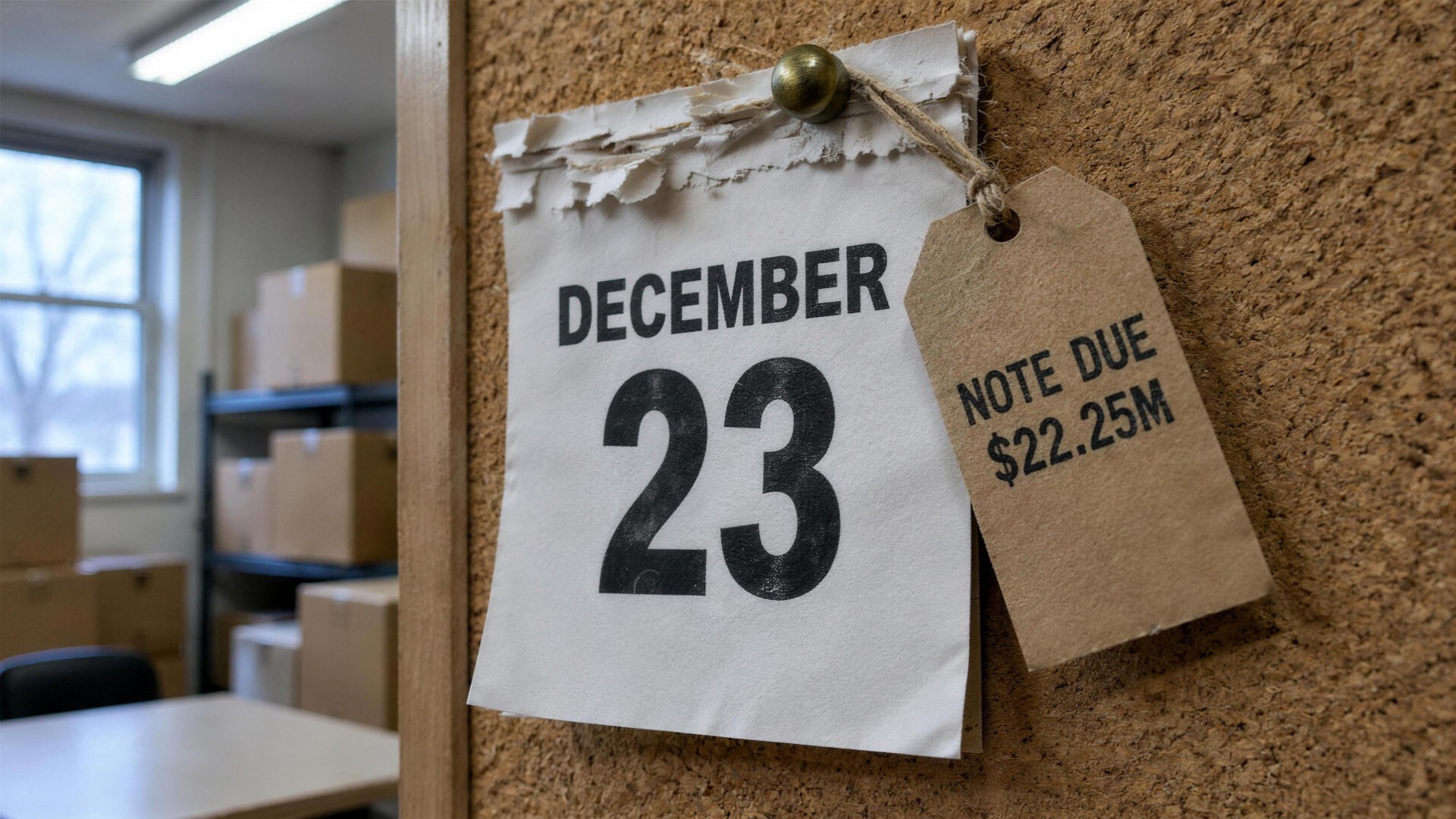
The nearest wall is a $22.25 million vendor note due December 23, 2026. The lender has agreed to push it to December 31, 2027, on conditions that include US$10 million repaid from the offering. The offering’s minimum is US$15 million, about US$14.0 million after costs. The prospectus says plainly that the proceeds will not retire the note in full.
A US$15 million raise, a US$10 million repayment and a December 23 deadline: one sports drink’s 2027 shelf plan runs through a single financing.
When a supplier restructures, unpaid deductions and promotional billbacks generally rank behind secured lenders. Clear them monthly, and keep prepaid orders off the table until the extension is confirmed in writing.
The certificates have expiry dates too
Verdict: the regulatory file gives a buyer both a risk and a tool.
The risk first. The prospectus lists what the plant needs to run: a Safe Food for Canadians licence, FDA registration, NSF good-manufacturing and HACCP certification, and kosher certification. Several come up for renewal within 12 to 18 months, and the company warns a lapse could halt production. On the shelf, “NSF Certified for Sport” on Spoken Nutrition is a banned-substance testing mark. It is not a Health Canada licence, so the certification and the NPN are checked separately. Any drink sold as a supplemented food has also needed a Supplemented Food Facts table since the transition ended on December 31, 2025.
The tool is disclosure. A Nasdaq listing would add SEC filings to what SEDAR+ already carries, free. Private hydration brands owe a buyer none of this. Ask them for the same five numbers anyway; a refusal is an answer.
Five moves before the next line review
- Read five lines in the MD&A of every listed supplier in the set: revenue by segment and country, gross margin, cash, working capital and the next debt maturity.
- Put two questions to the CWENCH rep or distributor by email: has the offering closed, and has the December 23 note been extended?
- Reconcile deductions and billbacks monthly instead of quarterly, starting with November.
- Set a weekly sales floor per facing from scan data, and name the hydration SKU that takes the space within one order cycle.
- Check paper as well as product: current NSF Certified for Sport listing by lot, NPN on any supplement making a health claim, and the facts table on supplemented drinks.
The 2027 line reviews will be the first where a prospectus tells a buyer more than the sell sheet does.
Frequently Asked Questions
What is a share consolidation?
A share consolidation, also called a reverse split, swaps a set number of old shares for one new share. Each holder keeps the same percentage of the company, and no money is raised. In this case fractions are rounded down to the nearest whole share, and options, warrants and convertible notes are adjusted in proportion.
Who makes CWENCH Hydration and where does the company trade?
CWENCH Hydration is made by Cizzle Brands Corporation, an Ontario company led by founder and chief executive John Celenza. The shares trade on Cboe Canada as CZZL, on the OTCQB as CZZLF and in Frankfurt as 8YF. The company has applied to list on Nasdaq under CZZL. Odyssey Trust Company is the transfer agent.
Which Canadian retailers carry CWENCH Hydration?
Company filings name 197 Walmart Canada stores, about 400 Loblaws and Real Canadian Superstore locations, Sobeys, Metro, Fortinos, London Drugs, Save-On-Foods, Sport Chek, Canadian Tire, Circle K and Petro-Canada. UNFI Canada is a named distribution partner. A three-year agreement also makes it the official sports drink of the Toronto Maple Leafs and Toronto Marlies.
Where can a buyer read a supplier’s financial filings?
Canadian public companies file on SEDAR+ at sedarplus.ca, and US-registered ones on the SEC’s EDGAR system. Both are free and searchable by company name. Open the latest annual MD&A and search three phrases: “going concern”, “customer concentration” and “subsequent events”. Ten minutes covers what a supplier presentation leaves out.
This is independent editorial analysis by IHR Magazine. It references Cizzle Brands and CWENCH Hydration as one example of supplier financial risk in the hydration category. It is not investment advice or an endorsement; verify NPN status and licensed claims before stocking.