The “Buy Canadian” movement has evolved from boycott energy to value-driven pragmatism. Here’s how health food retailers can convert patriotism into sustainable growth.
The movement didn’t fade. It professionalized.
The “Buy Canadian” surge that dominated conversations in 2025 has entered a new phase. The loudest part of the story has quieted, but the behaviour is still there—now guided by a sharper set of shopper rules: make it easy to find, easy to verify, and easy to afford.
For health food and wellness retailers, this is not a trend to chase. It’s a structural shift you can build into your operating system. Why? Because your customer already shops with a higher bar for truth. Wellness shoppers read labels. They ask questions. They expect receipts—literal and figurative. That means “Canadian-first” can become a durable advantage if you execute it like infrastructure, not a campaign.
The strategic question for 2026 is straightforward: when the next wave of cross-border tension hits the news cycle, will your shelves, website, staff, and pricing be ready to convert Canadian sentiment into repeatable, profitable behaviour?
The behaviour engine: what’s actually driving 2026
Identity plus economics: the dual engine
“Buy Canadian” persists because it runs on two tracks simultaneously. One is identity: shoppers want purchases that reflect who they are and what they stand for. The other is economics: cost-of-living pressure forces trade-offs at checkout.
In 2026, economics is the stricter boss. Shoppers may want to support Canadian brands, but they won’t do it if it feels like a premium tax. This is why the movement’s centre of gravity has shifted from broad boycott talk to practical substitutions in everyday baskets—food, essentials, personal care, and the wellness staples that sit adjacent to grocery.
The trust multiplier effect
Wellness retail benefits from a built-in advantage: your category already operates inside a trust contract. Customers come to you because they want fewer surprises—cleaner ingredients, clearer sourcing, better accountability. That makes “Canadian” an accelerant when it’s presented as a trust signal rather than a patriotic banner.
In other words, your best “Buy Canadian” messaging doesn’t sound like politics. It sounds like quality control.
The affordability ceiling
The most important limiter in 2026 is affordability. Many consumers are trading down, shopping promotions harder, and leaning into value retailers. This changes the marketing job. The goal is no longer to persuade people to care about Canadian products. They already do. The goal is to protect the choice from sticker shock.
The international echo
A final wrinkle: origin scrutiny is spreading. Even when the movement is framed as Canadian, the shopper mindset can extend into broader questions about global supply chains, ownership, and where ingredients originate. This matters in wellness, where formulation and sourcing are often international even when the final product is made locally.
The solution is not to hide complexity. It’s to translate it clearly.
The 2026 playbook: five strategic moves
1) Frictionless discovery: own the scan moment
In 2026, discovery is the battleground. Shoppers want Canadian options, but they won’t work for them. You need to win the “scan moment”—the five seconds in front of shelf or search results where the decision happens.
What to do in the next 90 days
- Build a Canadian-first navigation layer everywhere: shelf tags, endcaps, aisle blades, e-commerce filters, and a consistent weekly flyer module.
- Treat “Canadian” like a product attribute, not a campaign: it should be sortable, searchable, and visible at a glance.
- Train staff to explain your Canadian labels in one sentence, confidently and consistently.
2) Reframe patriotism as wellness trust
The winning story is not flag-waving. It’s accountability. Canadian-first should be framed as closer supply chains, clearer standards, better traceability, and fewer surprises.
What to do in the next 90 days
- Add proof points to shelf talkers and product pages: where it’s made, what’s sourced where, ownership clarity, and the specific meaning of your Canadian callouts.
- Launch a “Meet the Maker” series: short, staff-led videos that turn Canadian brands into human stories—facility, sourcing, and why their standards matter.
- Build a simple “Canadian Proof” template for suppliers to fill out so your claims stay consistent across all channels.
3) Price architecture: protect the movement from sticker shock
If Canadian-first equals “more expensive,” you lose the trade-down shopper—even if they want to support Canada. Your job is to keep trading down inside the Canadian set.
What to do in the next 90 days
- Create Canadian Value Heroes: 10–20 SKUs per major category with reliable promo cadence and visible placement.
- Build Good / Better / Best tiers inside Canadian sets so value shoppers can step down without stepping out.
- Use price-pack strategy: trial sizes, bundles, and subscriptions for Canadian staples.
4) Assortment strategy: treat Canadian substitution as category growth
This is where marketing leaders can unlock real growth. When Canadian substitutes exist, give them the structural advantages imports often enjoy: distribution priority, feature space, education, and repeat promotions.
What to do in the next 90 days
- Run a Canadian Swap Map across top categories:
- High substitutability: snacks, pantry staples, tea, many personal-care basics, and selected supplement segments.
- Low substitutability: specialty actives and certain niche formulations.
- Where substitutes exist: feature them, bundle them, educate staff on the “why,” and build trial through sampling or “switch and save” mechanics.
- Where substitutes don’t exist: be transparent and credible. Shoppers can accept complexity; they don’t forgive spin.
5) Communications that land: forward-thinking, not cringe
The movement is strong, but consumers are tired of empty posturing. Your messaging should feel modern, calm, and specific.
Messaging framework for 2026
“Canadian-first when it counts. Transparent always.”
This line works because it respects two truths at once: shoppers care about Canada, and they also care about honesty, affordability, and real-world nuance.
The credibility trap: get your Canadian definitions right
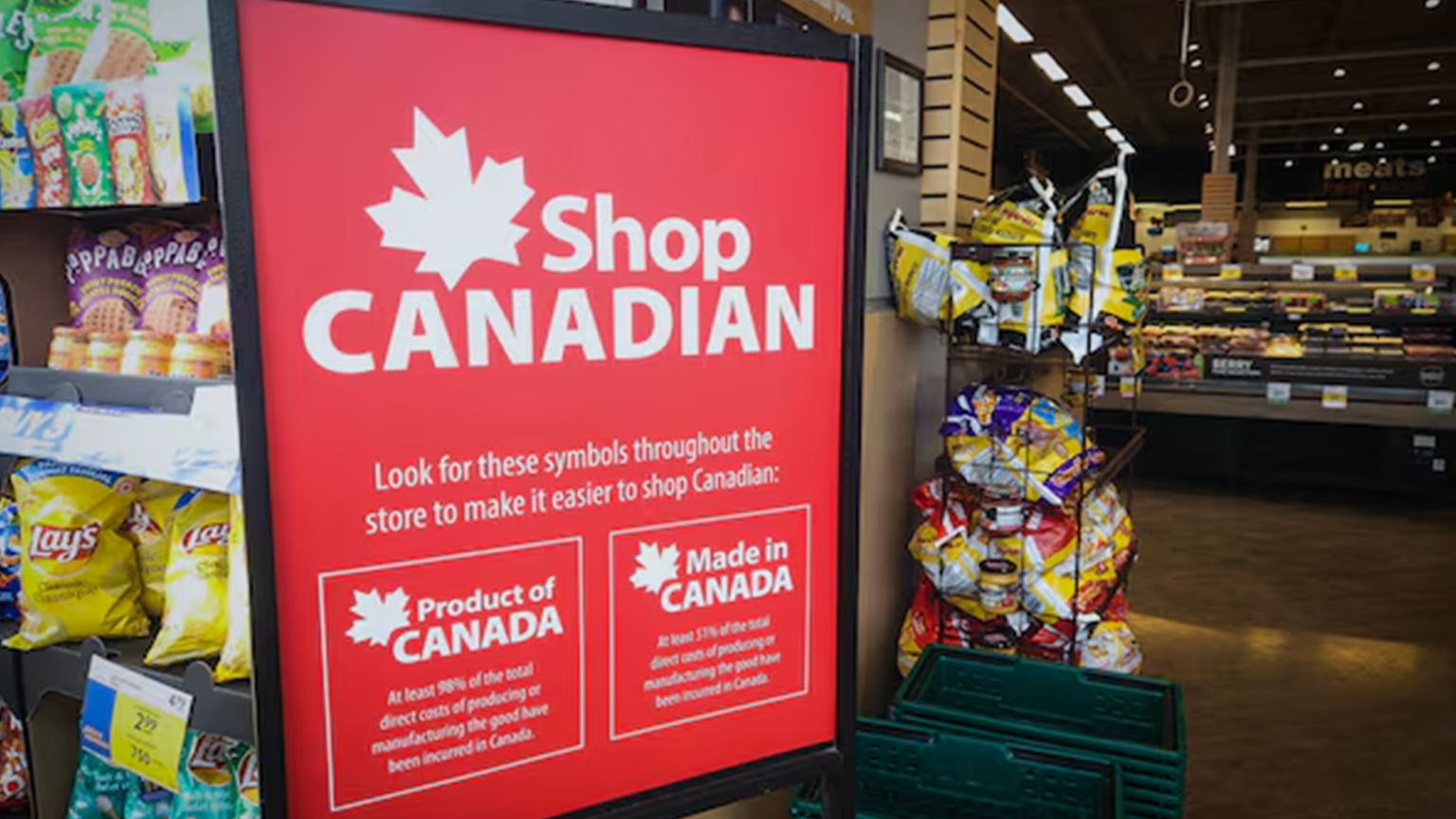
The fastest way to damage trust is a vague or inconsistent origin claim. Build one internal standard, stick to it, and make sure your shelf tags match what your products can substantiate.
Practical rule for marketing teams
- Avoid “local-ish” language.
- Use clear categories such as:
- Made in Canada (with a qualifier if needed)
- Product of Canada (where applicable)
- Canadian-owned
- Made in Canada with imported ingredients
- Packed in Canada (only if that’s the truth)
Then ensure every claim has a proof file you can produce if challenged.
The VP dashboard: metrics that prove it’s working
If you can’t measure Canadian-first, you can’t scale it. Track these weekly:
- Canadian SKU penetration: percent of category sales from Canadian-made/Canadian-owned products (based on your internal definitions)
- Basket mix shift: percent of basket value from Canadian-tagged items
- Filter adoption: percent of online sessions using Canadian filters or Canadian search terms
- Promo elasticity: lift on Canadian Value Heroes versus imported comparables
- Claims compliance rate: percent of Canadian shelf tags and PDP badges backed by supplier proof files
- Staff confidence score: percent of staff who can explain your Canadian labels accurately and consistently
The strategic outlook: build it now, benefit later
“Buy Canadian” isn’t fading. It’s becoming operational. The winners in 2026 won’t be the retailers with the most patriotic creative. They’ll be the ones who built Canadian-first into the way people shop—through discovery infrastructure, proof-based storytelling, value architecture, and staff confidence.
Do that, and the next wave of trade rhetoric won’t feel like a marketing scramble. It will feel like a tailwind you’re already built to capture.