




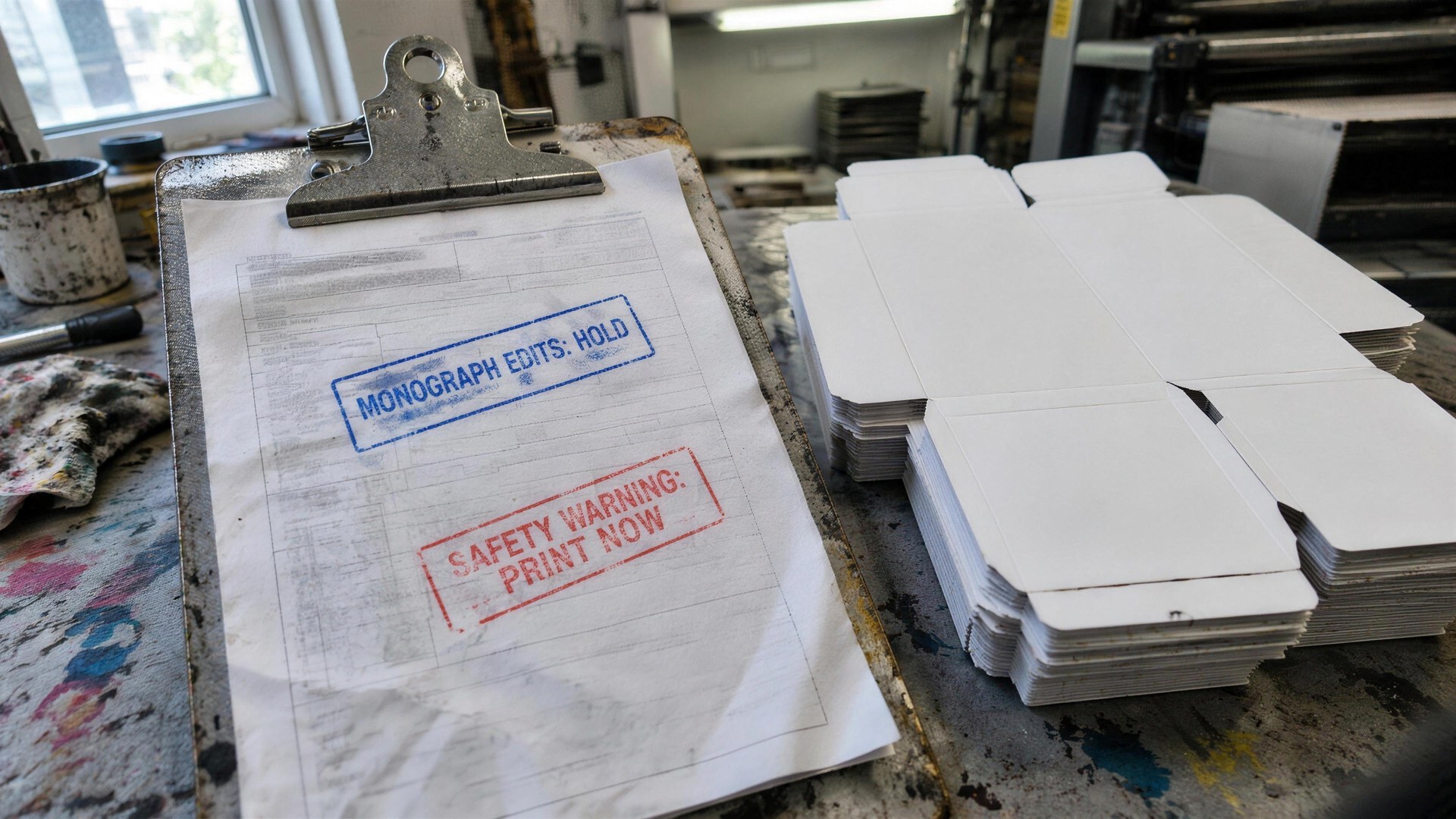
Health Canada’s pause on monograph-driven label edits can spare a 60-SKU brand up to $480,000 in duplicate artwork costs. Safety warnings still run on their own clock, and they now arrive about three times a year.
By IHR Editorial Team, IHR Magazine. November 4, 2026.
A brand carrying 60 natural health product SKUs can spend $240,000 to $480,000 every time it relabels its whole range. NHP labelling Bulletin 13, issued by Health Canada on October 13, 2026, lets that brand pay the bill once. Monograph-driven label edits can now wait and ride along with the Product Facts redesign, provided a separate fund covers safety changes.
What does Bulletin 13 actually defer? Label updates that flow from revisions to the Compendium of Monographs. Each one used to fall due at the earliest of three triggers: three years after the revised monograph, the next label run, or the next post-licence amendment or notification. The new deadline is the end of a transition period Health Canada has yet to define.
The deferral is real, the end date is not
Health Canada had planned to finish its monograph refresh in 2025 so brands would relabel only once. That work slipped into 2026, according to Quality Smart Solutions. Bulletin 13 repairs the damage from that slippage.
The anchor is June 21, 2028, the compliance date for the 2022 labelling amendments that Bulletin 10 confirmed on May 11, 2026. Health Canada now says the new transition period will run past June 2028. Its length will be set in draft amendments targeted for the Canada Gazette, Part I, in spring 2027.
Two limits apply. Safety-related changes that Health Canada directs through a notice, request or direction keep the timeline stated in that communication. Early adoption stays voluntary, and the department encourages it wherever a label is already being revised, according to regulatory consultancy dicentra.
IHR could not load the bulletin itself on canada.ca for this story. The scope above comes from dicentra and Quality Smart Solutions, whose readings agree on every point.
Where the money sits: avoided reprints
Verdict: the saving scales with SKU count, and the industry’s estimate runs higher than Ottawa’s. Health Canada priced the 2022 rules at $159 million in present-value costs over 2022 to 2036, against $292 million in benefits. At its CHFA NOW session in Toronto on September 25, the Canadian Health Food Association (CHFA) put sector-wide labelling change costs at $200 million to $400 million, SourceNutra reported. SourceNutra flags these as association estimates, unconfirmed by Health Canada.
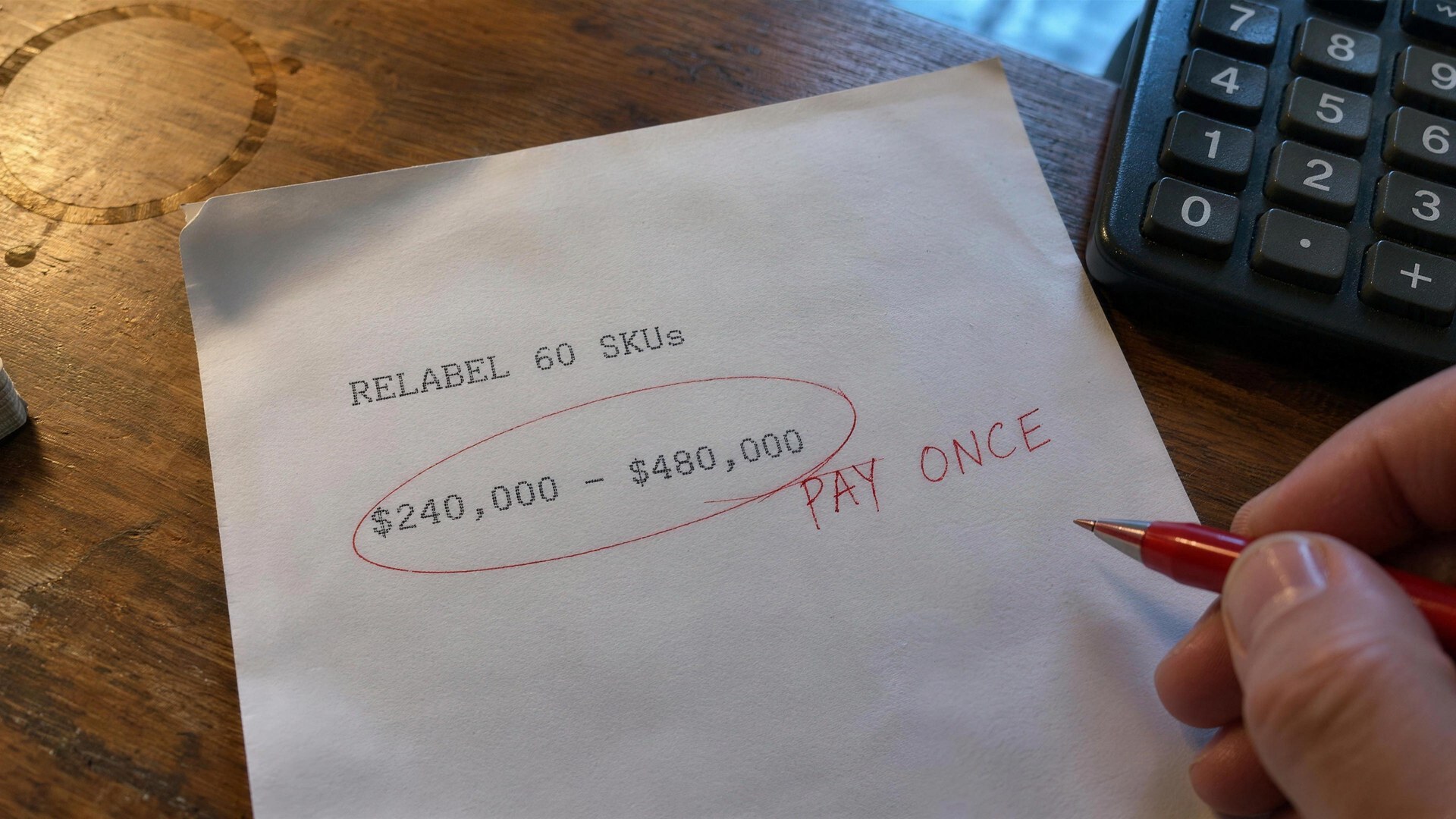
The department’s own costing assumed 50,000 SKUs on shelf and $5.1 billion in adjusted NHP sales. Divide the CHFA range by that SKU count and each relabel costs roughly $4,000 to $8,000 per SKU. That covers consulting, regulatory review, plates, packaging and written-off inventory. Treat it as an order of magnitude, since the CHFA has not published its per-SKU base.
The wider cost file explains why relief arrived now. A CHFA policy brief puts one-time regulatory costs at $430 million to $1 billion through 2028, plus $120 million to $170 million a year in new ongoing costs. It argues those costs outweigh announced savings by at least 8 to 1. Faster registration for low-risk Class I products, which took about 50 days and $392 in review costs each, saves $3 million to $14 million a year by the brief’s math.
The catch: safety reprints are speeding up
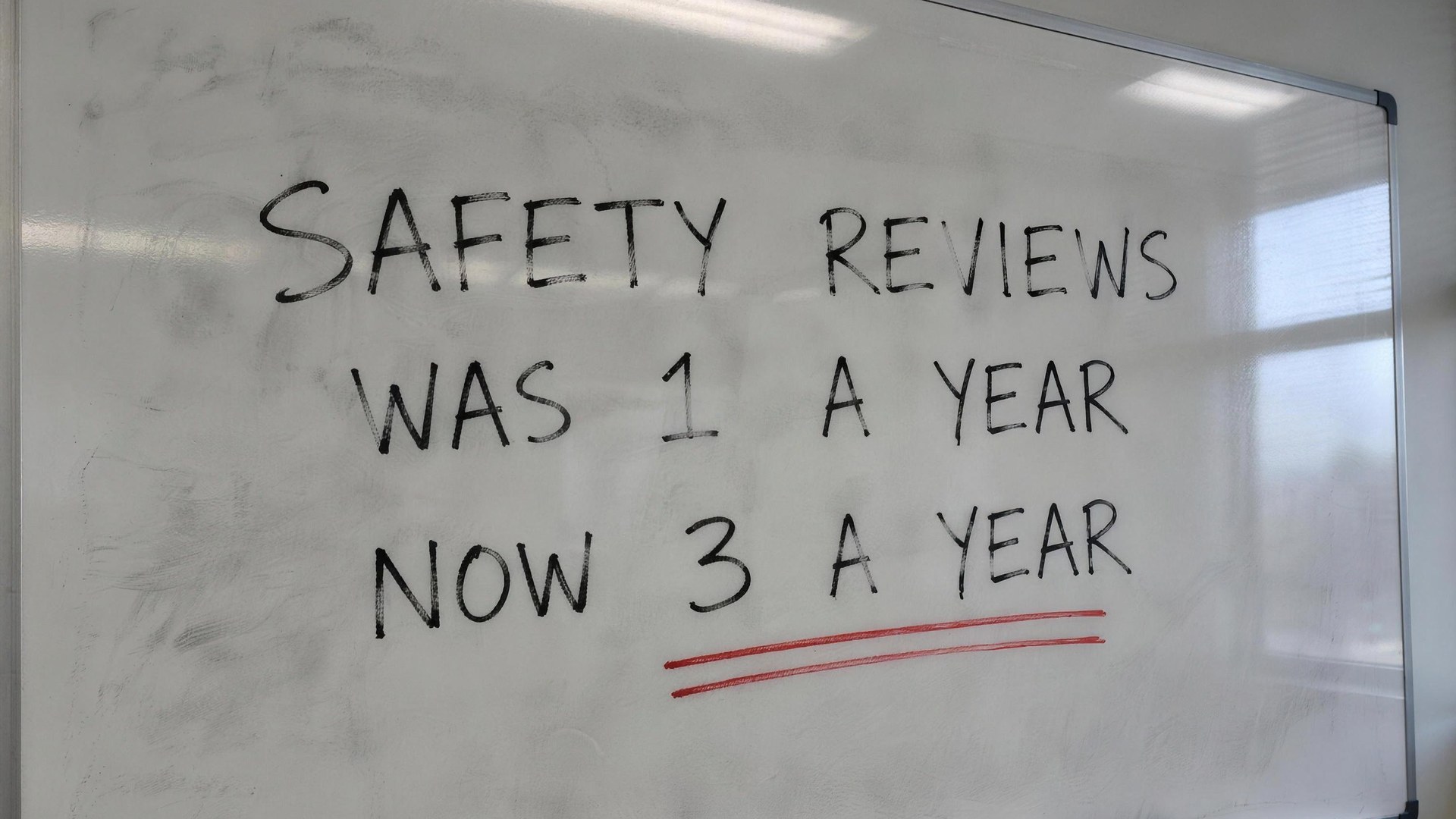
Verdict: Bulletin 13 parks the slow edits while the urgent ones multiply. The same CHFA brief says safety-driven ingredient reviews have climbed from about one a year to about three. Each can touch hundreds or thousands of products, and none qualify for the deferral.
Turmeric shows how that lands. In December 2025, Health Canada called for hepatotoxicity warnings on every licensed turmeric and curcuminoid product, NutraIngredients reported. The wording covers warning signs such as yellowing of the eyes or skin, plus advice to stop use and see a professional. Every brand in that category reprints on Health Canada’s schedule, whatever Bulletin 13 says.
Monograph activity is not slowing either. Health Canada published a prebiotics monograph on May 1, 2026, and EcoMundo reports 2026 revisions to the primary sunscreen, secondary sunscreen and acne therapy monographs. A brand could hold one of those edits until 2028 or later, then reprint the same carton in 2027 for a warning. That is the paradox the budget must absorb.
Printing the 2022 format now is a bet on rules Ottawa may loosen
The 2022 amendments require a Product Facts table, bolded allergen statements and required text of at least 6 points, or 5.5 if condensed. Packages of 90 square centimetres or less carry exemptions. Health Canada’s September 8, 2025 red tape report listed 42 initiatives, including a commitment to more flexible NHP labelling.
The May 2026 proposal shows where that flexibility may land, per SourceNutra. The Product Facts table could become optional if bold headings meet type and contrast standards. Latin binomials could move to a QR code or URL, with digital content supplementing the physical label. The transition date may also be tied to the date of manufacture or import.
That last idea matters for inventory. If it survives the Gazette text, stock produced before the cut-off could sell through on its old label, which turns production timing into a compliance lever.
Exemption order SOR/2025-94 already lets products licensed from June 21, 2025 keep the pre-2022 format. That condition does not apply to sales to a manufacturer or distributor, and the order is repealed on June 21, 2028.
Shelves will carry three label generations
Old-format cartons, 2022-format cartons and eventually a revised format will share shelf space. Health Canada’s 2020 survey found 0.09 per cent of NHPs bought in 2019 were the wrong product. About 79 per cent of those errors had label-related causes, such as illegible text, missed allergens or confusing layouts.
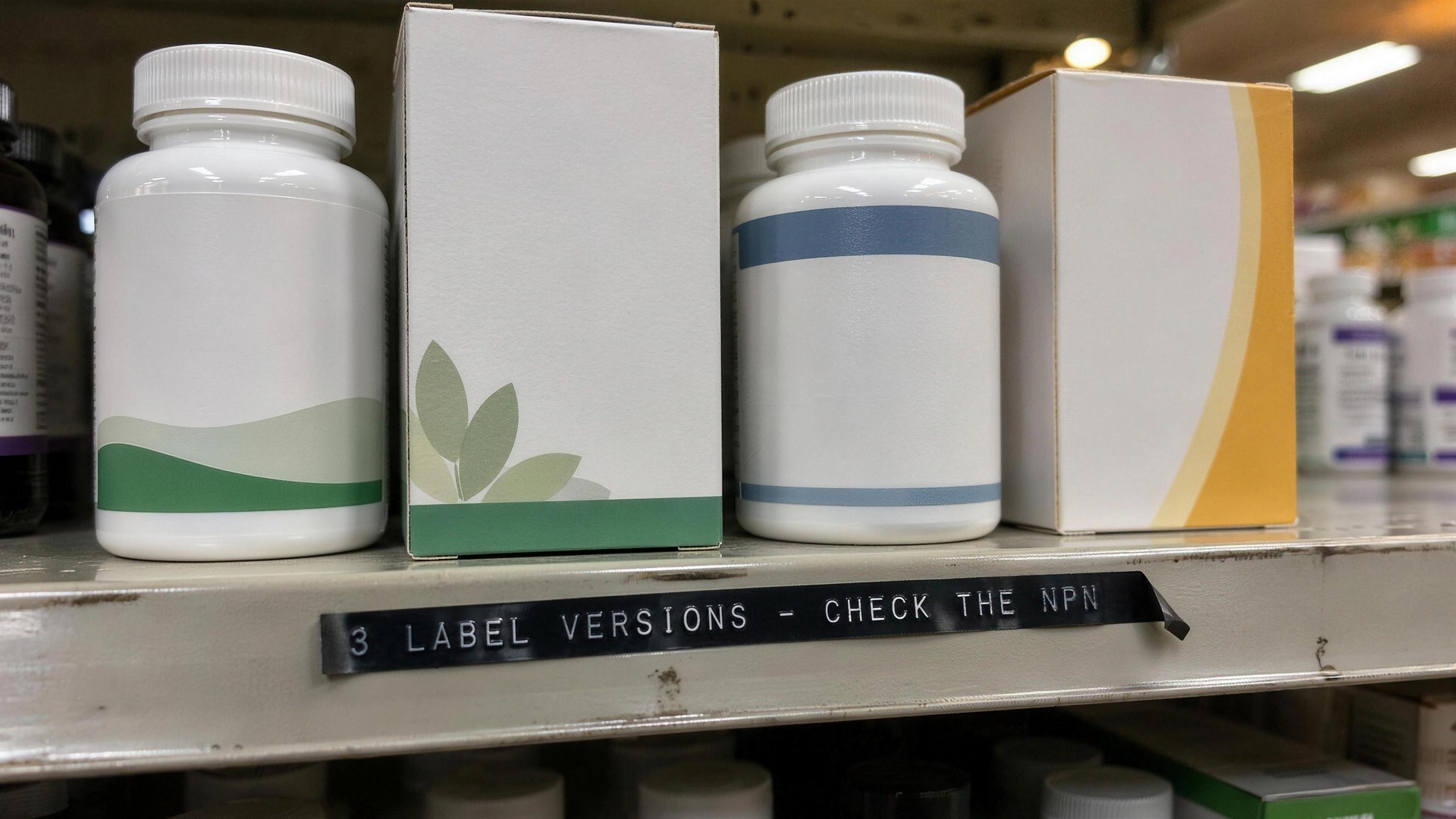
The 2021 federal environment commissioner’s audit found misleading label information on 56 per cent of sampled products, and misleading advertising on 88 per cent. It also counted more than 91,000 NHP licences issued since 2004. Shelf talkers must match the licensed claim on whichever carton faces out.
Five moves before the next two label runs
- Map every SKU against its monograph. List each revision since the label last printed and tag it monograph-only or safety-directed.
- Budget one combined artwork cycle per SKU. Time it to the transition end date once the Gazette text sets it, and fund a separate reserve for safety reprints.
- Keep deferred edits pre-approved. Regulatory-cleared files let monograph changes ride along on any forced safety run at no extra plate cost.
- Read the spring 2027 draft before large print orders. File comments if small-pack or Product Facts rules still bite.
- Ask suppliers for a label calendar by SKU. Retail buyers can then plan sell-through and brief floor staff before mixed cartons arrive.
The brands holding a finished SKU map the week the Gazette text appears will spend the least.
Frequently Asked Questions
Does Bulletin 13 let a brand skip a monograph update entirely?
No. Once the new transition period closes, every label must reflect the current monograph. The relief only helps products already on shelf. A fresh product licence application citing a monograph is generally assessed against the version in force on the filing date, so launches gain little by waiting.
Which label changes cannot be deferred?
Anything Health Canada orders for safety reasons, such as a new warning, contraindication or duration limit after an ingredient review. Those follow the date in that communication. A simple log linking each safety notice to affected licence numbers lets a regulatory team trigger a reprint within days.
When will the new deadline be known?
Health Canada targets spring 2027 for pre-publication of draft amendments in the Canada Gazette, Part I, which opens a public comment period. The end date can still shift after comments. It becomes binding only when final regulations appear in the Canada Gazette, Part II. Bulletin 13 itself fixes no date.
How should a store handle two label versions of one product?
Both can be legal at the same time. Sell older stock first and confirm the eight-digit NPN matches across cartons in the Licensed Natural Health Products Database. If the warnings differ between versions, pull the older carton and ask the supplier whether a safety direction triggered the change.