





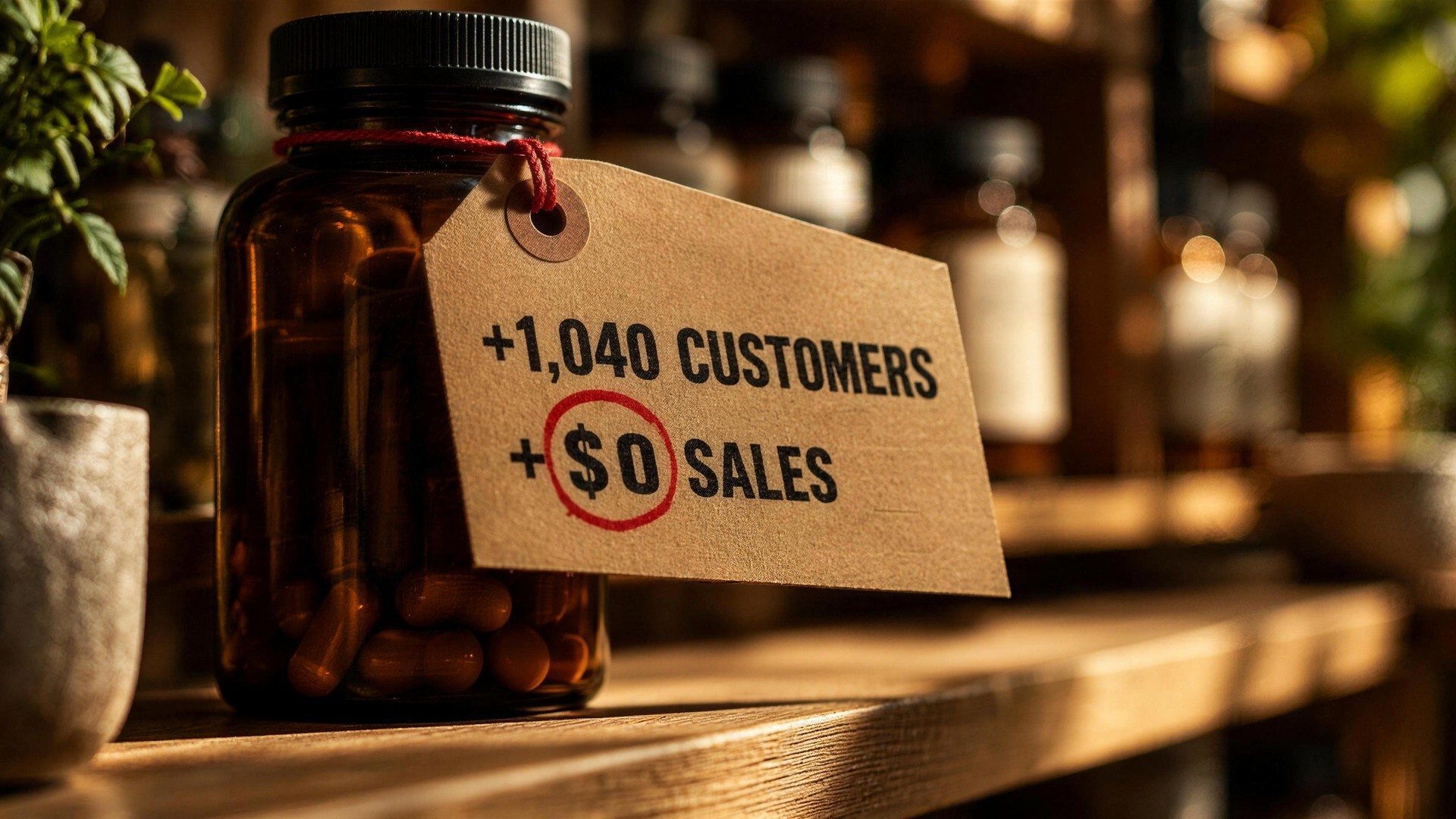
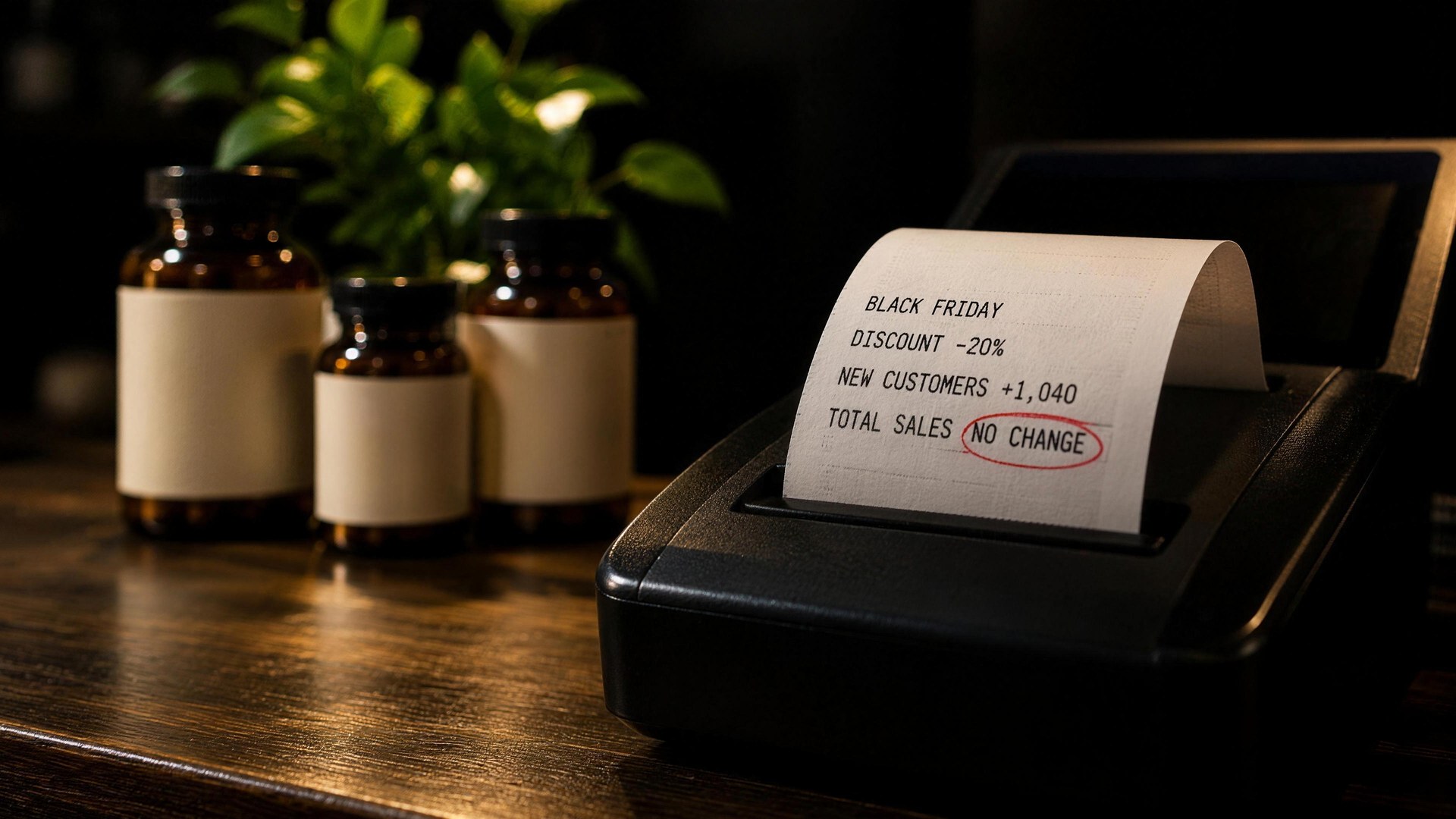
A discount brings in more customers but rarely more money, and the Natural Health Trends results released on October 28 put numbers on it. Natural Health Trends Corp. (Nasdaq: NHTC), a direct seller of supplements and personal care products, cut prices over the summer, gained 1,040 active members, and finished the third quarter with US$7.56 million in sales, the same as the quarter before. With Black Friday a month away, its books show the three things to check before marking anything down: what each customer spends, how many extra sales the discount needs, and who pays for it.
What did the Natural Health Trends discount buy?
Divide sales by active members and each one spent about US$280 in the quarter, down from US$338 a year earlier. Membership rose 4 per cent over the summer while spending per member fell by almost the same amount. According to its quarterly report, the company blamed its incentives and lower-priced packages for most of a 20 per cent drop in sales from last year. The promotion also cost a full point of gross margin. The smaller loss it reported came from paying its distributors less.
When a discount is worth it
The company had a reason to accept that trade. About 83 per cent of its revenue comes through Hong Kong from shoppers in mainland China, where demand has weakened, and it lost more than 3,000 members in the year to June. Keeping customers who were already leaving justified a lower price. A store whose regulars are steady has no such reason, and a deep November discount risks handing them money they would have spent at full price.
What makes a regular price legal in Canada?
A “was $60, now $45” tag in Canada must stand up under the Competition Act. The Competition Bureau accepts a regular price only if more than half of the product’s sales were at that price or higher. Failing that, the price must have been offered in good faith for a substantial period. Both tests usually look at the year either side of the sale. The Bureau warned last November of a surge in complaints about inflated regular prices around Black Friday.
Before you mark anything down
- Divide last November’s sales by the number of customers who bought, and judge this year’s discount against that figure rather than against foot traffic.
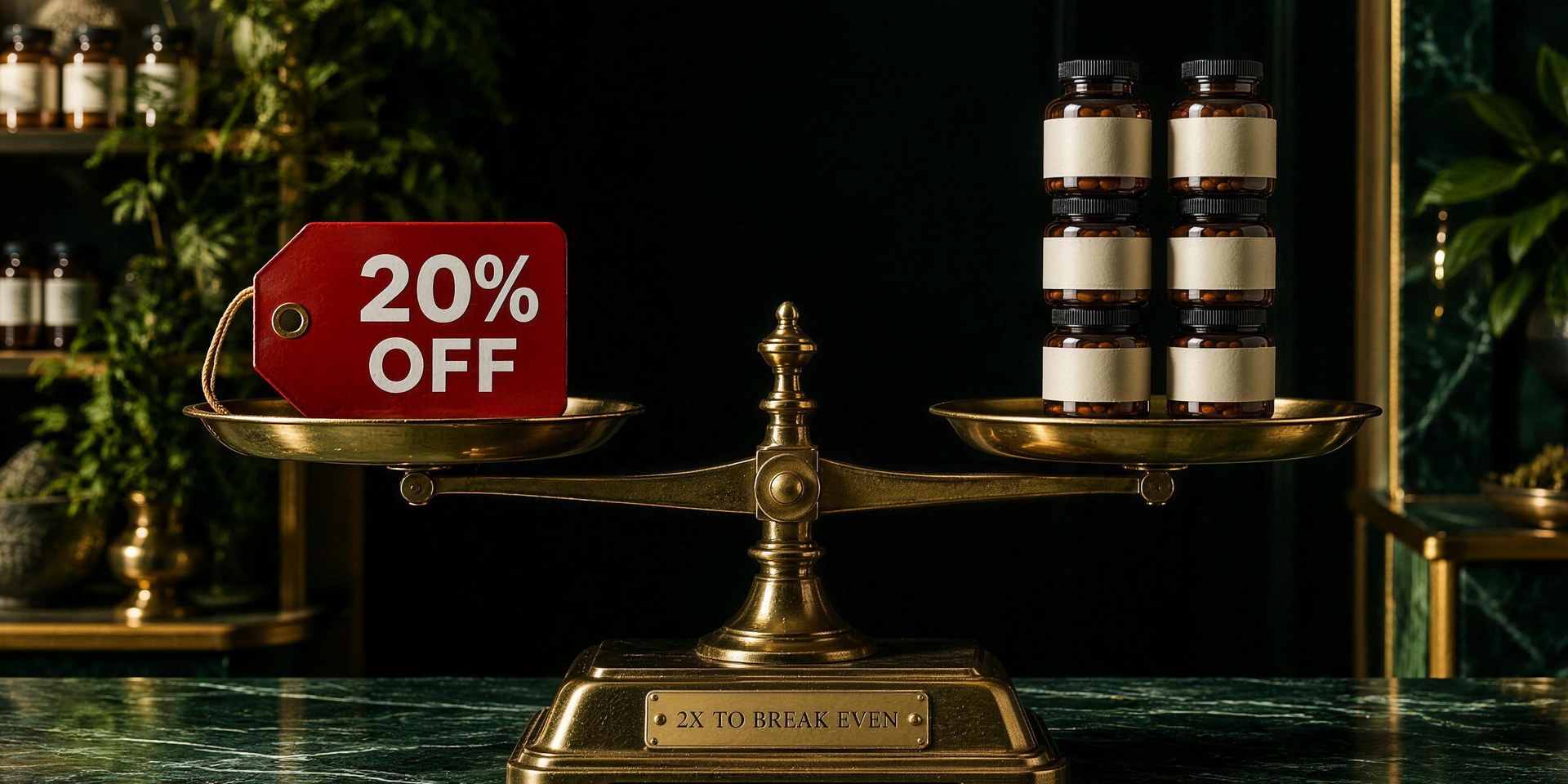
- Work out the volume you need. Your margin divided by your margin minus the discount gives the multiple of units required to earn the same gross profit. At a 40 per cent margin, 10 per cent off needs a third more units and 20 per cent off needs twice as many.
- Keep the sales records behind every regular price you advertise, and ask each supplier whether it or you will fund the discount.
Frequently asked questions
What were Natural Health Trends’ third quarter 2026 results?
The company reported a net loss of US$232,000, or US$0.03 a share, for the quarter ended September 30, against US$431,000 a year earlier. Its operating loss was US$277,000, and it gave no forecast for the fourth quarter.
Does Natural Health Trends sell in Canada?
Yes. Canada sits in its Americas segment with the United States, Mexico, Peru and Colombia, and Canadian sales are not reported separately.
Is a bundle safer than a percentage discount?
Only when no saving is advertised. “Save $15 when you buy two” is a savings claim, so it needs the same sales records behind it.
Is the company financially stable?
Its cash and securities fell to US$17.6 million from US$28.9 million in December, through buybacks, dividends and losses, and it declared no third quarter dividend.
Sources: Natural Health Trends third quarter 2026 release and Form 10-Q, October 28, 2026; second quarter 2026 release; Competition Bureau of Canada, ordinary selling price guidance and Black Friday notice of November 25, 2025. Figures in US dollars. Spending per member is IHR’s calculation from reported sales and active members.