




Health Canada has never approved a kratom product. Your customers use it anyway, and some of what they buy from you changes how it works.
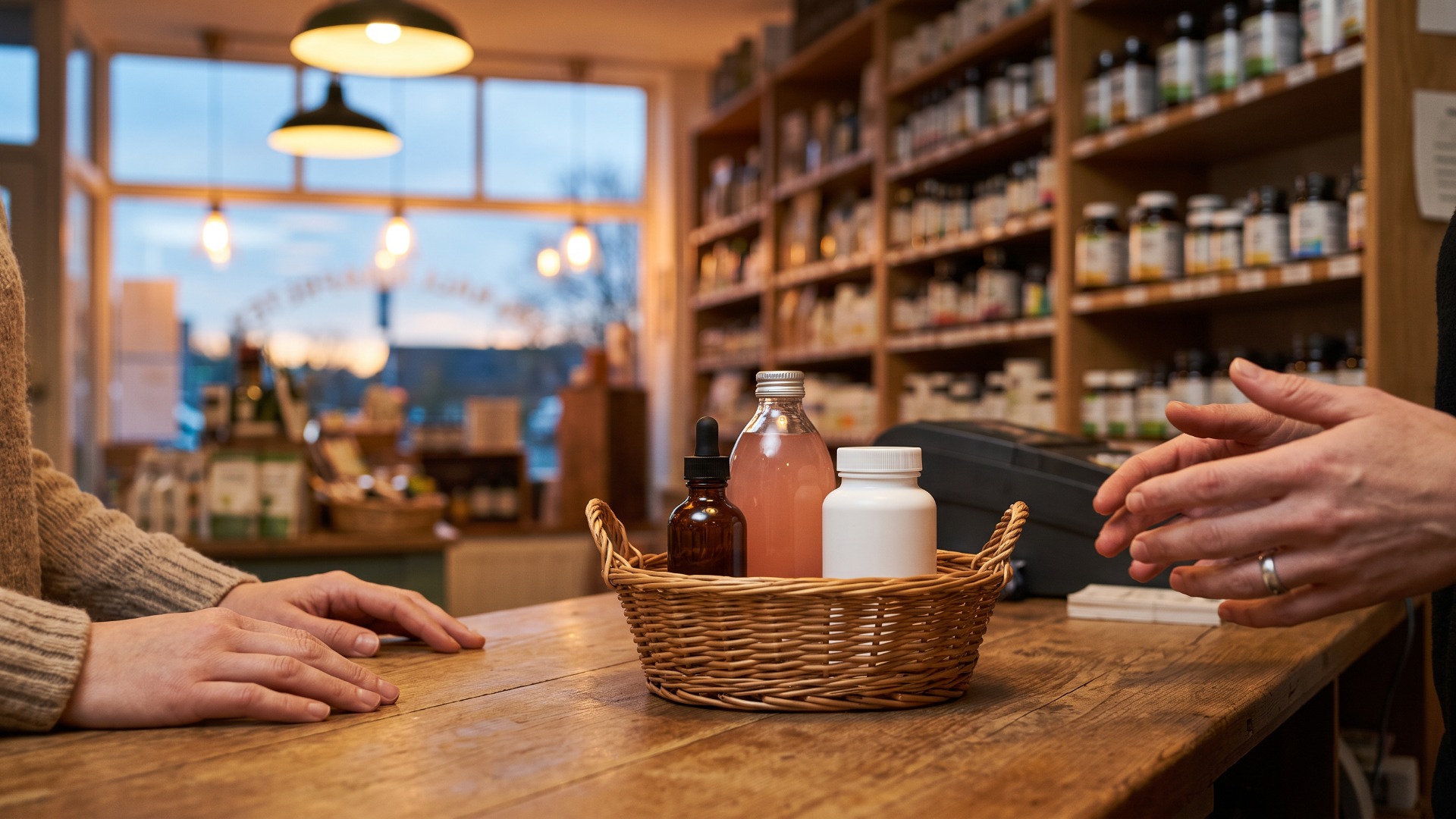
He comes in most Thursdays after work. Tonight it is a CBD tincture, a litre of grapefruit juice and a bottle of kava for sleep. While you bag them, he mentions, almost in passing, that he is trying to cut back on kratom. He used to buy the powder. Now he orders tablets online.
You have about ten seconds to decide whether to say anything. Most staff say nothing, because nobody has ever told them what kratom is or why that particular basket matters. This article is for the store that wants its people to speak up.
The tablet is not the leaf
Kratom comes from the leaves of Mitragyna speciosa, a tree native to Southeast Asia, and it has no legal route to the Canadian market. Health Canada seized it from shops in Edmonton, Milton and the GTA in 2017 and 2018, and stated that it “has not authorized the sale of any product containing kratom.”
What your regular is taking today is something else. The leaf holds only a trace of 7-hydroxymitragynine, or 7-OH, under 0.05 per cent by weight. Manufacturers have learned to concentrate or synthesize it, and in lab tests 7-OH is about 13 times as potent as morphine. A Canadian-facing website updated in March sells 7-OH tablets from 20 mg to 60 mg. It ships from inside Canada, takes Interac e-Transfer and prints “not intended for human consumption” on the label.
The United States shows where this leads. Poison centre calls involving kratom rose 1,200 per cent between 2015 and 2025, according to Centers for Disease Control and Prevention figures cited in Health Affairs, and the steepest climb came after the concentrated products appeared. Washington is now moving 7-OH toward Schedule I. Ottawa has not scheduled it at all.
Why his basket matters
Mitragynine, the main alkaloid in kratom, partly switches on the mu-opioid receptor, the same receptor that morphine and oxycodone act on. In small amounts it feels more like strong coffee. In larger amounts it behaves like an opioid. Sellers like to say it spares breathing, but rat studies on 7-OH tell a different story: breathing slowed, and repeated doses brought tolerance and withdrawal.
The part your staff can do something about happens in the liver. One enzyme, CYP3A4, clears mitragynine from the body and also turns some of it into 7-OH, a conversion researchers confirmed in human volunteers in 2024. Anything that slows that enzyme changes the dose your customer actually receives. Kratom slows it too. In a 2023 clinical study, a single cup of kratom tea raised blood levels of midazolam, a standard test drug, by 39 per cent, and many benzodiazepines, statins and some blood pressure pills are cleared the same way.
Look at the Thursday basket with that in mind. These are the kratom interactions most likely to start on your own shelves.
| Product | What it does with kratom | How solid the evidence is |
|---|---|---|
| CBD oil | Raised mitragynine levels 2.8-fold and delayed the peak, which tempts people to take a second dose too soon | One rat study |
| Grapefruit and other CYP3A blockers | Pushed up both mitragynine and 7-OH and multiplied their opioid effects | Rat studies; the researchers named citrus juice as a concern |
| Goldenseal | Cut the activity of a second liver enzyme, CYP2D6, by about half; mitragynine blocks the same enzyme in lab tests | Human study for goldenseal |
| Kava, valerian, passionflower, hops | Pile sedation on top of an opioid; a kava and kratom drink left one man in hospital with withdrawal from both | Pharmacology and a 2025 case report |
| Caffeine, yohimbe, bitter orange | Add to the racing heart and seizure risk Health Canada already lists for kratom | Pharmacology |
| St. John’s wort | Speeds up CYP3A4, which could lower mitragynine but raise 7-OH | Never studied |
Two of those rows need a closer look. CBD runs through almost every kratom user’s routine, and in one U.S. survey about 92 per cent of kratom users had also used cannabis. Grapefruit is the sneakier one. Kratom forums recommend it as a way to make kratom hit harder, so a customer who pairs grapefruit extract with a sleep aid may know exactly what he is doing.
Kratom that doesn’t say kratom
For the store itself, the bigger risk is a product that arrives in a distributor’s box under another name.
In Burnaby, chemists at the British Columbia Institute of Technology bought products labelled “kratom extract” and put them through the lab. They found 22 to 75 mg of 7-OH per gram, more than the labels promised, plus compounds that never occur in the leaf. Their conclusion, published this year in the Journal of AOAC International, was that such levels are “achievable only by synthetic means.”
The drinks fridge has its own version of the problem. In September, Arizona sued Botanic Tonics, the company behind the “feel free” shot. The state says the bottle was designed to look like an energy shot, sold as a kava drink with “other ancient plants” and pitched to sober-curious young adults, and that some users were drinking seven bottles a day. Attorney General Kris Mayes said there is “real danger of addiction and other mental and physical harm.” The company had already settled an earlier class action for $8.75 million.
If your store carries alcohol alternatives, functional shots or botanical blends, read the ingredient panel as closely as you would a supplement label. Mitragyna speciosa, “kratom extract” or a vague “botanical blend” without a Canadian product licence means the item does not belong on your shelf.
Your staff and your premises
Kratom can also become a staffing issue. Since June 1, 2023, Ontario employers who know, or ought to know, that a worker may be at risk of an opioid overdose have had to keep a naloxone kit on site with a trained worker nearby. If you learn that an employee is taking 7-OH tablets, get advice on whether that rule now applies to you. Ottawa’s powers have grown as well. Vanessa’s Law, extended to natural health products in 2023, lets Health Canada order recalls and label changes when a product poses a serious risk.
Don’t overcorrect
Most kratom customers are not in danger, and treating them as though they are will cost you their trust and their business. Much of the interaction research comes from rats or from a dozen healthy volunteers given a single cup of tea. That same 2023 study found no effect on CYP2D6, even though test-tube work had predicted one. Even the BCIT chemists drew a firm line between the traditional leaf and synthetic 7-OH.
Your policy should draw the same line. Concentrated or disguised products get zero tolerance on the shelf. The customer who drinks leaf tea gets patience and good information, because a lecture only sends him back to the forum that told him about grapefruit.
How to have the conversation
At the till, it can be short. During the usual chat about what else he takes, ask: “Do you use kratom, including tablets, shots or gummies?” If the answer is tablets, steer him away from the CBD, grapefruit and kava combination today and suggest he run his routine past a pharmacist. Then write down the date and what you suggested, which protects the store and gives you the details Health Canada asks for if you ever file a report.
Away from the till, three jobs are worth finishing this quarter. Look up every tonic, shot and botanical blend in Health Canada’s Licensed Natural Health Products Database, and pull anything without a valid NPN or DIN. Ask botanical suppliers for a certificate of analysis that tests for alkaloids, so that a “kratom-free” claim comes with a lab result attached. Finally, get at least one person on each shift trained on naloxone through a provincial program, and report suspected reactions through the Canada Vigilance Program.
When American shelves empty, those tablets will go looking for new buyers. The stores that have already had this conversation will see them coming.
Frequently Asked Questions
Does naloxone reverse a 7-OH overdose?
Yes. The American College of Medical Toxicology reports that naloxone has reversed 7-OH-related breathing problems in animal studies and in human case reports. Toxicologists warn against taking 7-OH alone or with alcohol or benzodiazepines, since a person who stops breathing needs someone nearby to give the naloxone.
How is kratom or 7-OH dependence treated?
Doctors treat it the way they treat opioid dependence. Buprenorphine and methadone, the standard medications for opioid use disorder, have been used successfully for people coming off 7-OH. Supplements are not a substitute, so a customer asking for help should be sent to a physician, pharmacist or addiction service.
Is a “kratom” gummy the same thing as kratom leaf?
Often not. A 2025 audit cited in Health Affairs found hundreds of 7-OH products on the U.S. market, mostly tablets, shots and gummies, and more than 93 per cent of them were sold simply as kratom. Customers often do not know which one they have, so ask about the form.
Is the United States banning 7-OH?
A ban is close. The DEA’s latest proposal, published for public inspection in October 2026, covers products with more than 1 mg of 7-OH per gram or millilitre, or a mitragynine-to-7-OH ratio below 100. Plain leaf under those limits would stay legal, so the target is concentrated products.
What happens to a Canadian store caught selling kratom?
Health Canada treats kratom as an unauthorized health product, and selling one is illegal. Earlier cases ended with stock seized from the store. The regulator also works with the Canada Border Services Agency to stop shipments at the border before they reach distributors or retail shelves.
This article is for trade education and is not medical or legal advice. Retailers should consult a pharmacist, physician or regulatory adviser on specific cases.
IHR Magazine is Canada’s business intelligence publication for the natural health, nutraceutical and personal care industry, covering regulation, retail strategy and ingredient science at ihrmagazine.com.
Sources
- Health Canada, “Unauthorized ‘Sāj’ kratom products seized from two Edmonton stores” (May 2018)
- Health Canada, “Unauthorized Jupiter and Kratom Zone kratom products seized from two Edmonton stores” (June 2017)
- Health Canada, “Unauthorized kratom products seized from Culture Rising store in Milton” (July 2017)
- Health Canada, “Unauthorized kratom and sexual enhancement products seized from multiple George’s Convenience stores in the Greater Toronto Area” (January 2018)
- Stine N, Ullal M. “When An Herbal Supplement Becomes A Potent Opioid,” Health Affairs Forefront, May 14, 2026
- American College of Medical Toxicology, position statement on 7-hydroxymitragynine and other kratom compounds, 2026
- DEA notice of intent, “Temporary Placement of 7-Hydroxymitragynine and Mitragynine Pseudoindoxyl Above a Specified Threshold in Schedule I” (public inspection, October 2026)
- Canadian-facing 7-OH vendor page (cited as market evidence only), March 2026
- Kruegel AC, Grundmann O. Neuropharmacology, 2018
- Kamble SH et al. Metabolism of mitragynine, Xenobiotica, 2019
- Kamble SH et al. CYP3A inhibition and mitragynine in rats, JPET, 2023
- Tanna RS et al. Clinical drug interaction potential of kratom, Clin Pharmacol Ther, 2023
- Mongar P et al. Itraconazole and mitragynine/7-OH pharmacokinetics in humans, ACS Pharmacol Transl Sci, 2024
- Berthold EC et al. Kratom and cannabidiol interaction in rats, Pharmaceutics, 2024
- Gurley BJ et al. CYP2D6 herb-drug interactions (goldenseal, kava, St. John’s wort), Mol Nutr Food Res, 2008
- Bleifuss W et al. Severe kava withdrawal (kava-kratom beverage), Am J Emerg Med, 2025
- Brown PN et al. “Elevated 7-Hydroxymitragynine Levels Found in Products Misbranded as Kratom,” J AOAC Int, 2026
- Arizona v. Botanic Tonics coverage, Courthouse News, September 2026
- KOLD/AZFamily, “Arizona sues popular ‘feel free’ kratom drink maker,” September 23, 2026
- California Department of Alcoholic Beverage Control, warning to licensees on kratom and 7-OH products, January 15, 2026
- Bennett Jones, “Ontario Provides Details on Workplace Naloxone Kit Requirements”
- Health Canada, Vanessa’s Law and natural health products
- Health Canada, Licensed Natural Health Products Database
- Hill K et al. Cannabinoid use among people who use kratom, J Addict Med, 2024