





As per WHO, more than 1 billion women will experience menopause by 2025. Menopause transition is a life-changing phase that occurs between 45 and 55 years and can last from a few months up to 10 years (1, 2).
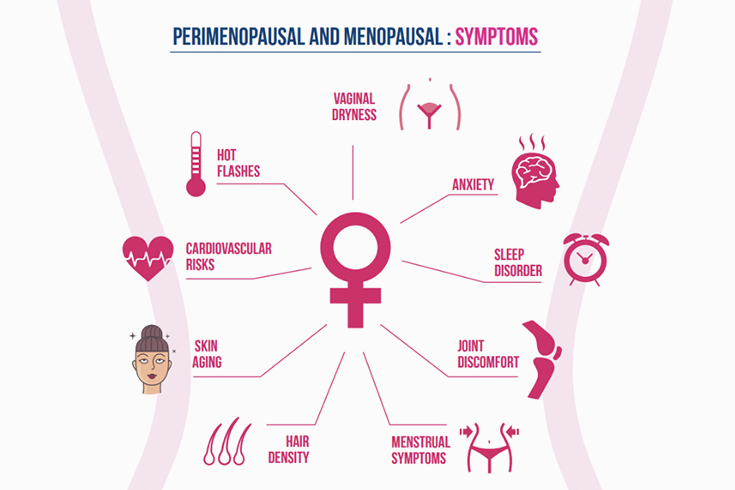
Menopause transition not only marks the end of fertile years, but it can also affect the whole body because of hormonal fluctuations. Vasomotor symptoms, specifically hot flashes and spontaneous sweats are considered the most frequent and most bothersome symptoms during menopause, affecting up to 80% of perimenopausal women (3). Hot flashes and spontaneous sweats during menopause transition can lead to sleep disruption and depressed mood – two other common symptoms of menopause transition. This results in fatigue, irritability, forgetfulness and decreased work productivity, all frequently described by perimenopausal women (3).
Other typical climacteric issues include an increased risk of cardiovascular problems, cognitive impairments, sexual dysfunction (vaginal dryness, loss of libido, dyspareunia), joint and muscle aches, hair and skin problems and impaired sense of attractiveness (4, 5). Interestingly, women from different cultures perceive the severity and mere occurrence of various symptoms very differently (6).

Hormone therapy (especially estrogen-progestogen preparations) has for a long time been a common way to treat menopausal symptoms. However, this treatment may cause an increased risk of severe adverse effects, including venous thromboembolism, strokes and even breast cancer (7). Thus, many women are looking for non-hormonal and natural ways to cope with the signs and symptoms of menopausal transition.
Pycnogenol®, French maritime pine bark extract is a natural antioxidant and anti-inflammatory food supplement, that was found to have beneficial properties for the various health impairments in perimenopausal women. It has been established that Pycnogenol® does not only improve menopausal symptoms but it also helps with cardiovascular, joint, skin and hair health without affecting hormone levels (8, 9).
Pycnogenol® relieves menopause transition without any impact on hormonal levels
Pycnogenol® relieves menopausal symptoms
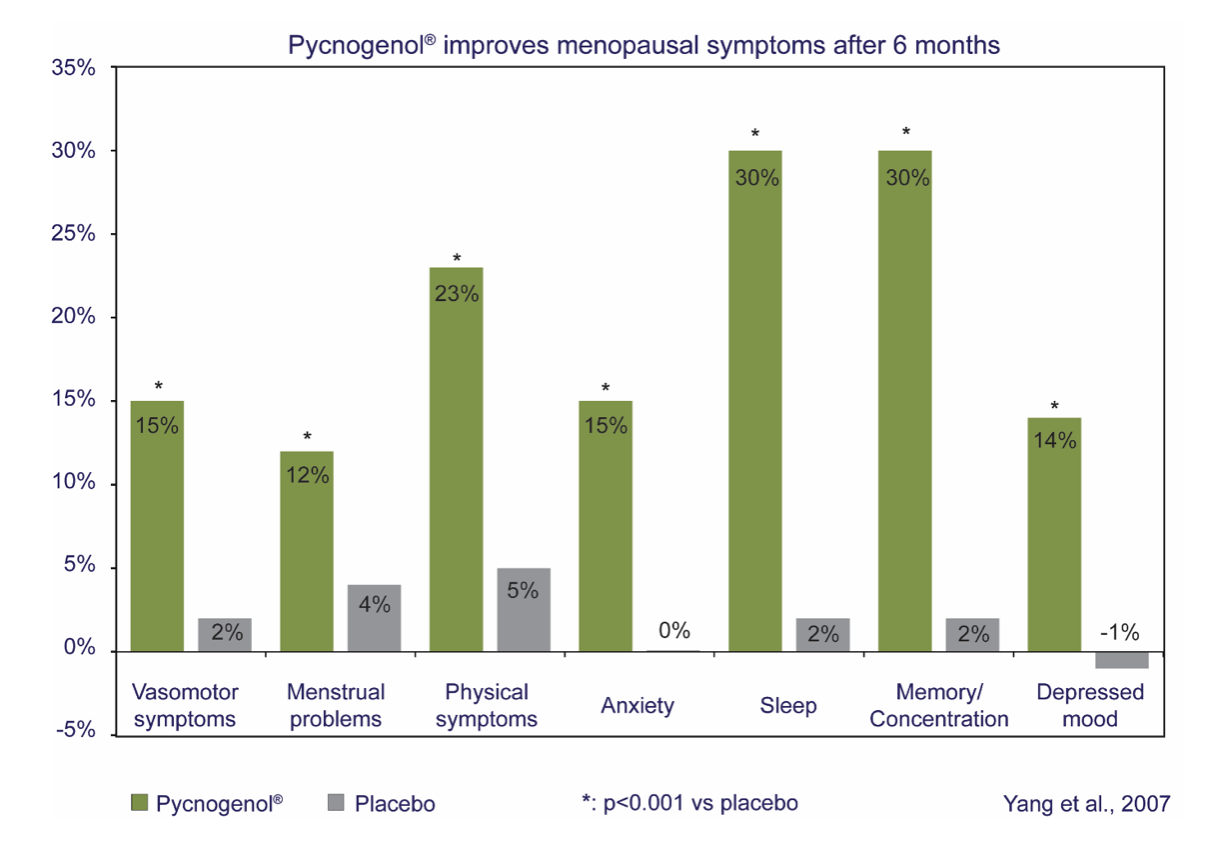
Pycnogenol® has demonstrated remarkable efficacy in addressing various conditions and disorders associated with menopause. Numerous studies have been conducted, involving nearly 600 menopausal women, to investigate the effects of Pycnogenol® on climacteric symptoms (9-13), providing substantial evidence of its benefits. A randomized, double-blind placebo-controlled 6-month study with 155 peri-menopausal women found all symptoms of the Women’s Health Questionnaire (WHQ) to be significantly improved in the Pycnogenol® supplementing subjects, as compared to placebo controls (10). The symptoms on the WHQ include somatic (tiredness, headache) and vasomotor problems (hot flashes, sweating), depressed mood, memory and concentration issues, attractiveness, anxiety, sexual behavior, sleep, and menstrual problems.
In another study, the symptoms of 70 women in menopausal transition were evaluated with 38 subjects being supplemented with 100 mg Pycnogenol® per day for 8 weeks (11). The scoring system included 33 common signs and symptoms of menopausal complaints, such as hot flashes, night sweats, mood swings, irregular periods, loss of libido and vaginal dryness, which were improved significantly after Pycnogenol® intake.
A significant efficacy of a low dosage of Pycnogenol® (60 mg daily) on climacteric symptoms could be shown in a randomized, double-blind placebo-controlled investigation with 170 women (9). In this study, the total menopause symptom score of the women was reduced by 17% compared to placebo control after 3 months, along with the improvement of arthritic or muscular pain, fatigue or sleep problems. In this study, blood plasma levels of different sexual hormones were investigated as well. The results showed that after Pycnogenol® intake, none of the hormone levels showed significant changes compared to baseline or placebo, providing further evidence of its safety.
The main symptoms of menopausal transition could be shown to be improved in a study with 70 women, who took Pycnogenol® for 8 weeks (12). Vasomotor symptoms, vaginal problems, cognitive impairment, and sleep disorders were significantly improved compared to baseline scores as well as to the control group.

A very recently published study on menopause compared the effects of Pycnogenol® to two other plant extracts that are commonly used against menopausal symptoms (13). Psychological as well as vasomotor and sexual symptoms were improved more with Pycnogenol® compared to the other tested extracts in the 90 postmenopausal women in the study.
Pycnogenol® maintains a healthy cardiovascular system
The frequency and severity of perimenopausal symptoms is associated with vascular dysfunction (14). This explains the increased risk of menopausal women for cardiovascular diseases (15). One of the vastly researched properties of Pycnogenol® is its positive effect on the vascular and endothelial health (10, 16-18). The suggested mechanism of action of Pycnogenol® is an activation of the endothelial nitric oxide synthase, which leads to an optimized NO generation (19, 20). This results in vasorelaxation and improved tissue perfusion.
Supplementation of peri-menopausal women with 100 mg Pycnogenol® per day for 6 months was shown to normalize high blood pressure and to improve blood lipid profile (12). Cardiovascular risk factors (homocysteine and CRP values) improved significantly, and plasma free radicals decreased significantly by 22%.
Similar beneficial effects on blood pressure and blood lipid profile were shown in another study on menopausal women who took Pycnogenol® for half a year, leading to a significantly reduced risk for cardiovascular diseases (10).
Pycnogenol® benefits mental fitness
Researchers have found a potentially important role of estrogen protecting neurons and ensuring neuronal function (21). This could explain a commonly described subtle cognitive decline during menopause (21). A healthy diet, physical activities, enough sleep and staying mentally active helps maintain a healthy cognitive function.
Several studies have shown that Pycnogenol® contributes to preserving healthy mental performances and to managing mild cognitive impairment (22-25). Attention, mental performance, memory, and daily tasks, like making decisions or coping with daily problems have been shown to be improved after supplementation with Pycnogenol®.

Pycnogenol® improves bone and joint health
Many menopausal women complain about increased joint pain and indeed, there are several hypotheses regarding the decreasing estrogen levels during menopause. As a consequence, osteoarthritis prevalence and severity increases during menopause (26). In studies with Pycnogenol®, it was observed that pro-inflammatory and degradation markers were significantly decreased after supplementation (27-31). Specifically, the metabolites that are produced after Pycnogenol® intake have been shown to prevent the release of inflammation markers and tissue degradation mediators. In addition, Pycnogenol® improved discomfort, stiffness, physical function and reduced the need for analgesic medication in patients presenting with signs of osteoarthritis (32-35). Metabolites of Pycnogenol® could be detected in the fluid around the knee cartilage, which explains the observed beneficial effects (36).
Pycnogenol® supports skin health and beauty
In over 20 published dermatological clinical investigations, Pycnogenol® was shown to provide numerous health benefits to the skin. These benefits include increased skin hydration, improved skin microcirculation, greater skin elasticity and decreased pigmentation, leading to a beautifully glowing skin appearance with less wrinkles (37-45).
A placebo-controlled double-blind study investigated the effects of Pycnogenol® on the skin health of 78 subjects, who work outdoors in a highly polluted urban area. After 3 months, the skin barrier measured as water loss of the skin during the hot summer season was improved by 14% with Pycnogenol® supplementation and was increased by 5% with placebo (37). Thus, Pycnogenol® led to an improvement of skin moisture compared to placebo, which was additionally investigated. Furthermore, skin elasticity was shown to be improved by 13% after supplementation, compared to an increase of 1% in the placebo group.
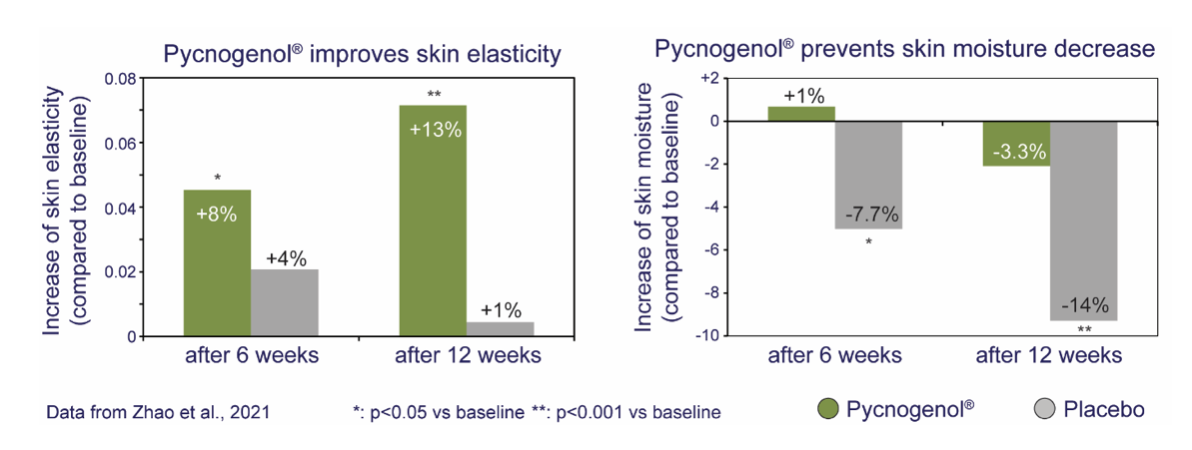
Interestingly, clinical investigations of Pycnogenol® supplementation for 12 weeks with menopausal women, aged 55 to 68 years revealed increased hyaluronic acid synthase levels within the skin by 44%, leading to improved skin hydration (38). Hyaluronic acid synthase is the natural source of water-binding hyaluronic acid in the dermis, which moisturizes the skin from the inside, keeping it taut and smooth. Consequently, an average skin-hydration increase by 21% in the group of Pycnogenol® supplementation was found, particularly in women presenting with dry skin prior to Pycnogenol® intake. In this study, Pycnogenol® was also shown to improve skin elasticity by 25% and decrease skin fatigue by 30%. The results were paralleled by Pycnogenol®’s ability to generate skin´s connective tissue collagen in average by 40%. These very interesting results explain the efficacy of Pycnogenol® on skin hydration and elasticity.

In addition to stimulating the synthesis of new collagen, Pycnogenol® metabolites inhibit the release and activity of destructive enzymes (metalloproteinases 1,2 and 9), which break down dermal tissue proteins, like collagen or elastin (29, 30). The reduced activity of these lytic enzymes saves the connective tissues from degradation, representing the basis for maintaining an elastic, smooth and youthful looking skin.
To ensure sufficient supply of nutrients and oxygen to all parts of the skin, blood circulation of the micro vessels must be in good functional condition. Pycnogenol® was shown to improve capillary blood flow by 40%, indicating better microcirculation (39).
Melasma – dark spots on the skin – can be caused by UV exposure, by predisposed genetic background but also by female hormone fluctuation during menopause transition (46). Pycnogenol® was shown to reduce over-pigmentation and melasma resulting in a more even, bright looking skin (37, 40-43).
A recently published study investigated the depigmenting action of Pycnogenol® and found that tyrosinase activity was significantly reduced by 66.5% and other pigmentation-related mediators were downregulated in UV-light treated human melanocytes (40). Tyrosinase is an enzyme that activates the production of melanin – the pigments responsible for skin darkening. From their results, they conclude that Pycnogenol® “contribut[es] to the inhibition of pathways associated with skin hyperpigmentation”.
These findings of Pycnogenol®’s ability to counteract skin hyperpigmentation were clinically validated in another study (41). In this clinical trial with 20 women, oral supplementation with Pycnogenol® was shown to significantly lower UV-induced expression of the pigment synthesizing enzymes tyrosinase-related protein 1 by 75% and tyrosinase by 51%, which are both linked to long-lasting pigmentation.
In another clinical study, the oral intake of Pycnogenol® has been observed to reduce the “melasma area and severity index” by 58% in 31 Brazilian women after 90 days (42). Additionally, the “melasma quality of life scale” was significantly improved by 29% and 94.5% of the patients experienced subjective improvement.

In the study on urban outdoor workers, mentioned before, Pycnogenol® improved skin lightening significantly by 13.8% after 12 weeks of supplementation (37). In the placebo group, subjects experienced a slight decrease in skin lighting due to sun radiation and pollution, reflecting a significant increase in skin color. Skin color lightening was assessed on the cheeks of the participants by the individual typology angle (ITA°), which is an objective classification of the skin color in dermatology and cosmetology.
Furthermore, a study with 30 women with melasma reported a fairer skin complexion with 22% lower pigment intensity following four weeks intake of Pycnogenol® (43). Additionally, Pycnogenol® was shown to effectively decrease the area of over-pigmented skin by 38%, leading to smaller spots.
Skin ageing processes are highly accelerated by exposure of skin to UV radiation. In a clinical trial, Pycnogenol® was shown to increase the resistance of participant’s skin to solar UV exposure, needed to trigger skin redness (minimal erythema dose) (44). Different doses of oral Pycnogenol® supplementation to 21 healthy volunteers with fair skin showed significant photo-protective effects, increasing the minimal dose of light needed to produce erythema (skin reddening) dose-dependently by 60% and 85% respectively.
The results of these studies suggest that Pycnogenol® provides potent photo-protective and melasma-reducing effects from inside out, in addition to topical skin protection and shadowing.
Pycnogenol® improves hair quality
Some menopausal women will experience noticeable changes to hair quality and density during menopause. Those menopausal changes may include hair loss, hair thinning, reduced hair growth and density as well as altered hair quality and structure (47). A 2022 study found that more than half of menopausal women experience female pattern hair loss (48).
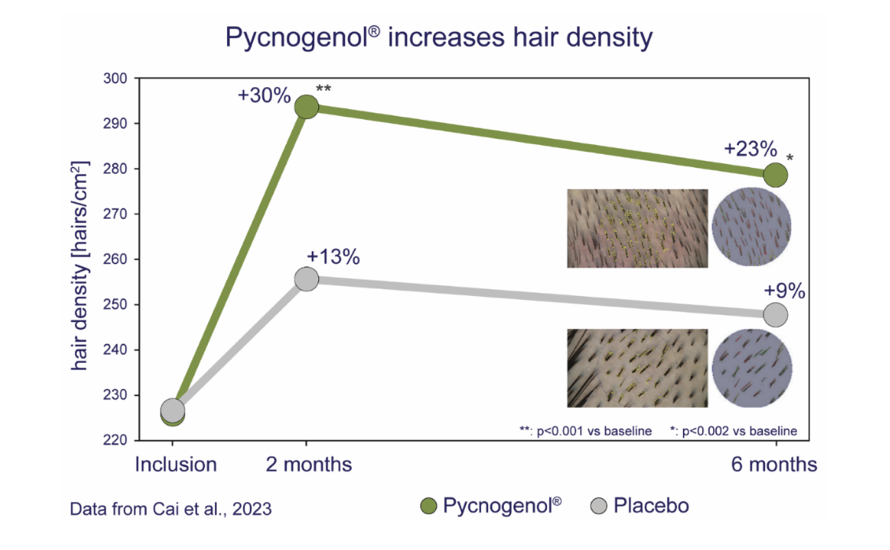
A recently published double-blind, randomized, placebo‐controlled study reveals a natural, safe and effective path for women who face hair thinning (49). The study was conducted for 6 months with 76 healthy menopausal women between 45 and 60 years. Remarkably, oral intake of Pycnogenol® led to a significant increase of hair density of 30%, compared to baseline and of 15% compared to placebo after 2 months. The effects of Pycnogenol® stayed on a highly improved level after longer supplementation.
In addition, the study showed that Pycnogenol® significantly reduced water loss from the skin of subjects’ scalp, compared to the placebo group. This leads to a better regulated scalp skin moisture balance for healthier hair and scalp.
The study also confirmed that Pycnogenol® intake positively affects microcirculation in the skin, leading to a better supply of nutrients and oxygen to the hair follicle.
According to a questionnaire in a previously published study with peri-menopausal women, Pycnogenol® reduced hair loss complaints by 31% after 8 weeks (11).
There are several mechanisms of action that can explain Pycnogenol®’s efficacy for hair health and beauty. Healthy microcirculation is vital for maintaining good hair quality as it leads to a well-functioning supply of nutrients and oxygen to the scalp and the hair follicles.
In several previously published studies, Pycnogenol® was shown to improve circulation in small blood vessels in the body, like the very fine micro vessels in the skin, fingertips and in the inner ear or the retinal capillaries in the eye (39, 49-55).
In addition, Pycnogenol® protects hair follicles by capturing free radicals, generated either by stress, sun rays, pollution, or inflammation. In many studies, it was shown that Pycnogenol® has potent anti-inflammatory (28, 29, 31) and strong antioxidant activities (10, 16, 25, 56-60).

Pycnogenol® for urinary tract infection symptoms
Women are 8-times more likely to get a urinary tract infection (UTI) (61). (Post-) menopausal women are at an even higher risk, as the lowered levels of estrogen can lead to a decreased production of antimicrobial peptides and proteins in the bladder (62).
Recently, it could be shown that Pycnogenol® intake has beneficial effects on the signs and symptoms and number of recurrent UTIs in women (63, 64). Interestingly, even more so as the traditionally used cranberry extract. Again, this can be explained by the strong anti-inflammatory and antioxidant effects of Pycnogenol®.
Pycnogenol® French maritime pine bark extract is a safe, natural, hormone-free and evidence-based solution to effectively relieve the main menopausal symptoms as well as several health and beauty impairments commonly reported by ageing women.
For more information, please visit www.pycnogenol.com.
Article written by Dr. Franziska Weichmann, Manager of Scientific Communications and Product Development at Horphag Research.
About Pycnogenol
Pycnogenol® is a French maritime pine bark extract studied as a hormone-free option for menopause. Evidence suggests it may reduce hot flashes, support sleep and mood, and benefit skin, hair and cardiovascular health—without changing hormone levels. It’s a complementary approach for women seeking non-hormonal relief.
People Also Ask (FAQ)
What is Pycnogenol® and how might it help in menopause?
- Pycnogenol® is a standardized pine bark extract rich in procyanidins. Studies suggest it can ease vasomotor symptoms (hot flashes, sweats), support sleep and mood, and help skin, hair and cardiovascular markers during menopause—without altering sex-hormone levels.
- Is Pycnogenol® hormone-free?
Yes. Clinical data indicate Pycnogenol® provides symptom relief without significant changes to sex-hormone levels, making it a non-hormonal option for women who can’t—or prefer not to—use hormone therapy. - Which menopause symptoms does Pycnogenol® address?
Research reports improvements in hot flashes, sleep quality, mood and cognitive performance, plus benefits for skin hydration/elasticity, hair density and select cardiovascular risk markers. - How long until benefits are noticed?
Timelines vary by outcome and dosage, but trials commonly report changes within 8–12 weeks, with additional benefits over 3–6 months alongside healthy lifestyle habits. - Can Pycnogenol® be taken with other supplements?
Often, yes, but combinations should be individualised. Readers should consult a qualified health professional, especially if using prescription medicines or managing chronic conditions.
References:
2. McKinlay SM, Brambilla DJ, Posner JG. The normal menopause transition. Maturitas. 1992;14(2):103-15.
3. Nappi RE, Siddiqui E, Todorova L, Rea C, Gemmen E, Schultz NM. Prevalence and quality-of-life burden of vasomotor symptoms associated with menopause: A European cross-sectional survey. Maturitas. 2023;167:66-74.
4. Wu JM, Zelinski MB, Ingram DK, Ottinger MA. Ovarian Aging and Menopause: Current Theories, Hypotheses, and Research Models. Experimental Biology and Medicine. 2005;230(11):818-28.
5. Woods NF, Mitchell ES. Symptoms during the perimenopause: prevalence, severity, trajectory, and significance in women’s lives. Am J Med. 2005;118 Suppl 12B:14-24.
6. Richters JMA. Menopause in Different Cultures. Journal of Psychosomatic Obstetrics & Gynecology. 1997;18(2):73-80.
7. Beral V, Peto R , Pirie K , Reeves G. Type and timing of menopausal hormone therapy and breast cancer risk: individual participant meta-analysis of the worldwide epidemiological evidence. Lancet. 2019;394(10204):1159-68.
8. Oliff H. American Botanical Council – Scientific and clinical Monograph for Pycnogenol. ABC. 2019:1-46.
9. Kohama T, Negami M. Effect of low-dose French maritime pine bark extract on climacteric syndrome in 170 perimenopausal women: a randomized, double-blind, placebo-controlled trial. J Reprod Med. 2013;58(1-2):39-46.
10. Yang HM, Liao MF, Zhu SY, Liao MN, Rohdewald P. A randomised, double-blind, placebo-controlled trial on the effect of Pycnogenol on the climacteric syndrome in peri-menopausal women. Acta Obstet Gynecol Scand. 2007;86(8):978-85.
11. Errichi S, Bottari A, Belcaro G, Cesarone MR, Hosoi M, Cornelli U, et al. Supplementation with Pycnogenol® improves signs and symptoms of menopausal transition. Panminerva Med. 2011;53(3 Suppl 1):65-70.
12. Luzzi R, Belcaro G, Hosoi M, Feragalli B, Cornelli U, Dugall M, et al. Normalization of cardiovascular risk factors in peri-menopausal women with Pycnogenol(R). Minerva Ginecol. 2017;69(1):29-34.
13. Cesarone MR, Belcaro G, Cornelli U, Hosoi M, Scipione V, Scipione C, et al. Effects of Pycnogenol® in women with postmenopausal symptoms: a 90-day comparative study. Panminerva Med. 2023.
14. Hildreth KL, Ozemek C, Kohrt WM, Blatchford PJ, Moreau KL. Vascular dysfunction across the stages of the menopausal transition is associated with menopausal symptoms and quality of life. Menopause. 2018;25(9):1011-9.
15. Moreau KL, Hildreth KL. Vascular Aging across the Menopause Transition in Healthy Women. Adv Vasc Med. 2014;2014.
16. Enseleit F, Sudano I, Periat D, Winnik S, Wolfrum M, Flammer AJ, et al. Effects of Pycnogenol on endothelial function in patients with stable coronary artery disease: a double-blind, randomized, placebo-controlled, cross-over study. Eur Heart J. 2012;33(13):1589-97.
17. Liu X, Wei J, Tan F, Zhou S, Wurthwein G, Rohdewald P. Pycnogenol, French maritime pine bark extract, improves endothelial function of hypertensive patients. Life Sci. 2004;74(7):855-62.
18. Zibadi S, Rohdewald PJ, Park D, Watson RR. Reduction of cardiovascular risk factors in subjects with type 2 diabetes by Pycnogenol supplementation. Nutr Res. 2008;28(5):315-20.
19. Fitzpatrick DF, Bing B, Rohdewald P. Endothelium-dependent vascular effects of Pycnogenol. J Cardiovasc Pharmacol. 1998;32(4):509-15.
20. Nishioka K, Hidaka T, Nakamura S, Umemura T, Jitsuiki D, Soga J, et al. Pycnogenol, French maritime pine bark extract, augments endothelium-dependent vasodilation in humans. Hypertens Res. 2007;30(9):775-80.
21. Conde DM, Verdade RC, Valadares ALR, Mella LFB, Pedro AO, Costa-Paiva L. Menopause and cognitive impairment: A narrative review of current knowledge. World J Psychiatry. 2021;11(8):412-28.
22. Hosoi M, Belcaro G, Saggino A, Luzzi R, Dugall M, Feragalli B. Pycnogenol(R) supplementation in minimal cognitive dysfunction. J Neurosurg Sci. 2018;62(3):279-84.
23. Cesarone MR, Belcaro G, Hosoi M, Ledda A, Feragalli B, Maione C, et al. Supplementary management with Pycnogenol® in Parkinson’s disease to prevent cognitive impairment. J Neurosurg Sci. 2020;64(3):258-62.
24. Belcaro G DM, Ippolito E, Hu S, Saggino A, Feragalli B Improvement in cognitive function, attention, mental performance with Pycnogenol® in healthy subjects (55-70) with high oxidative stress. J Neurosurg Sci 2015;59:437-46.
25. Ryan J, Croft, K., Wesnes, K and Stough, C. An examination of the effects of the antioxidant Pycnogenol® on cognitive performance, serum lipid profile, endocrinological and oxidative stress biomarkers in an elderly population. J Psychopharmacol. 2008;22(5):553-62.
26. Neogi T, Zhang Y. Epidemiology of osteoarthritis. Rheum Dis Clin North Am. 2013;39(1):1-19.
27. Jessberger S, Högger P, Genest F, Salter DM, Seefried L. Cellular pharmacodynamic effects of Pycnogenol(R) in patients with severe osteoarthritis: a randomized controlled pilot study. BMC Complement Altern Med. 2017;17(1):537.
28. Canali R, Comitato R, Schonlau F, Virgili F. The anti-inflammatory pharmacology of Pycnogenol in humans involves COX-2 and 5-LOX mRNA expression in leukocytes. Int Immunopharmacol. 2009;9(10):1145-9.
29. Grimm T, Chovanova Z, Muchova J, Sumegova K, Liptakova A, Durackova Z, et al. Inhibition of NF-kappaB activation and MMP-9 secretion by plasma of human volunteers after ingestion of maritime pine bark extract (Pycnogenol). J Inflamm (Lond). 2006;3:1.
30. Grimm T, Schäfer A, Högger P. Antioxidant activity and inhibition of matrix metalloproteinases by metabolites of maritime pine bark extract (pycnogenol). Free Radic Biol Med. 2004;36(6):811-22.
31. Schäfer A, Chovanova Z, Muchova J, Sumegova K, Liptakova A, Durackova Z, et al. Inhibition of COX-1 and COX-2 activity by plasma of human volunteers after ingestion of French maritime pine bark extract (Pycnogenol). Biomed Pharmacother. 2005;60(1):5-9.
32. Belcaro G, Cesarone MR, Errichi S, Zulli C, Errichi BM, Vinciguerra G, et al. Variations in C-reactive protein, plasma free radicals and fibrinogen values in patients with osteoarthritis treated with Pycnogenol. Redox Rep. 2008;13(6):271-6.
33. Farid R, Mirfeizi Z, Mirheidari M, Rezaieyazdi Z, Mansouri H, Esmaelli H, et al. Pycnogenol supplementation reduces pain and stiffness and improves physical function in adults with knee osteoarthritis. Nutrition Research. 2007;27(11):692-7.
34. Cisar P, Jany R, Waczulikova I, Sumegova K, Muchova J, Vojtassak J, et al. Effect of pine bark extract (Pycnogenol) on symptoms of knee osteoarthritis. Phytother Res. 2008;22(8):1087-92.
35. Belcaro G, Cesarone MR, Errichi S, Zulli C, Errichi BM, Vinciguerra G, et al. Treatment of osteoarthritis with Pycnogenol. The SVOS (San Valentino Osteo-arthrosis Study). Evaluation of signs, symptoms, physical performance and vascular aspects. Phytother Res. 2008;22(4):518-23.
36. Mülek M, Seefried L, Genest F, Högger P. Distribution of Constituents and Metabolites of Maritime Pine Bark Extract (Pycnogenol((R))) into Serum, Blood Cells, and Synovial Fluid of Patients with Severe Osteoarthritis: A Randomized Controlled Trial. Nutrients. 2017;9(5).
37. Zhao H, Wu J, Wang N, Grether-Beck S, Krutmann J, Wei L. Oral Pycnogenol(R) Intake Benefits the Skin in Urban Chinese Outdoor Workers: A Randomized, Placebo-Controlled, Double-Blind, and Crossover Intervention Study. Skin Pharmacol Physiol. 2021:1-11.
38. Marini A, Grether-Beck S, Jaenicke T, Weber M, Burki C, Formann P, et al. Pycnogenol(R) effects on skin elasticity and hydration coincide with increased gene expressions of collagen type I and hyaluronic acid synthase in women. Skin Pharmacol Physiol. 2012;25(2):86-92.
39. Belcaro G, Cesarone MR, Errichi BM, Ledda A, Di Renzo A, Stuard S, et al. Diabetic ulcers: microcirculatory improvement and faster healing with pycnogenol. Clin Appl Thromb Hemost. 2006;12(3):318-23.
40. Ayres EL, Silva JDS, Eberlin S, Facchini G, Vasconcellos C, Costa A. In-vitro effect of pine bark extract on melanin synthesis, tyrosinase activity, production of endothelin-1 and PPAR in cultured melanocytes exposed to Ultraviolet, Infrared, and Visible light radiation. J Cosmet Dermatol. 2021.
41. Grether-Beck S, Marini A, Jaenicke T, Krutmann J. French Maritime Pine Bark Extract (Pycnogenol(R)) Effects on Human Skin: Clinical and Molecular Evidence. Skin Pharmacol Physiol. 2016;29(1):13-7.
42. Pinto CAS, Delfes MFZ, Reis LMd, Garbers LE, Passos PCVdR, Torre DSd. The use of pycnogenol in the treatment of melasma. Surgical & Cosmetic Dermatology. 2015;7(3).
43. Ni Z, Mu Y, Gulati O. Treatment of melasma with Pycnogenol. Phytother Res. 2002;16(6):567-71.
44. Saliou C, Rimbach G, Moini H, McLaughlin L, Hosseini S, Lee J, et al. Solar ultraviolet-induced erythema in human skin and nuclear factor-kappa-B-dependent gene expression in keratinocytes are modulated by a French maritime pine bark extract. Free Radic Biol Med. 2001;30(2):154-60.
45. Kim YJ, Kang KS, Yokozawa T. The anti-melanogenic effect of pycnogenol by its anti-oxidative actions. Food Chem Toxicol. 2008;46(7):2466-71.
46. Kwon SH, Na JI, Choi JY, Park KC. Melasma: Updates and perspectives. Experimental Dermatology. 2019;28(6):704-8.
47. Zouboulis CC, Blume-Peytavi U, Kosmadaki M, Roó E, Vexiau-Robert D, Kerob D, et al. Skin, hair and beyond: the impact of menopause. Climacteric. 2022;25(5):434-42.
48. Chaikittisilpa S, Rattanasirisin N, Panchaprateep R, Orprayoon N, Phutrakul P, Suwan A, et al. Prevalence of female pattern hair loss in postmenopausal women: a cross-sectional study. Menopause. 2022;29(4):415-20.
49. Cai C, Zeng B, Lin L, Zheng M, Burki C, Grether‐Beck S, et al. An oral French maritime pine bark extract improves hair density in menopausal women: A randomized, placebo‐controlled, double blind intervention study. Health Science Reports. 2023;6(1).
50. Cesarone MR, Belcaro G, Agus GB, Ippolito E, Dugall M, Hosoi M, et al. Chronic venous insufficiency and venous microangiopathy: management with compression and Pycnogenol(R). Minerva Cardioangiol. 2019;67(4):280-7.
51. Steigerwalt R, Belcaro G, Cesarone MR, Di Renzo A, Grossi MG, Ricci A, et al. Pycnogenol improves microcirculation, retinal edema, and visual acuity in early diabetic retinopathy. J Ocul Pharmacol Ther. 2009;25(6):537-40.
52. Wang S, Tan D, Zhao Y, Gao G, Gao X, Hu L. The effect of Pycnogenol® on the microcirculation, platelet function and ischaemic myocardium in patients with coronary artery diseases. European Bulletin of Drug Research. 1999;7(2):19-25.
53. Cesarone MR, Belcaro G, Rohdewald P, Pellegrini L, Ledda A, Vinciguerra G, et al. Improvement of diabetic microangiopathy with pycnogenol: A prospective, controlled study. Angiology. 2006;57(4):431-6.
54. Luzzi R BG, Hu S, Dugall M, Hosoi M, Cacchio M, Ippolito E, Corsi M Improvement in symptoms and cochlear flow with Pycnogenol in patients with Meniere’s disease and tinnitus. Minerva Med 2014;105:245-54.
55. Grossi MG, Belcaro G., Cesarone, M.R., Duggall, M., Hosoi, M Cacchio,. Improvement in cochlear flow with Pycnogenol® in patients with tinnitus: a pilot evaluation. Panminerva Med. 2010;52(2):63-7.
56. Chovanova Z, Muchova J, Sivonova M, Dvorakova M, Zitnanova I, Waczulikova I, et al. Effect of polyphenolic extract, Pycnogenol, on the level of 8-oxoguanine in children suffering from attention deficit/hyperactivity disorder. Free Radic Res. 2006;40(9):1003-10.
57. D̆uračková Z, Trebatický B, Novotný V, Žitňanová I, Breza J. Lipid metabolism and erectile function improvement by pycnogenol®, extract from the bark of pinus pinaster in patients suffering from erectile dysfunction-a pilot study. Nutrition Research. 2003;23(9):1189-98.
58. Devaraj S V-LS, Kaul N, Schönlau F, Rohdewald P, Jialal I. Supplementation with a pine bark extract rich in polyphenols increases plasma antioxidant capacity and alters plasma lipoprotein profile. Lipids. 2002;37(10):931-4.
59. Kolacek M, Muchova J, Dvorakova M, Paduchova Z, Zitnanova I, Cierna I, et al. Effect of natural polyphenols (Pycnogenol) on oxidative stress markers in children suffering from Crohn’s disease–a pilot study. Free Radic Res. 2013;47(8):624-34.
60. Errichi S, Bottari, A., Belcaro, G., Cesarone, M.R., Hosoi, M., Cornelli, U., Dugall, M., Ledda, A., Feragalli, B. Supplementation with Pycnogenol® improves signs and symptoms of menopausal transition. Panminerva Med. 2011;53(3):65-70.
61. Al-Badr A, Al-Shaikh G. Recurrent Urinary Tract Infections Management in Women: A review. Sultan Qaboos Univ Med J. 2013;13(3):359-67.
62. Lüthje P, Brauner H, Ramos NL, Ovregaard A, Gläser R, Hirschberg AL, et al. Estrogen supports urothelial defense mechanisms. Sci Transl Med. 2013;5(190):190ra80.
63. Cotellese R, Hu S, Cesarone MR, Belcaro G, Dugall M, Feragalli B, et al. Pycnogenol® supplementation prevents inflammation and symptoms in recurrent, non-severe urinary infections. Panminerva Med. 2021;63(3):343-8.
64. Ledda A, Hu S, Cesarone MR, Belcaro G, Dugall M, Feragalli B, et al. Pycnogenol® Supplementation Prevents Recurrent Urinary Tract Infections/Inflammation and Interstitial Cystitis. Evidence-Based Complementary and Alternative Medicine. 2021;2021:9976299.