N-Acetylcysteine (NAC) for Addiction & Substance Use Disorders
By IHR Magazine,
Store-floor brief
- A February 2025 IHR story reviewed research on N-acetylcysteine (NAC), a derivative of the amino acid L-cysteine, in substance use disorders.
- The author cites studies on nicotine, cocaine, cannabis and alcohol use, reporting reduced cravings in some trials and early findings for opioids.
- The story says NAC is not a standalone treatment and should be used with behavioural therapy and medical supervision.
What it means for your shelf: Customers may ask about NAC in connection with addiction recovery, and the story is clear that it is studied as an add-on to professional treatment, so the right step is pointing them to their health care provider.
A Science-Backed Intervention for Substance Use Disorders
Addiction remains a significant public health crisis, with millions struggling to overcome substance dependence. While traditional treatments such as cognitive-behavioural therapy (CBT) and medication-assisted therapy (MAT) have shown success, researchers are increasingly exploring adjunctive therapies to enhance recovery outcomes.
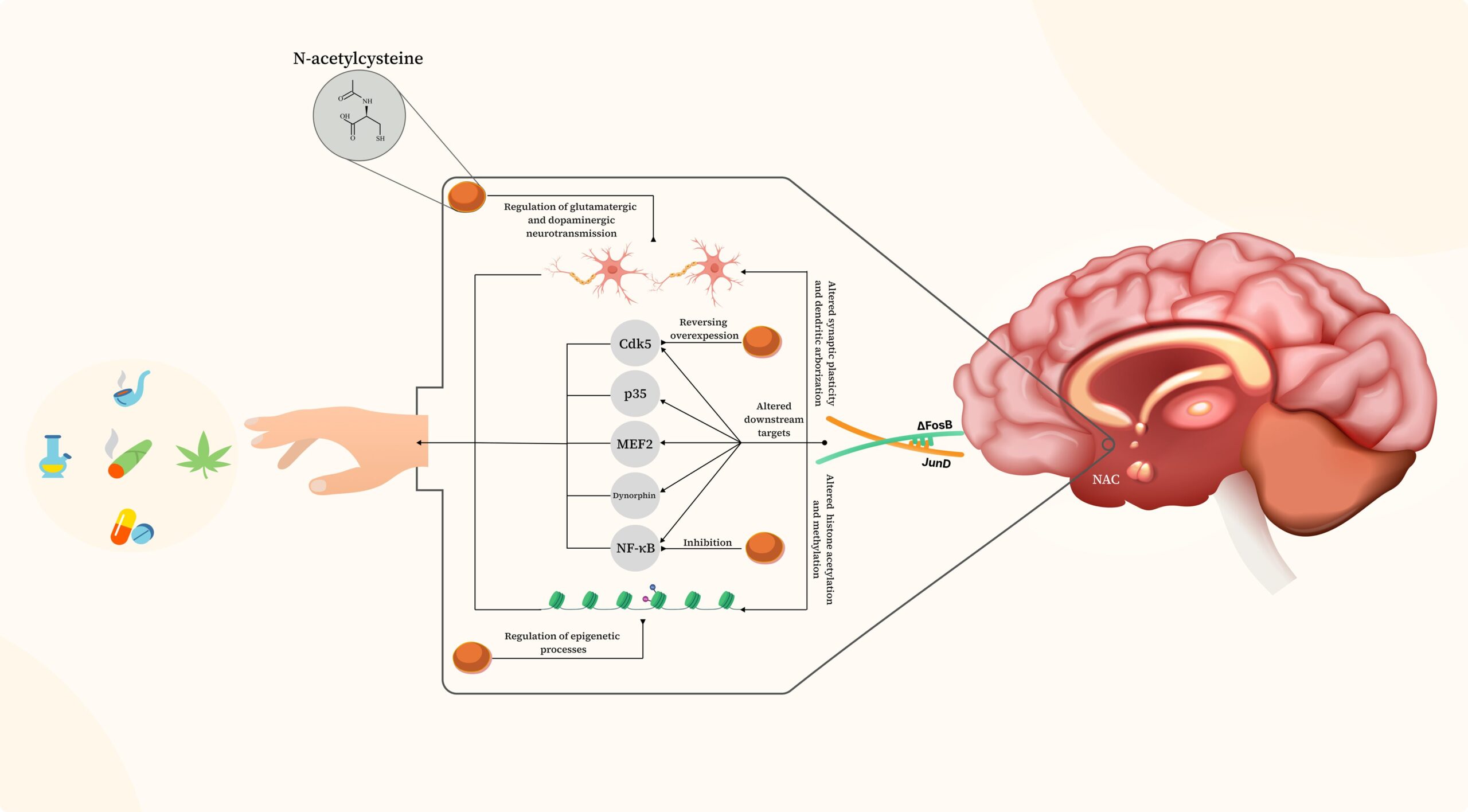
One promising compound is N-acetylcysteine (NAC), a derivative of the amino acid L-cysteine. NAC has demonstrated potential in mitigating cravings, reducing withdrawal symptoms, and supporting brain recovery in individuals struggling with addiction. This article explores the scientific basis, clinical evidence, and therapeutic potential of NAC in substance use disorders.
The Mechanisms Behind NAC’s Role in Addiction
1. Regulation of Glutamate Homeostasis
Neurobiological research has established that addiction dysregulates glutamate, the brain’s most abundant excitatory neurotransmitter. This disruption contributes to drug-seeking behaviour, cravings, and relapse. NAC helps restore glutamate homeostasis, particularly in the nucleus accumbens, a brain region implicated in reward processing.
2. Dopamine Modulation and Craving Reduction
Substance use depletes dopamine levels, leading to compulsive drug-seeking behaviour. NAC has been shown to increase extracellular dopamine, potentially reducing cravings and improving impulse control.
3. Antioxidant and Neuroprotective Effects
Chronic substance use induces oxidative stress and neuroinflammation, which can damage neurons and contribute to cognitive impairment. NAC, a precursor to glutathione (GSH), is a potent antioxidant that protects against neurotoxicity and supports neuronal repair.
Clinical Evidence: NAC’s Impact on Different Addictions
Nicotine Addiction
A randomized controlled trial (RCT) found that individuals receiving NAC (2,400 mg/day) experienced a significant reduction in cigarette cravings compared to placebo (Knackstedt et al., 2009). NAC’s ability to normalize glutamate signalling may explain its potential to promote smoking cessation.
Cocaine and Methamphetamine Dependence
Clinical studies indicate that NAC reduces cue-induced cravings in cocaine-dependent individuals. A meta-analysis by Schmaal et al. (2020) reported that NAC (2,400 mg/day) reduced relapse rates and improved cognitive flexibility, critical for sustaining abstinence.
Cannabis Use Disorder
A double-blind, placebo-controlled study on adolescents with cannabis dependence revealed that NAC (1,200 mg/day) increased quit rates compared to placebo (Gray et al., 2012). The compound’s ability to modulate glutamate levels and reduce withdrawal symptoms may be key to its effectiveness.
Alcohol Use Disorder (AUD)
Chronic alcohol consumption contributes to oxidative damage and neuroinflammation, exacerbating withdrawal symptoms and relapse risk. A study by Berk et al. (2013) demonstrated that NAC (1,200–2,400 mg/day) decreased alcohol cravings and improved cognitive function in individuals with AUD.
Opioid Addiction
Preliminary research suggests NAC may attenuate withdrawal symptoms and opioid-induced neurotoxicity. Though more studies are needed, early findings suggest potential benefits in reducing opioid cravings and enhancing treatment outcomes when used alongside MAT.
Recommended Dosage and Administration
| Substance | Suggested NAC Dose | Recommended Duration |
|---|---|---|
| Nicotine (Smoking/Vaping) | 1,200–2,400 mg/day | 8–12 weeks |
| Cocaine & Methamphetamine | 2,400 mg/day | 4–8 weeks |
| Cannabis (Marijuana) | 1,200–2,400 mg/day | 8+ weeks |
| Alcohol (AUD) | 1,200–2,400 mg/day | 6+ weeks |
| Opioids (Heroin, Painkillers) | 1,200–2,400 mg/day | 6–12 weeks |
Administration: NAC should be taken in divided doses (600 mg, 2–4 times per day) to maintain stable plasma levels.
Safety Profile and Considerations
NAC is generally well-tolerated, with mild side effects such as nausea, diarrhea, and headaches. However, certain populations should exercise caution:
- Patients on blood thinners: NAC may have mild anticoagulant effects, increasing bleeding risk.
- Individuals with chronic illnesses: Those with liver or kidney disease should consult a healthcare provider before use.
- Not a standalone treatment: While promising, NAC should be used with behavioural therapy and medical supervision for optimal results.
NAC as an Adjunctive Therapy in Addiction Recovery
In conclusion, the emerging body of research highlights NAC as a valuable adjunctive treatment for substance use disorders. Its ability to modulate neurotransmitter balance, reduce oxidative stress, and mitigate cravings makes it a compelling option for individuals seeking to overcome addiction.
Future research should focus on long-term clinical trials to refine dosage recommendations and assess NAC’s efficacy across different stages of addiction recovery. As the field of addiction medicine evolves, N-acetylcysteine stands out as a promising, science-backed intervention with the potential to enhance traditional treatment approaches.
References
- Berk, M., Copolov, D. L., Dean, O., et al. (2013). N-Acetyl Cysteine as a Glutathione Precursor for Schizophrenia—A Double-Blind, Randomized, Placebo-Controlled Trial. Biological Psychiatry, 64(5), 361-368.
- Gray, K. M., Carpenter, M. J., Baker, N. L., et al. (2012). N-Acetylcysteine in Adolescent Marijuana Dependence: A Randomized, Double-Blind, Placebo-Controlled Trial. American Journal of Psychiatry, 169(8), 805-812.
- Knackstedt, L. A., LaRowe, S., & Kalivas, P. W. (2009). The Role of Glutamate in Nicotine and Cocaine Addiction: Treatment Implications. Annals of the New York Academy of Sciences, 1141(1), 262-275.
- Schmaal, L., Veltman, D. J., Nederveen, A., et al. (2020). N-Acetylcysteine for the Treatment of Cocaine Dependence: A Systematic Review. Addiction Biology, 25(3), e12797.
Frequently asked questions
What is N-acetylcysteine (NAC)?
N-acetylcysteine, or NAC, is a derivative of the amino acid L-cysteine and a precursor to glutathione, an antioxidant. The 2025 IHR story reviews research on its possible role in substance use disorders.
What does research say about NAC and addiction?
The 2025 story cites studies reporting that NAC reduced cigarette cravings, cue-induced cravings in cocaine dependence and alcohol cravings, and increased quit rates in adolescents with cannabis dependence. It notes that opioid findings are preliminary and that longer trials are needed.
How is NAC thought to work in addiction?
According to the story, researchers propose that NAC helps restore glutamate balance in the nucleus accumbens, a brain region tied to reward, and that it has antioxidant effects. The story presents these as proposed mechanisms.
Is NAC safe for everyone?
The story says NAC is generally well tolerated, with possible mild side effects such as nausea, diarrhea and headaches. It says people on blood thinners or with liver or kidney disease should consult a health care provider, and that NAC is not a standalone treatment.
Sections: Business News
More in Business News
- What Canada’s Shrinking Organic Farmland Means for the Organic Shelf
- Meehan Family Investments Moves From Vodka Soda to Brain Health
- What Unifrutti’s New CEO Means for Canada’s Winter Fruit Supply
- Cizzle Brands’ Share Consolidation Puts the Supplier Balance Sheet on the Planogram
- The Password Was Today’s Date: How 700 Supermarket Freezers Were Turned Into Ovens
- Zellers Is Rebuilding in 25,000-Square-Foot Pieces, and Food Is Its Open Category